


Netflix Strategy For Business Growth And Target OTT Market Strategy CD




Try Before you Buy Download Free Sample Product
 Impress Your
 Audience
 100%
100% Editable
 Save Hours
 of Time


Discover Netflixs successful business and marketing strategy with our comprehensive presentation on Netflixs strategy for business growth and targeting the OTT market. The presentation covers Netflixs progress over the years and its global presence. It also examines the segmentation, targeting, and positioning strategy of the company, along with the use of frameworks such as VRIO, SWOT, and Porters Five Forces to analyze its competitive position. Moreover, our Netflix Competitor Assessment PPT includes a comprehensive competitive analysis of Netflix based on parameters such as competitors strategies, market share, pricing, and available features. It also showcases the collaborations and partnerships initiated by Netflix to grow its business and increase its market share in the OTT industry. The pricing strategies adopted by the company to compete with rivals and acquire customers are highlighted, as well as the content mix of Netflix to target customers with different genres of movies and TV shows. Finally, the Netflix Content Strategy module highlights the different marketing strategies used by Netflix for content promotion, including email marketing, social media advertising, search engine optimization, and guerilla marketing. Get access to our highly researched and skillfully designed presentation now.
People who downloaded this PowerPoint presentation also viewed the following :
Content of this Powerpoint Presentation
Slide 1: This slide introduces Netflix Strategy for Business Growth and Target OTT Market. State your company name and begin.
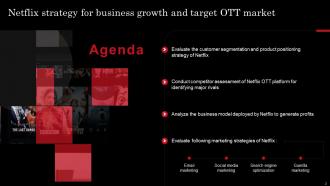
Slide 2: This slide states Agenda of the presentation.
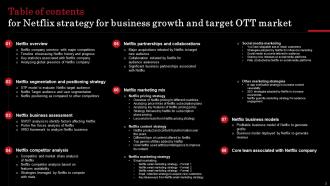
Slide 3: This slide shows Table of Content for the presentation.
Slide 4: This slide highlights title for topics that are to be covered next in the template.
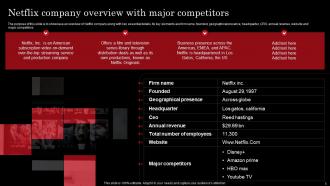
Slide 5: This slide presents Netflix company overview with major competitors.
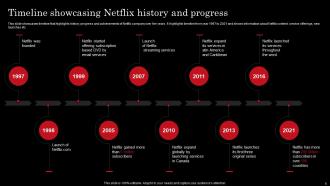
Slide 6: This slide displays Timeline showcasing Netflix history and progress.
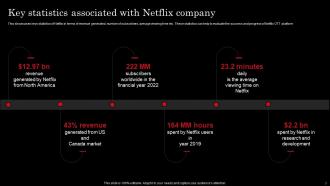
Slide 7: This slide represents Key statistics associated with Netflix company.
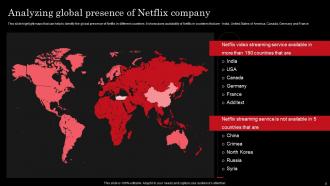
Slide 8: This slide showcases Analyzing global presence of Netflix company.
Slide 9: TThis slide highlights title for topics that are to be covered next in the template.
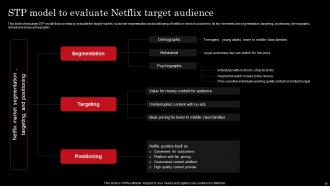
Slide 10: This slide shows STP model to evaluate Netflix target audience.
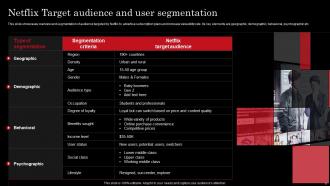
Slide 11: This slide presents Netflix Target audience and user segmentation.
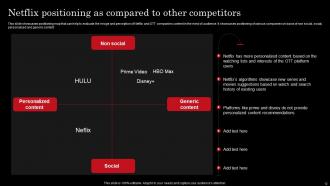
Slide 12: This slide displays Netflix positioning as compared to other competitors.
Slide 13: This slide represents Netflix strategy for business growth and target OTT market.
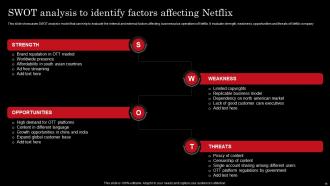
Slide 14: This slide showcases SWOT analysis to identify factors affecting Netflix.
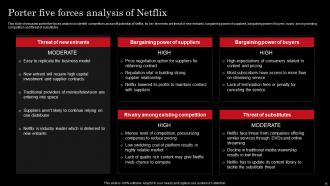
Slide 15: This slide shows Porter five forces analysis of Netflix.
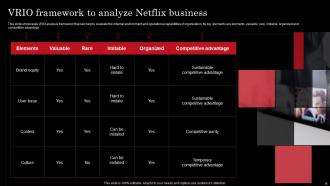
Slide 16: This slide presents VRIO framework to analyze Netflix business.
Slide 17: This slide displays Netflix strategy for business growth and target OTT market.
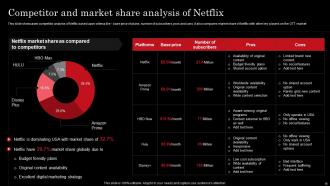
Slide 18: This slide represents Competitor and market share analysis of Netflix.
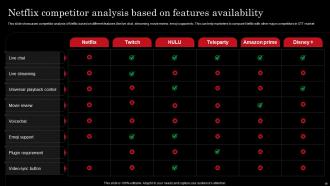
Slide 19: This slide showcases Netflix competitor analysis based on features availability.
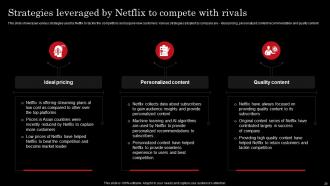
Slide 20: This slide shows Strategies leveraged by Netflix to compete with rivals.
Slide 21: This slide highlights title for topics that are to be covered next in the template.
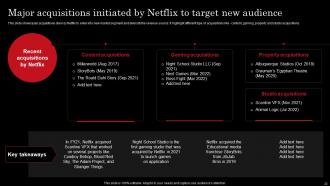
Slide 22: This slide presents Major acquisitions initiated by Netflix to target new audience.
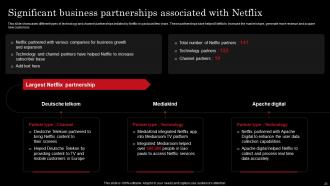
Slide 23: This slide displays Significant business partnerships associated with Netflix.
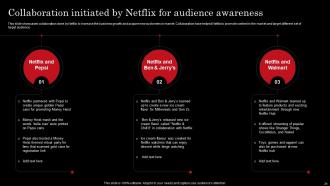
Slide 24: This slide represents Collaboration initiated by Netflix for audience awareness.
Slide 25: This slide highlights title for topics that are to be covered next in the template.
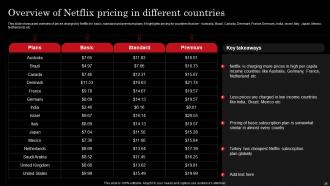
Slide 26: This slide showcases Overview of Netflix pricing in different countries.
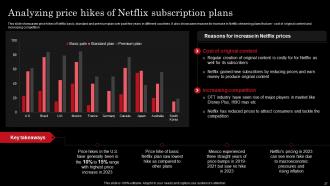
Slide 27: This slide shows Analyzing price hikes of Netflix subscription plans.
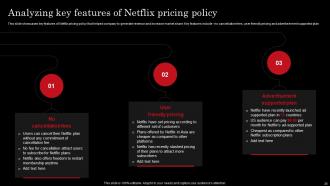
Slide 28: This slide presents Analyzing key features of Netflix pricing policy.
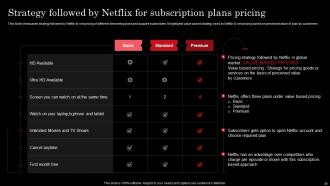
Slide 29: This slide displays Strategy followed by Netflix for subscription plans pricing.
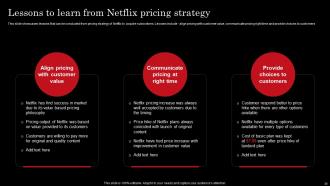
Slide 30: This slide represents Lessons to learn from Netflix pricing strategy.
Slide 31: This slide highlights title for topics that are to be covered next in the template.
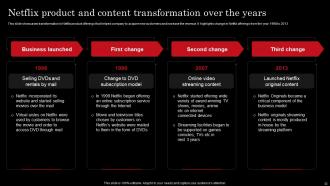
Slide 32: This slide showcases Netflix product and content transformation over the years.
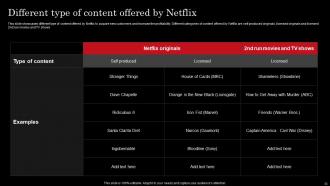
Slide 33: This slide shows Different type of content offered by Netflix.
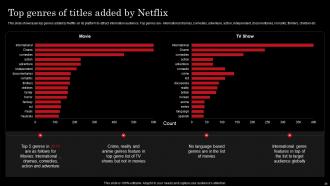
Slide 34: This slide presents Top genres of titles added by Netflix.
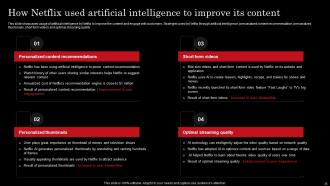
Slide 35: This slide displays How Netflix used artificial intelligence to improve its content.
Slide 36: This slide highlights title for topics that are to be covered next in the template.
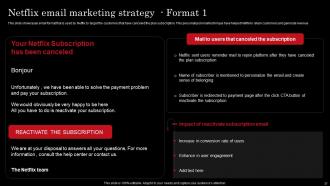
Slide 37: This slide showcases email format that is used by Netflix to target the customers that have canceled the plan subscription.
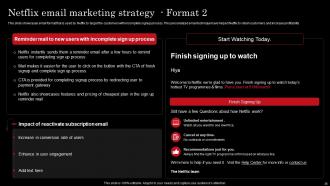
Slide 38: This slide showcases email format that is used by Netflix to target the customers with incomplete signup process.
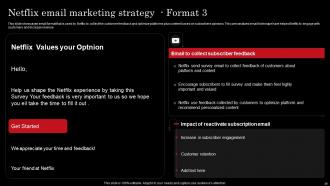
Slide 39: This slide presents email format that is used by Netflix to collect the customer feedback and optimize platforms.
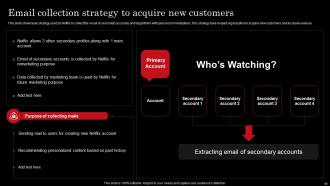
Slide 40: This slide shows Email collection strategy to acquire new customers.
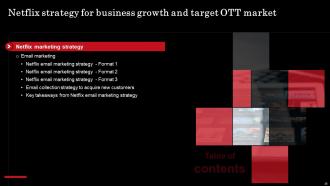
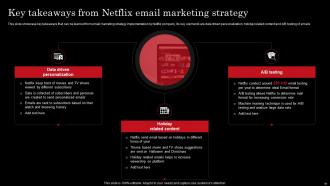
Slide 41: This slide displays Key takeaways from Netflix email marketing strategy.
Slide 42: This slide highlights title for topics that are to be covered next in the template.
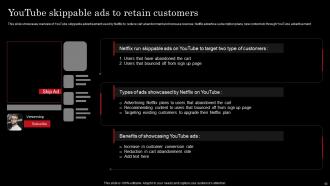
Slide 43: This slide represents YouTube skippable ads to retain customers.
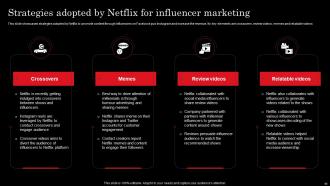
Slide 44: This slide showcases Strategies adopted by Netflix for influencer marketing.
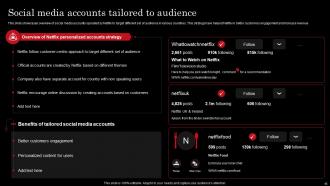
Slide 45: This slide shows Social media accounts tailored to audience.
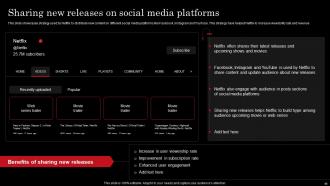
Slide 46: This slide presents Sharing new releases on social media platforms.
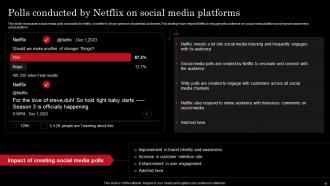
Slide 47: This slide displays Polls conducted by Netflix on social media platforms.
Slide 48: This slide highlights title for topics that are to be covered next in the template.
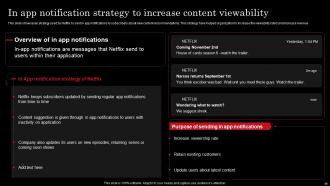
Slide 49: This slide represents In app notification strategy to increase content viewability.
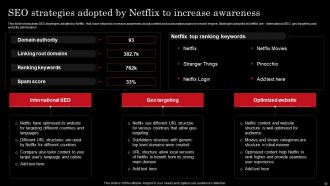
Slide 50: This slide showcases SEO strategies adopted by Netflix to increase awareness.
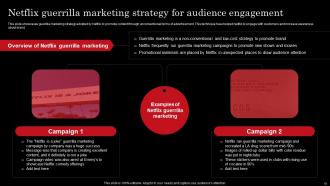
Slide 51: This slide shows Netflix guerrilla marketing strategy for audience engagement.
Slide 52: This slide highlights title for topics that are to be covered next in the template.
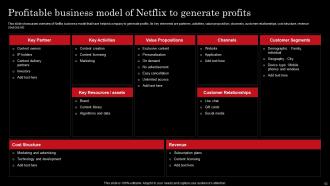
Slide 53: This slide presents Profitable business model of Netflix to generate profits.
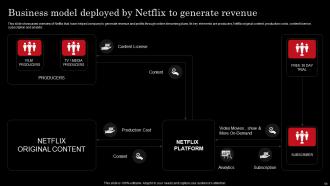
Slide 54: This slide displays Business model deployed by Netflix to generate revenue.
Slide 55: This slide highlights title for topics that are to be covered next in the template.
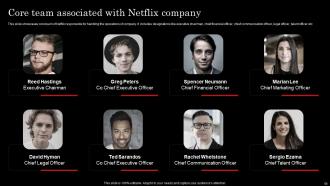
Slide 56: This slide represents Core team associated with Netflix company.
Slide 57: This slide contains all the icons used in this presentation.
Slide 58: This slide is titled as Additional Slides for moving forward.
Slide 59: This is an Idea Generation slide to state a new idea or highlight information, specifications etc.
Slide 60: This slide contains Puzzle with related icons and text.
Slide 61: This slide depicts Venn diagram with text boxes.
Slide 62: This slide presents Roadmap with additional textboxes.
Slide 63: This is Our Team slide with names and designation.
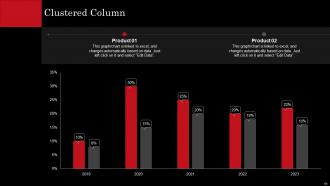
Slide 64: This slide provides Clustered Column chart with two products comparison.
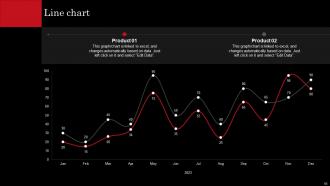
Slide 65: This slide describes Line chart with two products comparison.
Slide 66: This is Our Target slide. State your targets here.
Slide 67: This slide provides 30 60 90 Days Plan with text boxes.
Slide 68: This is a Thank You slide with address, contact numbers and email address.
Netflix Strategy For Business Growth And Target OTT Market Strategy CD with all 73 slides:
Use our Netflix Strategy For Business Growth And Target OTT Market Strategy CD to effectively help you save your valuable time. They are readymade to fit into any presentation structure.











FAQs for Netflix Strategy For Business Growth And Target OTT
So Netflix basically cracked the code with three big moves. First, they ditched licensing other people's stuff and went crazy investing in originals - Stranger Things, The Crown, all that. Risky as hell but it worked. Then they expanded globally like maniacs while still nailing the personalized recommendations thing. Oh, and they adapted content for different markets without losing what made Netflix... Netflix, you know? Honestly, the biggest lesson here? Don't rely on outside partners for your main thing. Own it yourself or you'll get screwed eventually.
So Netflix figured out people were getting bored with the same old network TV reruns and wanted stuff they couldn't find anywhere else. That's when they went all-in on originals - like, billions of dollars all-in. Pretty genius move if you ask me, because now other studios can't just yank their shows away whenever they feel like it. They've also been doing tons of international stuff lately, which makes sense since everyone wants different types of stories. Bottom line - they saw what viewers actually wanted and pivoted hard before someone else beat them to it.
Netflix basically lives or dies by their original content now. Making their own stuff means you literally can't watch Stranger Things anywhere else - smart move. They own everything forever too, so no more losing Friends to HBO Max (still bitter about that tbh). The crazy amount of data they have on what we binge helps them figure out exactly what to make next. Short version: any subscription business needs something only they can offer. Otherwise why wouldn't people just jump ship?
Dude, Netflix is basically spying on you in the best way possible. They track everything - what you watch, when you hit pause, how fast you scroll past rom-coms. All that gets fed into their recommendation engine. Pretty creepy but also kinda genius? The wild part is they use this data to decide what shows to make. Like, they'll greenlight a series because their algorithm says "trust me, people will binge this." They even test different thumbnails to see which ones make you click. My friend works in tech and says it's insane how much they know about our habits.
Dude, Netflix going global totally changed their whole game. They went from mailing DVDs to producing shows like Squid Game and Money Heist - honestly didn't see that coming back in the day. Smart move though. Local content pulls in regional subscribers, but then everyone worldwide binges it too. Double win. Different countries got different pricing which makes sense. But here's the thing - expanding internationally basically forced them to become actual content creators instead of just streaming other people's stuff. That's probably why they're still crushing it while other platforms struggle.
Netflix basically wins on two things - they're obsessed with using your data to figure out what you'll watch next, and they dump insane money into original content worldwide. Disney+ has all their nostalgic franchises, Amazon throws Prime Video in with shipping deals, but Netflix? Their algorithm is honestly kind of creepy good at nailing recommendations. They also started that whole "release everything at once" thing everyone copies now. What's wild is how they green-light shows - it's not just some exec's gut feeling, they're looking at actual viewing patterns. Pretty smart combo of art meets data science.
So Netflix isn't really cutting spending - they're just being way smarter about it. They crunch data on what genres kill it in different countries, then green-light stuff that's likely to hit. Multi-year creator deals save them tons versus those crazy bidding wars too. International co-productions are huge now since they split costs but work globally. Honestly, I think their smartest move is focusing on content that travels well instead of just paying A-listers insane money. Oh, and they don't just look at viewer numbers anymore - there's apparently way more metrics they track.
Netflix basically partners with everyone to get in front of more eyeballs. Telecom companies like Verizon bundle it with phone plans. They cut deals with studios for exclusive content - even worked with Disney before Disney+ became a thing (awkward now lol). But honestly? The device partnerships are genius. Your smart TV, PlayStation, whatever - Netflix is already there waiting for you. No extra steps. It's a solid reminder that sometimes growing your business isn't about selling harder. Find partners who can get you in front of their customers too.
So Netflix has gotten really good at this adaptive streaming thing - basically your video quality adjusts automatically when your wifi gets spotty. Their algorithm is honestly creepy good at predicting what you'll binge next (though sometimes I wonder if I'm that predictable lol). They built this huge network of servers globally so videos don't buffer as much. Downloads and syncing across devices are solid features too. If you're analyzing their growth, focus on how these solve actual problems users have rather than just being cool tech for tech's sake.
Netflix is actually really smart about this stuff. Instead of just slapping subtitles on American shows, they go all-in on creating local content. Sacred Games in India, Dark in Germany - totally different vibe from their US catalog. They work with local talent and tell stories that actually matter to those audiences. Oh, and they don't just blast the same marketing everywhere either. Different influencers, different social platforms per region. Honestly, it's pretty obvious when you think about it, but most companies still mess this up. You can't just export your exact strategy and expect it to work everywhere.
Netflix basically lives off licensing deals to stock their library without spending crazy money on originals. Ever wonder why shows vanish randomly? That's contracts expiring. These deals help them load up on content fast, especially when entering new markets. But man, they're pricey and temporary - which explains Netflix's obsession with making their own stuff now. They got sick of dropping millions on shows like Friends only to lose them later. Honestly, if you want to understand Netflix's game plan, just compare how much they spend on licensing versus originals.
So Netflix basically prices things based on what people in each country can actually afford. Like in India or Brazil, subscriptions are literally a third of what we pay here - kinda wild when you think about it. They look at local competition too, not just income levels. Each region gets treated as its own separate market rather than some blanket global approach. Oh and they adjust how much they spend on content depending on the market. If you're digging into their strategy, I'd start by checking out what competitors charge locally and average wages in that area.
So Netflix dumps insane amounts of money into original shows - like billions every year. Their whole thing is making stuff you literally can't get anywhere else. The algorithm they use is honestly creepy good at figuring out what you'll watch next (sometimes better than I know myself lol). They're also pushing hard into global markets and trying weird new stuff like interactive episodes and mobile games. It's wild how they've evolved from just streaming other people's content to being this massive entertainment company. When you're looking at their competitors, focus on content budgets and tech innovation, not just how many subscribers they have.
So Netflix basically splits their audience into different groups and makes content specifically for them. They look at what people watch, then greenlight shows based on that data - like how they spotted the gap for Korean content way before Squid Game became huge. Smart, right? Same show gets marketed totally differently too. Romance fans see the love story angle while thriller people get the suspense stuff. It's wild how they've moved away from trying to please everyone. Now they're just laser-focused on specific viewer clusters and honestly? It's working pretty well for them.
So Netflix is basically drowning in competition right now - Disney+, HBO Max, Apple TV, you name it. Subscriber growth has totally stalled in places like the US because the market's saturated. They're spending insane amounts on original shows and movies just to keep up, but honestly some of their recent stuff feels pretty meh to me. Password sharing is eating into their profits too. International expansion helps but those markets don't pay as much. People are also getting way more selective about which streaming services they actually want to pay for, especially with everything being so expensive lately. Watch their content spending vs how many subscribers they're actually keeping.
-
The templates are easy to get, and the chat customer support is excellent.
-
Amazing variety of PowerPoint slides. Really helpful in designing professional presentations.