


Network As A Service Naas IT Powerpoint Presentation Slides






Try Before you Buy Download Free Sample Product
 Impress Your
 Audience
 100%
100% Editable
 Save Hours
 of Time


This PowerPoint presentation gives a brief idea about the network as a service cloud service model, including its importance, benefits, challenges and solutions, and implementation. In this Network as a Service PowerPoint Presentation, we have covered an overview of the network as a service model, covering its introduction, features, benefits, and requirements. It also contains the importance of the NaaS model that caters to network agility with NaaS, how it shifts focus from architecture to results, NaaS as an enabler for cloud transformation, helping sustainability efforts, and so on. In addition, this NaaS PPT contains the relationship between NaaS and SASE, different levels of NaaS, and operation organizational structure. It also covers the architecture of NaaS, its working, and how it is delivered to customers. Also, the NaaS Architecture PPT presentation includes various models of NaaS, such as VPN, Bandwidth-on-demand, and mobile network virtualization, along with its implementation that comprises top global NaaS providers, challenges and solutions, required components, implementation merits and impact and how small businesses can take advantage of it. Furthermore, this NaaS Service Models template caters to CapEx and OpEx funding for NaaS, a comparison between NaaS, IaaS, and SaaS. It also contains an overview of mobile networks as a service, their benefits, and pricing for the NaaS model. Moreover, this NaaS Architecture deck comprises a roadmap for adopting NaaS, a timeline to develop a NaaS model, a NaaS performance tracking dashboard, and how it will serve as a future model. Download our 100 percent editable and customizable template, which is also compatible with Google Slides.
People who downloaded this PowerPoint presentation also viewed the following :
Content of this Powerpoint Presentation
Slide 1: This slide introduces Network as a Service (NaaS) (IT). State your company name and begin.
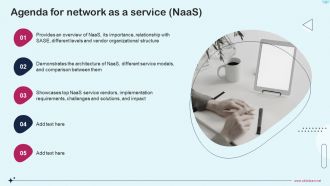
Slide 2: This slide states Agenda of the presentation.
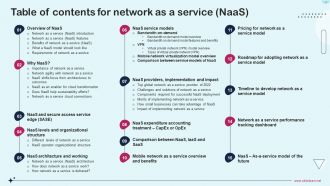
Slide 3: This slide shows Table of Content for the presentation.
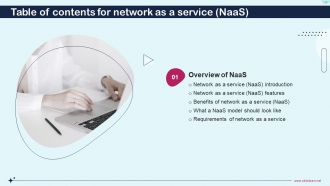
Slide 4: This slide highlights title for topics that are to be covered next in the template.
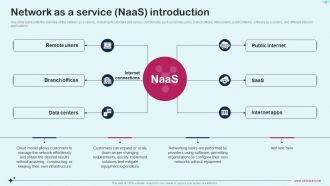
Slide 5: This slide shows Network as a service (NaaS) introduction.
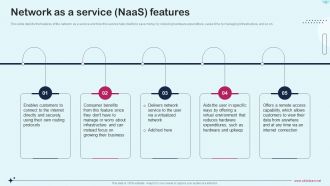
Slide 6: This slide presents Network as a service (NaaS) features.
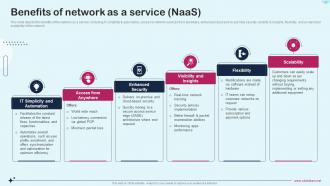
Slide 7: This slide displays Benefits of network as a service (NaaS).
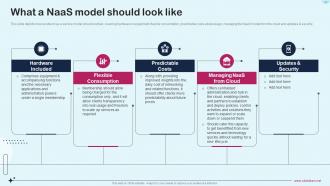
Slide 8: This slide represents What a NaaS model should look like.
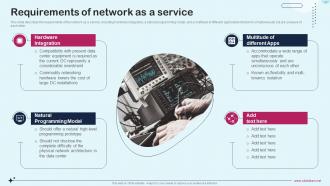
Slide 9: This slide showcases Requirements of network as a service.
Slide 10: This slide highlights title for topics that are to be covered next in the template.
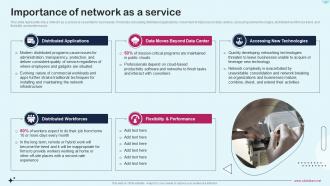
Slide 11: This slide shows Importance of network as a service.
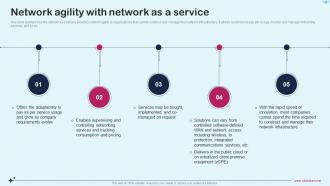
Slide 12: This slide presents Network agility with network as a service.
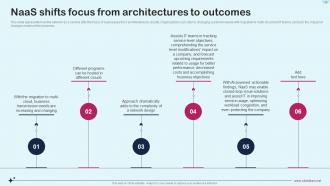
Slide 13: This slide displays NaaS shifts focus from architectures to outcomes.
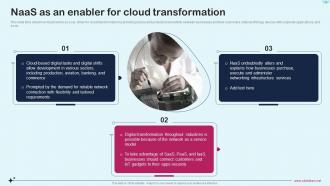
Slide 14: This slide represents NaaS as an enabler for cloud transformation.
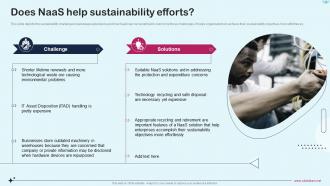
Slide 15: This slide depicts the sustainability challenges businesses experience.
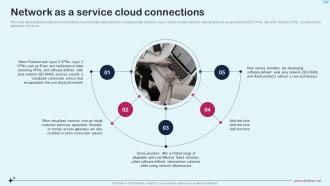
Slide 16: This slide showcases Network as a service cloud connections.
Slide 17: This slide highlights title for topics that are to be covered next in the template.
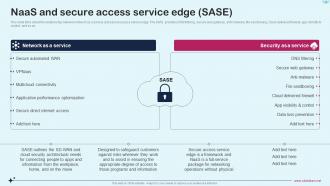
Slide 18: This slide shows NaaS and secure access service edge (SASE).
Slide 19: This slide highlights title for topics that are to be covered next in the template.
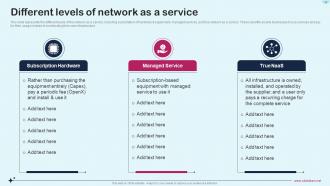
Slide 20: This slide presents Different levels of network as a service.
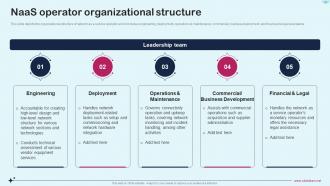
Slide 21: This slide displays NaaS operator organizational structure.
Slide 22: This slide highlights title for topics that are to be covered next in the template.
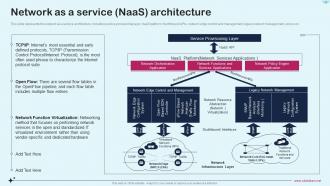
Slide 23: This slide represents Network as a service (NaaS) architecture.
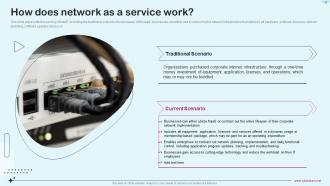
Slide 24: This slide represents the working of NaaS, including the traditional scenario of businesses.
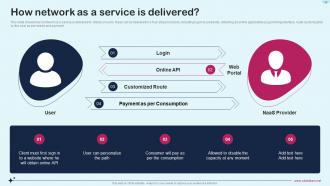
Slide 25: This slide shows how a network as a service is delivered to clients or users.
Slide 26: This slide highlights title for topics that are to be covered next in the template.
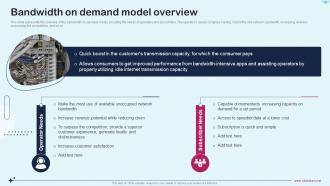
Slide 27: This slide represents the overview of the bandwidth on-demand model.
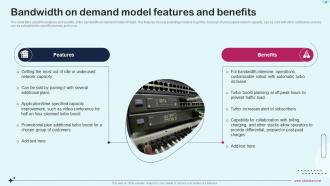
Slide 28: This slide showcases Bandwidth on demand model features and benefits.
Slide 29: This slide highlights title for topics that are to be covered next in the template.
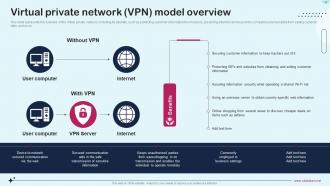
Slide 30: This slide shows Virtual private network (VPN) model overview.
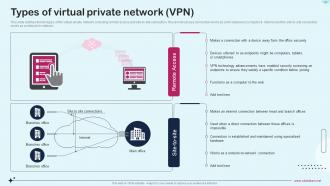
Slide 31: This slide presents Types of virtual private network (VPN).
Slide 32: This slide highlights title for topics that are to be covered next in the template.
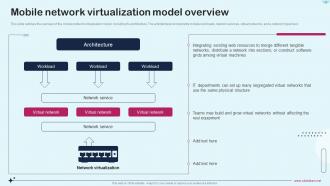
Slide 33: This slide displays Mobile network virtualization model overview.
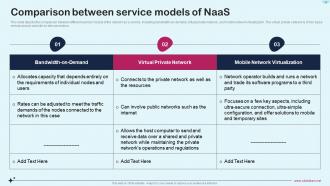
Slide 34: This slide represents Comparison between service models of NaaS.
Slide 35: This slide highlights title for topics that are to be covered next in the template.
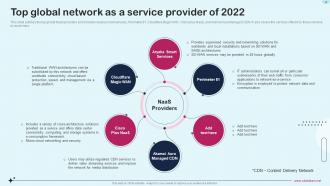
Slide 36: This slide showcases Top global network as a service provider of 2022.
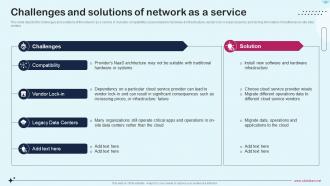
Slide 37: This slide shows Challenges and solutions of network as a service.
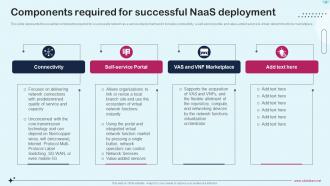
Slide 38: This slide presents Components required for successful NaaS deployment.
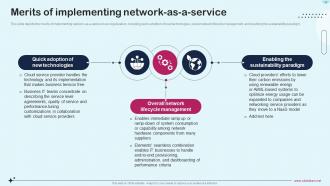
Slide 39: This slide displays Merits of implementing network-as-a-service.
Slide 40: This slide represents How small businesses can take advantage of NaaS.
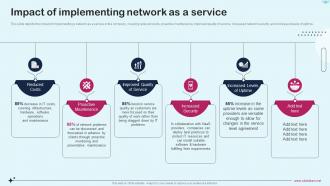
Slide 41: This slide showcases Impact of implementing network as a service.
Slide 42: This slide highlights title for topics that are to be covered next in the template.
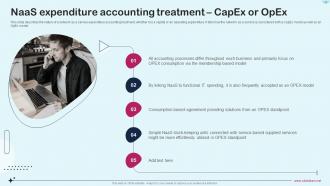
Slide 43: This slide shows NaaS expenditure accounting treatment – CapEx or OpEx.
Slide 44: This slide highlights title for topics that are to be covered next in the template.
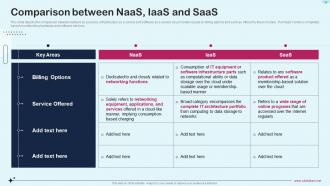
Slide 45: This slide presents Comparison between NaaS, IaaS and SaaS.
Slide 46: This slide highlights title for topics that are to be covered next in the template.
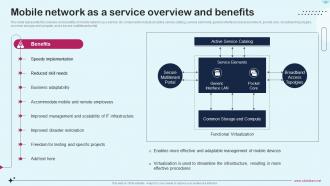
Slide 47: This slide displays Mobile network as a service overview and benefits.
Slide 48: This slide highlights title for topics that are to be covered next in the template.
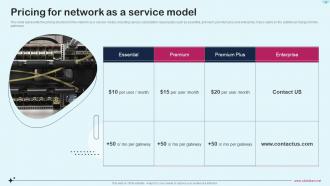
Slide 49: This slide represents Pricing for network as a service model.
Slide 50: This slide highlights title for topics that are to be covered next in the template.
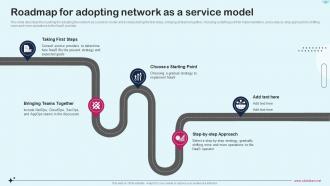
Slide 51: This slide showcases Roadmap for adopting network as a service model.
Slide 52: This slide highlights title for topics that are to be covered next in the template.
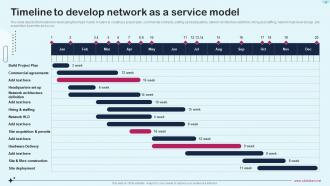
Slide 53: This slide shows Timeline to develop network as a service model.
Slide 54: This slide highlights title for topics that are to be covered next in the template.
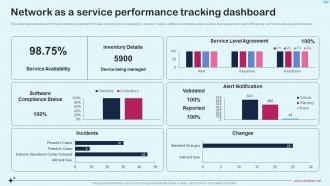
Slide 55: This slide presents Network as a service performance tracking dashboard.
Slide 56: This slide highlights title for topics that are to be covered next in the template.
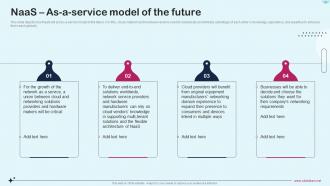
Slide 57: This slide depicts how NaaS will act as-a-service model in the future.
Slide 58: This slide contains all the icons used in this presentation.
Slide 59: This slide is titled as Additional Slides for moving forward.
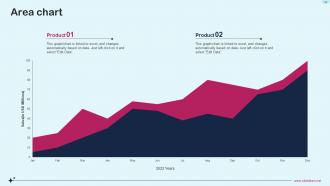
Slide 60: This slide depicts Area chart with two products comparison.
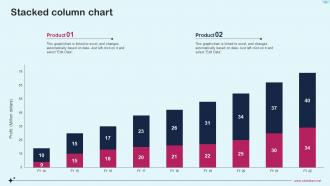
Slide 61: This slide represents Stacked Column chart with two products comparison.
Slide 62: This slide provides 30 60 90 Days Plan with text boxes.
Slide 63: This is a Timeline slide. Show data related to time intervals here.
Slide 64: This slide contains Puzzle with related icons and text.
Slide 65: This slide shows Post It Notes. Post your important notes here.
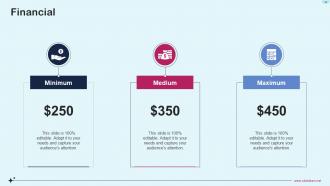
Slide 66: This is a Financial slide. Show your finance related stuff here.
Slide 67: This is Our Goal slide. State your firm's goals here.
Slide 68: This is a Thank You slide with address, contact numbers and email address.
Network As A Service Naas IT Powerpoint Presentation Slides with all 73 slides:
Use our Network As A Service Naas IT Powerpoint Presentation Slides to effectively help you save your valuable time. They are readymade to fit into any presentation structure.















FAQs for Network As A Service Naas IT
Primary benefits include reduced infrastructure costs, enhanced scalability, simplified network management, improved security, and faster deployment of network services. These cloud-based solutions enable organizations to streamline operations by eliminating hardware maintenance, optimizing resource allocation, and delivering consistent connectivity across multiple locations, with many enterprises finding that NaaS ultimately provides greater operational efficiency and competitive advantage.
NaaS delivers significantly greater flexibility and scalability than traditional networking by enabling on-demand resource provisioning, automated scaling, and cloud-based management rather than fixed hardware deployments. Unlike traditional models requiring physical infrastructure investments and manual configuration, NaaS allows organizations to dynamically adjust bandwidth, add locations, and deploy services instantly, with companies like retail chains and financial institutions finding they can expand operations rapidly while reducing capital expenditure and operational complexity.
NaaS enables remote work and hybrid environments by providing scalable network infrastructure, secure connectivity, centralized management, and flexible bandwidth allocation without requiring on-premise hardware. Through cloud-based networking, organizations streamline remote access, enhance security protocols, and reduce IT overhead, with many companies finding that NaaS delivers consistent performance across distributed teams while significantly lowering infrastructure costs.
NaaS significantly enhances network security through advanced threat detection, automated security updates, centralized monitoring, and professional managed services that many organizations lack internally. By leveraging enterprise-grade firewalls, intrusion prevention systems, and 24/7 security operations centers, companies gain access to cybersecurity expertise and infrastructure that would be costly to develop in-house, ultimately delivering stronger protection and faster incident response.
NaaS pricing models include subscription-based plans, pay-per-use consumption, hybrid combinations, tiered service levels, and usage-based bandwidth allocation. Organizations can choose the best fit by evaluating their network traffic patterns, budget predictability requirements, and scalability needs, with many enterprises finding that hybrid models deliver optimal cost control and flexibility for diverse operational demands.
NaaS integrates with existing cloud services through APIs, software-defined networking protocols, and unified management platforms that enable seamless connectivity across hybrid environments. Through centralized orchestration, organizations streamline multi-cloud deployments, enhance application performance, and automate network provisioning, while reducing operational complexity and ultimately delivering scalable infrastructure that adapts to evolving business requirements.
Transitioning to NaaS presents challenges including initial migration complexity, vendor dependency concerns, security control adjustments, bandwidth reliability requirements, and staff retraining needs. While these obstacles require careful planning, many organizations find that strategic implementation with phased rollouts, comprehensive SLAs, and hybrid approaches ultimately delivers enhanced flexibility, reduced infrastructure costs, and improved scalability across operations.
NaaS improves network performance and reliability through advanced traffic optimization, redundant infrastructure, real-time monitoring, and automatic failover capabilities that ensure consistent connectivity. These managed services deliver enhanced bandwidth allocation, reduced latency, and 99.9% uptime guarantees, with financial institutions and healthcare providers finding significantly faster application response times and minimized downtime risks.
Organizations should monitor network performance metrics including latency, throughput, availability uptime, security incident response times, and cost per user or application. These measurements enable businesses to assess service quality, operational efficiency, and ROI, with many enterprises finding that comprehensive monitoring across bandwidth utilization, user experience scores, and vendor SLA compliance ultimately delivers improved network visibility and strategic cost optimization.
Different industries leverage NaaS by implementing tailored networking solutions that address sector-specific requirements, including scalable bandwidth management, enhanced security protocols, application optimization, and regulatory compliance frameworks. Healthcare organizations streamline patient data sharing, financial institutions enhance transaction security, and retail businesses optimize customer connectivity, while manufacturing companies improve IoT device integration, ultimately delivering reduced operational costs and improved service reliability.
Organizations should consider data sovereignty requirements, industry-specific regulations like HIPAA or PCI DSS, encryption standards, and audit trail maintenance when utilizing NaaS. These compliance frameworks require careful vendor selection, clear data handling agreements, and continuous monitoring capabilities, with many financial services and healthcare institutions finding that strategic NaaS partnerships actually enhance their regulatory posture through improved security controls.
NaaS providers ensure data privacy through end-to-end encryption, network segmentation, multi-factor authentication, compliance with regulatory frameworks, and continuous security monitoring. These comprehensive security measures enable organizations across industries like healthcare, financial services, and retail to maintain strict data protection standards while leveraging scalable network infrastructure, ultimately delivering enhanced security posture and regulatory compliance.
Future trends in the NaaS landscape include AI-driven network optimization, edge computing integration, enhanced security automation, 5G network slicing, and multi-cloud orchestration capabilities. These advancements streamline network management by reducing operational complexity, accelerating deployment times, and enabling dynamic resource allocation, with enterprises increasingly finding that intelligent automation delivers significant cost reductions and competitive advantages.
Businesses can effectively manage NaaS vendor relationships through clear SLA definitions, regular performance monitoring, diversified provider strategies, and centralized governance frameworks. These approaches enable organizations to maintain service quality, negotiate better terms, and mitigate risks, with many enterprises finding that strategic vendor partnerships ultimately deliver enhanced network flexibility and cost optimization.
IT teams should develop cloud architecture understanding, network security protocols, vendor management capabilities, API integration skills, and performance monitoring expertise. These competencies enable seamless NaaS implementation by enhancing visibility into network operations, streamlining multi-vendor coordination, and optimizing resource allocation, with many organizations finding that cross-functional collaboration ultimately delivers greater operational efficiency.
-
I can always count on your designs for my professional needs. I believe I found a one-stop-shop for PPTs.
-
“Detailed and great to save your time.”