


Planning a flawless new service launch powerpoint presentation slides





Try Before you Buy Download Free Sample Product
 Impress Your
 Audience
 100%
100% Editable
 Save Hours
 of Time


You have only one chance to make great impression with your slide presentation on service launch. Hence getting everything right is very important. Bearing this in mind here we are showcasing a readymade planning a flawless new service launch PowerPoint presentation. Now, you can use our PPT sample to give insights at audience about your service launch marketing plan. Furthermore, while launching a new service our PowerPoint slide deck helps to lay emphasis on important aspects like budget, target audience, pricing strategies and market share. Moreover, with help of our presentation slides you can brief your sales and marketing force about the prospective line of attack or strategy for entering the market. There is more, as we have included exclusive slide templates like buyer behavior, customer need analysis, swot analysis, strategic positioning, marketing mix, break even analysis etc. Above all, you can contact our experts to get exclusively customized deck as per your requirement. All in all, this is a complete package to get you ready for any sort of service launch. So, download quickly and get started now. Folks feel assured you have considered all angles with our Planning A Flawless New Service Launch Complete Powerpoint Deck With Slides. It helps fortify your conclusions.
People who downloaded this PowerPoint presentation also viewed the following :
Content of this Powerpoint Presentation
Slide 1: This slide introduces Planning A Flawless New Service Launch. State Your Company Name and get started.
Slide 2: This is an Agenda slide. State your agendas here.
Slide 3: This slide contains Our Mission with Vision and Goal icons imagery. State them here.
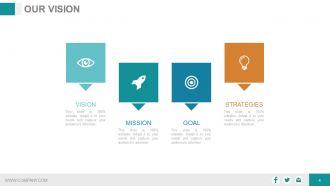
Slide 4: This is Our Vision slide. State company Vision here.
Slide 5: This is Our Team slide with name, designation and image boxes.
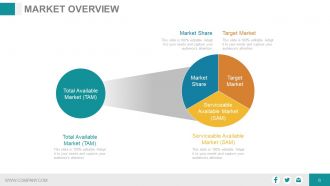
Slide 6: This slide showcases Market Overview showing- Total Available Market (TAM), Serviceable Available Market (SAM), Target Market, Market Share.
Slide 7: This slide showcases Buyer Behavior.
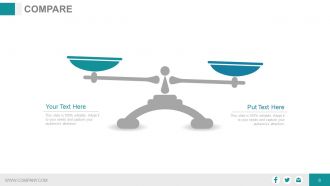
Slide 8: This is a COMPARE slide in balance scale form to compare product, services, entities etc.
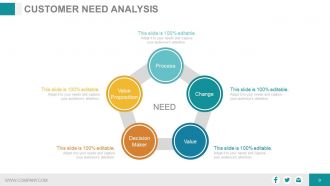
Slide 9: This is a Customer Need Analysis slide showing- Process, Change, Value, Decision Maker, Value Proposition.
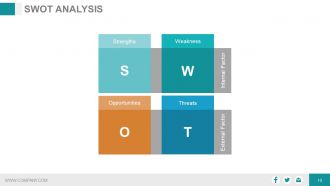
Slide 10: This is a SWOT ANALYSIS slide.
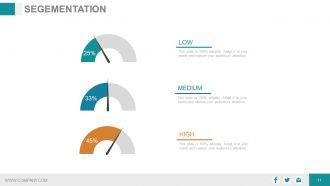
Slide 11: This slide showcases SEGEMENTATION in terms of- LOW, MEDIUM, HIGH.
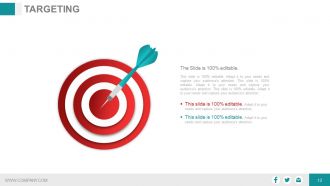
Slide 12: This is a TARGETING image slide to state targets, goals etc.
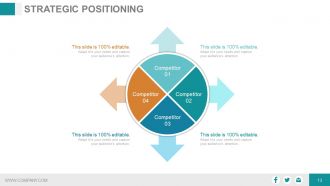
Slide 13: This slide showcases Strategic Positioning to state strategic points etc.
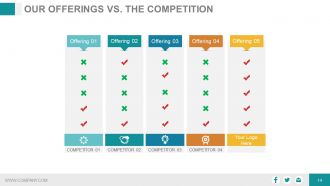
Slide 14: This slide shows Our Offerings VS. The Competition.
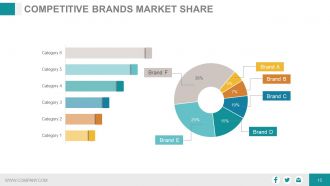
Slide 15: This slide showcases Competitive Brands Market Share.
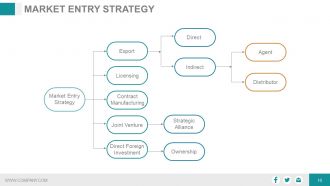
Slide 16: This slide presents Market Entry Strategy with- Export, Licensing, Contract Manufacturing, Joint Venture, Direct Foreign Investment, Strategic Alliance, Ownership, Agent, Distributor.
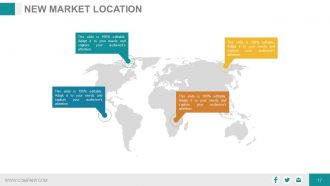
Slide 17: This slide shows New Market Location in world map image form.
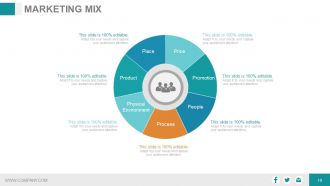
Slide 18: This slide showcases Marketing Mix displaying- Price, Promotion, People, Process, Physical Environment, Product, Place.
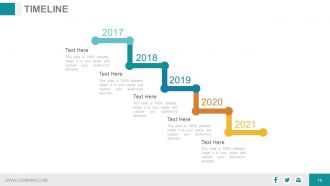
Slide 19: This is a Timeline slide to show evolution, growth, milestones etc.
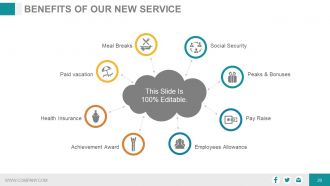
Slide 20: This slide showcases Benefits Of Our New Service displaying- Health Insurance, Paid vacation, Meal Breaks, Social Security, Peaks & Bonuses, Pay Raise, Employees Allowance, Achievement Award.
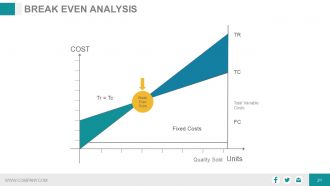
Slide 21: This slide presents Break Even Analysis.
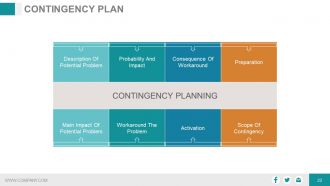
Slide 22: This slide displays a Contingency Plan.
Slide 23: This slide shows New Service Development Process with- People, Systems, Technology, Service, Concept, Elements, Teams, Enablers, Tools, Organizational, Context, Service design and testing, Process and system design and testing, Marketing program design and testing, Personnel training, Service testing and pilot run, Test marketing, Business analysis, Project authorization, Formulation of new services objective/strategy, Idea generation and screening, Concept development and testing, Full – scale launch, Post – launch review.
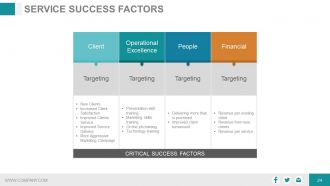
Slide 24: This slide displays Service Success Factors in tabular form.
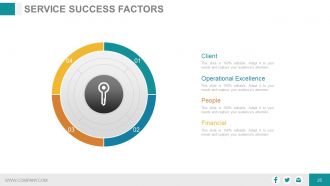
Slide 25: This slide shows Service Success Factors displaying- People, Financial, Client, and Operational Excellence aspects.
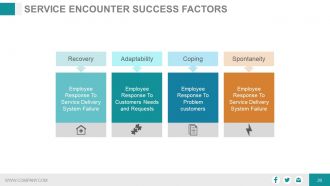
Slide 26: This slide showcases Service Encounter Success Factors divided into- Recovery: Employee Response To Service Delivery System Failure, Adaptability: Employee Response To Customers Needs and Requests, Coping: Employee Response To Problem customers, Spontaneity: Employee Response To Service Delivery System Failure.
Slide 27: This slide displays Service Resource Planning in tabular form.
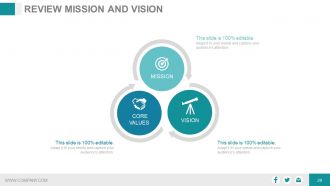
Slide 28: This slide showcases Review Mission And Vision with- Core Values, Vision, Mission.
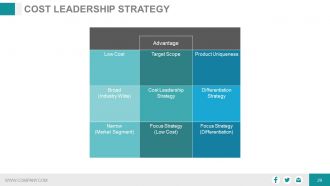
Slide 29: This slide shows Cost Leadership Strategy in matrix form.
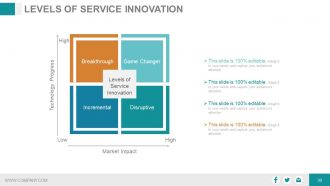
Slide 30: This slide shows Levels Of Service Innovation displaying- Technology Progress, Market Impact with: Breakthrough, Game Changer, Disruptive, Incremental, Levels of Service Innovation.
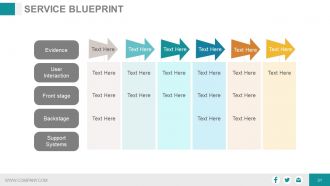
Slide 31: This slide showcass Service Blueprint with- Evidence User Interaction Front stage Backstage Support Systemsn as main factors to display.
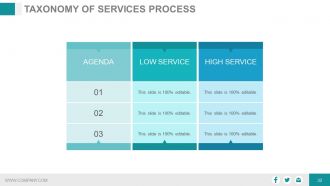
Slide 32: This slide presents Taxonomy Of Services Process in table form.
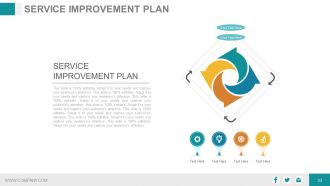
Slide 33: This slide shows Service Improvement Plan.
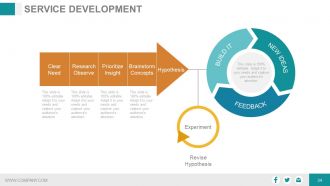
Slide 34: This slide showcases Service Development displaying- Experiment, Revise Hypothesis, Clear Need, Research Observe, Prioritize Insight, Brainstorm Concepts, Hypothesis.
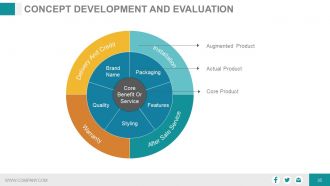
Slide 35: This slide shows Concept Development And Evaluation showing- After Sale Service, Delivery And Credit, Warranty, Installation, Packaging, Features, Styling, Quality, Brand Name, Core Benefit Or Service, Augmented Product, Actual Product, Core Product.
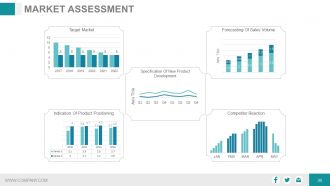
Slide 36: This slide presents Market Assessment in graph form displaying- Target Market, Indication Of Product Positioning, Competitor Reaction, Forecasting Of Sales Volume, Specification Of New Product Development.
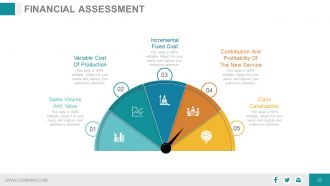
Slide 37: This slide showcases Financial Assessment displaying- Claim Canalization, Sales Volume And Value, Incremental Fixed Cost, Variable Cost Of Production, Contribution And Profitability Of The New Service.
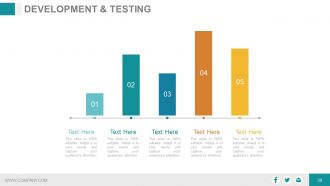
Slide 38: This slide shows Development & Testing in graph form.
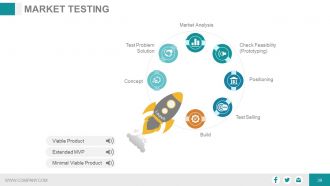
Slide 39: This slide shows Market Testing with- Viable Product, Extended MVP, Minimal Viable Product, Test Problem Solution, Market Analysis, Check Feasibility, (Prototyping), Positioning, Test Selling, Concept, Build, Launch.
Slide 40: This slide showcases Post Introduction Evaluation in roadmap form.
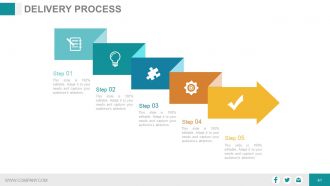
Slide 41: This slide showcases Delivery Process in creative arrow form.
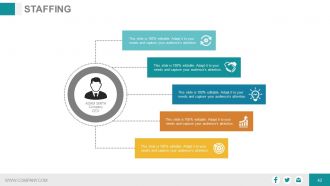
Slide 42: This slide showcases STAFFING. Present staffing criteria etc. here.
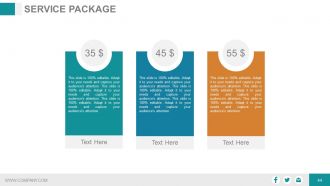
Slide 43: This slide shows Service Package. State relative facts, information etc. here.
Slide 44: This slide shows Service Package. State relative facts, information etc. here.
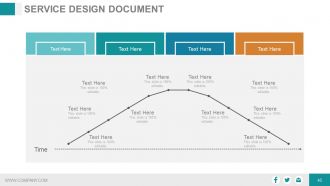
Slide 45: This slide shows Service Design Document in graph form.
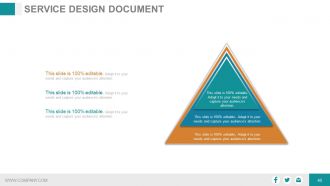
Slide 46: This slide shows Service Design Document in pyramid form.
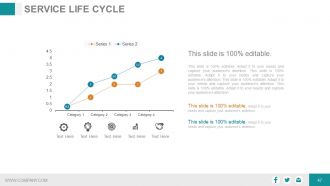
Slide 47: This slide shows Service Life Cycle in graph form.
Slide 48: This is a Quotes slide to convey company messages, beliefs etc. You can change the slide contents as per need.
Slide 49: This is a Thank You slide with Address# street number, city, state, Contact Numbers, Email Address.
Planning a flawless new service launch powerpoint presentation slides with all 49 slides:
Fix flaws immediately with our Planning A Flawless New Service Launch Complete Powerpoint Deck With Slides. Halt the further build up of errors.







FAQs for Planning a flawless new service launch
A new service launch presentation should include market opportunity analysis, service differentiation and unique value proposition, target customer segments, implementation timeline, pricing strategy, and expected ROI projections. These elements work together by demonstrating market need, showcasing competitive advantage, and outlining clear execution plans, with many organizations finding that comprehensive presentations significantly enhance stakeholder buy-in and launch success rates.
Storytelling techniques enhance new service launch presentations by creating emotional connections, simplifying complex concepts, and making benefits memorable through relatable narratives. These approaches enable presenters to demonstrate real-world problem-solving scenarios, showcase customer transformation journeys, and build compelling value propositions, with many organizations finding that narrative-driven launches generate stronger stakeholder engagement and accelerate market adoption.
Best practices for designing visually appealing slides include using consistent color schemes, incorporating high-quality visuals, maintaining clear typography, applying whitespace strategically, and ensuring visual hierarchy through size and placement. These design elements enhance audience engagement by improving readability, reducing cognitive load, and reinforcing key messages, with many organizations finding that well-designed presentations significantly increase stakeholder buy-in and presentation effectiveness.
Tailoring service launch presentations involves segmenting content by audience priorities, pain points, technical depth, and decision-making authority. Financial stakeholders focus on ROI projections and market potential, while technical teams examine implementation details and operational requirements, with many organizations finding that customized messaging for each segment significantly enhances engagement and accelerates adoption decisions.
Key metrics should include market size and penetration potential, projected revenue growth, customer acquisition costs, competitive differentiation factors, and operational efficiency gains. These indicators demonstrate business viability by showcasing scalability, profitability timelines, and strategic positioning, with many organizations finding that combining financial projections with market validation data ultimately delivers stronger stakeholder confidence and investment support.
Common pitfalls include overwhelming audiences with technical details, failing to clearly articulate value propositions, neglecting competitive differentiation, and lacking concrete implementation timelines. These presentation challenges can undermine launch success by confusing stakeholders, diluting key messages, and reducing investor confidence, with many organizations finding that focused, outcome-driven presentations significantly enhance market reception and strategic buy-in.
Customer testimonials significantly enhance presentation credibility by providing third-party validation, authentic success stories, real-world proof of concept, and social proof that resonates with potential clients. These powerful endorsements demonstrate tangible results across various industries, with many organizations finding that incorporating specific customer feedback, quantifiable outcomes, and relatable experiences ultimately builds trust and accelerates decision-making processes.
Competitive analysis establishes market positioning, identifies differentiation opportunities, validates pricing strategies, and demonstrates market gaps your service addresses. Through comprehensive competitor research, businesses can articulate unique value propositions, anticipate market challenges, and showcase competitive advantages, with many organizations finding that thorough analysis strengthens investor confidence and strategic positioning.
Demonstrate value proposition through clear problem-solution mapping, quantified benefits like cost savings or efficiency gains, and compelling customer testimonials or case studies. Visual comparisons with competitors, ROI projections, and real-world implementation scenarios help stakeholders understand tangible outcomes, while interactive demonstrations showcase practical applications, ultimately building confidence in the service's strategic advantage and market potential.
Visual aids for service launch presentations include infographics, flowcharts, comparison tables, process diagrams, and interactive dashboards that break down complex concepts into digestible formats. These tools enhance audience comprehension by transforming dense technical specifications, pricing structures, and implementation timelines into clear visual narratives, ultimately enabling faster stakeholder buy-in and more effective communication across diverse business functions.
Creating an engaging call to action requires clear next steps, compelling urgency, and specific value propositions that resonate with your audience's needs and business objectives. Use action-oriented language like "Schedule your consultation today," pair it with limited-time incentives or exclusive access offers, and provide multiple contact methods, with many service providers finding that personalized follow-up commitments and concrete timelines significantly increase audience response rates and conversion success.
Managing audience questions during new service launch presentations involves setting clear Q&A boundaries, acknowledging questions immediately while parking complex ones for follow-up, and using bridging techniques to redirect off-topic inquiries back to key service benefits. These approaches enable presenters to maintain momentum, address stakeholder concerns effectively, and ensure comprehensive coverage of launch objectives, with many organizations finding that structured question management ultimately enhances audience engagement and service positioning.
Leveraging social media platforms enhances service launch presentation reach through targeted advertising, influencer partnerships, live streaming capabilities, and strategic content distribution across multiple channels. These approaches streamline audience engagement by creating pre-launch buzz, facilitating real-time interaction during presentations, and extending post-launch discussions, with many companies finding that integrated social campaigns deliver significantly broader market penetration and accelerated customer acquisition.
Rehearsing your new service launch presentation multiple times enhances delivery confidence, refines messaging clarity, identifies potential technical issues, improves timing precision, and strengthens audience engagement strategies. Through repeated practice sessions, organizations streamline their narrative flow, anticipate stakeholder questions more effectively, and ultimately deliver more compelling launches that generate stronger market interest and accelerated customer adoption.
Feedback from initial presentations enables refinement through analyzing audience engagement patterns, identifying unclear messaging elements, and assessing persuasiveness of value propositions. Organizations typically streamline content flow, enhance visual storytelling, and strengthen competitive positioning based on stakeholder responses, with many finding that iterative improvements significantly boost conversion rates and accelerate market adoption timelines.
-
Great product with effective design. Helped a lot in our corporate presentations. Easy to edit and stunning visuals.
-
Easily Understandable slides.