


Strategies for new product launch powerpoint presentation slides




Try Before you Buy Download Free Sample Product
 Impress Your
 Audience
 100%
100% Editable
 Save Hours
 of Time


Every organization makes a rough plan before actually launching the product in the market. And to beat the current level of cut-throat competition, it becomes imperative to be equipped with such tools that help you market your product better. Here is a competently designed Strategies for New Product Launch template that assists you in creating tactics to bring a new product to the market. Conducting a comparative analysis of your competitors market share has become easy with this PPT slide incorporating a customizable pie chart. Find out the need for launching the new product and introduce your product by giving a brief overview of the same with the help of this readily available PowerPoint template. Address the product lifecycle stages and highlight the concept of market segmentation, targeting, and positioning. This slide will also help you frame a product launch event and the marketing tactics used for its promotion. Throw some light on the challenges faced while launching the product and make your audience aware of the post-launch measures. Customize this 100 percent editable template now.
People who downloaded this PowerPoint presentation also viewed the following :
Content of this Powerpoint Presentation
Slide 1: This slide introduces Strategies for New Product Launch. State Your Company Name and begin.
Slide 2: This slide shows Agenda for Strategies for New Product Launch.
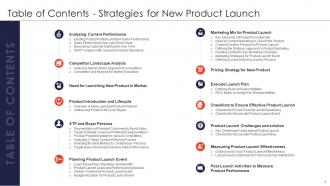
Slide 3: This slide presents Table of Content for the presentation.
Slide 4: This slide shows title for topics that are to be covered next in the template.
Slide 5: This slide displays existing product portfolio with annual sales figures and top five performing products offered by the company.
Slide 6: This slide represents Sales Performance Over Last Three Years.
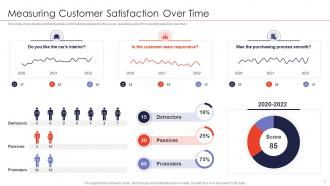
Slide 7: This slide shows dashboard that illustrates informational statistics for the survey questions asked from existing valuable customers.
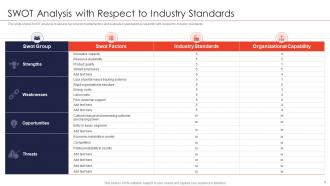
Slide 8: This slide presents SWOT Analysis with Respect to Industry Standards.
Slide 9: This slide shows Table of Content for the presentation.
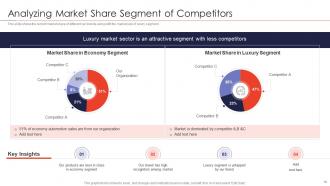
Slide 10: This slide displays the current market share of different car brands along with the market size of luxury segment.
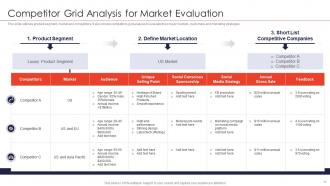
Slide 11: This slide represents Competitor Grid Analysis for Market Evaluation.
Slide 12: This slide shows Table of Content highlighting Need for Launching New Product in Market.
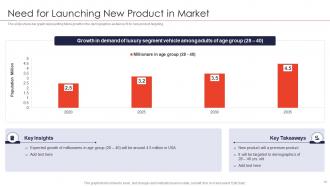
Slide 13: This slide presents bar graph representing future growth in the demographics audience, fit for new product targeting.
Slide 14: This slide shows Table of Content highlighting Product Introduction and Lifecycle.
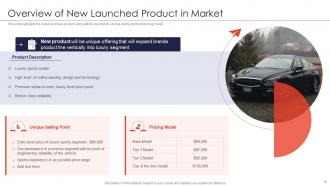
Slide 15: This slide highlights the overview of new product along with its description, unique selling point and pricing model.
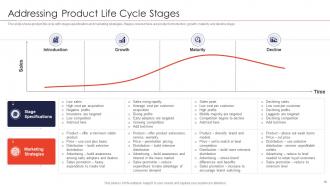
Slide 16: This slide represents product life cycle with stage specification and marketing strategies.
Slide 17: This slide shows Table of Content highlighting STP and Buyer Persona.
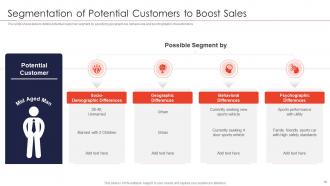
Slide 18: This slide presents Segmentation of Potential Customers to Boost Sales.
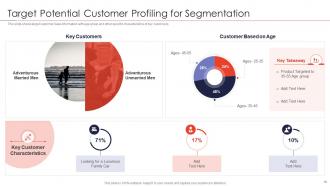
Slide 19: This slide shows target customer base information with age group and other specific characteristics of key customers.
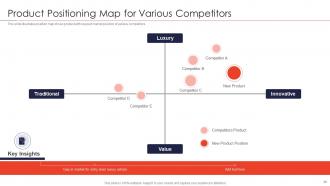
Slide 20: This slide displays Product Positioning Map for Various Competitors.
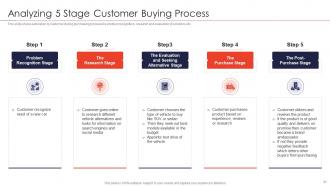
Slide 21: This slide represents sets taken by customer during purchasing process like problem recognition, research and evaluation of solutions etc.
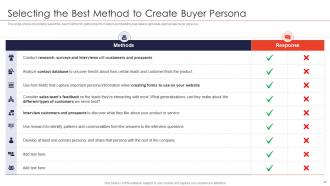
Slide 22: This slide shows Selecting the Best Method to Create Buyer Persona.
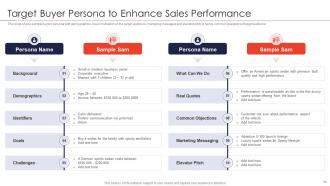
Slide 23: This slide presents Target Buyer Persona to Enhance Sales Performance.
Slide 24: This slide shows Table of Content highlighting Planning Product Launch Event.
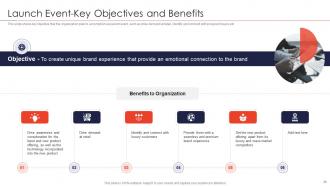
Slide 25: This slide displays key objective that the organization plan to accomplish via launch event.
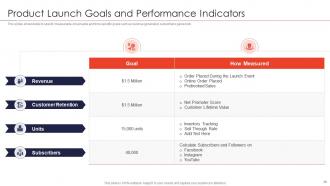
Slide 26: This slide represents Product Launch Goals and Performance Indicators.
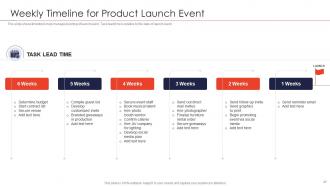
Slide 27: This slide shows timeline to help manage planning of launch event.
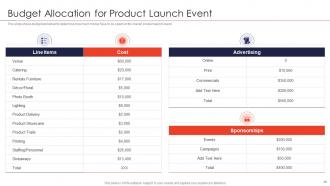
Slide 28: This slide presents budget worksheet to determine how much money have to be spent on the overall product launch event.
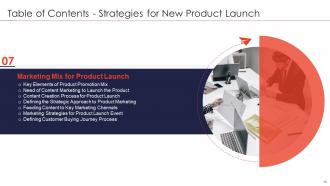
Slide 29: This slide shows Table of Content highlighting Marketing Mix for Product Launch.
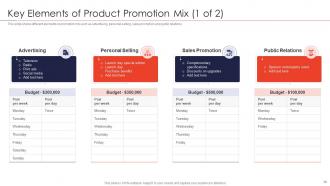
Slide 30: This slide displays different elements in promotion mix such as advertising, personal selling, etc.
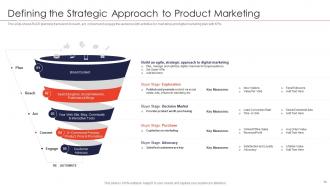
Slide 31: This slide represents RACE planning framework to reach, act, convert and engage the audience with activities.
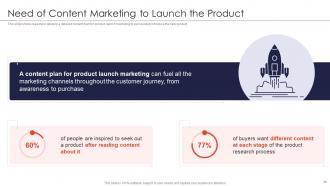
Slide 32: This slide shows reasons to develop a detailed content plan for product launch marketing.
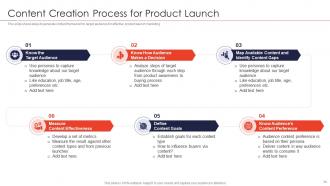
Slide 33: This slide presents steps to generate content framework to target audience for effective product launch marketing.
Slide 34: This slide shows Defining the Strategic Approach to Product Marketing.
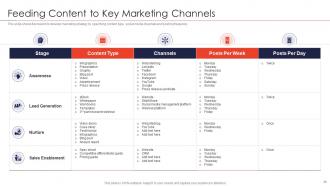
Slide 35: This slide displays framework to develop marketing strategy by specifying content type.
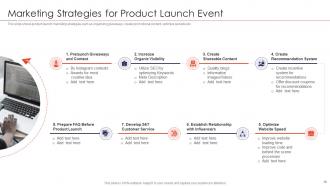
Slide 36: This slide represents product launch marketing strategies such as organizing giveaways, create promotional content, etc.
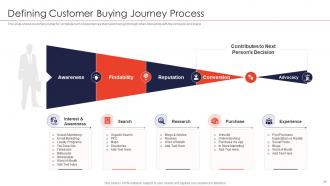
Slide 37: This slide shows customer journey for complete sum of experiences that customers go through.
Slide 38: This slide presents Table of Content highlighting Pricing Strategy for New Product.
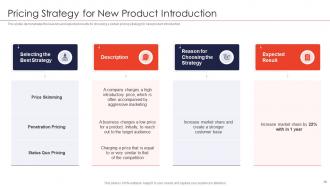
Slide 39: This slides demonstrates the reasons and expected results for choosing a certain pricing strategy for new product introduction.
Slide 40: This slide displays Table of Content highlighting Execute Launch Plan.
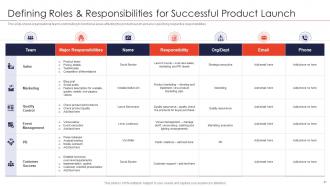
Slide 41: This slide represents Defining Roles & Responsibilities for Successful Product Launch.
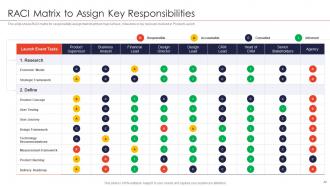
Slide 42: This slide shows RACI matrix for responsibility assignment chart that map out task, milestone or key decision, etc.
Slide 43: This slide presents Table of Content highlighting Checklists to Ensure Effective Product Launch.
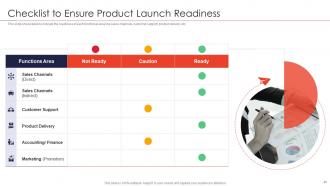
Slide 44: This slide shows table to indicate the readiness of each functional area like sales channels, customer support, etc.
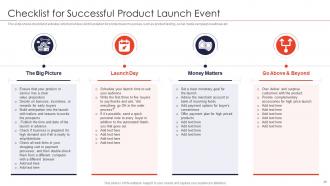
Slide 45: This slide displays checklist of activates which provides solid foundation for product launch success.
Slide 46: This slide represents Table of Content highlighting Product Launch Challenges and Solution.
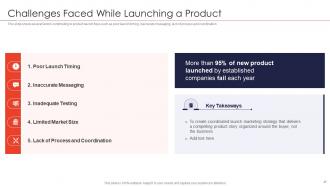
Slide 47: This slide shows Challenges Faced while Launching a Product.
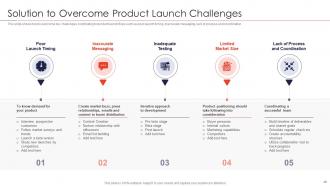
Slide 48: This slide presents Solution to Overcome Product Launch Challenges.
Slide 49: This slide shows Table of Content highlighting Measuring Product Launch Effectiveness.
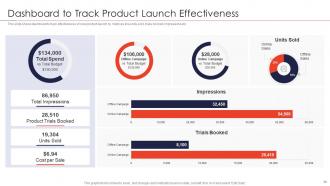
Slide 50: This slide displays Dashboard to Track Product Launch Effectiveness.
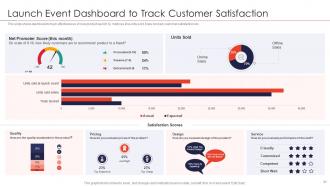
Slide 51: This slide represents Launch Event Dashboard to Track Customer Satisfaction.
Slide 52: This slide shows Table of Content highlighting Post-Launch Activities to Measure Product Performance.
Slide 53: This slide presents list of post launch activities to measure launch effectiveness, prospect nurturing and customer retention.
Slide 54: This slide displays Icons for Strategies for New Product Launch.
Slide 55: This slide is titled as Additional Slides for moving forward.
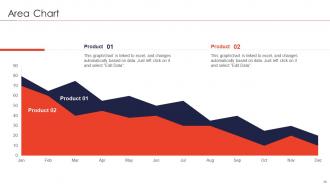
Slide 56: This slide depicts Area chart with two products comparison.
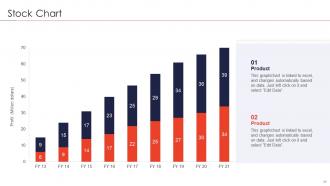
Slide 57: This slide presents Stock chart with two products comparison.
Slide 58: This is About Us slide to show company specifications etc.
Slide 59: This slide shows Post It Notes. Post your important notes here.
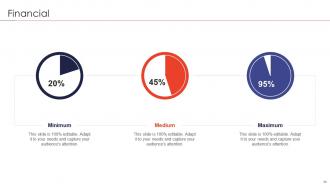
Slide 60: This is a Financial slide. Show your finance related stuff here.
Slide 61: This is an Idea Generation slide to state a new idea or highlight information, specifications etc.
Slide 62: This is a Comparison slide to state comparison between commodities, entities etc.
Slide 63: This slide contains Puzzle with related icons and text.
Slide 64: This is a Thank You slide with address, contact numbers and email address.
Strategies for new product launch powerpoint presentation slides with all 69 slides:
Use our Strategies For New Product Launch Powerpoint Presentation Slides to effectively help you save your valuable time. They are readymade to fit into any presentation structure.













FAQs for Strategies for new product launch
Three things will make or break your launch: knowing your audience, nailing your message, and getting the timing right. Really dig into who you're helping and what pain point you're solving. Most launches bomb because the messaging is way too fuzzy - be crystal clear about why people should care. Coordinate with your whole team so marketing, sales, and product are all on the same page for launch day. Oh, and definitely do a soft launch first to catch any issues. Map out your channels ahead of time and have your success metrics ready to go. Sounds like a lot but it's worth it!
Dude, market research is basically your cheat sheet for everything. Who's actually gonna buy this thing? What price won't make them laugh at you? Which social platforms they're scrolling through at 2am - you know what I mean. You'll figure out what features they actually care about vs the cool stuff you think matters. Plus it shows you competitors doing things you never thought of. I always tell people to survey current customers first - they're brutally honest, which honestly hurts but helps. Then branch out to test your hunches before dropping serious money on launch plans.
Honestly, customer feedback makes or breaks your launch. I'd start collecting it way before you're ready to go live - like during development when you can still pivot. Use what people tell you to nail down your messaging and figure out which features actually matter to them. Skip this step and you're basically flying blind (learned that the hard way). Their input shows you where to focus your marketing and which channels might work best. Keep asking questions right up until launch day. Seriously, the teams that listen early are the ones that don't crash and burn.
Dude, people remember stories way better than boring feature lists. Like, nobody cares about specs - they want to know how your product actually fixes their life. I've watched so many launches bomb because they're basically just tech demos (yawn). What works? Start with some problem your customers actually deal with. Then show how your product swoops in and saves the day. Or tell the story behind why you built it in the first place. When people can picture themselves in that story, they get hooked. Way more effective than rattling off what it does.
Start building hype about 6-8 weeks out. Post behind-the-scenes stuff and sneak peeks on social - people eat that up. Email waitlists are clutch because everyone wants to feel special with "early access." If you've got budget, influencers are honestly where it's at. They'll move product better than most ads. Your current customers? They're basically free marketing - get them hyped first. Oh, and definitely line up some PR for launch day. Those final countdown posts work too, though they're kinda cheesy but whatever, they convert.
Honestly, start building buzz like 4-6 weeks out with teasers and behind-the-scenes stuff - that pre-launch phase is way more crucial than most people think. Make a content calendar covering before, during, and after your launch. Each platform needs different vibes: Instagram Stories for quick hits, LinkedIn if you want to sound smart, TikTok for demos (assuming your people are actually on there). Oh, and definitely reply to comments - makes a huge difference. Track real metrics that matter, not just likes and follows. Those vanity numbers look pretty but they won't pay your bills.
Honestly, the worst mistake is launching without knowing who actually wants your product. Teams get hyped and skip the customer research part completely - huge mistake. Don't overpromise features either because customers will remember every single thing you said. Marketing and sales being on different pages kills launches too. Oh, and plan your support before you go live, not after when everything's on fire. I'd do a small soft launch first to work out the kinks. Trust me, better to find problems with 100 users than 10,000.
Track the obvious stuff first - sales, conversion rates, market share in those early weeks. But honestly? The soft metrics are where you'll really learn something. Customer feedback and social media chatter tell you way more than numbers sometimes. Support tickets too - if you're getting flooded, that's a red flag. Oh, and check if you actually hit your timeline and budget because that matters for next time. I'd probably set up some kind of dashboard and obsess over it weekly for the first month, then chill to monthly reviews.
Honestly, pricing can make or break everything. Set it too high and you're basically telling most people "this isn't for you" - but you'll look premium. Too low? People assume it sucks, which is so backwards but whatever. Higher prices give you more cash for marketing though, so there's that. Are you trying to grab everyone fast or just the early adopters who'll pay anything? That changes the whole game. I'd definitely test a few different price points with some focus groups first. Way better than guessing and being totally wrong later.
Honestly, getting everyone talking early is huge - like 8-10 weeks before launch. Your marketing team will actually create stuff sales can use instead of pretty fluff nobody wants. Product gets real feedback from people who talk to customers daily, and support won't be caught totally off guard when things go live. I'm telling you, those weekly cross-team meetings are worth the hassle. Way better than having marketing promise one thing while product delivers something completely different. Catches problems before they blow up at launch too.
Dude, templates are a lifesaver. I wasted so many hours reformatting slides before I figured this out. You'll have consistent messaging whether you're talking to execs or the sales team, which honestly matters more than people think. No more scrambling to remember if you included competitive analysis when prepping for some random investor meeting. Your whole team stays on the same page too. Just build one solid template and tweak the content for different audiences. Trust me on this - it's one of those things that seems obvious after you start doing it.
Honestly, turning boring product specs into actual stories is a game changer. People connect with narratives way better than feature lists - it's just how our brains work. Show the customer's problem, then how your product fixes it. Before/after scenarios work great, or those journey maps that walk through the whole experience. I've seen stakeholders zone out during chart presentations, but tell them a story with visuals? They're hooked. Complex stuff suddenly makes sense when you frame it as someone's journey from frustration to success. Stories stick around long after numbers fade.
Track your user numbers first - how many sign up and actually stick around after that first week. Revenue per user matters way more than total revenue honestly, especially early on. Feature usage tells you what people actually care about versus what you think they want. Customer satisfaction and support tickets are weirdly good predictors of who's about to bail. Oh, and activation rates - like how many people who create accounts actually do the key thing your product does. Set up something you can check weekly so you're not flying blind. Business metrics are boring but they'll save your ass.
So basically, find people who actually vibe with your brand and have audiences that match your target market. Give them early access so they can make genuine content - unboxing vids, reviews, tutorials, whatever feels natural. Timing's everything though - you want their posts going live right when you launch to create that initial buzz. Honestly, micro-influencers are way better than big celebrities. Their engagement rates crush the mega-stars and won't destroy your budget. Think of them as your word-of-mouth on steroids. Just make sure they're not obviously faking the enthusiasm, you know?
Dude, you absolutely need a backup plan ready before launch day. Trust me on this - something will definitely go wrong because it always does. Build extra time into your schedule and figure out who makes the big calls when things get messy. Have your crisis messaging ready for your team AND customers. Daily check-ins during launch week are clutch so you can switch gears fast. Also, pick one person to be your main problem-solver who handles all the chaos. Oh, and don't forget backup options for the critical stuff - your supply chain, tech setup, marketing channels. Stay flexible because launches are basically controlled disasters waiting to happen.
-
Qualitative and comprehensive slides.
-
Use of icon with content is very relateable, informative and appealing.
-
Perfect template with attractive color combination.