

New product development process and strategy powerpoint presentation slides





Try Before you Buy Download Free Sample Product
 Impress Your
 Audience
 100%
100% Editable
 Save Hours
 of Time


If you have a brilliant idea for the new product launch our new product development process and strategy PowerPoint Presentation is a promising presentation that can portray your thoughts convincingly. When you download this product management PPT slide, you get various designs such as product outline, idea screening, new product introduction, detailed overview, understanding customer needs, internal & external sources of new product, roadmap, category planning, porters five forces model, product lifecycle, introduction stage, growth stage, maturity stage, decline stage, tools & techniques, BCG matrix, Ansoff matrix, empathy map, Kano map, market segmentation, geographic, demographic psychographic, & behavioral segmentation and many more. The new product launch PowerPoint templates can be utilized for few topics like entering a new market, NPD process, product development, product launch, launch strategy, market entry strategy, new product introduction and product marketing. Our New product development process and strategy PPT diagram can make your presentation interesting and captivating. Send all fears flying with our New Product Development Process And Strategy Powerpoint Presentation Slides. They can handle all emerging doubts.
People who downloaded this PowerPoint presentation also viewed the following :
Content of this Powerpoint Presentation
Slide 1: This slide introduces New Product Development Process and Strategy. State Your Company Name and get started.
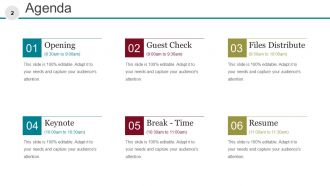
Slide 2: This is an Agenda slide. Present your agendas here.
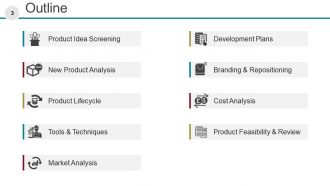
Slide 3: This slide presents an Outline for New Product Development.
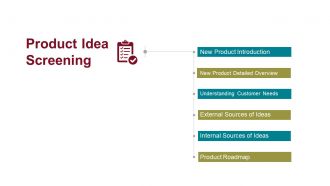
Slide 4: This slide presents Product Idea Screening with- New Product Introduction, New Product Detailed Overview, External Sources of Ideas, Internal Sources of Ideas, Understanding Customer Needs, Product Roadmap.
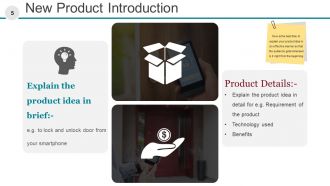
Slide 5: This slide shows New Product Introduction with- Technology used, Benefits, Product Details.
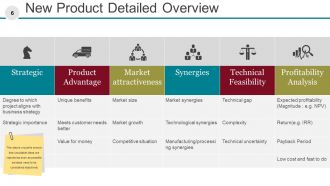
Slide 6: This slide presents New Product Detailed Overview. This step is crucial to ensure that unsuitable ideas are rejected as soon as possible as Ideas need to be considered objectively.
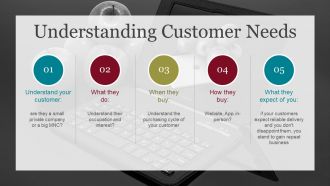
Slide 7: This slide presents Understanding Customer Needs.
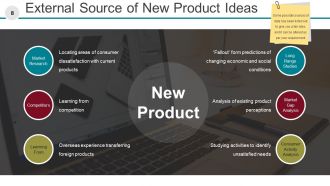
Slide 8: This slide showcases External Source of New Product Ideas such as- Consumer Activity Analysis, Market Gap Analysis Competitors, Long Range Studies, Learning From, Market Research.
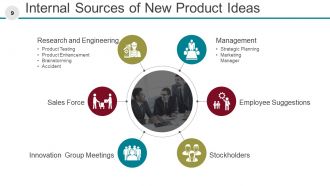
Slide 9: This slide shows Internal Sources of New Product Ideas with the following subheadings- Sales Force, Innovation Group Meetings, Stockholders, Employee Suggestions, Research and Engineering: Product Testing, Product Enhancement, Brainstorming, Management: Strategic Planning, Marketing Manager.
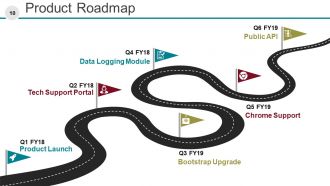
Slide 10: This slide presents a Product Roadmap showing- Product Launch, Bootstrap Upgrade, Data Logging Module, Chrome Support, Public API.
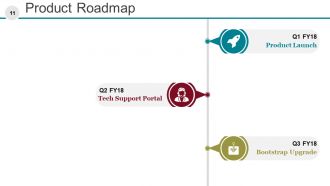
Slide 11: This slide also presents a Product Roadmap showing- Product Launch, Bootstrap Upgrade, Data Logging Module, Chrome Support, Public API.
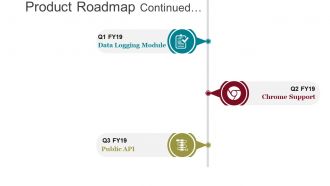
Slide 12: This slide presents a Product Roadmap showing- Finish, Data Logging Module, Chrome Support, Public API.
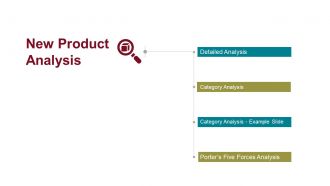
Slide 13: This slide shows New Product Analysis categorized as- Detailed Analysis, Category Analysis, Porter’s Five Forces Analysis, Category Analysis - Example Slide.
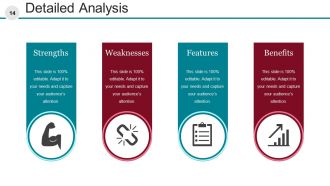
Slide 14: This slide showcases a Detailed Analysis displaying- Strengths, Weakness, Features, Benefits.
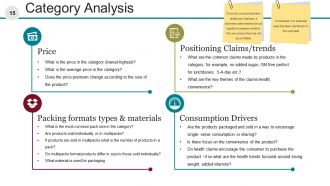
Slide 15: This slide shows Category Analysis with the following subheadings- Packing formats types & materials: What is the most common pack size in the category? Are products sold individually or in multipacks? If products are sold in multipacks what is the number of products in a pack? Do multipacks format products differ in size to those sold individually? What material is used for packaging. Consumption Drivers: Are the products packaged and sold in a way to encourage single- serve consumption or sharing? Is there focus on the convenience of the product? Do health claims encourage the consumer to purchase the product –if so what are the health trends focused around losing weight, added vitamins? Price: What is the price in the category (lowest-highest)? What is the average price in the category? Does the price premium change according to the size of the product? Positioning Claims/trends: What are the common claims made by products in the category- for example, no added sugar, GM free perfect for lunchboxes, 5-A-day etc.? What are the key themes of the claims-health, convenience? Once the concept has been tested and finalized, a business case needs to be put together to assess whether the new product/service will be profitable.
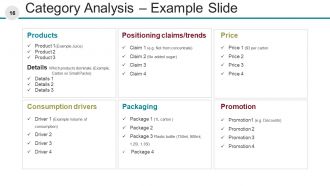
Slide 16: This slide shows Category Analysis- Example Slide with the following subheadings- Products, Details, Positioning claims/trends, Claim, Price, Consumption drivers, Packaging, Promotion.
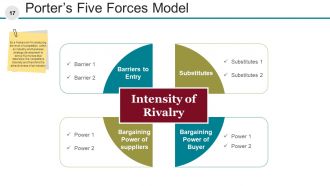
Slide 17: This slide presents Porter’s Five Forces Model displaying- Bargaining Power of suppliers, Bargaining Power of Buyer, Barriers to Entry, Substitutes as Intensity of Rivalry.
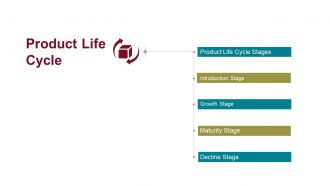
Slide 18: This slide showcases Product Life Cycle displaying- Repositioning a Product, Introduction Stage, Maturity Stage, Decline Stage, Growth Stage.
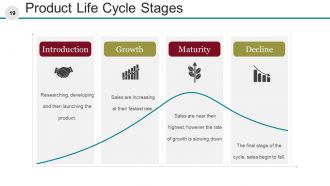
Slide 19: This slide presents Product Life Cycle Stages crest grpah showing- Introduction, Growth, Maturity, Decline.
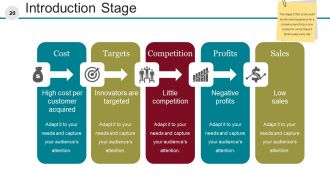
Slide 20: This slide shows the Introduction Stage with the following subheadings- Cost: High cost per customer acquired Targets: Innovators are targeted Competition: Little competition Profits: Negative profits Sales: Low sales This stage of the cycle could be the most expensive for a company launching a new product in which these 5 factors play a key role.
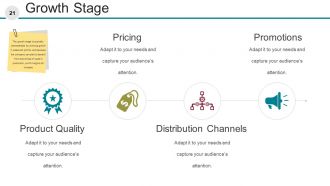
Slide 21: This slide shows the Growth Stage consisting of- Pricing, Distribution Channels, Product Quality, Promotions. The growth stage is typically characterized by a strong growth in sales and profits, and because the company can start to benefit from economies of scale in production, profit margins will increase.
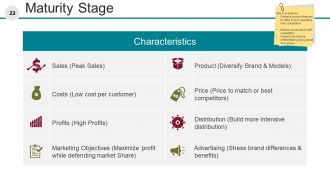
Slide 22: This slide shows Maturity Stage with- Enhance product features to make it more appealing than competitors, Reduce prices due to stiff competition, Promote the factors differentiating your product from others.
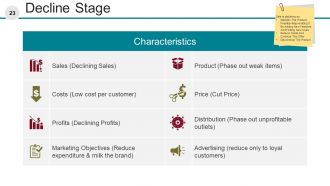
Slide 23: This slide presents the Decline Stage comprising of- Maintain The Product, Possibly Rejuvenating It By Adding New Features And Finding New Uses, Reduce Costs And Continue The Offer, Discontinue The Product.
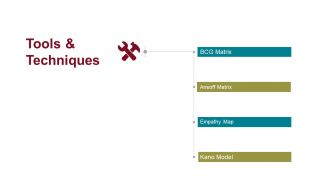
Slide 24: This slide presents the Tools and Techniques- Listed ones are- BCG Matrix, Ansoff Matrix, Kano Model, Empathy Map.
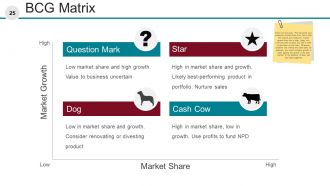
Slide 25: This slide shows a BCG Matrix in terms of- Market Share and Market Growth.
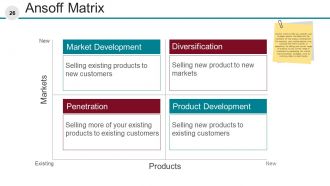
Slide 26: This slide shows an Ansoff Matrix showing- Market Development: Selling existing products to new customers Penetration: Selling more of your existing products to existing customers Diversification: Selling new product to new markets Product Development: Selling new products to existing customers
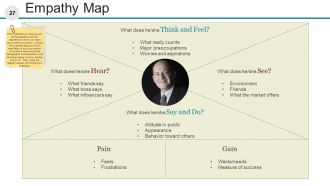
Slide 27: This slide shows an Empathy Map.
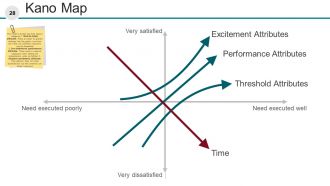
Slide 28: This slide shows a Kano Map.
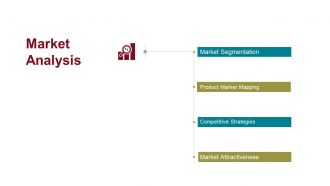
Slide 29: This slide presents Market Analysis with the following points- Market Segmentation, Product Market Mapping, Market Attractiveness, Competitive Strategies.
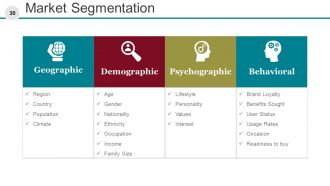
Slide 30: This slide showcases Market Segmentation divided as- Geographic: Region, Country, Population, Climate. Demographic: Age, Gender, Nationality, Ethnicity, Occupation, Income, Family Size. Psychographic: Lifestyle, Personality, Values, Interest. Behavioral: Brand Loyalty, Benefits Sought, User Status, Usage Rates, Occasion, Readiness to buy.
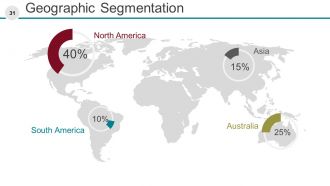
Slide 31: This slide showcases Geographic Segmentation on a world map image.
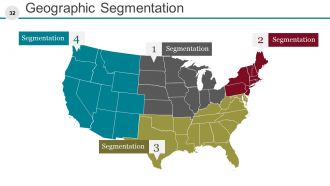
Slide 32: This slide showcases Geographic Segmentation on a US map image.
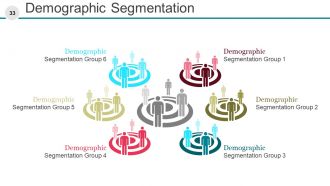
Slide 33: This slide showcases Demographic Segmentation with different segements to fill information for.
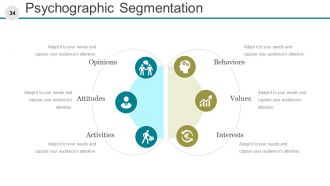
Slide 34: This slide presents Psychographic Segmentation showing- Opinions, Attitudes, Activities, Behaviors, Values, Interests.
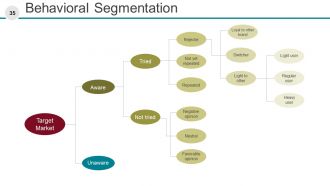
Slide 35: This slide showcases Behavioral Segmentation in hierarchy form consisting of- Rejecter, Not yet repeated, Repeated, Target Market, Aware, Unaware, Light to other, Switcher, Loyal to other brand, Light user, Regular user, Heavy user, Negative opinion, Neutral, Favorable opinion, Not tried, Tried.
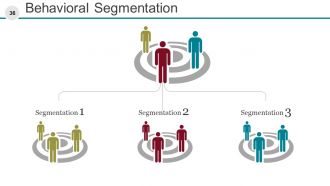
Slide 36: This slide displays Behavioral Segmentation with different segments to be shown.
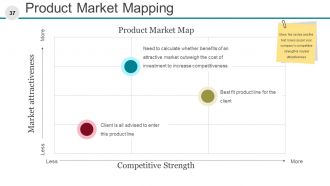
Slide 37: This slide presents Product Market Mapping in terms of Market Attractiveness and Competitive Strength.
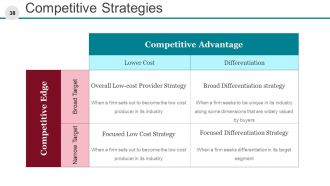
Slide 38: This slide displays Competitive Strategies matrix showing- Broad Differentiation strategy, Focused Low Cost Strategy, Overall Low-cost Provider Strategy, Focused Differentiation Strategy in terms of Competitive Advantage and Competitive Edge.
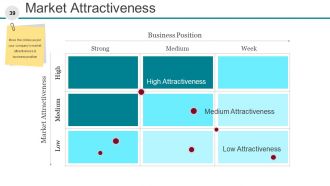
Slide 39: This is a Market Attractiveness risk matrix showing- Business Position, Market Attractiveness, High Attractiveness, Medium Attractiveness, Low Attractiveness.
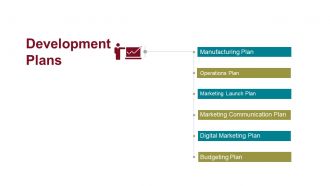
Slide 40: This slide shows Development Plans consisting of- Manufacturing Plan, Operations Plan, Marketing Communication Plan, Digital Marketing Plan, Marketing Launch Plan, Budgeting Plan.
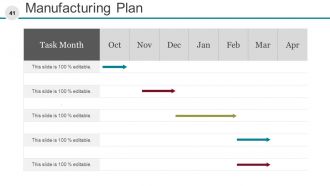
Slide 41: This slide shows Manufacturing Plan in gantt chart form.
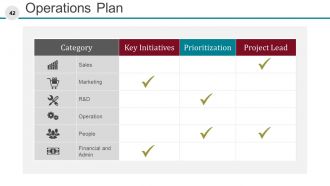
Slide 42: This slide presents Operation Plan table.
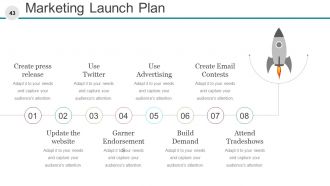
Slide 43: This slide presents Marketing Launch Plan showcasing- Update the website, Create press release, Garner endorsements, Use Twitter, Build Demand, Use Advertising, Attend Tradeshows, Create Email Contests.
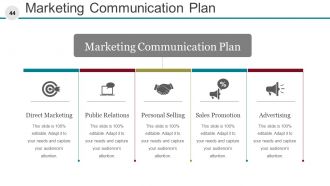
Slide 44: This slide presents a Marketing Communication Plan consisting of- Direct Marketing, Personal Selling, Sales Promotion, Advertising, Public Relations.
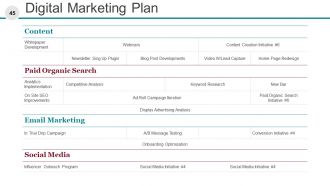
Slide 45: This slide showcases a Digital Marketing Plan.
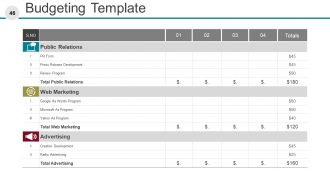
Slide 46: This slide showcases a Budgeting Template.
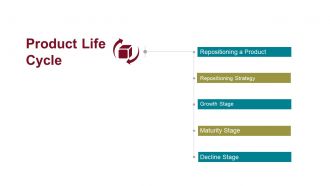
Slide 47: This slide showcases Product Lifecyle with- Repositioning a Product, Repositioning Strategy, Maturity Stage, Decline Stage, Growth Stage.
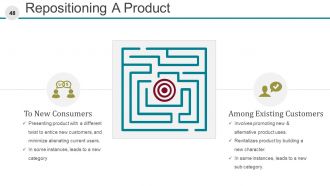
Slide 48: This slide shows Repositioning A Product maze with- To new Consumers: Presenting product with a different twist to entice new customers, and minimize alienating current users. In some instances, leads to a new category Among Existing Customers: Involves promoting new & alternative product uses. Revitalizes product by building a new character. In same instances, leads to a new sub category.
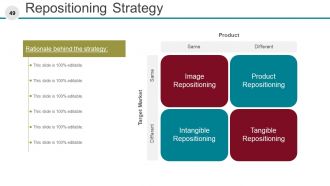
Slide 49: This slide showcases Repositioning Strategy matrix with- Image Repositioning, Intangible Repositioning, Tangible Repositioning, Product Repositioning.
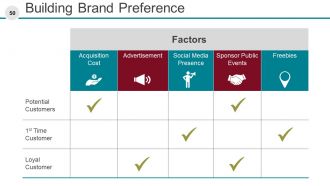
Slide 50: This slide presents Building Brand Preference in tabular form.
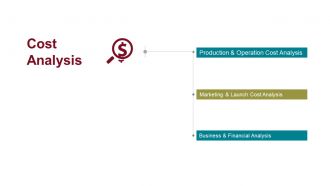
Slide 51: This slide shows Cost Analysis consisting of- Production & Operation Cost Analysis, Marketing & Launch Cost Analysis, Business & Financial Analysis.
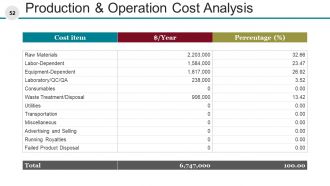
Slide 52: This slide showcases Production & Operation Cost Analysis in tabular form.
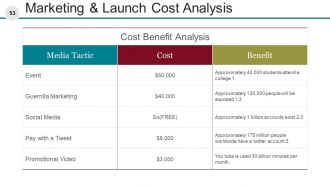
Slide 53: This slide shows Marketing & Launch Cost Analysis in tabular form.
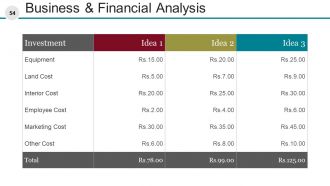
Slide 54: This slide displays Business & Financial Analysis in tabular form.
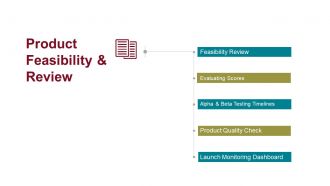
Slide 55: This slide showcases Product Feasibility & Review with- Feasibility Review, Evaluating Scores, Product Quality Check, Launch Monitoring Dashboard, Alpha & Beta Testing Timelines.
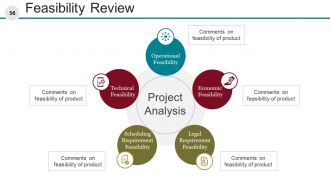
Slide 56: This slide showcases Feasibility Review with- Comments on Feasibility of product, Scheduling Requirement Feasibility, Legal Requirement Feasibility, Economic Feasibility, Operational Feasibility, Technical Feasibility as Project Analysis.
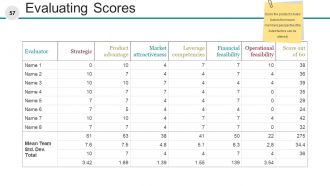
Slide 57: This slide presents Evaluating Scores. Score the product’s listed factors from team members perspective (the listed factors can be altered).
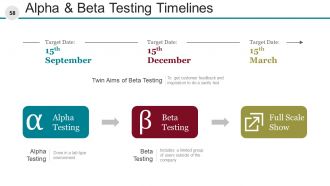
Slide 58: This slide shows Alpha & Beta Testing Timelines showing- Alpha Testing, Beta Testing, Full Scale Show.
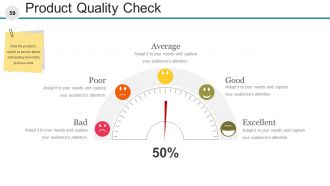
Slide 59: This slide shows Product Quality Check in metric scale with- Bad, Poor, Average, Good, Excellent as parameters.
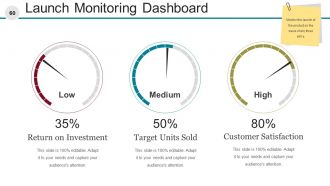
Slide 60: This slide presents a Launch Monitoring Dashboard showing- Customer Satisfaction, Return on Investment, Target Units Sold, Monitor the launch of the product on the basis of any three KPI’s in terms of Medium, High, Low.
Slide 61: This slide presents Icons for NDP. Use them as per need.
Slide 62: This slide is titled Additional Slides to move forward. You can change the slide content as per need.
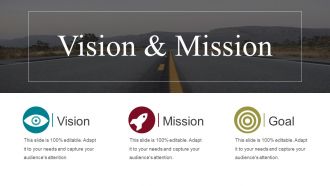
Slide 63: This is Vision, Mission and Goal slide. State them here.
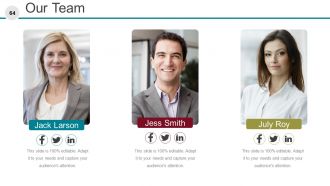
Slide 64: This is Our Team slide with names, designation and text boxes.
Slide 65: This is an About Us slide. State company/team specifications here.
Slide 66: This is Our Main Goals slide. State your goals, aspirations etc. here.
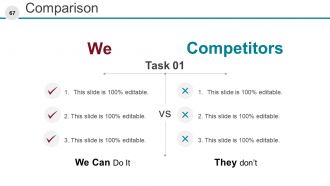
Slide 67: This slide showcases Comparison of two entities in tabular form.
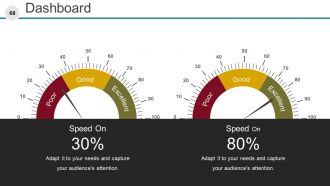
Slide 68: This slide displays a Dashboard. State performance aspects here.
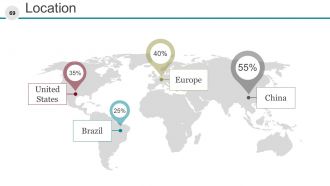
Slide 69: This is a Location slide of world map image to show global growth, presence etc.
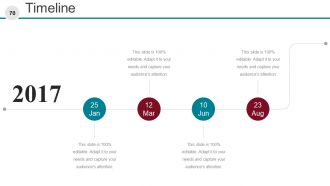
Slide 70: This is a Timeline slide to show company growth, milestones etc.
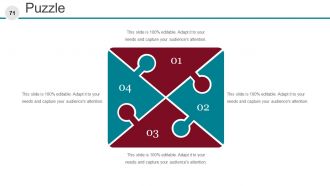
Slide 71: This is a Puzzle image slide to show information, specifications etc.
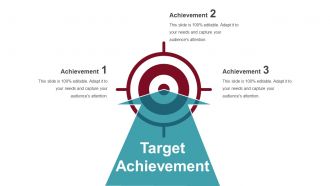
Slide 72: This is a Target Achievement slide. State targets, goals etc. here.
Slide 73: This is a Venn diagram image slide to present information, specifications etc.
Slide 74: This is a Mind map image slide to show information, specifications etc.
Slide 75: This slide is titled Our Charts to move forward. You can alter the slide content as per need.
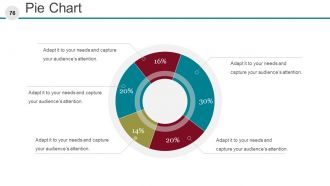
Slide 76: This is a Pie chart slide. State specifications, comparison of products/entities here.
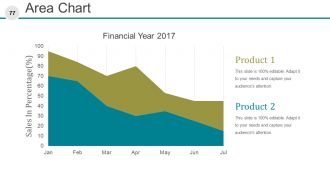
Slide 77: This is an Area chart slide. State specifications, comparison of products/entities here.
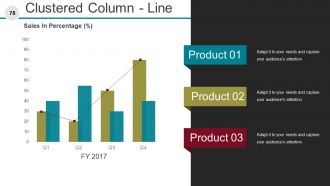
Slide 78: This is a Clustered Column chart slide. State specifications, comparison of products/entities here.
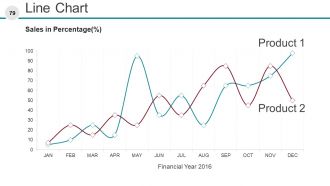
Slide 79: This is a Line chart slide. State specifications, comparison of products/entities here.
Slide 80: This is a Thank You slide with Address# street number, city, state, Contact Number, Email Address.
New product development process and strategy powerpoint presentation slides with all 80 slides:
Our New Product Development Process And Strategy Powerpoint Presentation Slides fill the air with great expectations. No one will make a half hearted attempt.



FAQs for New product development process and strategy
Alright, so NPD basically has six stages: idea generation, screening, concept development/testing, business analysis, product development, and market testing. It's like a funnel - tons of ideas at the start, then you narrow it down. Each stage is a checkpoint where you can axe terrible ideas before they drain your budget. Most companies totally blow it during screening though. They're either way too picky or let garbage slide through because someone's attached to their "brilliant" concept. My advice? Set your criteria for each gate beforehand so you're not making decisions based on office politics later.
Honestly, market research is just about figuring out what people actually want before you waste time building the wrong thing. You can test your idea early, see which features customers care about, and catch problems before they get expensive. Too many founders (myself included once) get obsessed with their brilliant concept without asking if anyone else gives a damn. Simple customer interviews work great - or even basic surveys. The info helps you price things right, position your product better, and sometimes you'll discover uses you never thought of. Way better than guessing and hoping for the best.
Look, customer feedback is basically your north star for building stuff people actually want. Don't wait until after you launch - get it early and often through surveys, user tests, whatever works. Way too many teams (mine included, honestly) get obsessed with their brilliant ideas and tune out what users are screaming at them. Build something small first, then let real people poke at it. They'll tell you exactly what sucks. Sure, it stings sometimes, but it's so much better than spending months on features nobody cares about. Set up those feedback loops from day one.
Honestly, you've gotta bake risk management right into the process from day one - don't just slap it on later. Figure out what could go wrong early: market shifts, tech problems, budget issues, competitors swooping in. I swear, half the teams I've worked with totally skip this part and then wonder why everything's falling apart. Make backup plans for the big scary stuff and actually assign people to watch for warning signs. Those checkpoint meetings? Perfect time to step back and see if risks are getting too crazy. Sometimes you need to change direction or just kill the whole thing. Oh, and talk to customers early - they'll spot market problems you're totally blind to.
Honestly, the classic "no bad ideas" brainstorming sessions actually do work if you get the right people in the room. Mind mapping's solid too - just branch out from whatever problem you're trying to solve. Oh, and there's this weird exercise where you intentionally come up with the worst possible ideas... sounds dumb but it gets everyone loose and thinking differently. Customer journey mapping helps you find those annoying pain points that might be opportunities. You could also steal ideas from totally different industries - like how Uber basically copied taxi dispatch systems but made them digital. Try mixing 2-3 of these approaches so your team doesn't get bored.
Dude, cross-functional teams are seriously worth it for product development. You get marketing, engineering, design, and ops all in the room from the start instead of each group doing their own thing. Problems get spotted way earlier - like before you're scrambling at launch. Everyone brings different skills so you won't end up with something amazing that can't actually be built or sold. Just make sure engineering doesn't dominate every decision (they love to do that). Oh, and map out which departments you actually need involved before kicking things off. Trust me on this one.
Honestly, focus on time-to-market and whether you're hitting your budget first. Customer adoption rates will tell you if people actually want what you built - that's huge. I'd track satisfaction scores too, plus how fast ideas move through your pipeline. Don't ignore quality stuff like defect rates because launching buggy products is just embarrassing. Here's the thing though - pick maybe 4-5 metrics max. Otherwise you'll get lost in spreadsheets and lose sight of what actually matters. Start tracking from day one so you can pivot if things go sideways.
Honestly, tech can shave months off your NPD process if you use it right. 3D printing lets you prototype stuff in days instead of weeks - game changer. Digital collab tools keep everyone in sync without those soul-crushing meetings we all hate. AI market research gets you consumer insights crazy fast compared to old-school surveys. Plus simulation software means you can test things virtually before building anything physical (saves so much money). CAD speeds up design tweaks, and good project management software keeps the chaos organized. My advice? Figure out where you're slowest right now - that's where you'll see the biggest impact from new tools.
Honestly, prototypes are total lifesavers in product development. You can spot design problems early and get real user feedback without burning through your budget. Way better than finding out something's broken after you've already built the whole thing, you know? Teams I've worked with literally saved months by catching issues in prototype phase. Plus your stakeholders actually get it when they can hold something tangible instead of trying to picture your vision. My advice? Start super rough and basic, then make it prettier as things click into place. Works every time.
Honestly, most people just rush everything without testing properly first. Feature creep will destroy you - I've seen it happen so many times where founders keep adding random stuff nobody wants. Also? Your marketing and product teams need to actually talk to each other, otherwise you're screwed. Don't guess at pricing either, that's a rookie mistake. Talk to real customers from day one, not just your mom and coworkers. Oh, and give yourself way more time than you think - launches always take longer. Have your whole strategy figured out at least a month before you go live.
Design thinking makes or breaks new products, honestly. Most teams think they know what customers want and just... don't. Map out your user journey first - seriously, before any specs get written. That empathy-prototype-test cycle? It'll save you insane amounts of rework later. Better problem solving, way more creative solutions, faster iterations. Your whole team stays focused on the actual user experience instead of getting lost in feature creep (which happens constantly). I know it feels like extra work upfront, but skipping this step is how you end up with expensive failures that nobody uses.
Definitely validate demand super early - like, before you build anything real. Customer interviews are gold. I made this mistake on my last startup and it sucked lol. Don't assume you know what people actually want vs what they say they need. Beta test with real users and get brutally honest feedback. Your launch strategy should match how customers naturally find products in your space. Oh and timeline-wise? Start planning your go-to-market stuff way earlier than you think - like 3-6 months out minimum.
Honestly, regulations will completely dictate your timeline and budget from the start. Build compliance checks into every single stage - concept to launch. Missing stuff early costs a fortune later. Pharma and medical devices are brutal, but even basic consumer products have safety rules you can't skip. I learned this the hard way on a project once. Map out which regulations hit your product category first, then treat those as design limits, not something to deal with later. Bake those review cycles straight into your project plan from day one.
Honestly, agile is pretty clutch for this stuff. Break your project into like 2-week chunks and just... build something quick, test it, then fix what sucks. Way better than spending months building in a cave only to find out users hate it. The whole point is getting feedback early instead of guessing what people want. Market's always changing anyway, so you need to be able to pivot fast. I used to think all the "fail fast" talk was just startup BS, but it actually works. Real user data beats your assumptions every time. Try it on your next project - you'll see how much clearer everything gets when you're not flying blind.
Look, nobody wants to hear a laundry list of features - that's just boring as hell. When you tell a story instead, people actually care. Like don't say "faster processing speeds." Show them Sarah panicking about her deadline and how your app swoops in to save her butt. Our brains are wired for stories, not specs. That's why you'll remember a good story from years ago but forget yesterday's presentation slides. Once stakeholders can picture real people using your product, they get excited about it. So next time, skip the feature dump. Start with someone's actual problem and show how you fix it.
-
Understandable and informative presentation.
-
The content is very helpful from business point of view.