

New Product Introduction Process Powerpoint Presentation Slides





Try Before you Buy Download Free Sample Product
 Impress Your
 Audience
 100%
100% Editable
 Save Hours
 of Time


Your thoughts will glow brightly forever. Our New Product Introduction Process Powerpoint Presentation Slides will throw light on them.
People who downloaded this PowerPoint presentation also viewed the following :
Content of this Powerpoint Presentation
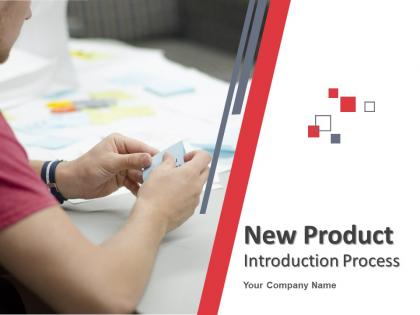
Slide 1: This slide introduces New Product Introduction Process. State your company name and begin.
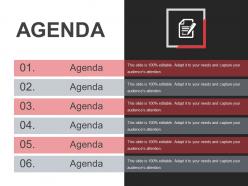
Slide 2: This is an Agenda slide with text boxes. Showcase your agendas here.
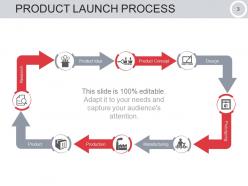
Slide 3: This slide showcases Product Launch Process with arrow and icon imagery.
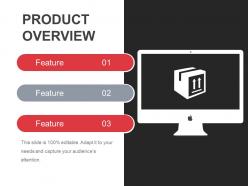
Slide 4: This slide presents Product Overview. State your features etc. here.
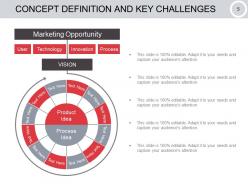
Slide 5: This slide presents Concept Definition And Key Challenges with Marketing Opportunity containing- User, Technology, Innovation, Process, Vission.
Slide 6: This is Focus Aand Value Proposition slide.
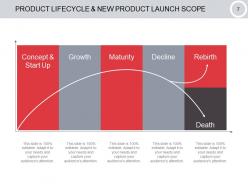
Slide 7: This slide showcases Product Lifecycle & New Product Launch Scope with the following levels- Concept & Start Up, Growth, Maturity, Decline, Rebirth, Death.
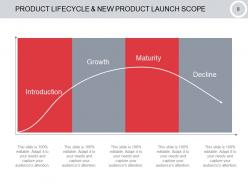
Slide 8: This slide also presents Product Lifecycle & New Product Launch Scope in a graphical form with the followig stages- Introduction, Growth, Maturity, Decline.
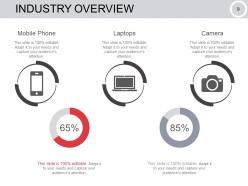
Slide 9: This slide presents Industry Overview showing- Mobile Phone, Camera, Laptops.
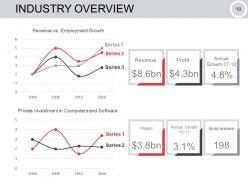
Slide 10: This slide also presents Industry Overview graph showing- Revenue vs. Employment Growth, Private Investment in Computers and Software.
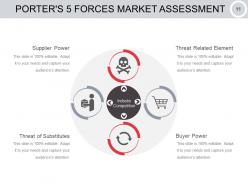
Slide 11: This slide showcases Porter's 5 Forces Market Assessment with- Threat Related Element, Buyer Power, Supplier Power, Threat of Substitutes, Industry Competition.
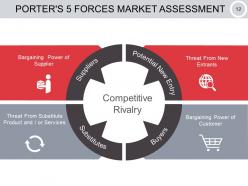
Slide 12: This slide also presents Porter's 5 Forces Market Assessment in a caircular form further showing Competitive Rivalry.
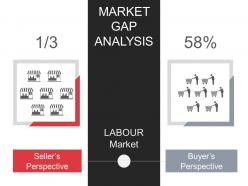
Slide 13: This is Market GAP Analysis slide showing- Buyer’s Perspective, Seller’s Perspective.
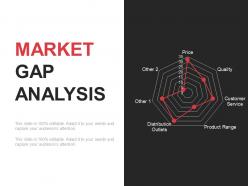
Slide 14: This slide also shows Market GAP Analysis in a radar chart form.
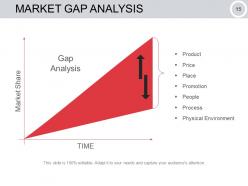
Slide 15: This is another slide presenting Market GAP Analysis in a graphical form showing- Product, Price, Place, Promotion, People, Process, Physical Environment.
Slide 16: This is a Coffee Break image slide to halt. You can change the slide content as per need.
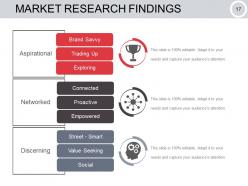
Slide 17: This slide shows Market Research Findings divided into 3 categories- Aspirational, Networked, Discerning. Use as per your need.
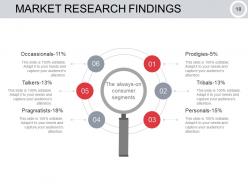
Slide 18: This is also Market Research Findings slide with magnifying glass imagery. We have listed a few of its attributes. Make use of them or add yur own.
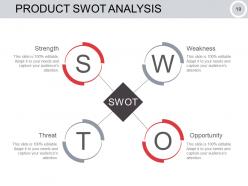
Slide 19: This is Product SWOT Analysis slide.
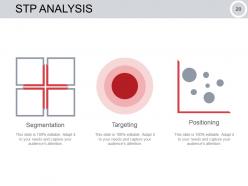
Slide 20: This slide presents STP Analysis swith 3 aspects to be displayed- Targeting, Positioning, Segmentation.
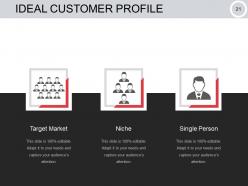
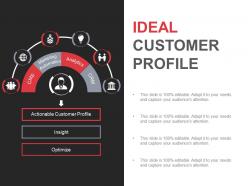
Slide 21: This slide shows Ideal Customers Profile which should consist the following factors- Target Market, Niche, Single Person.
Slide 22: This slide shows Ideal Customers Profile with text boxes.
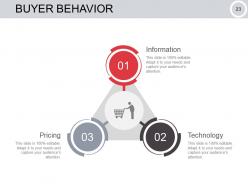
Slide 23: This slide shows Buyer Behavior with respect to- Pricing, Technology, Information.
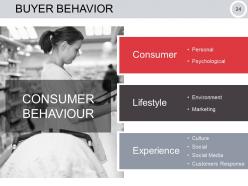
Slide 24: This slide also shows Buyer Behavior with the following 3 aspects- Consumer, Lifestyle, Experience.
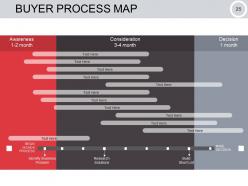
Slide 25: This slide showcases Buyer Process Map with the following 3 parameters- Awareness 1-2 month, Consideration 3-4 month, Decision 1 month.
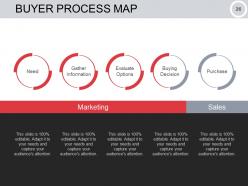
Slide 26: This slide also showcases Buyer Process Map with- Marketing, Sales.
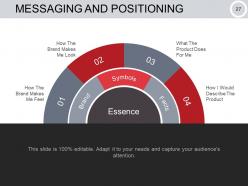
Slide 27: This is Messaging And Positioning slide showing Essence with- Brand, Symbols, Facts.
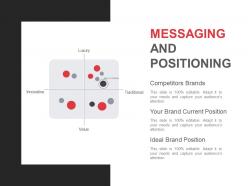
Slide 28: This slide also presents Messaging And Positioning matrix showing- Competitors Brands, Your Brand Current Position, Ideal Brand Position.
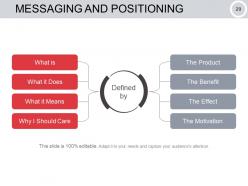
Slide 29: This is another Messaging And Positioning slide showing Defined by- What is, What it Does, What it Means, Why I Should Care and The Product, The Benefit, The Effect, The Motivation
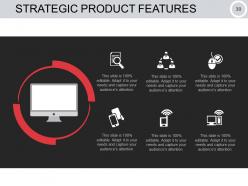
Slide 30: This slide showcases Strategic Product Features with icon imagery and text boxes.
Slide 31: This slide also showcases Strategic Product Features. State your product features with their respective icons.
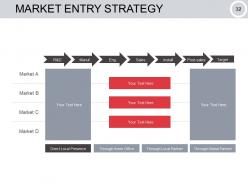
Slide 32: This slide shows Market Entry Strategy with arrow imagery and text boxes to state.
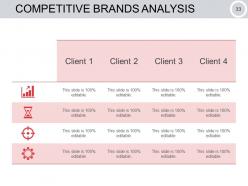
Slide 33: This slide shows COMPETITIVE BRANDS ANALYSIS with respect to Clients. State your several clients here and use it accordingly.
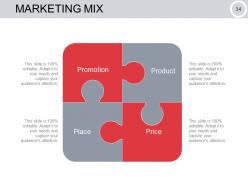
Slide 34: This slide presents Marketing Mix in a puzzle image form to show the following 4 aspects- Product, Price, Place, Promotion.
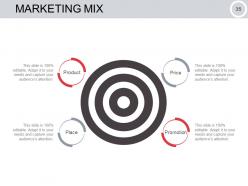
Slide 35: This slide also shows Marketing Mix with target imagery and text boxes.
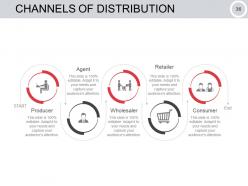
Slide 36: This slide presents the Channels of Distribution starting from- Producer, Agent, Wholesaler, Retailer to Consumer.
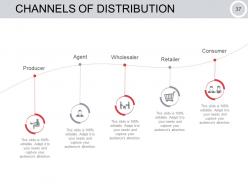
Slide 37: This slide also showcases Channels of Distribution timeline.
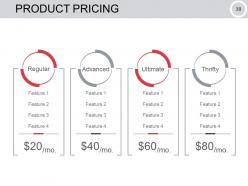
Slide 38: This slide showcases Product Pricing with the following parameters- Regular, Ultimate, Advanced, Thrifty.
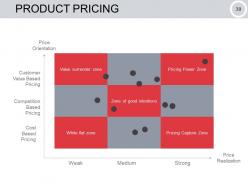
Slide 39: This slide also shows Product Pricing matrix with the following parameters- Weak, Medium, Strong.
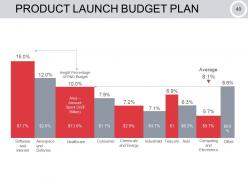
Slide 40: This slide presents Product Launch Budget Plan in a bar graph/ chart form.
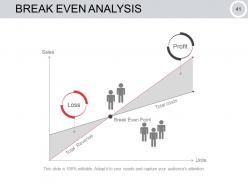
Slide 41: This slide presents Break Even Analysis graph.
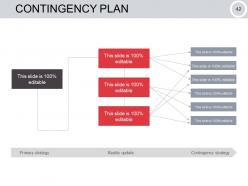
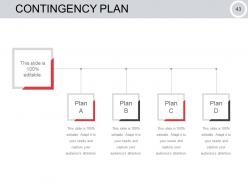
Slide 42: This slide presents Contingency Plan with text boxes to state.
Slide 43: This slide also displays a Contingency Plan with text boxes.
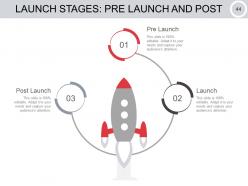
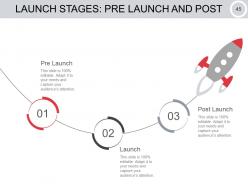
Slide 44: This slide showcases Launch Stages: Pre Launch And Post with relevant imagery.
Slide 45: This slide also shows Launch Stages: Pre Launch And Post.
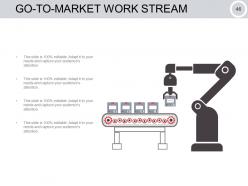
Slide 46: This slide showcases Go-To-Market Work Stream with imagery and text boxes. Add relevant information and make use of it.
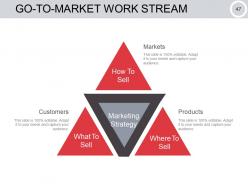
Slide 47: This is also Go-To-Market Work Stream slide showing Marketing Strategy consisting of- Markets, Customers, Products.
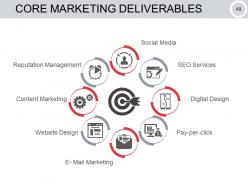
Slide 48: This slide states Core Marketing Deliverables. We have listed a few of them for your reference. Make use of them or add your own.
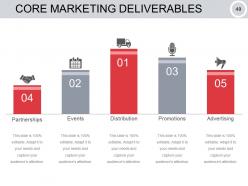
Slide 49: This slide also shows Core Marketing Deliverables namely- Partnerships, Distribution, Promotions, Advertising, Events.
Slide 50: This slide shows Marketing Launch Plan.
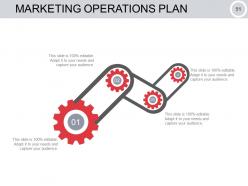
Slide 51: This slide showcases Marketing Operations Plan with text boxes.
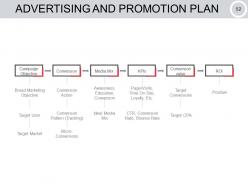
Slide 52: This slide shows Advertising And Promotion Plan with- Campaign Objective, Conversion, Media Mix, KPIs, Conversion value, ROI.
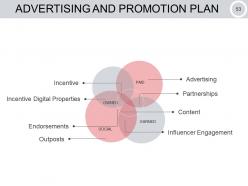
Slide 53: This is another slide showing Advertising And Promotion Plan.
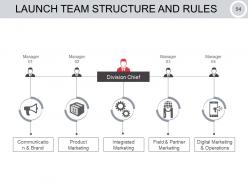
Slide 54: This slide presents Launch Team Structure And Rules in a hierarchy form.
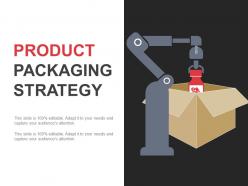
Slide 55: This is Product Packaging Strategy slide with relevant imagery.
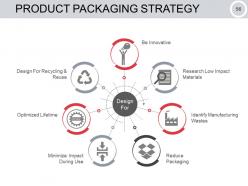
Slide 56: This is another Product Packaging Strategy slide with the following points- Be Innovative, Reduce Packaging, Minimize Impact During Use, Identify Manufacturing Wastes, Optimized Lifetime, Research Low Impact Materials, Design For Recycling & Reuse.
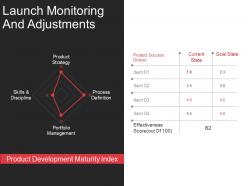
Slide 57: This slide presents Launch Monitoring And Adjustments showing Product Development Maturity Index.
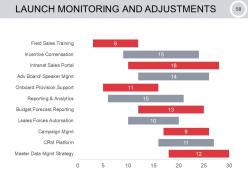
Slide 58: This slide also presents Launch Monitoring And Adjustments in a graphical image form.
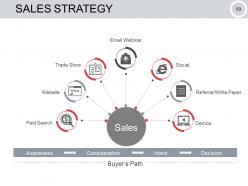
Slide 59: This slide shows Sales Strategy with the following points- Awareness, Consideration, Intent, Decision, Buyer’s Path, Paid Search, Website, Trade Show, Email Webinar, Demos, Referral/White Paper, Social.
Slide 60: This is another Sales Strategy slide with magnifying glass imagery.
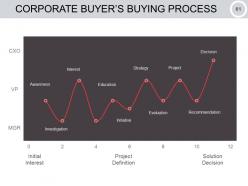
Slide 61: This slide presents Corporate Buyer's Buying Process in a graphical form showing- Decision, Recommendation, Evaluation, Project, Initiative, Awareness, Strategy, Education, Interest, Investigation.
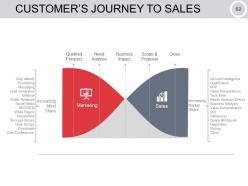
Slide 62: This slide shows Customer's Journey To Sales in a graphical form.
Slide 63: This slide presents Product Portfolio Planning Icons Set. Use icons as per need.
Slide 64: This slide is titled Additional Slides to move forward. You can alter/ modify as per need.
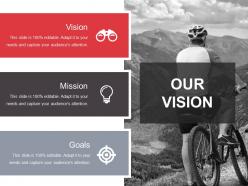
Slide 65: This is OUR VISION slide. State goals, mission and vision here.
Slide 66: This is an Our Team slide with name, image and text boxes to put the required information.
Slide 67: This is an About Us slide. State company or team specifications here.
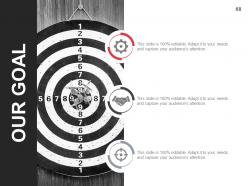
Slide 68: This is Our Goal slide. State your important goals here.
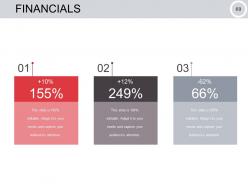
Slide 69: This slide is titled as Financials. Show finance related stuff here.
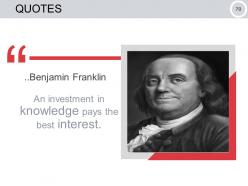
Slide 70: This is a Business Quotes slide to quote something you believe in.
Slide 71: This is a Timeline slide to present important dates, journey, evolution, milestones etc.
Slide 72: This is also a Timeline slide to present important dates, journey, evolution, milestones etc.
Slide 73: This is a Post It slide to mark events, important information etc.
Slide 74: This is a Circular image slide. State specifications, information here.
Slide 75: This is a Venn diagram image slide to show information, specifications etc.
Slide 76: This is a Silhouettes slide to show information, specifications etc.
Slide 77: This is a Funnel image slide to show information, funneling aspects, specifications etc.
Slide 78: This is a Contact Us slide with Email, Address# street number, city, state, Contact Numbers.
Slide 79: This is a Thank You slide for acknowledgement or to end the presentation.
New Product Introduction Process Powerpoint Presentation Slides with all 79 slides:
Encourage folks to display ingenuity with our New Product Introduction Process Powerpoint Presentation Slides. It will influence budding entrepreneurs.









FAQs for New Product Introduction Process
Honestly, start with market research and validating your concept - that's huge. Design and prototyping comes next, then you'll hit the testing phase (technical stuff plus real users). Fair warning though, testing always drags on way longer than you expect. Production planning and supply chain setup follow that. Marketing prep and sales enablement happen before launch. Then you actually launch and watch everything like a hawk. Don't rush between phases - each one builds on the last. Set clear criteria for moving forward so your team knows when you're actually ready to advance.
Look, market research is everything for NPI - it shows you what customers actually need instead of what you're guessing they want. Do some quick customer interviews before diving into development. Trust me on this one. You'll validate your concept early and figure out pricing that makes sense. I've watched too many teams skip this step and wonder why their launch flopped. The research helps you find competitive gaps and understand how people actually buy stuff. Plus it shapes your timeline and messaging for go-to-market. Seriously, it saves major headaches down the road.
Dude, customer feedback is everything - it'll literally make or break your product. Get it early through surveys, focus groups, beta tests, whatever fits your crowd. I've watched so many products crash because teams fell in love with their own ideas and completely ignored what people actually needed. Use that feedback to check your assumptions and fix usability problems before they cost you big time. Oh, and don't just collect feedback at the end - that's way too late. Build those feedback loops into every single stage of development.
Okay so first things first - actually talk to your potential customers and figure out what's driving them crazy. Most people totally blow off this step which is honestly stupid because you'll just have to backtrack later. Map out how you're gonna reach these people, nail down what makes your thing different from all the competition out there. Pricing strategy, where you'll sell it, marketing that doesn't suck - get all that sorted. Oh and definitely test your pitch on real humans before you go all-in. Trust me on this one. Set up some measurable goals and deadlines too so you're not just wandering around hoping for the best.
Honestly? Get everyone in the same room (or Zoom) weekly - engineering, marketing, sales, ops. Make sure they're all working from the same launch timeline because I've watched launches crash and burn when teams had different dates in their heads. Super painful. Set up a shared dashboard so nobody can claim they didn't know about delays. You'll need one person calling the shots though - usually product or project lead. Without that, teams just ping-pong decisions forever. Kick off your next launch with everyone agreeing on what success actually looks like. Trust me on this one.
Honestly, your competition shapes everything - timeline, features, pricing, the works. Crowded market? You gotta move fast and stand out hard, otherwise you'll be another failed "me too" product. First to market though? Take your time, nail the basics instead of throwing in random bells and whistles. I always tell people to study their top 3 competitors early on. Let their strategy inform yours, but don't just copy what they're doing. Oh and pricing - that's where competitive positioning really matters. You can't price in a vacuum anymore.
Track the obvious stuff first - revenue, units sold, market share. Customer acquisition costs and conversion rates too. But honestly, the soft metrics matter just as much. Check satisfaction scores and reviews because they'll tell you if people actually want this thing. Support tickets are huge - tons of complaints = bad sign. Watch your time-to-break-even and how fast inventory moves. Early adoption patterns by customer type will help you figure out who to target next (this saved my butt on my last launch). Set up weekly tracking for the first three months.
Dude, forget listing features like a robot. Tell a story instead! Like instead of "better analytics," paint the picture of Sarah at 2am discovering her business is bleeding money through your dashboard - and how she fixed it. Our brains are wired for stories, not spec sheets. People will actually remember your product when there's a real person behind it. Plus they can picture themselves in Sarah's shoes. Honestly, the before/during/after format works every time. Pick your biggest pain point and build around that.
Honestly, the worst mistake is rushing your timeline - learned that one the hard way. Scope creep will absolutely destroy you too, like when everyone keeps saying "oh just add this tiny thing" until suddenly your project is a monster. Communication breakdowns between teams are brutal, so I'd rather bug people with too many updates than assume they know what's happening. Testing always, ALWAYS takes way longer than you think it will. Don't skip getting stakeholders aligned upfront either - manufacturing complexity is no joke. Build in buffer time from the start and do weekly check-ins with everyone involved.
Don't wait until launch to think about marketing - that's a rookie mistake I see all the time. Build buzz from day one with teaser content and get people excited about what's coming. Your dev milestones? Perfect social media content. Email campaigns are clutch for keeping leads warm throughout the whole process. Honestly, marketing should feel like part of product development, not something you scramble to add later. Get your marketing team looped in early so they're not blindsided. When launch day hits, it'll feel smooth instead of chaotic.
Start with IP stuff - patents, trademarks, all that. Regulatory compliance is huge too depending on what you're selling (FDA approval, safety regs). Your marketing copy better be bulletproof because false claims will bite you later. Oh, and don't sleep on updating your terms of service and privacy policies - boring but necessary. Distribution agreements and supplier contracts need a look too. I swear the legal checklist never ends! But seriously, get your lawyer involved way before you set launch dates. Trying to fix this stuff after the fact is a nightmare you don't want.
Dude, branding is everything for first impressions. People see your stuff and either think "I want that" or keep scrolling. Good branding builds trust instantly and shows what problem you're actually solving. But if it's weak? Doesn't matter how amazing your product is - I've literally watched incredible products bomb because they looked cheap or confusing. It's kinda like wearing pajamas to an interview, you know? Just focus on being authentic and make sure your value is crystal clear from the start. That visual stuff matters way more than people think.
Dude, AI is seriously changing the game for new product development. You can automate design validation and predict where things'll break before they actually do. Digital twins are kinda crazy - basically you simulate your whole product lifecycle without building anything physical first. Cloud platforms are finally getting design, manufacturing, and supply chain teams talking to each other properly. 3D printing makes prototyping way faster and cheaper too. Honestly, I'd start small and figure out which tech fits your current setup best. Don't try to do everything at once though.
Don't just slap sustainability on at the end - build it right into your NPI process from the start. Set environmental requirements upfront: material sourcing, energy use, recyclability, all that stuff. Include sustainability checkpoints in your design reviews next to cost and quality. Honestly, I've watched so many teams get burned when they discover their materials are getting regulated out of existence. Pull your sustainability people in from day one, not just for rubber-stamping later. Run those lifecycle assessments while you can actually change things without destroying your timeline. Oh, and make it measurable - what doesn't get tracked doesn't get done.
Dude, this is huge - I can't stress it enough. Start prepping your training stuff way before launch day hits. Your sales team needs to actually know what they're selling, and support has to handle the inevitable "how does this work?" questions. I've watched solid products totally bomb because the team was clueless about their own features. Customers need good onboarding too, plus docs they can actually understand. Oh, and make sure customer success is ready to jump in when people get stuck. Seriously, it's the difference between launching and people actually using your thing.
-
Understandable and informative presentation.
-
Innovative and Colorful designs.