New product idea screening powerpoint presentation slides
Try Before you Buy Download Free Sample Product
Audience
Editable
of Time
Use New Product Idea Screening PowerPoint Presentation Slides to understand the customer’s preferences, competition, technology and more to bring new product in the market. Go through the stages of product development with the help of new product development PPT templates. This content-ready new product idea screening PowerPoint presentation templates comprises of templates such as new product introduction, new product development stages, new product development process, screening, new product development overview, understanding customer needs, and more. Add necessary product development idea screening PowerPoint slides to meet and exceed customer’s expectations. Develop new products and stay competitive in the market. Carefully execute the new product development process using ready-made new product idea screening PowerPoint presentation templates. This professionally designed complete deck is completely customizable. You can customize the template as per your need. Edit the color, text, icon, and font size as per the requirement. Download this ready-to-use new product idea screening PPT templates to bring the new product in the market. Give folks the correct image of your concept with our New Product Idea Screening Powerpoint Presentation Slides. It helps illustrate your doctrine.
People who downloaded this PowerPoint presentation also viewed the following :
Content of this Powerpoint Presentation
Slide 1: This is an introductory slide to New Product Idea Screening. Add your company name and proceed.
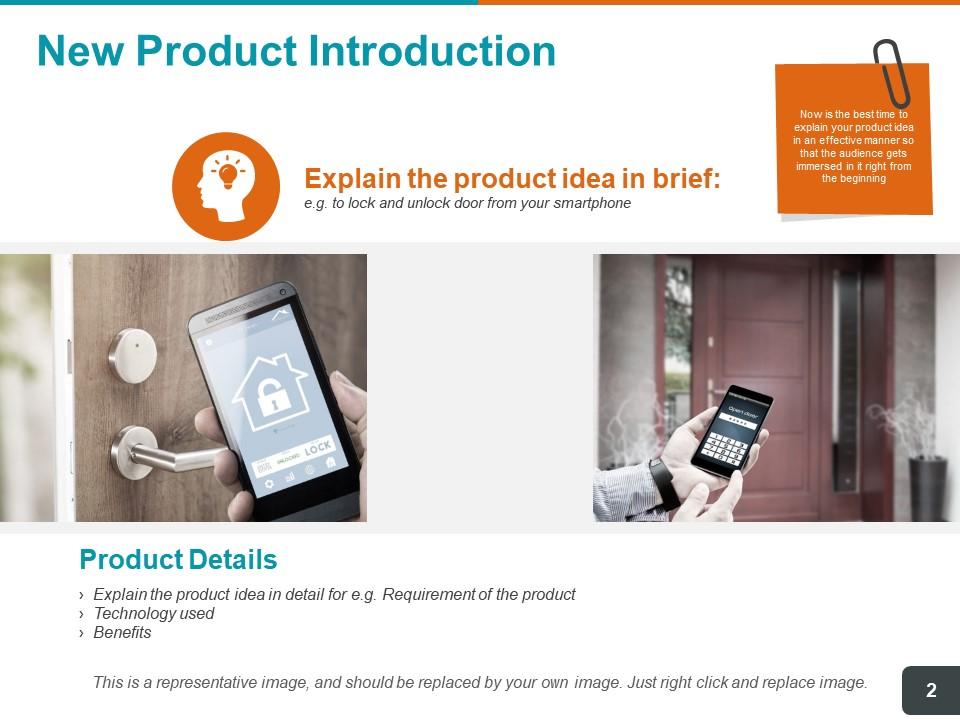
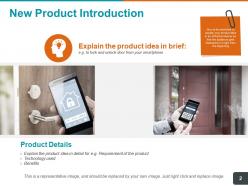
Slide 2: This slide showcases New Product Introduction with Product Details.
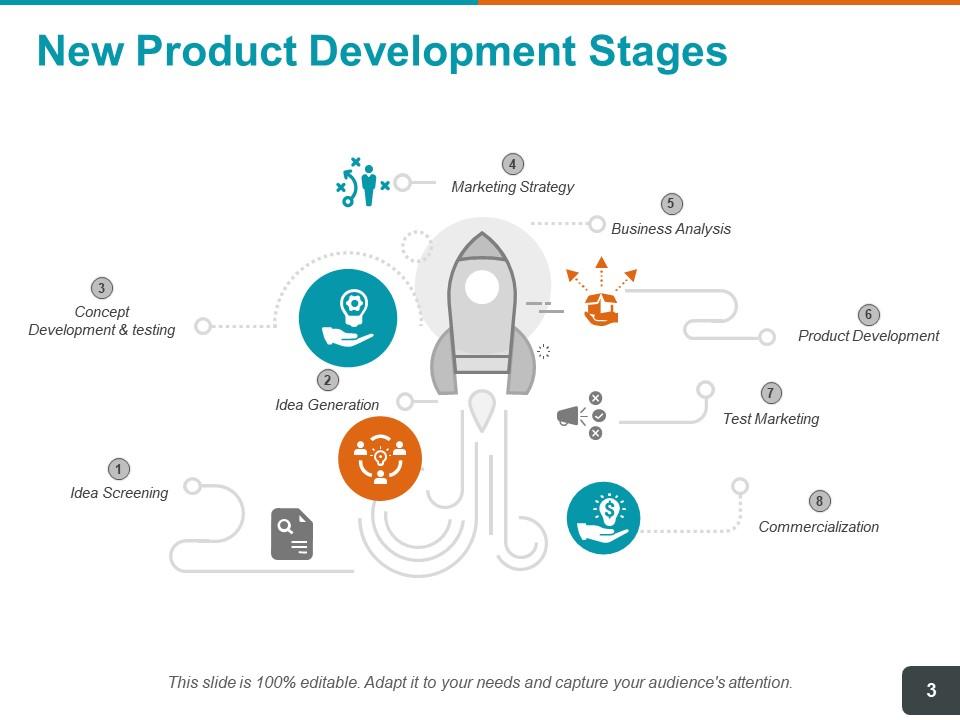
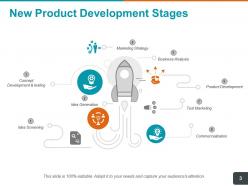
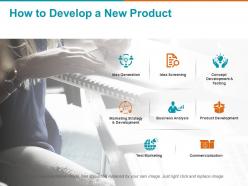
Slide 3: This slide showcases New Product Development Stages. These are- Idea Screening, Idea Generation, Concept Development & testing, Marketing Strategy, Business Analysis, Product Development, Test Marketing, Commercialization.
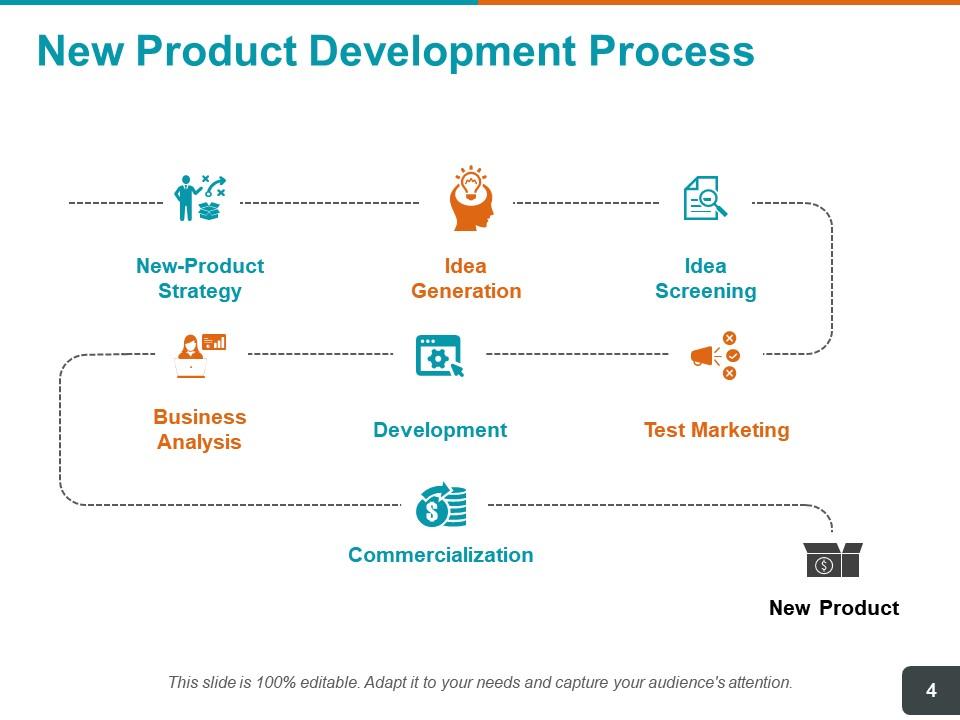
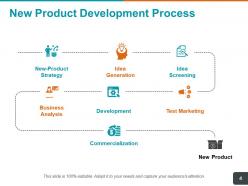
Slide 4: This slide showcases New Product Development Process with the following steps- New-Product Strategy, Idea Generation, Idea Screening, Test Marketing, Development, Business Analysis, Commercialization, New Product.
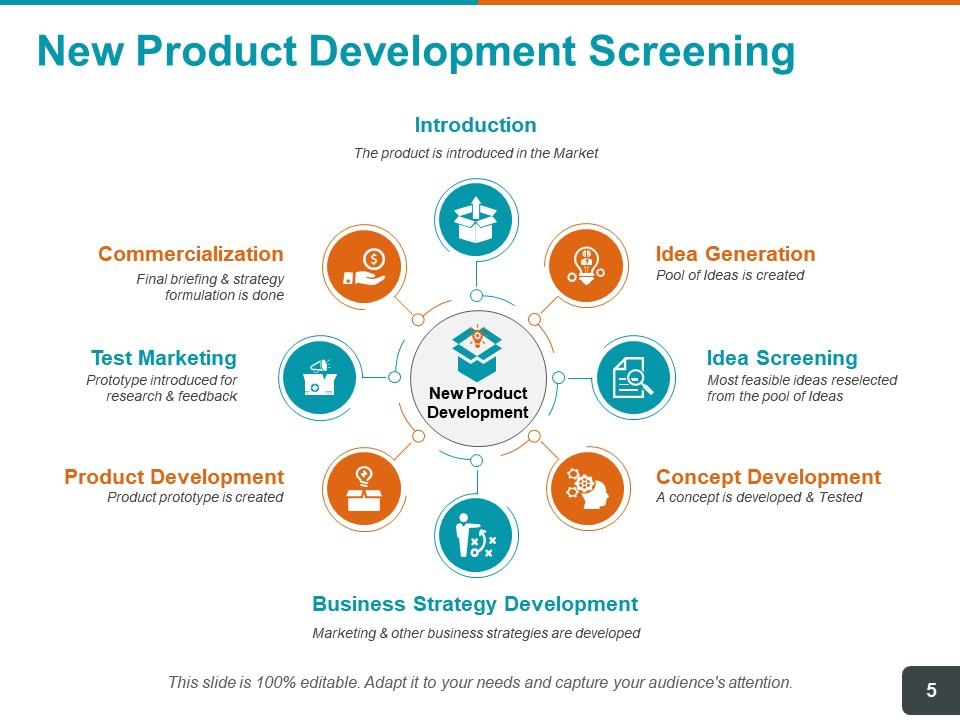
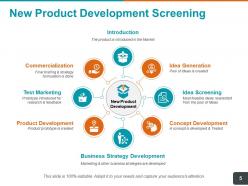
Slide 5: This slide shows New Product Development Screening consisting of- Introduction, Idea Generation, Idea Screening, Concept Development, Business Strategy Development, Product Development, Test Marketing, Commercialization, New Product Development.
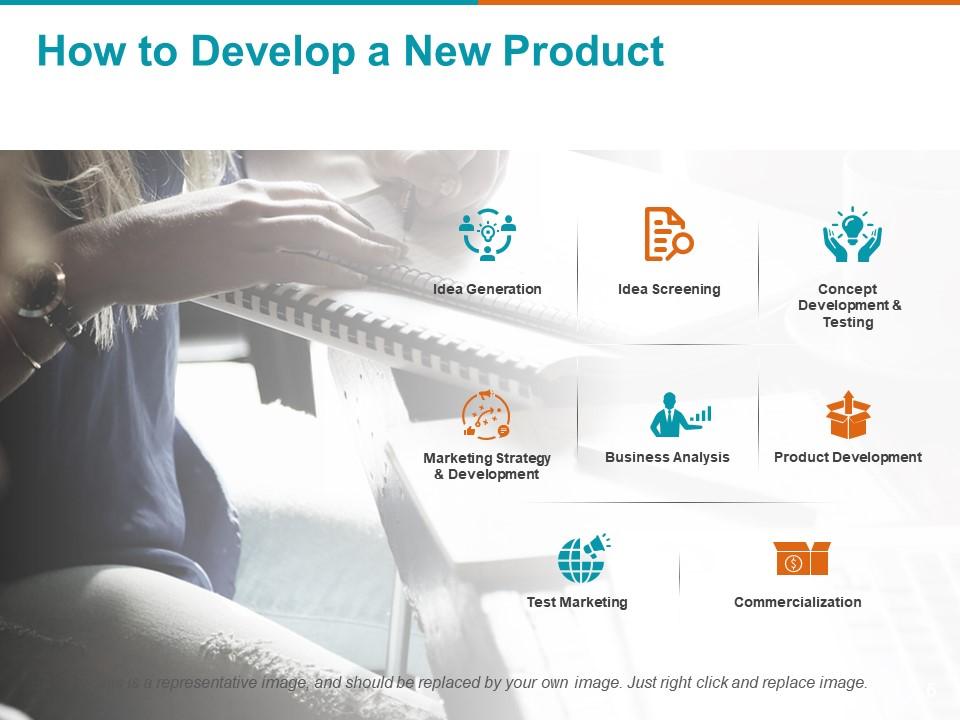
Slide 6: This slide showcases How to Develop a New Product.
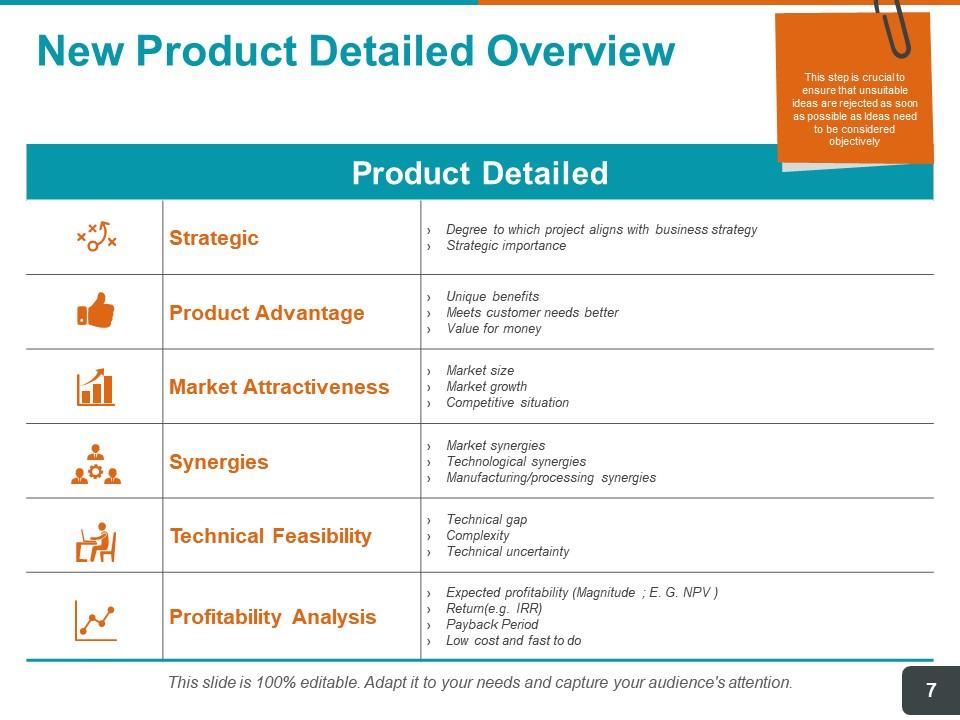
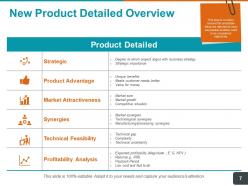
Slide 7: This slide presents New Product Detailed Overview. Use this step to ensure that unsuitable ideas are rejected as soon as possible.
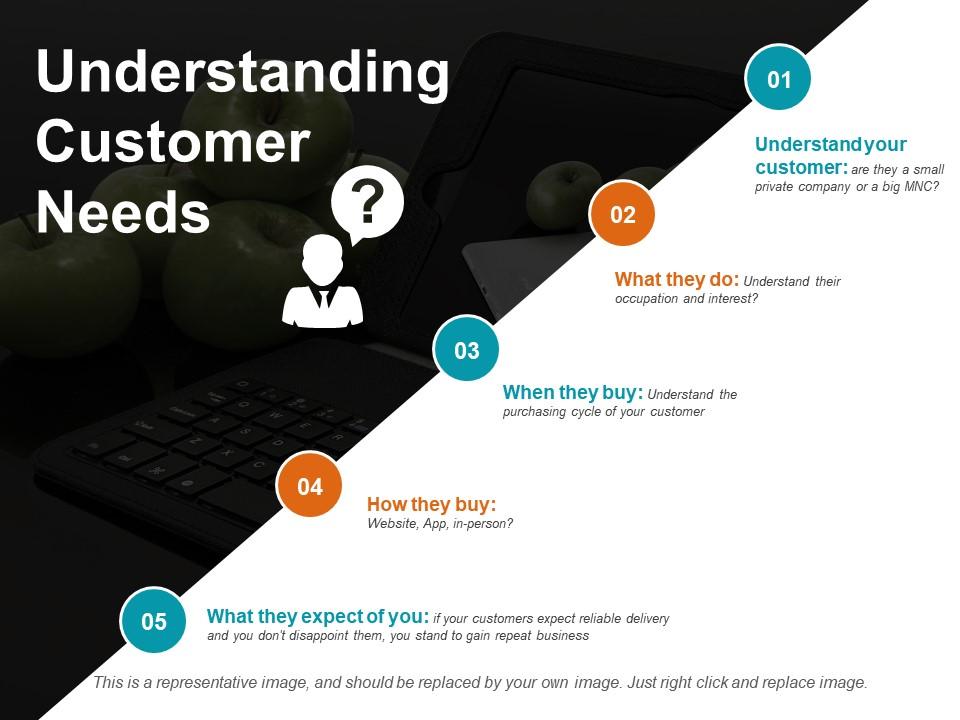
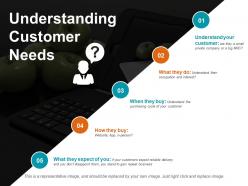
Slide 8: This is Understanding Customer Needs slide with the following points to discuss- What they do? Understand your customer, When they buy? What they expect of you? How they buy?
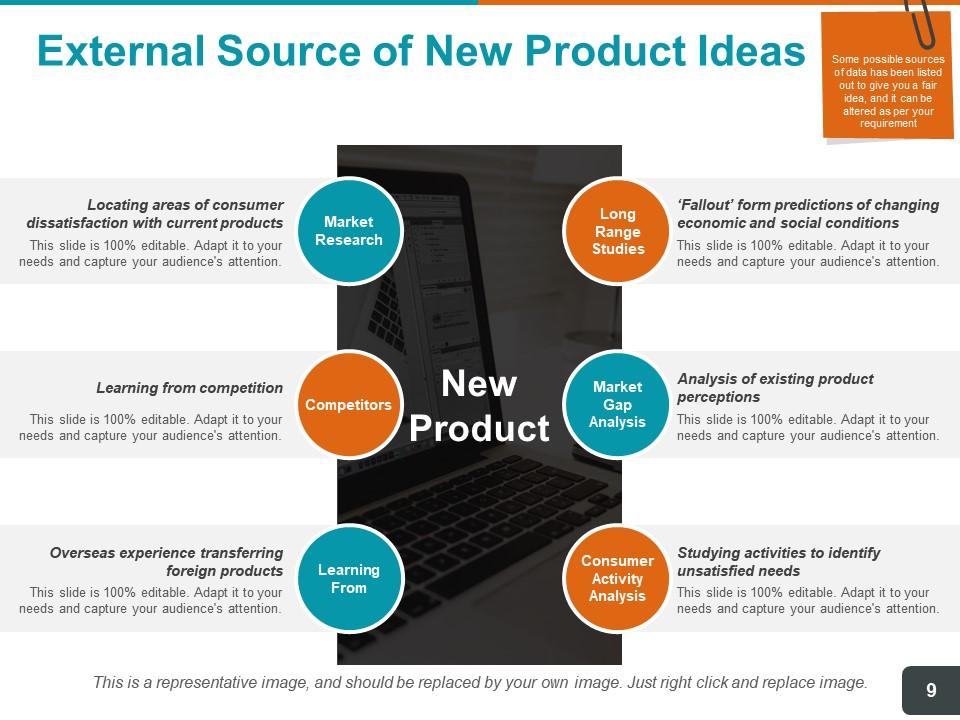
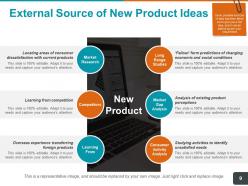
Slide 9: This slide shows External Source of New Product Ideas. Some possible sources of data has been listed out to give you a fair idea, and it can be altered as per your requirement
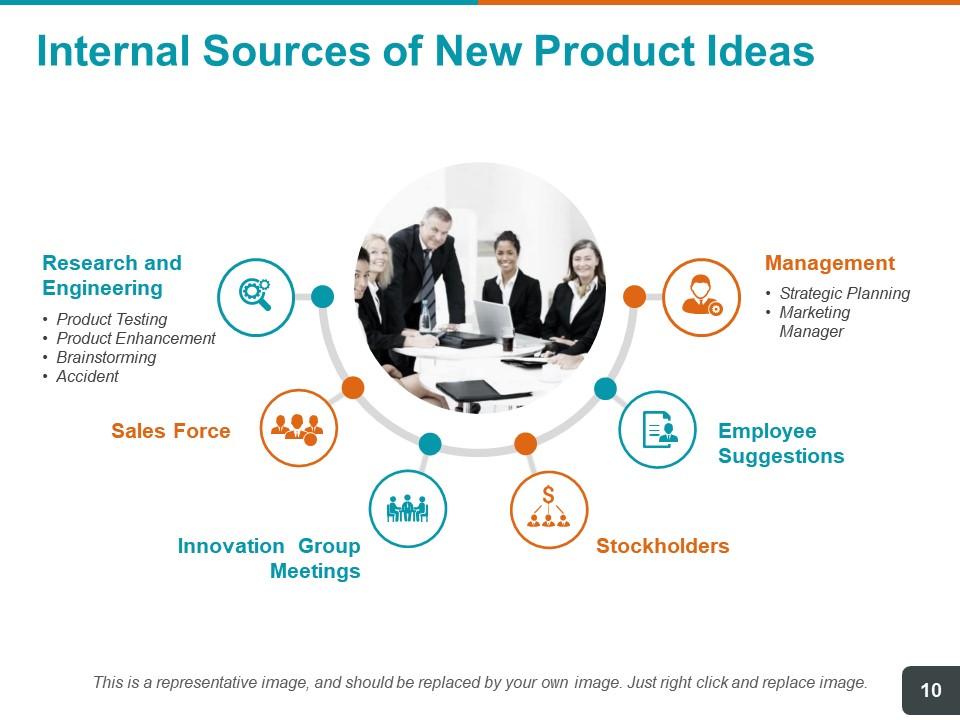
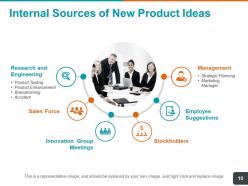
Slide 10: This slide showcases Internal Sources of New Product Ideas such as- Sales Force, Innovation Group Meetings, Stockholders, Employee Suggestions, Research and Engineering, Management.
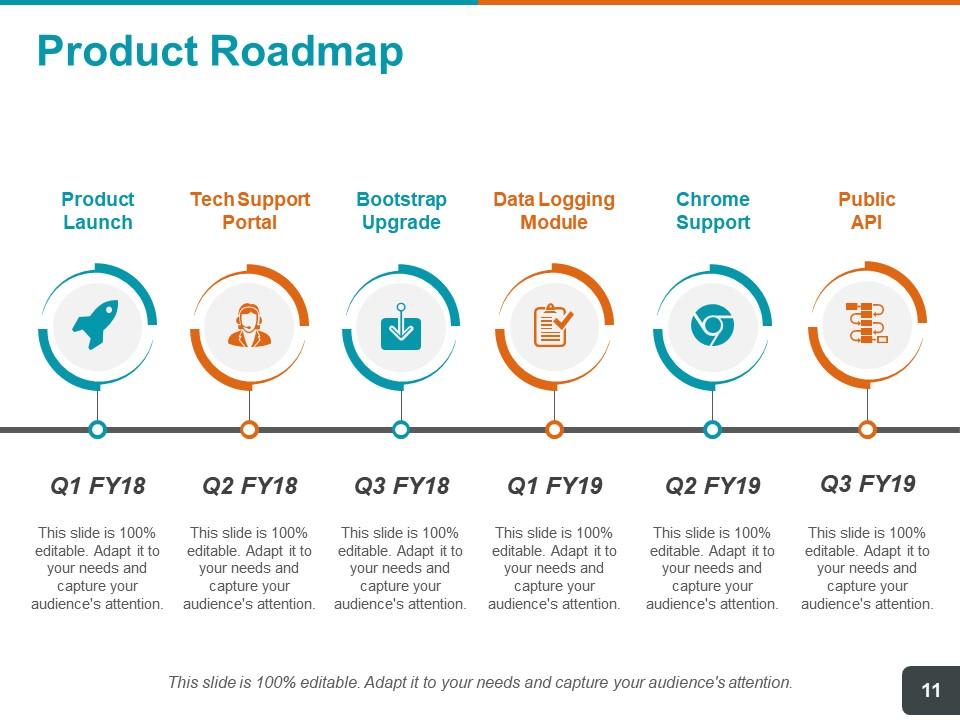
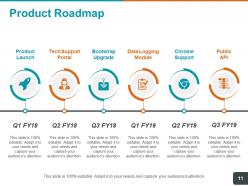
Slide 11: This slide presents Product Roadmap showing- Product Launch, Tech Support Portal, Bootstrap Upgrade, Data Logging Module, Chrome Support, Public API.
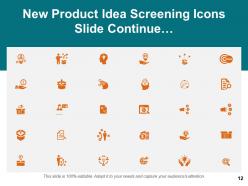
Slide 12: This is New Product Idea Screening Icons Slide. Add/ remove icons as per need.
Slide 13: This is also New Product Idea Screening Icons Slide. Use icons as per need.
Slide 14: This slide is titled Additional slides to proceed forward.
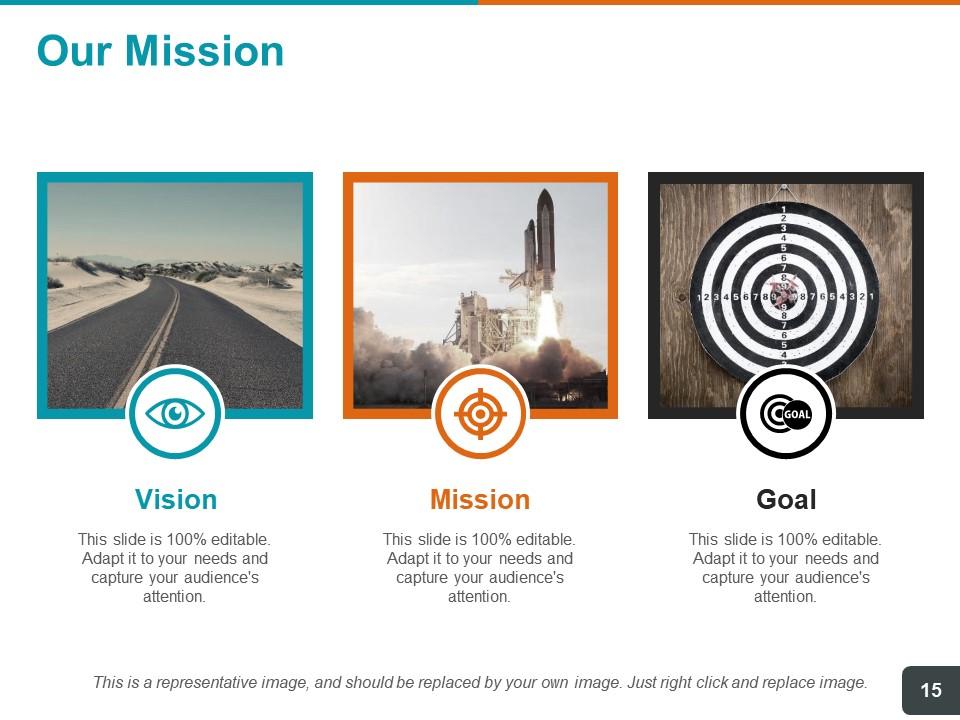
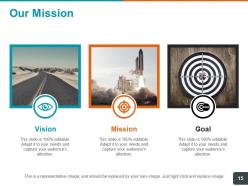
Slide 15: This slide contains Our Mission with text boxes.
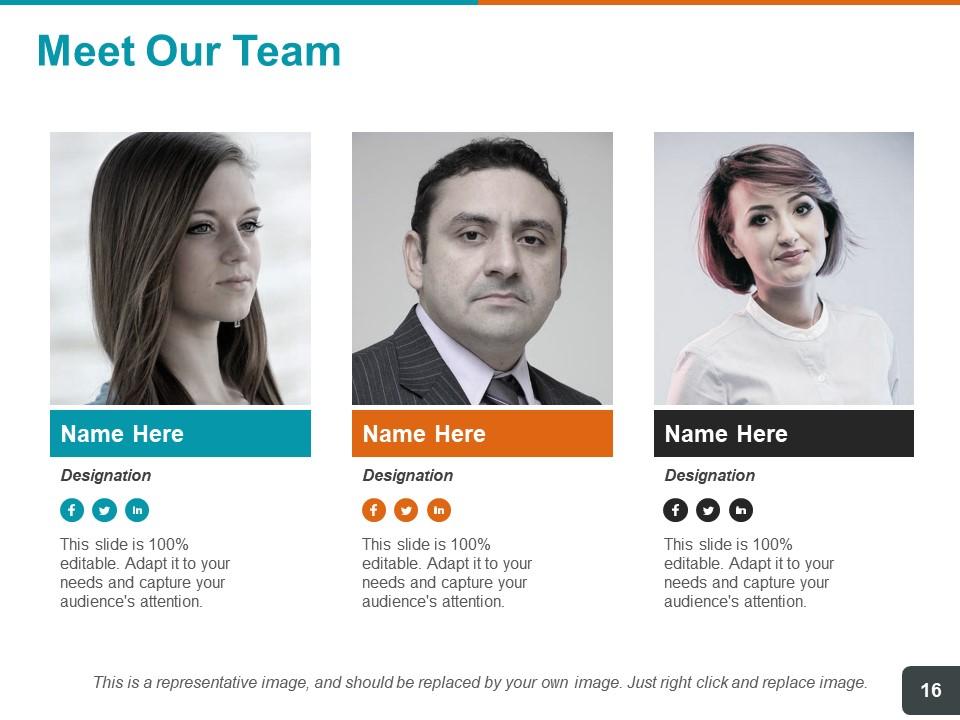
Slide 16: This is Meet Our Team slide with name and designation.
Slide 17: This slide helps show About Our Company to present information etc.
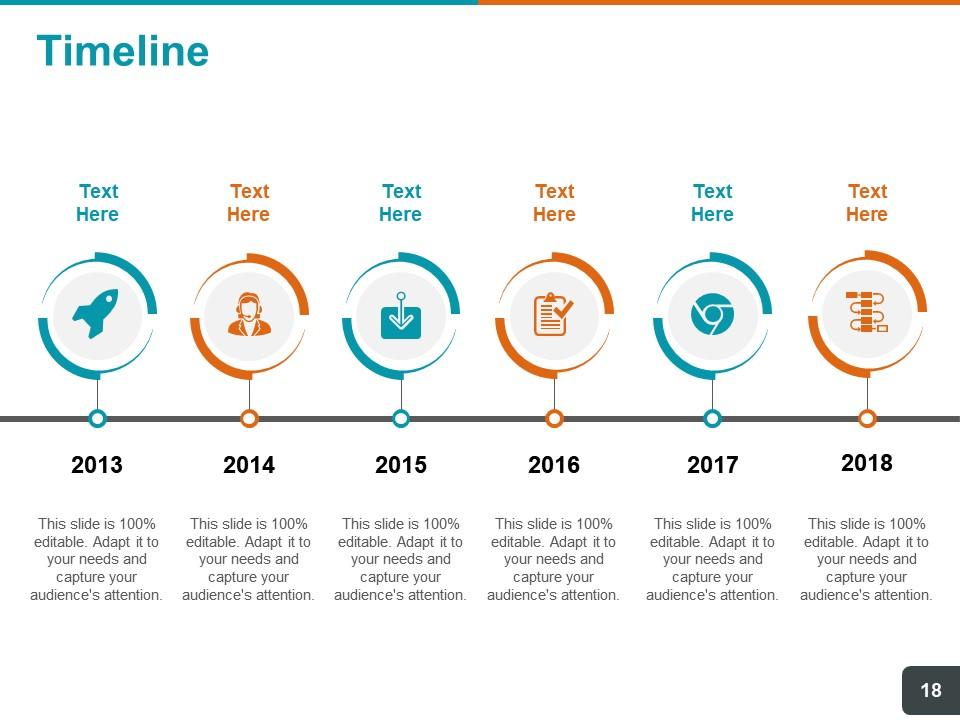
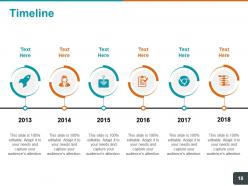
Slide 18: This is a Timeline slide to present important dates, journey, evolution, milestones etc.
Slide 19: This is a Puzzle pieces image slide to show information, specifications etc.
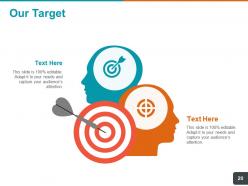
Slide 20: This is Our Target slide. State your targets here.
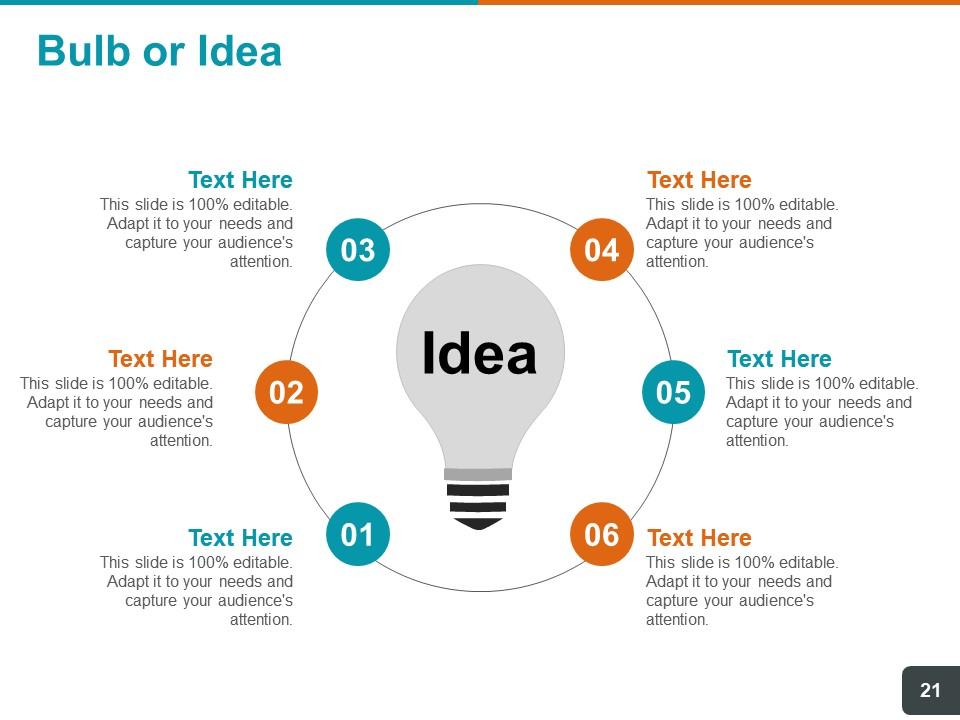
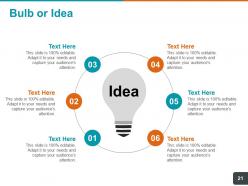
Slide 21: This is a Bulb or Idea slide to state a new idea or highlight specifications/ information etc.
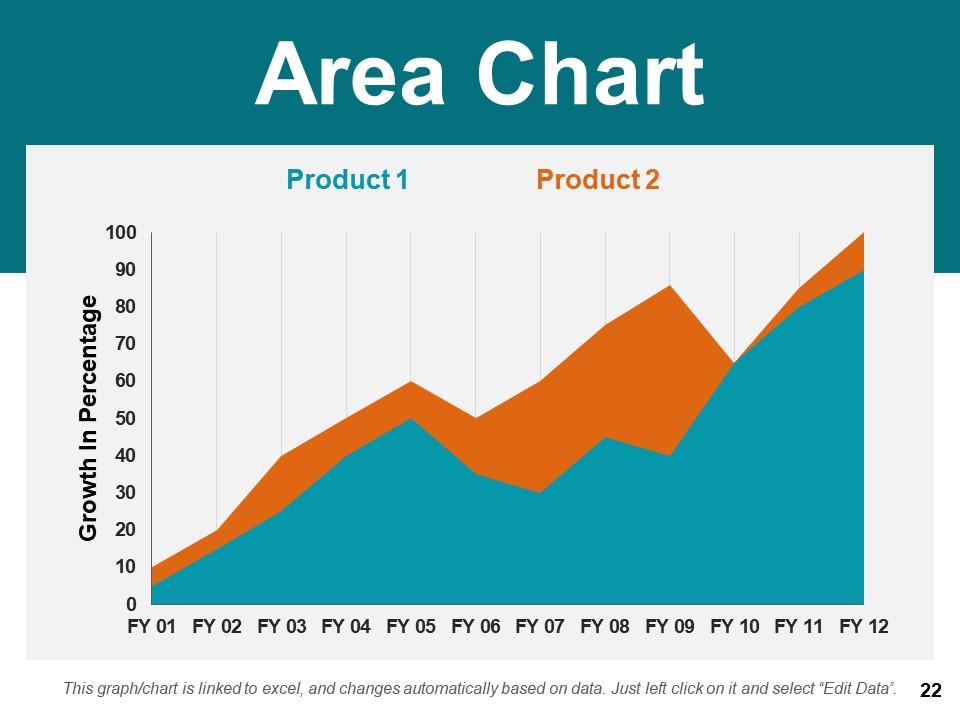
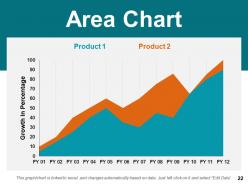
Slide 22: This slide presents an Area Chart for showcasing product/ company growth, comparison etc.
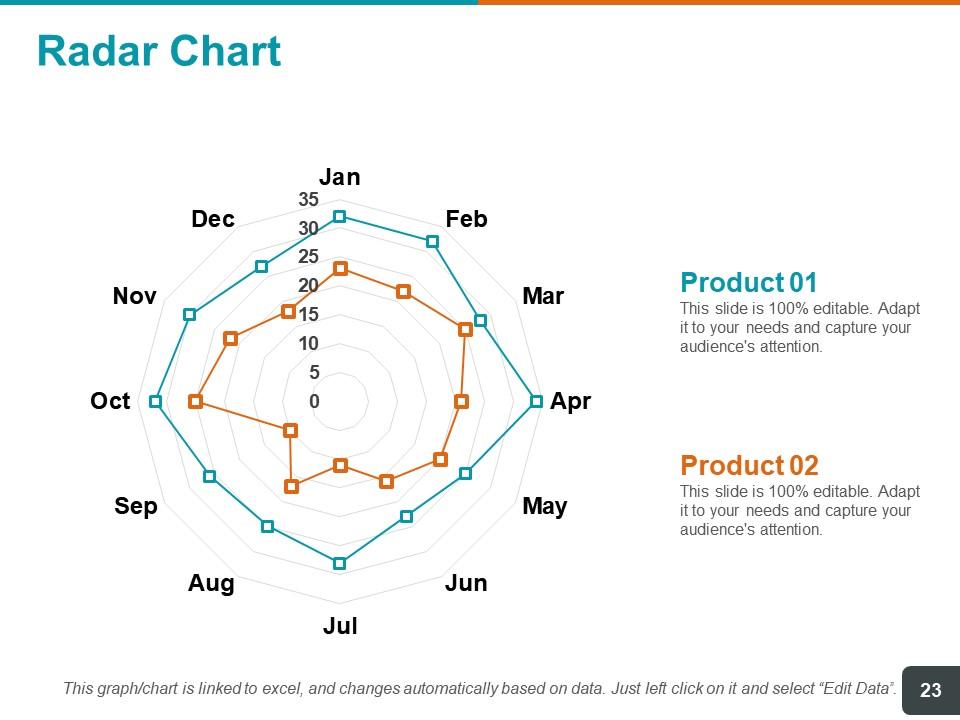
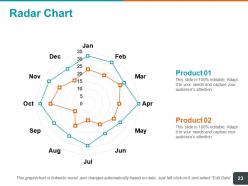
Slide 23: This is a Radar chart slide to show product/ entity growth, comparison etc.
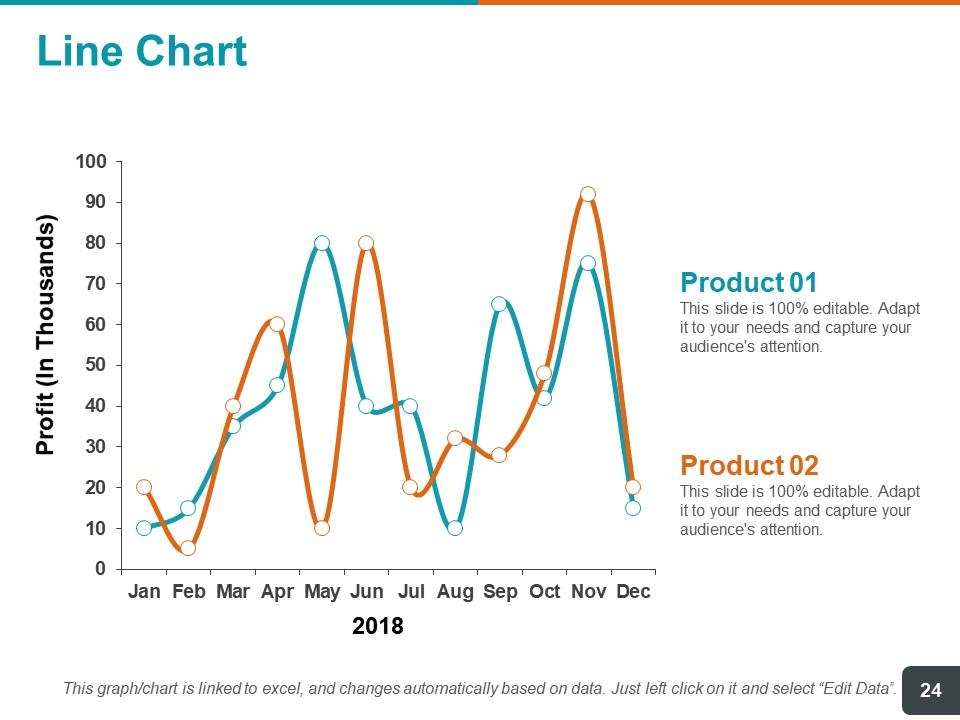
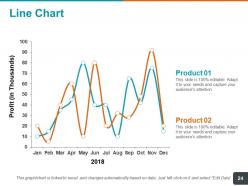
Slide 24: This is a Line Chart slide for product/ entity comparison.
Slide 25: This is a Thank You slide with Address# street number, city, state, Contact Numbers, Email Address.
New product idea screening powerpoint presentation slides with all 25 slides:
Build a firm base for cohesive action with our New Product Idea Screening Powerpoint Presentation Slides. It helps cement the deal.
FAQs for New product idea screening
Honestly, I'd break it down into four key things: market demand, whether you can actually build it, if it'll make money, and does it fit your company's direction. Check if people really want this thing first - that's huge. Then figure out if your team has the skills and resources to pull it off. The profit margins need to work obviously, and sometimes a decent idea just doesn't align with where you're headed (learned that one the hard way). Oh, and don't forget competitors and any regulatory headaches depending on your space. Try scoring each idea on these criteria - way better than just winging it based on what feels right.
Honestly, just bake the research right into how you screen ideas from the start. I set up this scoring thing where customer surveys, competitor stuff, and market size all become filters. Short sentences work. Voice-of-customer data is huge for ranking concepts objectively – way better than just guessing what people want. Market research becomes your BS detector basically, since it's so easy to get excited about ideas that sound cool but nobody actually needs. Pull demographic insights and purchase intent scores into your screening rubric. Figure out which research metrics actually matter for your space first, then build everything around those.
Dude, you HAVE to get customer feedback during idea screening - learned this the hard way once. Don't just assume people want what sounds awesome to you and your team. Surveys work great, or just chat with potential users about prototypes. Quick reality check before you waste months building something. The tricky part? Separating real market demand from ideas that just feel exciting internally. Honestly, I'd rather kill a bad idea early than launch to crickets. Start asking around now - people are usually pretty honest about whether they'd actually pay for stuff.
Just make a simple scoring system, honestly. Pick 3-4 things that matter - market size, how much work it'll take, fits with your strategy, time to make money. Use 1-5 scale because anything fancier is overkill. The criteria don't even matter that much as long as you're consistent. High impact + low effort = your winners. Have everyone score independently first, then compare - the disagreements are usually where the interesting discussions happen. I always end up spotting patterns I missed when I see everything laid out in a basic spreadsheet.
Honestly, the worst thing you can do is get obsessed with an idea before you've actually checked if people want it. I've watched so many "game-changing" concepts totally bomb because someone skipped the boring validation stuff. Politics mess everything up too - suddenly you're stuck working on whatever the boss thinks is cool instead of what makes sense. Oh, and don't evaluate ideas like they exist in a vacuum. Your team's bandwidth and skills matter way more than you think. Just set up some real criteria from day one and actually follow them, even when something sounds super promising.
You've got some good options to work with. RICE framework is solid - Reach, Impact, Confidence, Effort. Most teams love it because you can score ideas super fast. MoSCoW method works too (Must have, Should have, Could have, Won't have). Impact-effort matrices are clutch if your team likes visuals. For deeper dives, try a business model canvas or lean canvas to map out assumptions. Honestly, I'd just start with RICE since it's straightforward and you won't get bogged down in analysis paralysis. Once you've got your top scorers, then dig deeper into those. Way more efficient than trying to perfect everything upfront.
So basically you set up criteria like market size, how hard it is to build, does it fit your strategy - then score each idea numerically. Way better than those painful meetings where Steve from marketing fights with engineering for 2 hours lol. The cool thing is you weight what matters most upfront, so no one can move the goalposts later. Just crunch the numbers and boom - you can see which ideas are actually solid vs the ones that just sound sexy. Takes the politics out of it. Set your framework early and don't let people mess with it mid-process.
Brainstorming's obviously the go-to, but don't judge ideas right away - just dump everything out first. Mind mapping works great too. Here's something weird that actually helps: try coming up with the *worst* possible ideas you can think of. Sounds backwards but it loosens up your brain. Look at your customer journey and find where people get frustrated. Check what competitors aren't doing well. Oh, and definitely pull in people from sales and support - they hear complaints all day so they know what's broken. Mix a few of these together instead of just picking one.
Okay so basically you need to check out what's already out there before diving deep into any product idea. Map out the competition - their pricing, features, what customers hate about them. Most ideas aren't totally revolutionary, let's be honest. But that's fine! You're looking for gaps where you could do things better or different. Sometimes the best opportunities are in markets that already exist but suck. Do this quick audit first before you waste months building something nobody wants. It's like... your sanity check to see if there's actually room for your thing.
Look, you don't want to burn through resources on stuff that doesn't actually fit your business goals. I've seen companies chase shiny ideas that seemed brilliant but totally clashed with their brand or market position - it's a mess. Your strategy is basically your filter. Does this idea actually move you toward where the company wants to be? If not, pass on it. Even the most innovative product will flop if it confuses your customers or pulls you away from your strengths. Always come back to that question: does this reinforce our direction?
Honestly, mixing different departments together is a game-changer for catching stuff you'd totally miss otherwise. Marketing spots demand issues while engineering sees tech roadblocks - way better than having one team work in isolation. You'll avoid those cringe moments where someone builds something nobody wants. I learned this the hard way at my last job, lol. Make sure everyone knows their role in evaluating ideas upfront though. Don't just throw people in a room to argue about random opinions. Regular check-ins early on save you from getting attached to terrible concepts later.
Look, I basically use trends as my BS filter when I'm evaluating ideas. You know how everyone's obsessed with sustainability and AI right now? Well, I score each concept against 3-5 trends that actually matter in my space. Swimming upstream against major shifts is brutal unless you're being contrarian on purpose (which honestly can work). Ideas that catch the wave get bumped up my priority list. The ones ignoring where consumers are heading? They get shelved. It's not foolproof but it keeps me from wasting time on dead-end concepts that felt good in the moment.
Dude, tech has totally changed the game for testing product ideas. You can build digital prototypes now instead of expensive physical ones - saves so much time and money. AI actually predicts market demand pretty accurately (though I still don't fully trust it lol). What used to take months now happens in weeks since you're not constantly building and rebuilding stuff. The simulation tools are crazy good at catching problems early too. My advice? Use all these digital testing options to figure out what'll fail before you dump serious cash into it.
Honestly, prototyping is a lifesaver. Throw together something quick and dirty before you blow your budget on a full build. You'll catch all the stupid stuff early - usability disasters, tech problems, features that seemed brilliant but actually suck. Way cheaper to fix things when it's still rough around the edges. Getting it in front of real users beats surveys every time. They'll tell you things you never thought of. Plus stakeholders need to *see* stuff to get it - describing your idea usually doesn't cut it. I always start with the most basic version possible, then build from there. Trust me on this one.
Just set up a simple spreadsheet to track everything - concept, scores, who said what, decision made. Timestamps are clutch because you'll want to spot trends later. Document the rejections too, honestly those "no" decisions teach you more than the wins sometimes. Keep using the same format every time so comparing ideas isn't a nightmare. Tags help tons for filtering by category or status when your boss inevitably asks for updates. The main thing? Stay consistent. I learned this the hard way after losing track of like 20 good ideas because I was being lazy with documentation.
No Reviews