


New Product Marketing Powerpoint Presentation Slides





Try Before you Buy Download Free Sample Product
 Impress Your
 Audience
 100%
100% Editable
 Save Hours
 of Time


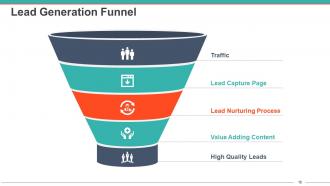
If you have a brilliant idea for the new product launch, our New Product Marketing PowerPoint Presentation Slides can portray your thoughts convincingly. This interesting and captivating new product development PPT graphics contains various impressive slides such as marketing tactics, launch tactics, momentum, product launch detailed plan, marketing plan, product launch marketing process, external communication tools, lead generation activities, lead generation funnel, press release plan, social media plan, sales training plan, marketing budget etc. Product launch marketing ideas PowerPoint background can likewise be utilized for a few more topics such as entering a new market, product development, product launch, launch strategy, market entry strategy, new product introduction, product led go-to-market strategy, product lifecycle management, product management, new product strategy, new product success factors and Product marketing powerpoint presentation slides. Download new product promotion PPT to present a process of taking product conception to market. Ensure each individual gets due attention with our New Product Marketing Powerpoint Presentation Slides. It helps create inclusive conditions.
People who downloaded this PowerPoint presentation also viewed the following :
Content of this Powerpoint Presentation
New product introductions are common. Scores of products get launched every year, but not all launches are successful. According to Clayton Christensen, a professor at Harvard Business School, more than 30,000 new products are introduced each year and 95% fail. You must do everything correctly to ensure it doesn't happen to you.
Do you also need help with a rollout plan for the new product launch? Check out these slides by SlideTeam.
If you are wondering why new product launches are essential, you should know that such actions offer the following benefits:
-
New products help open up new revenue sources and generate more revenue
-
New product launches help companies create the interest of the target audience and can enhance brand recognition
-
They also help boost the loyalty of existing customers/clients as you have more to offer them
Marketing is an essential part of a new product launch, and if you need help with that, you must follow all the essential steps and take all of them. The following presentation slides by SlideTeam will help you understand the key new product marketing steps and guide you through each step.
Want a new product sales strategy, too? This link is right for you.
Template 1- Tactics: Buzz
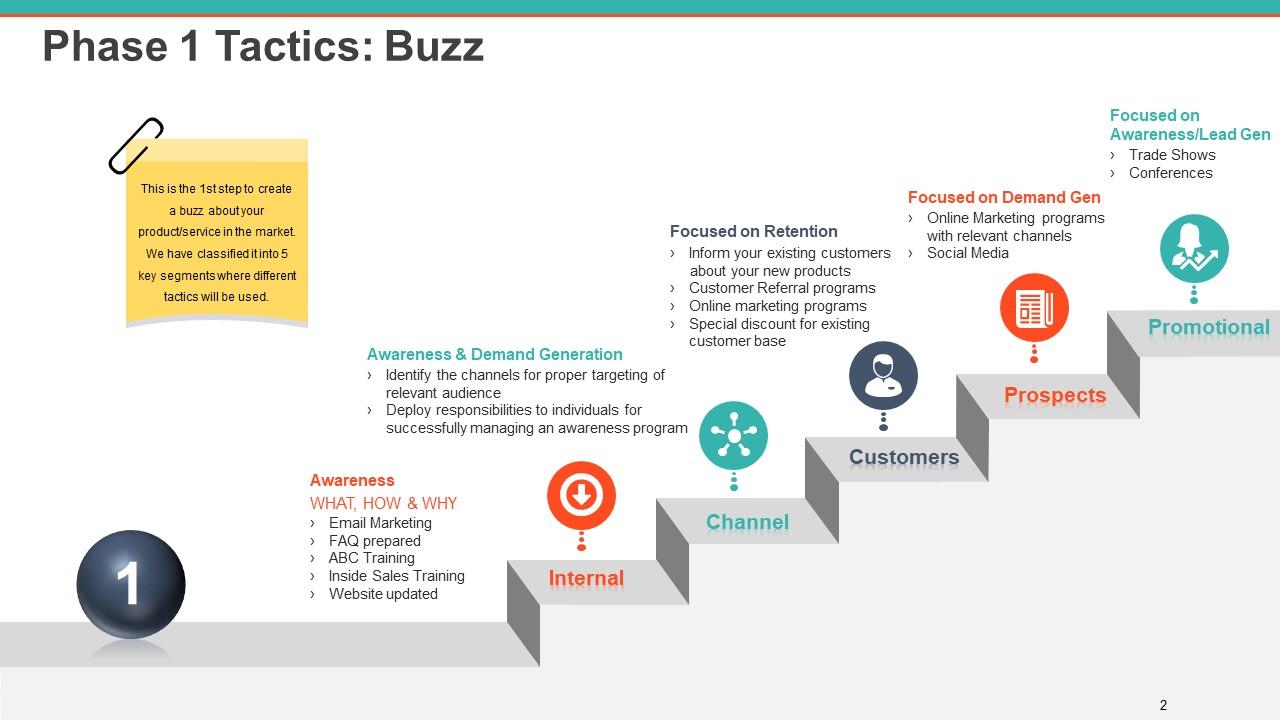
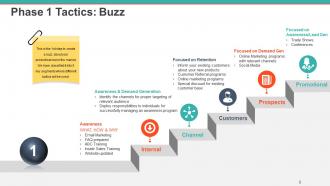
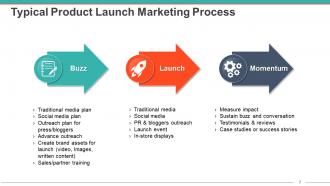
Creating a buzz or hype about a new launch is one of the most critical and useful strategies for attracting product attention. To ensure that a buzz or hype is created quickly, you need to use different methods, like email marketing to build awareness via email, FAQ creation to answer common questions, and website updation. You can also use different tactics to create a buzz about the new product, like talking to existing customers about the new launch or approaching prospective ones in specific target zones.
Template 2- Tactics: Launch
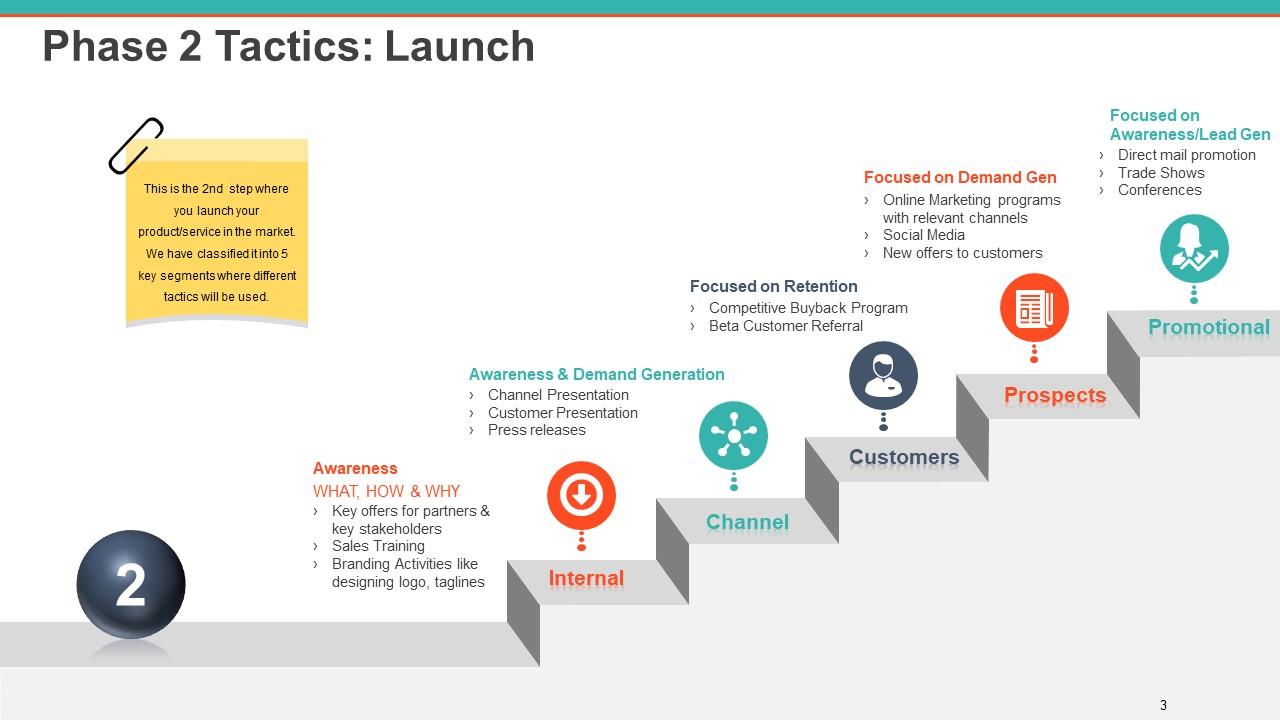
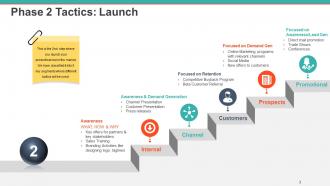
Most marketing experts know that the launch stage is critical in introducing new products. In this stage, the focus is not only on awareness about the new product but also on key factors like demand generation, lead generation, and retention, among others. This PPT Template highlights different strategies to help entice customers.
Template 3- Tactics: Momentum
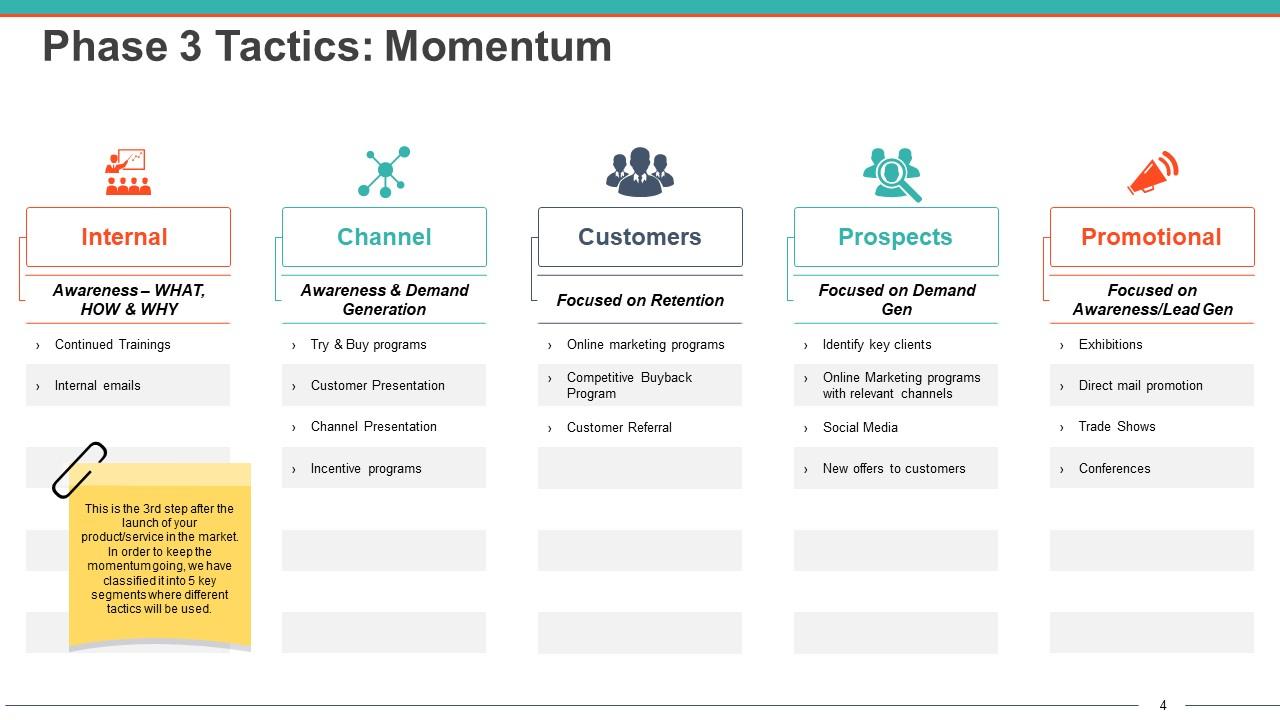
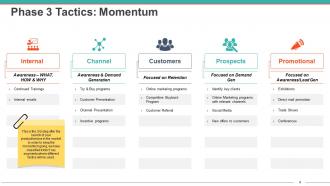
Another critical stage in new product development is momentum. The targets in this stage are achieved via internal factors like awareness, internal emails, regular training, etc. There is also a focus on customer retention, demand generation, and channels for awareness and demand generation. Promotional actions like exhibitions, trade shows, conferences, etc., are key to this stage.
Template 4- Product Launch Detailed Plan
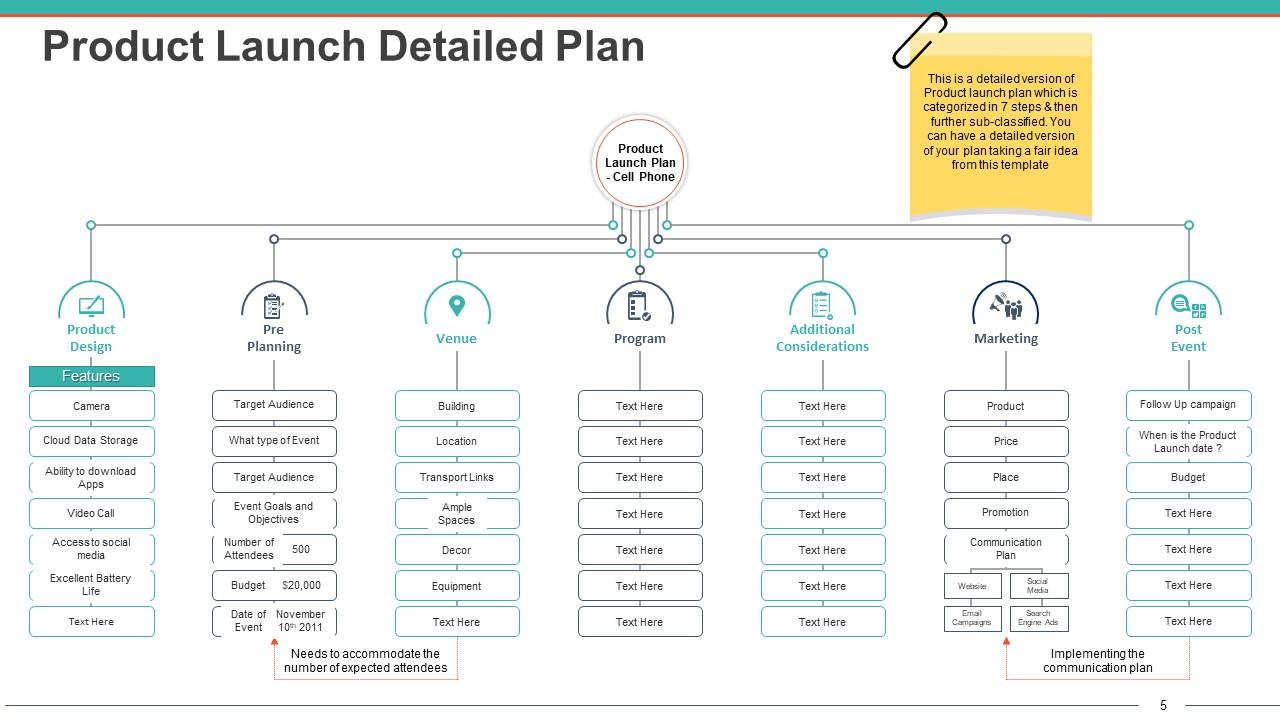
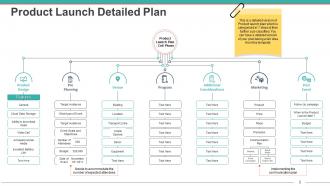
Use this PowerPoint Presentation to prepare a detailed plan for your product launch. It covers every aspect of a product launch that varies from product design, pre-planning, venue selection, program creation, marketing activities, and several post-event tasks. Each stage is defined in detail in the slide. For instance, selecting the venue includes small steps like choosing a building, finalizing the location, picking the right transport links, ensuring proper décor and equipment placement, etc.
Template 5- Marketing Plan
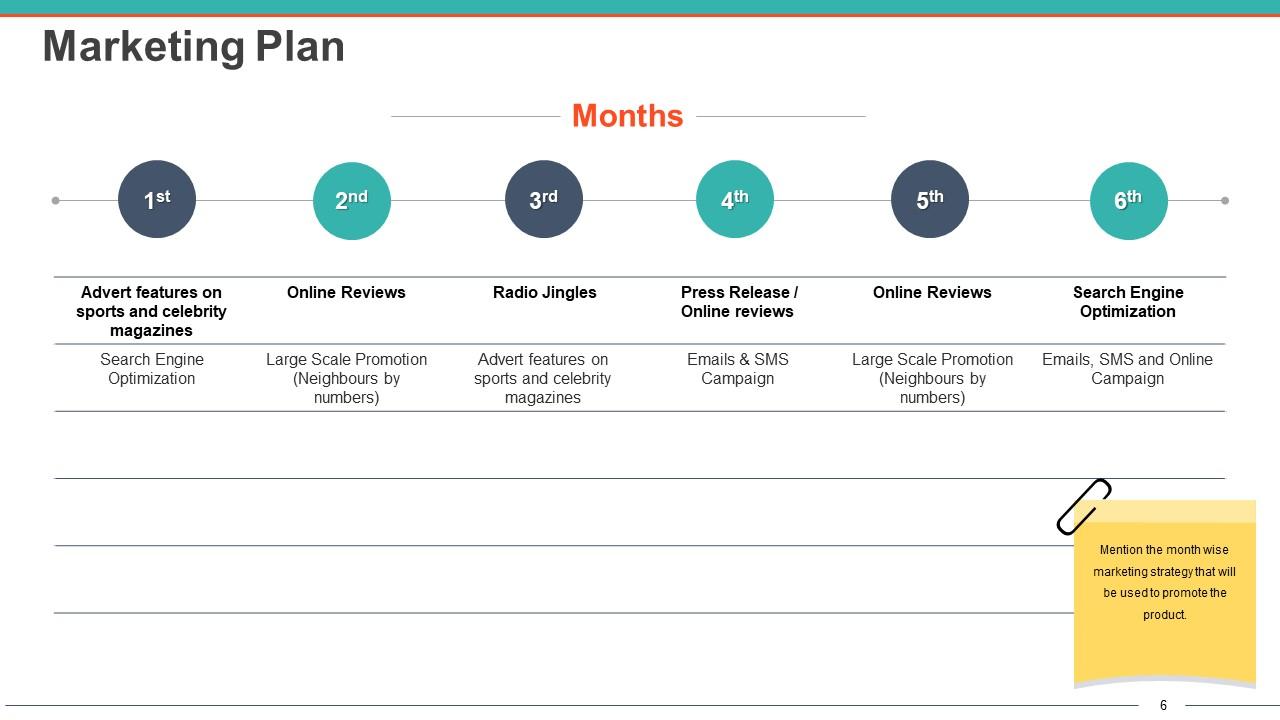
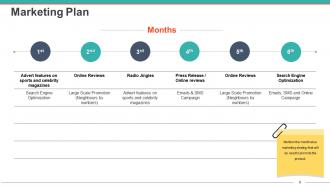
A marketing plan is an indispensable part of any new product launch. It helps market the product correctly, increases awareness, and can play a crucial role in reaching the right target audience at the right time.
This slide covers the essential aspects of a marketing plan for a new product. Examples of marketing strategies include online reviews, SEO submissions, PRs, ads, and radio jingles. You can use all these effectively and efficiently track their success.
Template 6- Lead Generation Activities
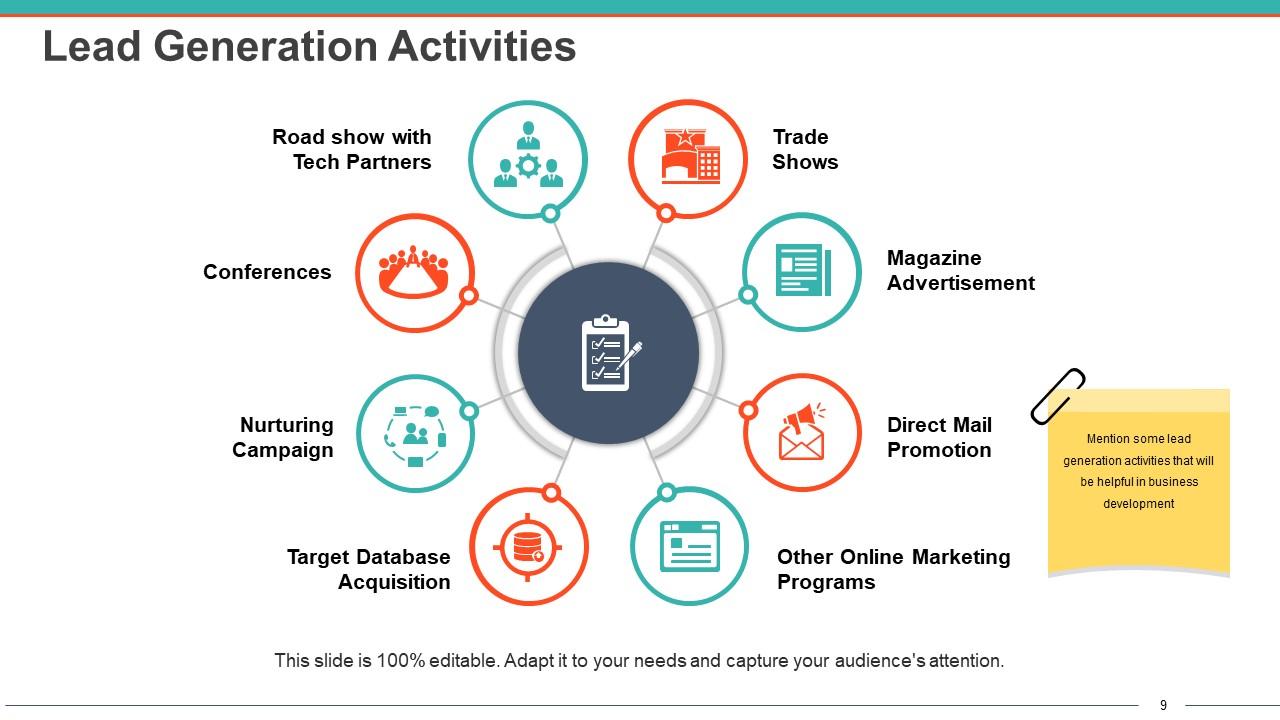
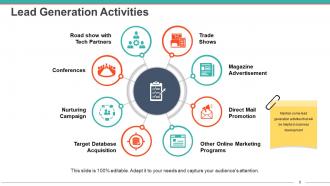
Lead generation helps reach out to customers and motivate them to purchase. Some useful and effective methods used in this slide are road shows, trade shows, conferences, advertisements, campaigns, direct mail, and online marketing activities. This will help to promote your product.
Template 7- Press Release Plan
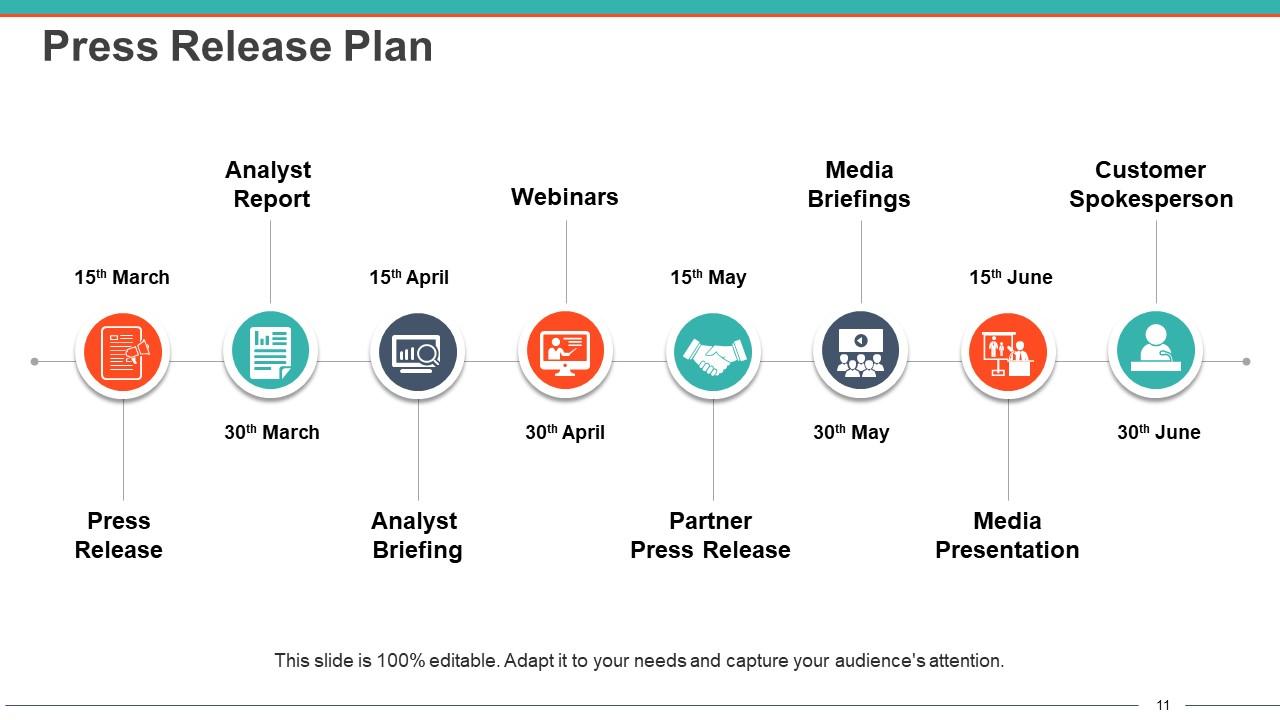
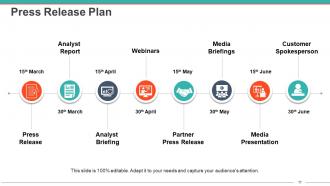
Press releases are one of the simplest ways to raise awareness about a new product. The above slide will help you decide when to publish a press release, when to schedule media briefings, how to do a media presentation, and how to communicate smartly with a customer spokesperson, among other things.
Template 8- Social Media Plan
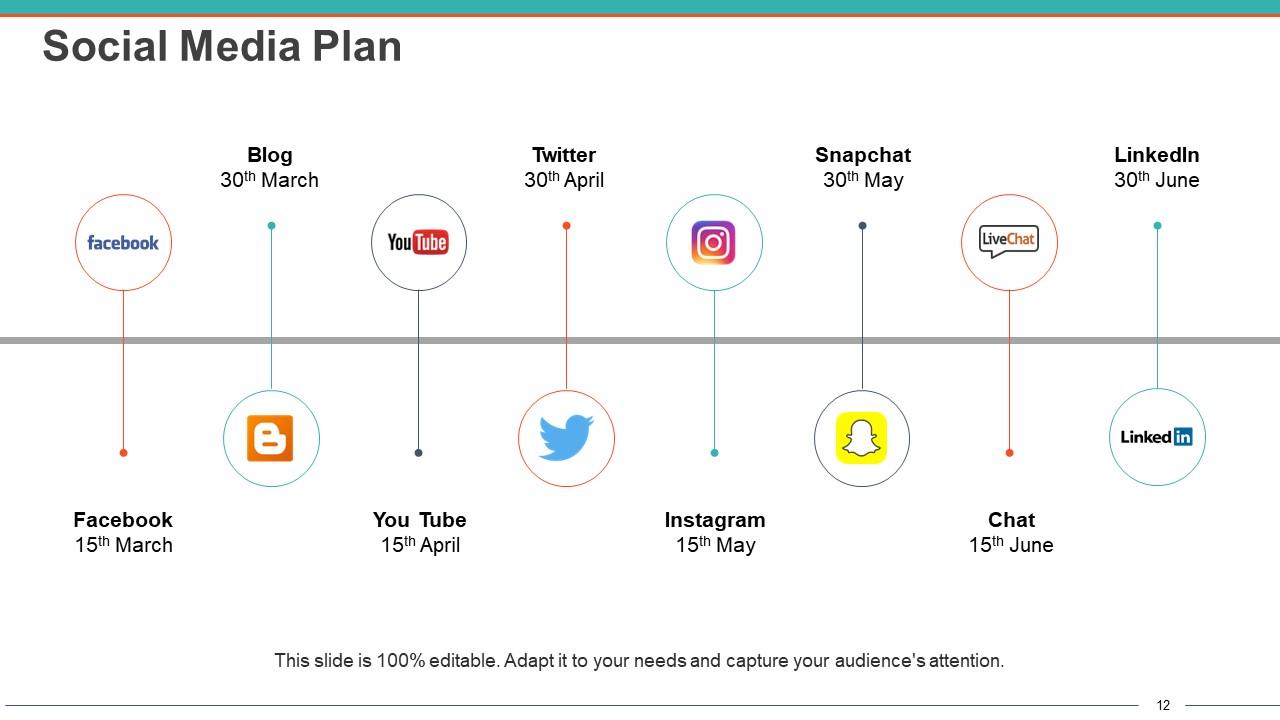
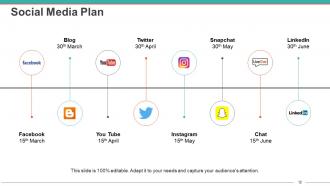
4.9 billion people use social media today. Therefore, a social media plan is crucial for any product launch. Use this PPT Template to create a thorough social media plan. This will help develop strategies for using social media platforms like Twitter, Snapchat, Facebook, LinkedIn, and YouTube. You can also use this creative slide to decide when and how frequently to post on each platform mentioned above to keep the audience engaged and energized.
Template 9- Sales Training Plan
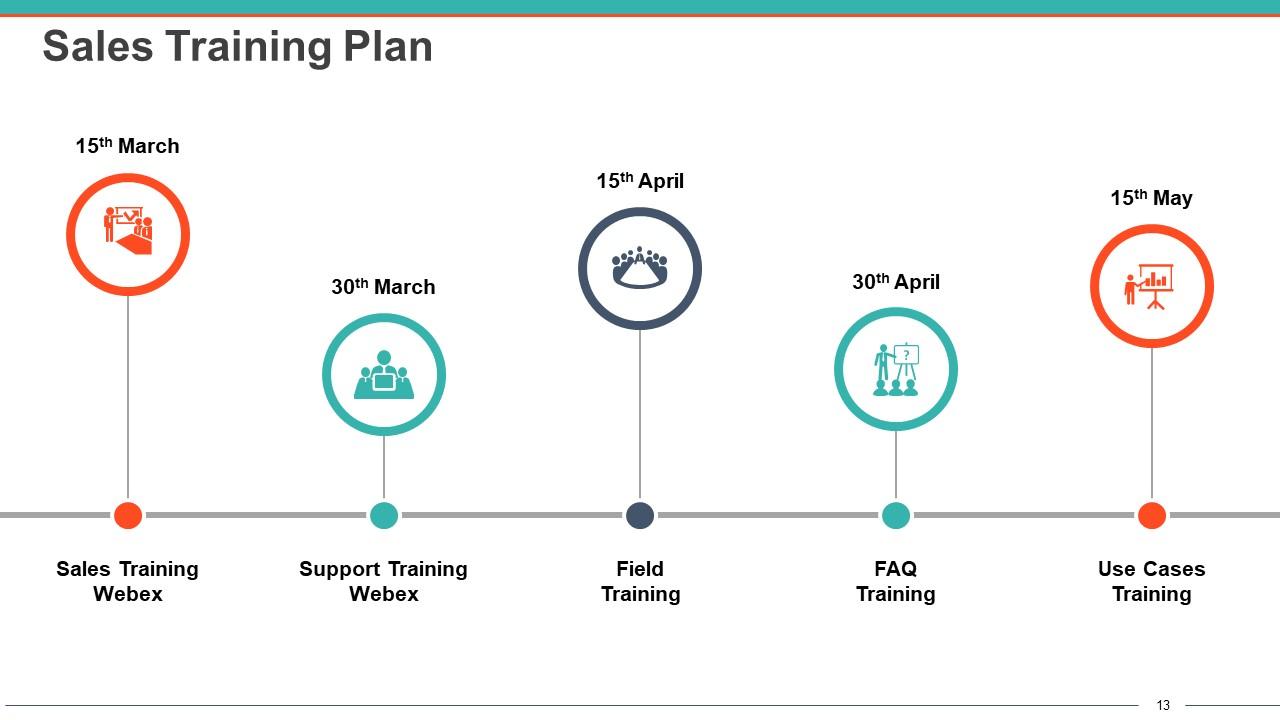
The sales team plays a crucial role in promoting a new product. Therefore, they need to be aware of all its features so that they can easily choose how to pitch it to potential customers (both existing and new ones).
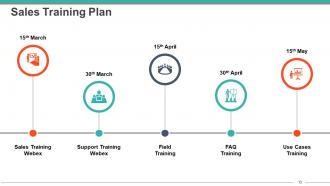
The slide by SlideTeam mentioned above can help create a comprehensive sales plan in simple steps. It focuses on the essential types of training such as sales training, field training, support training, use case training, and FAQ training. You can select a date for each training type and ensure that everyone who needs this training is present and everything is clear.
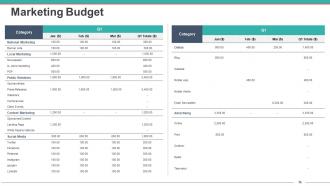
Template 10- Marketing Budget
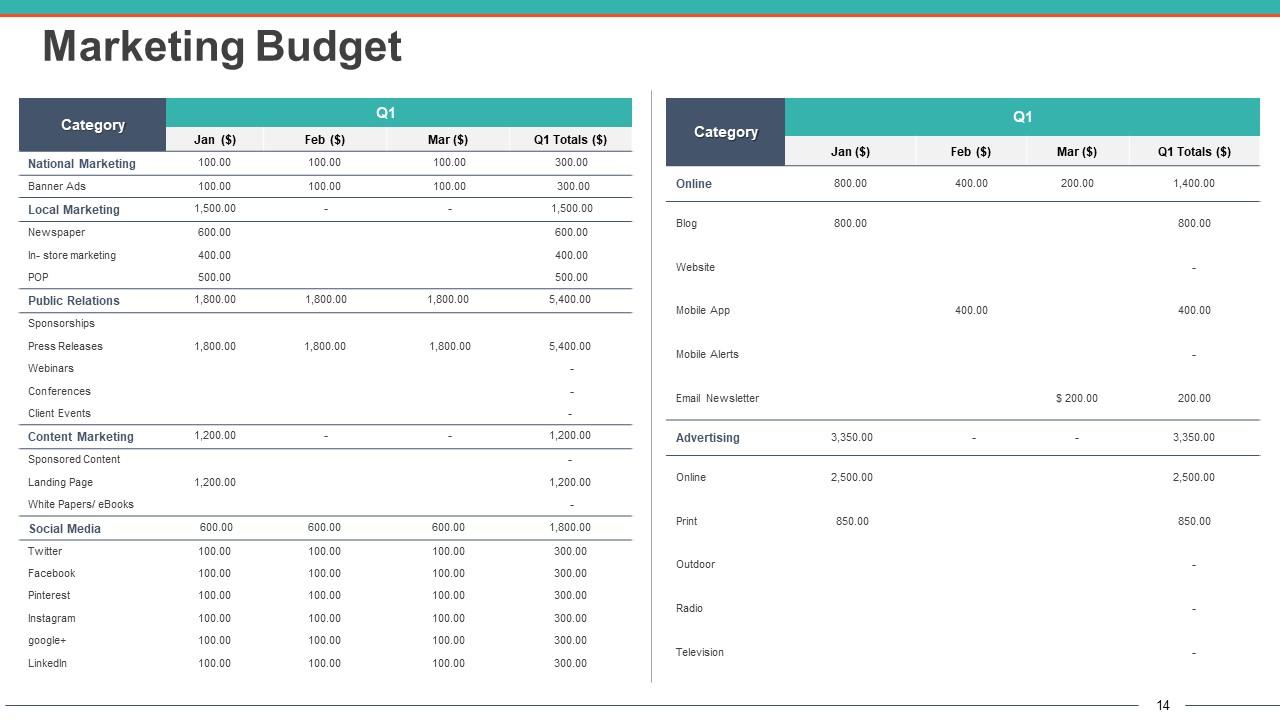
When launching a new product in any industry or sector, it is critical to create a marketing budget. Doing so ensures that you track all the money spent on marketing activities and that you only spend what you can afford.
This slide by SlideTeam can help you to create a detailed marketing budget. With it, you can also assign funds to different marketing efforts, such as public relations, blog creation, social media marketing, local and national marketing, and content marketing. It also has a provision for website updation, which you must pay attention to. You can add or remove any of these activities, start with one, and then add more. With this slide, you can also change the months and the amount allocated for each month. Isn't that amazing?
Final Words
If you plan a product launch, you need the slides above to make the marketing process smooth, efficient, and stress-free. Designed by the highly skilled, knowledgeable, and talented people of SlideTeam, the slides cover all essential elements and have well-researched content. You can modify everything from the content to the images or graphics to make them unique. Get them now!
Do you need help with market analysis for new product development? Take advantage of these innovative slides, which will simplify the process!
New Product Marketing Powerpoint Presentation Slides with all 30 slides:
Our New Product Marketing Powerpoint Presentation Slides are equipped with all the facilities. They build belief that you can do it.




FAQs for New Product Marketing
Ok so first thing - figure out exactly who you're targeting and what makes you different. Map everything out 6-8 weeks ahead (trust me on this timeline). Your messaging needs to be tight across email, social, PR, all that stuff. And this is embarrassing but I have to say it - actually tell your sales team what's happening! I've watched companies forget this basic step. Get customer support ready too since people will have questions. Oh, and pick your metrics beforehand so you're not scrambling later trying to figure out if it worked.
Honestly, market research is like your safety net before you blow money on something nobody wants. It helps you figure out if your product idea actually makes sense and who'd buy it. Pricing becomes way less of a guessing game too. I always tell people to do some quick surveys or focus groups early on - even if it feels like extra work. The data gives you real talking points that connect with people instead of just winging your messaging. Plus you'll know where to actually find your customers. Skip this step and you're basically throwing darts blindfolded.
Honestly, branding is just your product's whole vibe and what it promises people. It's the reason someone picks you instead of the competition before they've even tested anything. Like, I bet you chose your phone partly because of the brand image, right? Not just the technical stuff. Good branding builds that trust upfront so customers actually want to try something new. Plus it helps you charge more and gets people talking - everyone loves repping brands they connect with. Just don't oversell what you've actually got though. Nothing tanks a launch faster than promising the world and delivering... well, not the world.
Honestly, you gotta start way earlier than you think - like 6-8 weeks out. Tease the hell out of it with behind-the-scenes stuff first. Make a hashtag that doesn't suck and get people using it early. Micro-influencers are actually better than big ones sometimes if their crowd matches yours. Stories and Reels are where it's at right now since the algorithm loves that stuff. Run some kind of contest to get user content flowing. Each platform's different though - what works on TikTok won't fly on LinkedIn. But yeah, consistency is everything. Oh, and start building that email list too while you're at it.
Focus on the metrics that actually move the needle - sales, conversion rates, customer acquisition cost. Those matter way more than vanity stuff. Website traffic and email opens are still worth tracking though. If you're doing SaaS, user adoption rate is critical. Customer satisfaction scores predict whether people will stick around, so don't skip those. Honestly, I'd keep it to like 5-7 metrics max or you'll go crazy trying to track everything. Oh, and set up some kind of dashboard - makes the weekly reviews so much easier.
Customer feedback is seriously your best friend here. Mine reviews, surveys, support tickets - whatever you can get your hands on. People will straight up tell you stuff your team would never figure out internally. Here's what I'd do: steal their exact words for your messaging. If everyone's saying "super intuitive" instead of "user-friendly," go with that. Also dig into what they hate about your competitors - that's marketing gold right there. The trick is making this a regular thing, not just a one-time deep dive. You'll be surprised how much your positioning improves when it's based on actual user voices.
Start with the obvious stuff - age, income, that kind of thing. But honestly, the behavioral data is where it gets interesting. Like, how are people actually dealing with this problem right now? I'm a big believer in digging into the psychographic stuff too because it shows you what really makes people tick when they're deciding to buy something. Geography matters if your product is location-specific. Don't just pick one approach though - mix it up. Create maybe 3 or 4 different customer profiles from your research, then test your messaging on each group. See what clicks. You can tweak it later.
Honestly, stories just hit different than listing features. People remember them way better too - we're literally hardwired for it. So instead of "our product has X and Y," tell them about the customer whose problem you actually solved, or that lightbulb moment when you first thought of the idea. Makes it feel real, not like another random thing they could buy anywhere. You can work this into your launch videos, social stuff, emails - pretty much everywhere. Find one solid story that shows real impact, then just tweak it for different places. Way more memorable than specs.
Honestly, most startups mess up by not really knowing who they're building for. They try to appeal to everyone and end up appealing to no one. Don't rush to launch either - I know it's tempting when you're excited, but test the hell out of everything first. So many products die because teams get antsy and ship too early. Oh, and here's something people always underestimate: teaching customers about new stuff takes forever. Like, way longer than you think. My advice? Talk to actual users before you build anything. Figure out your one main thing you do well. Start with a tiny group of people who really get it, then expand from there.
Honestly, influencers are great because their followers already trust them, so when they recommend your stuff it doesn't feel like an obvious ad. You want someone whose audience actually matches who you're trying to reach - don't get caught up in follower counts. Micro-influencers in your specific niche usually have way better engagement anyway. They can do unboxing videos, tutorials, or just naturally work your product into their regular posts. The whole point is it looks authentic, like they're genuinely using and loving whatever you sent them. Much better than traditional advertising that everyone just scrolls past these days.
Honestly, demo videos are your best friend for new products - show people exactly what it does. Get some early users to give you testimonials, even if they're rough around the edges. Micro-influencers are way better than big names because their followers actually trust them. Don't bother with every social platform though, you'll burn out. Pick maybe 2-3 and nail those instead. Email sequences work great since nobody buys stuff immediately anymore. Oh, and start planning content like 6 weeks out - I learned that the hard way!
Price totally affects how people view your product's quality. Go too low? Everyone thinks it's junk - trust me, made that mistake myself. But price too high and you'll scare away customers. People use price as their first clue about what they're buying, honestly it's kind of annoying but that's just how brains work. You want to hit that sweet spot where the price matches what customers think they're getting. Check out what competitors charge first. Then maybe run some tests with different price points - see how people react. Their perception will shift based on those numbers alone.
Dude, you'll save yourself so much money and headache if you test first. Get a small group to try it out before going all-in - their feedback is gold compared to just hoping it works. Bugs are cheap to fix now, expensive later. I learned this the hard way on my first project, honestly. The data helps you figure out who actually wants your thing and how to talk to them. Way too many people I know skipped this and burned through their budget on something nobody wanted. Start with like 20 beta users or test in one city first.
Dude, timing can literally make or break everything. Hit it too early and you're basically paying to educate everyone else's future customers - not fun. But wait too long? You're scraping for whatever's left after the big players grab market share. Look for that sweet spot where people actually want what you're building, but it's not crazy crowded yet. Also think about outside stuff - like, don't launch during a recession or right when your industry's biggest conference is happening. Honestly, I'd rather be slightly early than late. Do your research on market readiness, then find a window where you can actually own the conversation for a few weeks.
Cross-promotion is honestly your best bet for new launches. Way cheaper than hunting down brand new customers from scratch. Map out which current products have similar customer types, then build those connections into your launch plan. Bundle stuff together or create upgrade paths - whatever makes sense. The trick is making sure products actually complement each other (not just random combos that sound good on paper). Your existing customers already trust you, so use that! Make your established products the gateway to introduce the new one. It's like having a head start in a race.
-
Helpful product design for delivering presentation.
-
Nice and innovative design.