


New product introduction marketing plan powerpoint presentation slides
Product decisions carry the center for all the marketing activities and are considered vital for market success. The marketing plan keeps its focus on the preferences, requirements, and appeal of the customers and helps in introducing the product to the public. Here is a professionally designed template on the New Product Introduction Marketing Plan that will combine all the functions of the sales and marketing teams for you. The template highlights the critical points for the awareness, such as the problems and the solutions for each. Businesses can showcase the services provided by them and the crucial objective for this whole product. You can even display the results using line charts and column charts for sales and revenue and fulfill the new marketing plan designs criteria. The proposal exhibits the ideas, financials, and roadmap for the target market, also the critical strategies in combination with product marketing. The monthly timeline presents the picture for each task and the investment details for every phase. One can showcase their company, client’s values, and information related to target prospects. Book a free demo and talk to our experts, and access the markets best template for New Product Introduction Marketing Plan. Download the template now.










You must be logged in to download this presentation.


Do you want to remove this product from your favourites?
PowerPoint presentation slides
Deliver this complete deck to your team members and other collaborators. Encompassed with stylized slides presenting various concepts, this New Product Introduction Marketing Plan Powerpoint Presentation Slides is the best tool you can utilize. Personalize its content and graphics to make it unique and thought-provoking. All the sixty four slides are editable and modifiable, so feel free to adjust them to your business setting. The font, color, and other components also come in an editable format making this PPT design the best choice for your next presentation. So, download now.

People who downloaded this PowerPoint presentation also viewed the following :
Content of this Powerpoint Presentation
Slide 1: This slide introduces New Product Introduction Marketing Plan. State Your Company Name and begin.
Slide 2: This is an Agenda slide. State your agendas here.
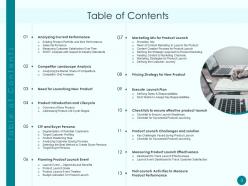
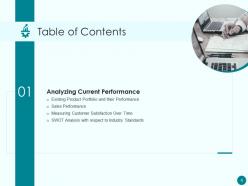
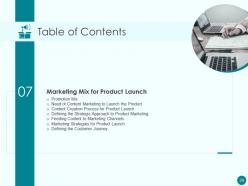
Slide 3: This slide shows Table of Content for the presentation.
Slide 4: This slide presents Table of Content highlighting Analyzing Current Performance.
Slide 5: This slide displays existing product portfolio with annual sales figures and top five performing products offered by the company.
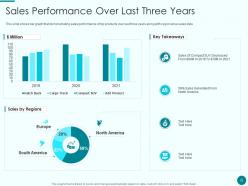
Slide 6: This slide represents bar graph that demonstrate sales performance of top products over last three years.
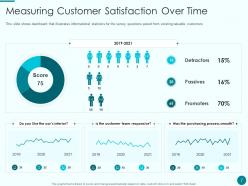
Slide 7: This slide showcases dashboard that illustrates informational statistics for the survey questions.
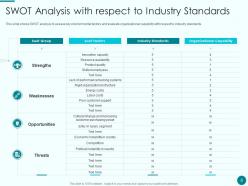
Slide 8: This slide shows SWOT analysis to assess key environmental factors and evaluate organizational capability.
Slide 9: This slide presents Table of Content for the presentation.
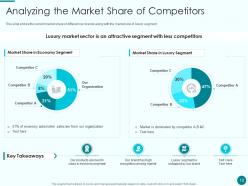
Slide 10: This slide displays the current market share of different car brands along with the market size of luxury segment.
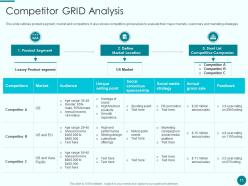
Slide 11: This slide outlines product segment, market and competitors.
Slide 12: This slide showcases Table of Content highlighting Need for Launching New Product.
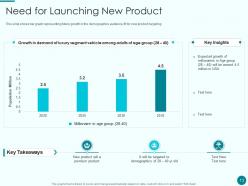
Slide 13: This slide shows bar graph representing future growth in the demographics audience.
Slide 14: This slide presents Table of Content highlighting Overview of New Product.
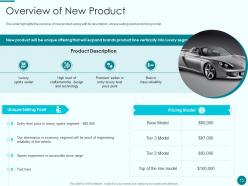
Slide 15: This slide highlights the overview of new product along with its description.
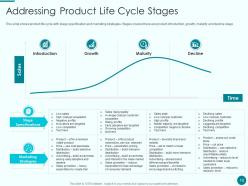
Slide 16: This slide represents product life cycle with stage specification and marketing strategies.
Slide 17: This slide showcases Table of Content for the presentation.
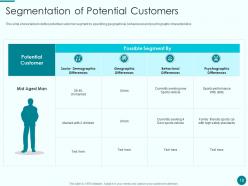
Slide 18: This slide shows table to define potential customer segment by specifying geographical, behavioural and psychographic characteristics.
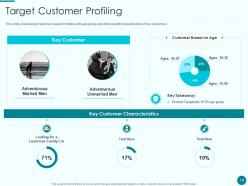
Slide 19: This slide presents target customer base information with age group and other specific characteristics of key customers.
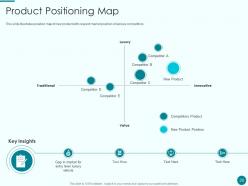
Slide 20: This slide illustrates position map of new product with respect market position of various competitors.
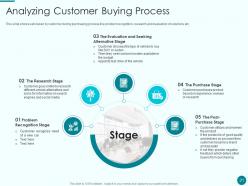
Slide 21: This slide represents sets taken by customer during purchasing process like problem recognition, research and evaluation of solutions etc.
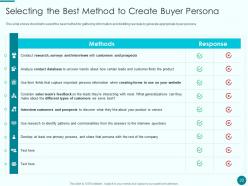
Slide 22: This slide showcases checklist to select the best method for gathering information and distilling raw data to generate appropriate buyer persona.
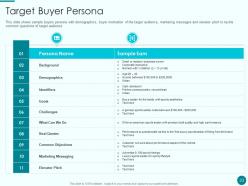
Slide 23: This slide shows sample buyers persona with demographics, buyer motivation of the target audience, marketing messages, etc.
Slide 24: This slide presents Table of Content highlighting Planning Product Launch Event.
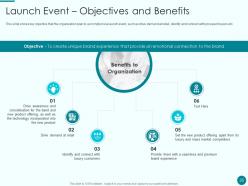
Slide 25: This slide displays key objective that the organization plan to accomplish via launch event.
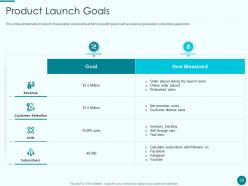
Slide 26: This slides represents table to specify measurable, observable and time specific goals.
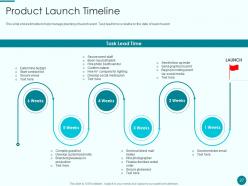
Slide 27: This slide showcases timeline to help manage planning of launch event.
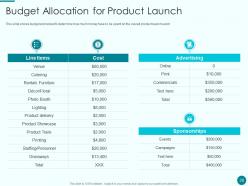
Slide 28: This slide shows budget worksheet to determine how much money have to be spent on the overall product launch event.
Slide 29: This slide presents Table of Content highlighting Marketing Mix for Product Launch.
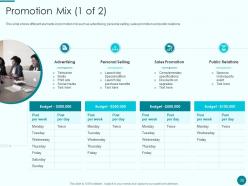
Slide 30: This slide displays different elements in promotion mix such as advertising, personal selling, sales promotion and public relations.
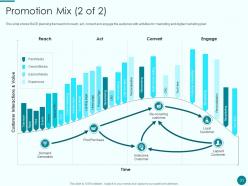
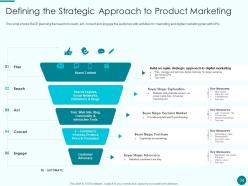
Slide 31: This slide represents RACE planning framework to reach, act, convert and engage the audience.
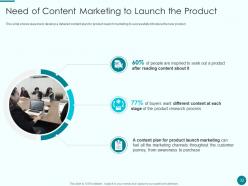
Slide 32: This slide showcases reasons to develop a detailed content plan for product launch marketing.
Slide 33: This slide shows steps to generate content framework to target audience for effective product launch marketing.
Slide 34: This slide presents RACE planning framework to reach, act, convert and engage the audience.
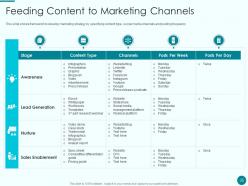
Slide 35: This slide displays framework to develop marketing strategy by specifying content type, social media channels and posting frequency.
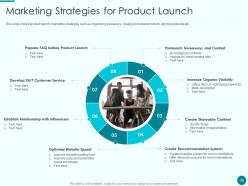
Slide 36: This slide represents product launch marketing strategies such as organizing giveaways, create promotional content, optimize website etc.
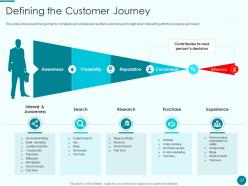
Slide 37: This slide showcases customer journey in interacting with the company and brand.
Slide 38: This slide shows Table of Content highlighting Pricing Strategy for New Product.
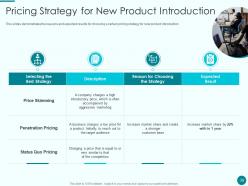
Slide 39: This slide presents Pricing Strategy for New Product Introduction.
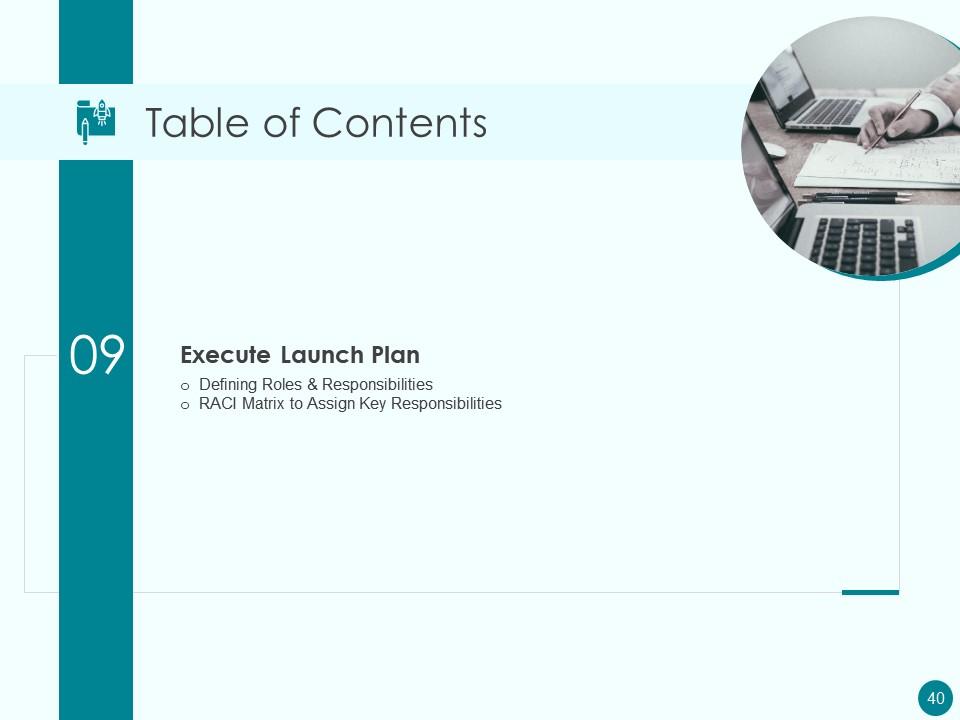
Slide 40: This slide displays Table of Content highlighting Execute Launch Plan.
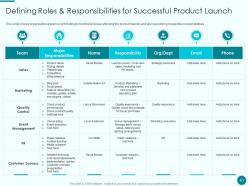
Slide 41: This slide represents organizational teams contributing to functional areas affecting the product launch.
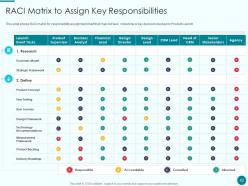
Slide 42: This slide showcases RACI matrix for responsibility assignment chart.
Slide 43: This slide shows Table of Content for the presentation.
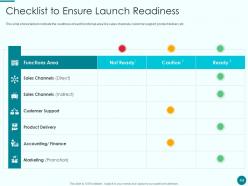
Slide 44: This slide presents table to indicate the readiness of each functional area like sales channels, customer support, product delivery etc.
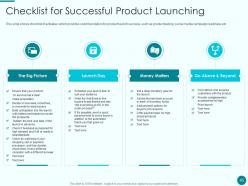
Slide 45: This slide displays checklist of activates which provides solid foundation for product launch success.
Slide 46: This slide represents Table of Content highlighting Product Launch Challenges and solution.
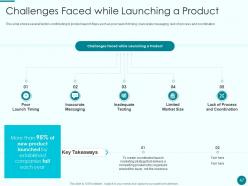
Slide 47: This slide showcases several factors contributing to product launch flops such as poor launch timing, inaccurate messaging, etc.
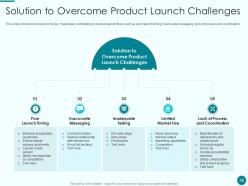
Slide 48: This slide shows Solution to Overcome Product Launch Challenges.
Slide 49: This slide presents Table of Content highlighting Measuring Product Launch Effectiveness.
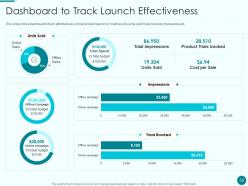
Slide 50: This slide displays dashboard to track effectiveness of new product launch.
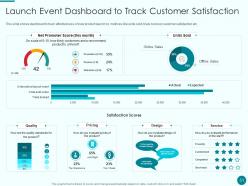
Slide 51: This slide represents dashboard to track effectiveness of new product launch by metrices like units sold, trials booked, customer satisfaction etc.
Slide 52: This slide showcases Table of Content highlighting Post-Launch Activities to Measure Product Performance.
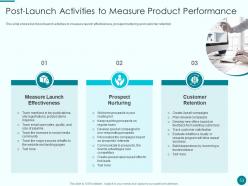
Slide 53: This slide shows list of post launch activities to measure launch effectiveness, prospect nurturing and customer retention.
Slide 54: This slide presents Icons for New Product Introduction Marketing Plan.
Slide 55: This slide is titled as Additional Slides for moving forward.
Slide 56: This is Our Mission slide with related imagery and text.
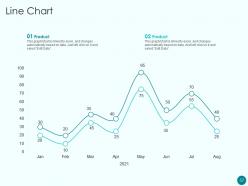
Slide 57: This slide displays Line Chart with two products comparison.
Slide 58: This is an Idea Generation slide to state a new idea or highlight information, specifications etc.
Slide 59: This slide shows Magnifying Glass to highlight information, specifications etc
Slide 60: This slide presents Venn diagram with text boxes.
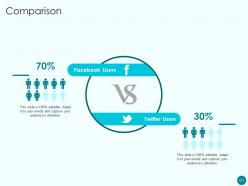
Slide 61: This is a Comparison slide to state comparison between commodities, entities etc.
Slide 62: This slide shows Post It Notes. Post your important notes here.
Slide 63: This slide presents Mind Map with related imagery.
Slide 64: This is a Thank You slide with address, contact numbers and email address.
New product introduction marketing plan powerpoint presentation slides with all 64 slides:
Use our New Product Introduction Marketing Plan Powerpoint Presentation Slides to effectively help you save your valuable time. They are readymade to fit into any presentation structure.
-
Good research work and creative work done on every template.
-
Professional and unique presentations.
