


New Product Idea Screening And Analysis Powerpoint Presentation Slides
Introduce the newly developed product in the market using new product idea screening and analysis PowerPoint presentation slides. Scrutinize the behavior of the consumers, market, and competitors with the help of new product development idea PPT presentation. This content-ready new product development presentation PPT will help you step by step in understanding the customer needs and developing a new product. Go through the new product development process to conduct the product idea screening and give the product a detailed overview to the colleagues and boss. This professionally designed PPT presentation on new product idea covers various slides such as new product introduction, new product detailed overview, understanding customer needs, external sources of an idea, internal sources of ideas, and product roadmap. You can also evaluate your newly developed product using various tools and techniques such as BCG matrix, Ansoff Matrix, Kano Map and more. Conduct a market analysis before introducing your product in the market. Understand the market dynamics using templates like market segmentation and product market mapping. Go step by step to make this product development process easy and straightforward. Folks find our New Product Idea Screening And Analysis Powerpoint Presentation Slides interesting. It exemplifies entertaining education.
Introduce the newly developed product in the market using new product idea screening and analysis PowerPoint presentation ..







































-

- Google Slides is a new FREE Presentation software from Google.
- All our content is 100% compatible with Google Slides.
- Just download our designs, and upload them to Google Slides and they will work automatically.
- Amaze your audience with SlideTeam and Google Slides.
-

Want Changes to This PPT Slide? Check out our Presentation Design Services
-

- WideScreen Aspect ratio is becoming a very popular format. When you download this product, the downloaded ZIP will contain this product in both standard and widescreen format.
-

- Some older products that we have may only be in standard format, but they can easily be converted to widescreen.
- To do this, please open the SlideTeam product in Powerpoint, and go to
- Design ( On the top bar) -> Page Setup -> and select "On-screen Show (16:9)” in the drop down for "Slides Sized for".
- The slide or theme will change to widescreen, and all graphics will adjust automatically. You can similarly convert our content to any other desired screen aspect ratio.
Compatible With Google Slides

Get This In WideScreen
You must be logged in to download this presentation.


Do you want to remove this product from your favourites?
PowerPoint presentation slides
Presenting new product idea screening and analysis presentation slides. This presentation comprises of 69 PPT templates which are editable in PowerPoint. Each template includes professional visuals, diagrams, and icons. Fonts types and size, colors and template background of the presentation slides are changeable. Utilize charts and graphs to highlight statistics highlights. You can download the presentation slides in both wide view (16:9) and standard view (4:3) aspect dimension. The PowerPoint slides are compatible with Google Slides and other online applications. It can be saved in JPG or PDF format. The presentation slides can be personalized by incorporating a business name or logo. Premium product support is provided.

People who downloaded this PowerPoint presentation also viewed the following :
Content of this Powerpoint Presentation
Slide 1: This slide introduces New Product Idea Screening And Analysis. State company name and begins.
Slide 2: This slide showcases Agenda. You can add your agenda as per your business requirement.
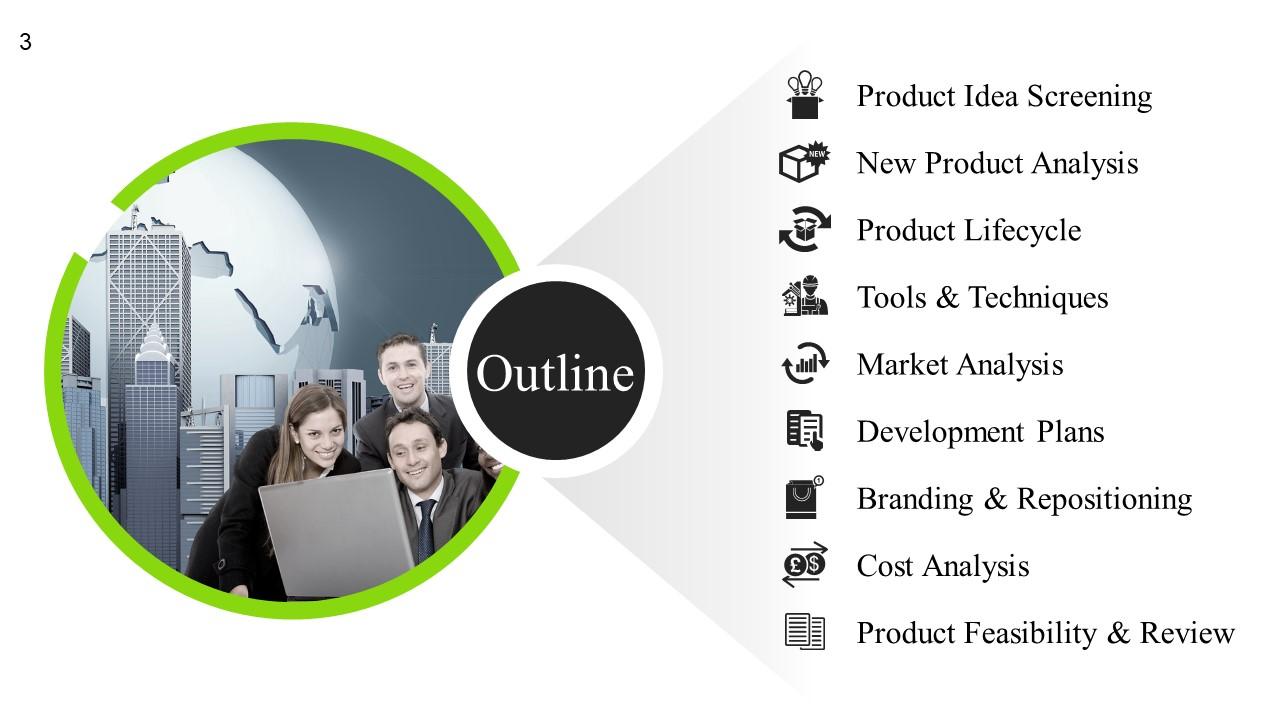
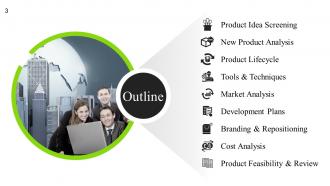
Slide 3: This slide shows Outline. Use this to show your business and product- Product Idea Screening, New Product Analysis, Tools & Techniques, Market Analysis, Development Plans, Branding & Repositioning, Cost Analysis, Product Feasibility & Review, Product Lifecycle.
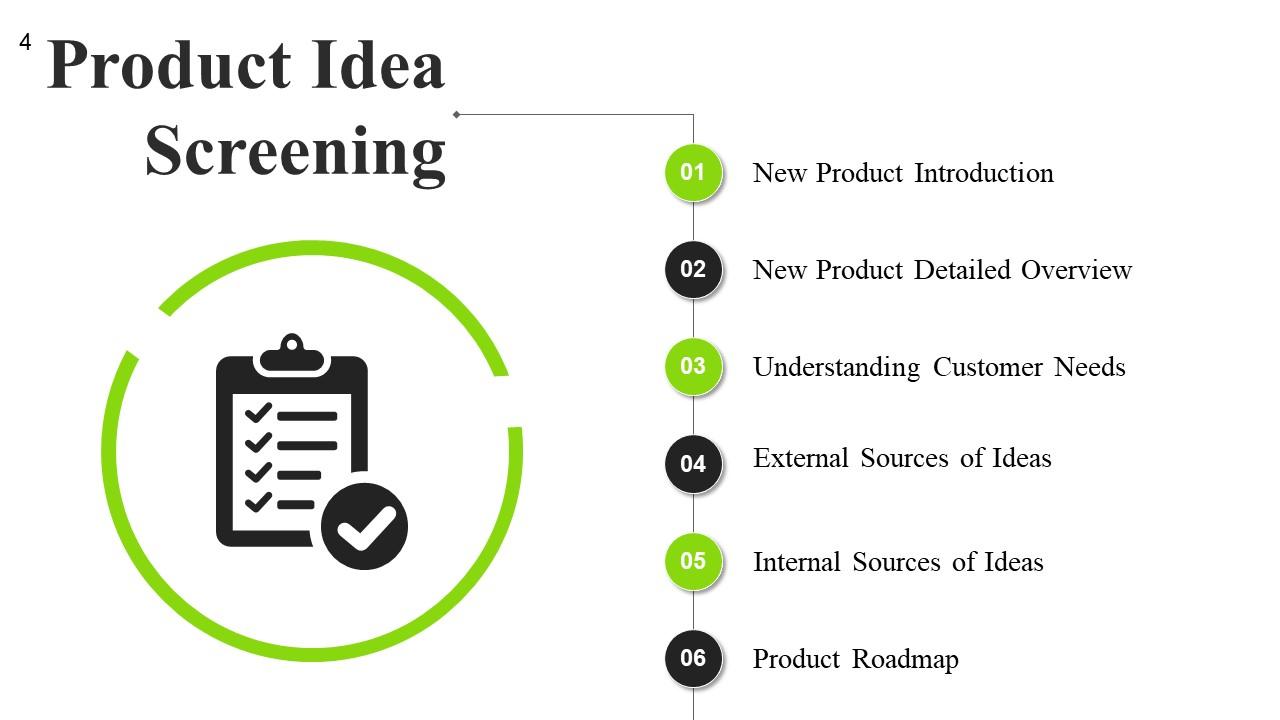
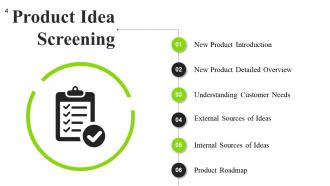
Slide 4: This slide showcases six steps explaing as- New product introduction, New Product Detailed Overview, Understanding customer Need, External sources of ideas, internal sources of ideas, Product roadmap.
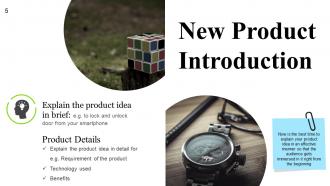
Slide 5: This slide present New Product Introduction showing- External Sources of Ideas, Internal Sources of Ideas.
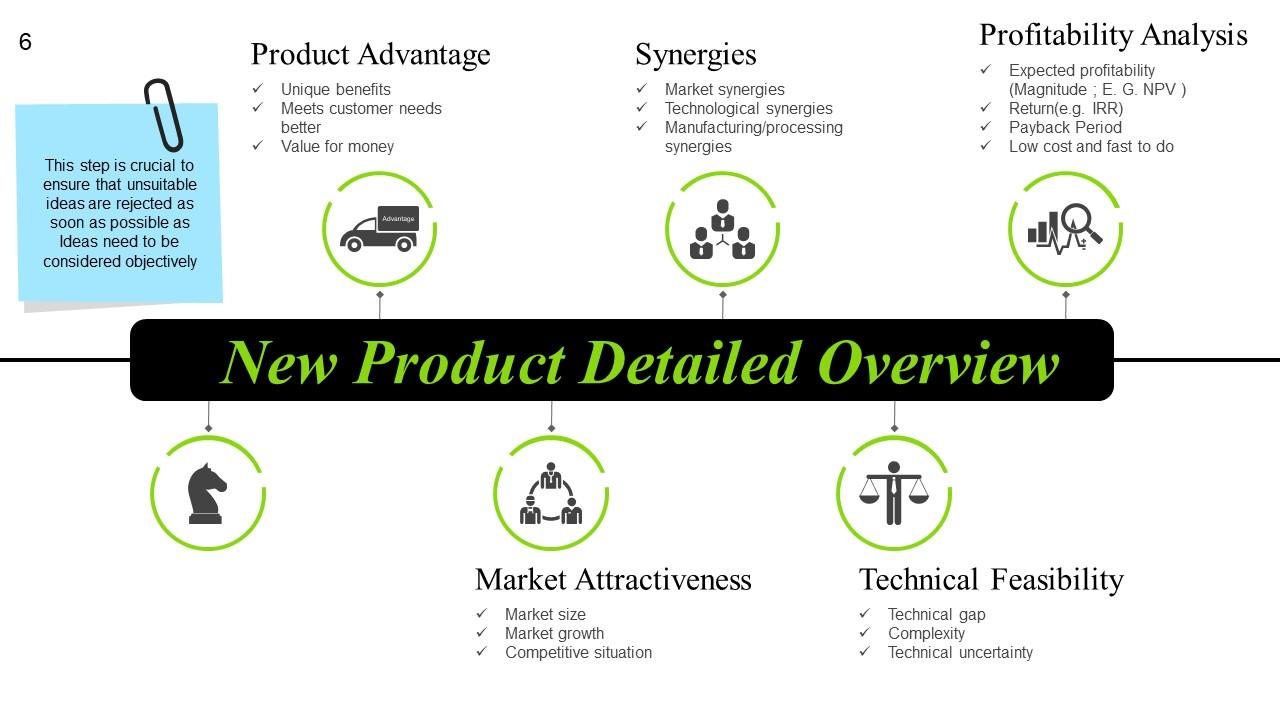
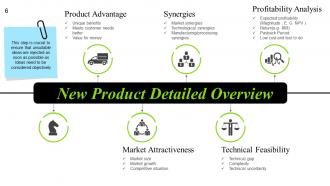
Slide 6: This slide showcases New product detailed overview which also help you to add these various parameters- product advantage, synergies, profitability analysis, market attractiveness, technical feasibilty.
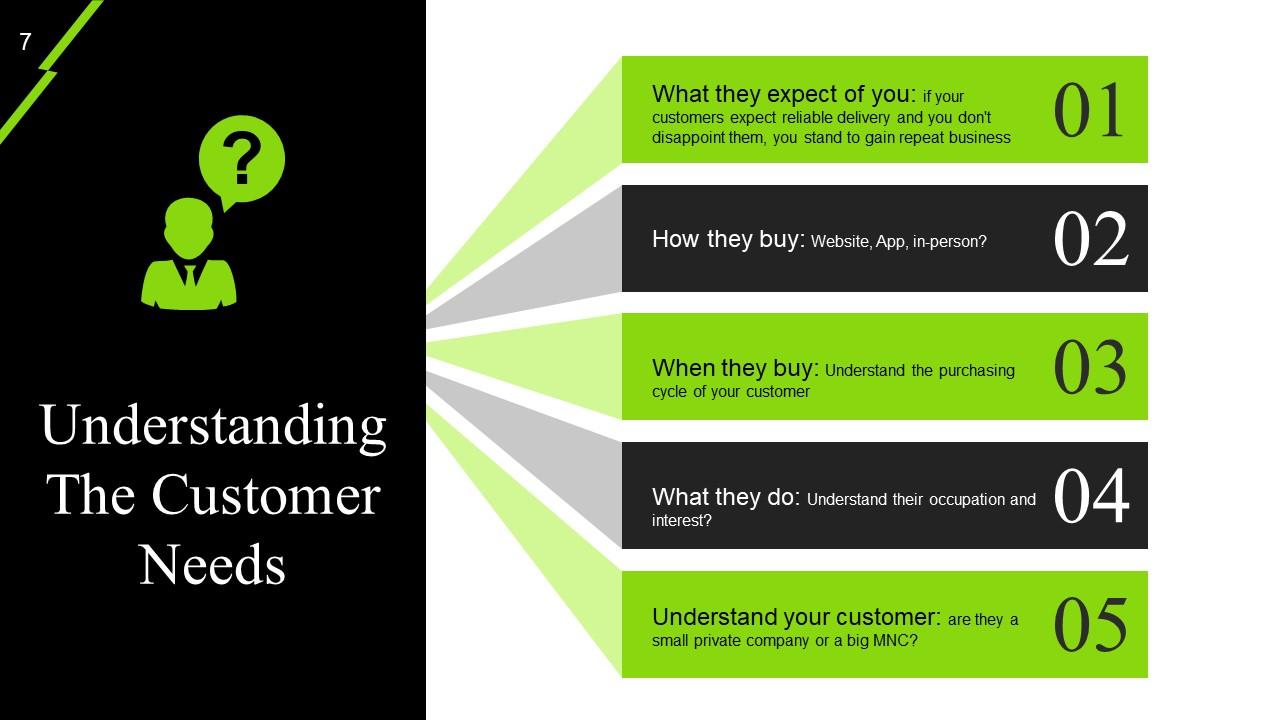
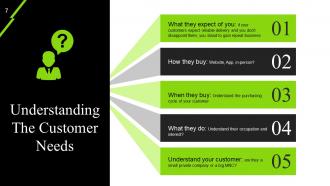
Slide 7: This slide showcases Understanding The Customer Needs. You can add your customer needs as per your requirement.
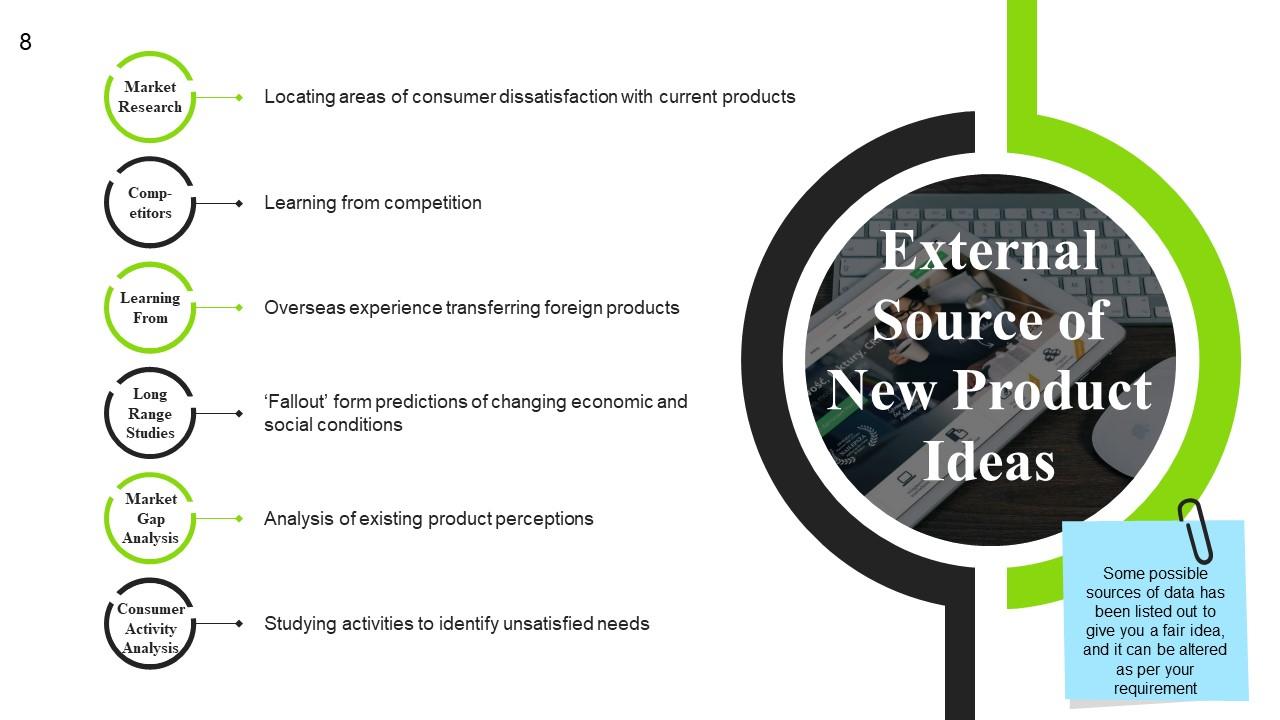
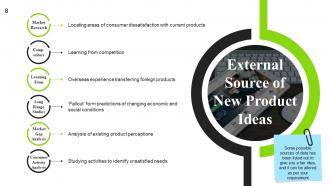
Slide 8: This slide presents External source of new product ideas- Learning From, Comp-etitors, Learning from competition Long Range Studies, Market Gap Analysis, Consumer Activity Analysis, Market Research.
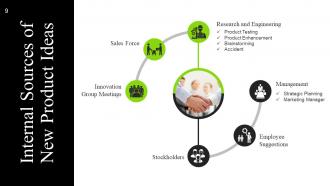
Slide 9: This slide displays Internal Sources of New Product Ideas which further shows different related parameters- Sales Force, Innovation Group Meetings, Research and Engineering Stockholders, Employee Suggestions, Management, Strategic Planning, Marketing Manager.
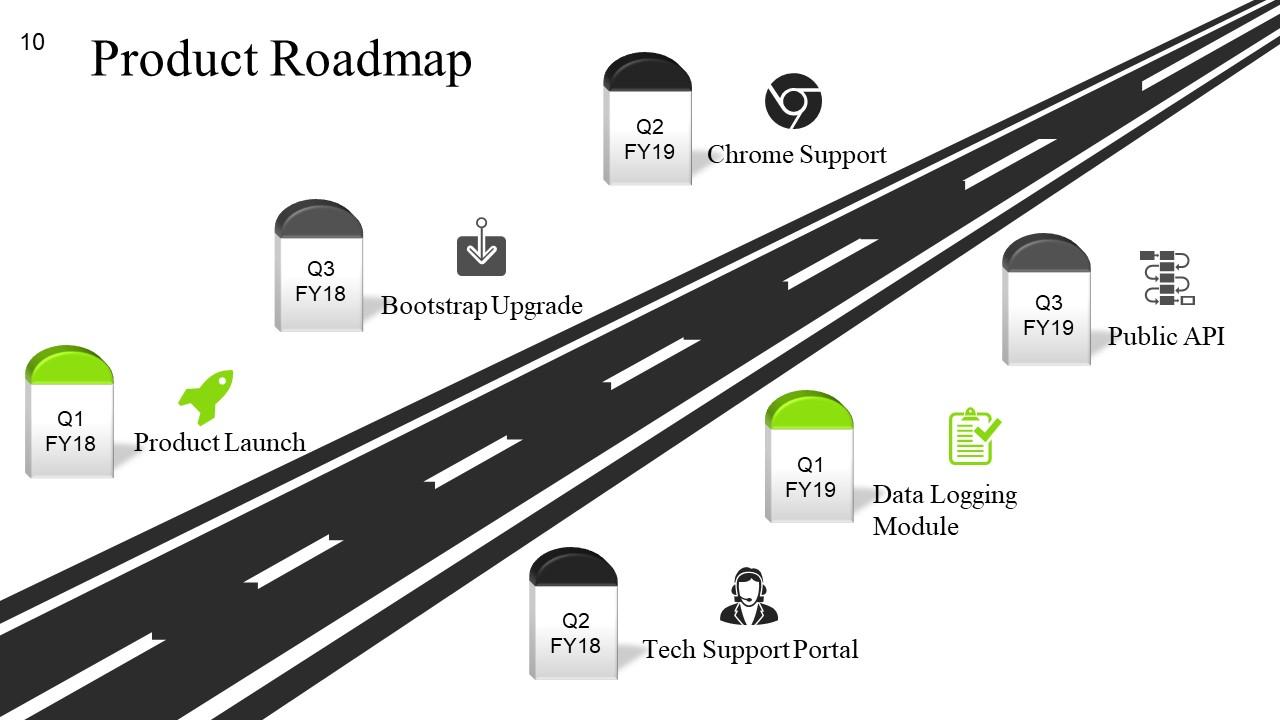
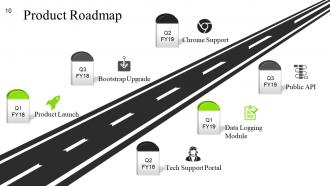
Slide 10: This slide presents roadmap Product Roadmap which shows different financial years. You can use according to your requirement.
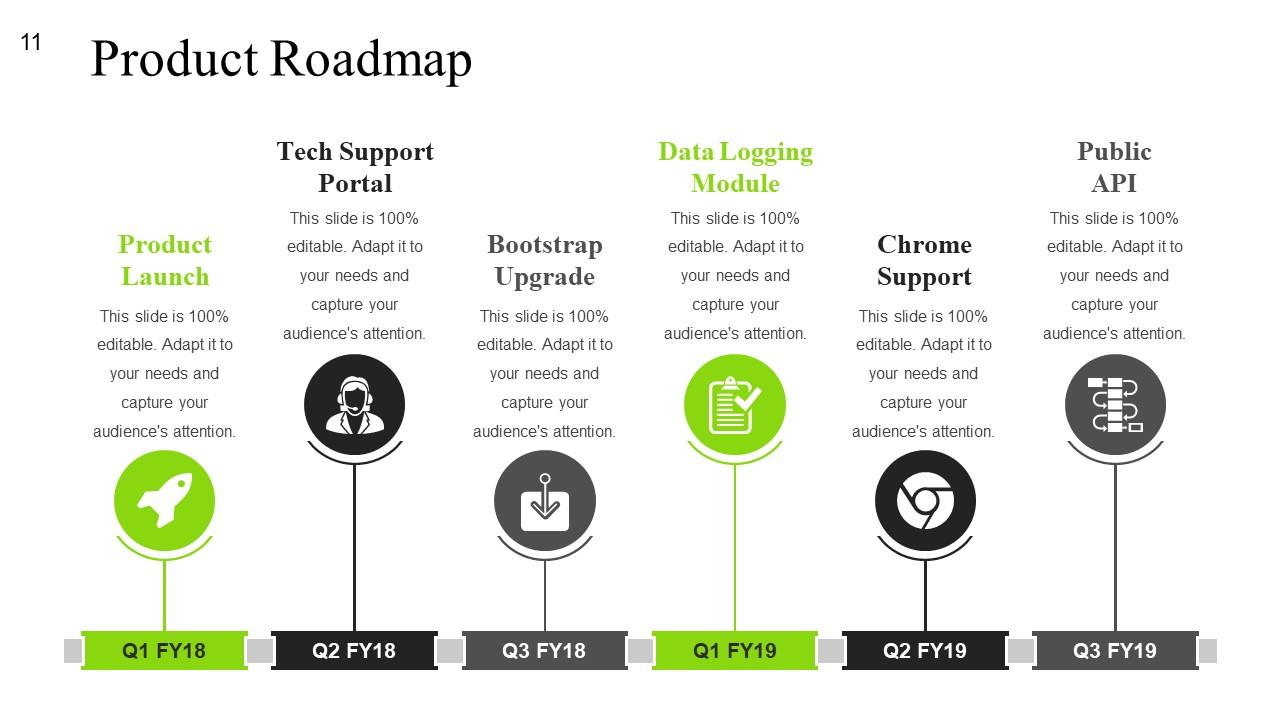
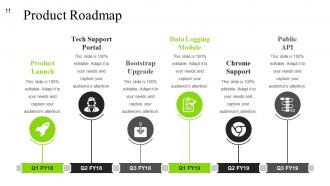
Slide 11: This slide displays Product Roadmap that also shows financial years with these categories- Product Launch, Bootstrap Upgrade, Chrome Support, Tech Support Portal, Data Logging Module, Public API.
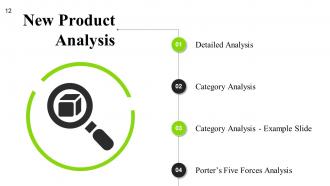
Slide 12: This slide presents New Product Analysis with these categories- Detailed Analysis, Category Analysis, Category Analysis - Example Slide, Porter’s Five Forces Analysis.
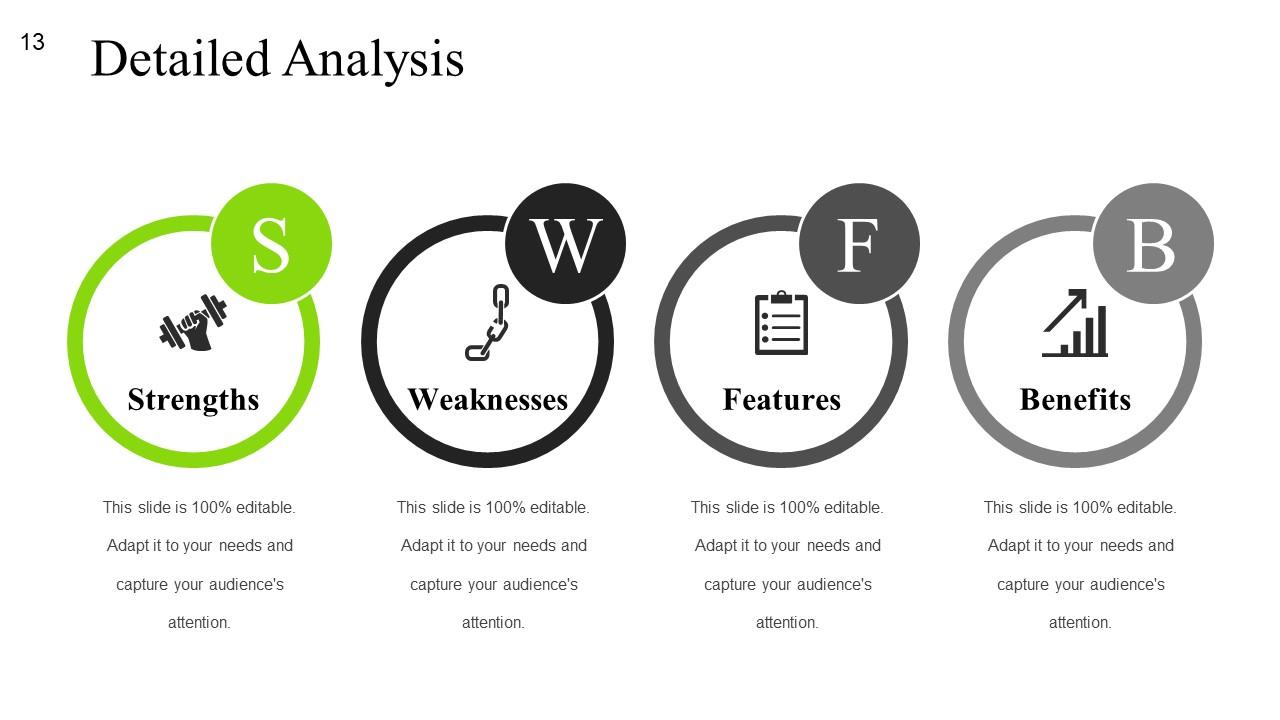
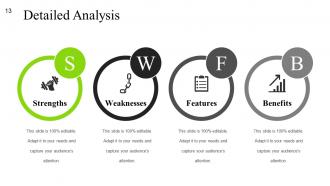
Slide 13: This slide presents Detailed Analysis- Features, Benefits, Strengths, Weakness.
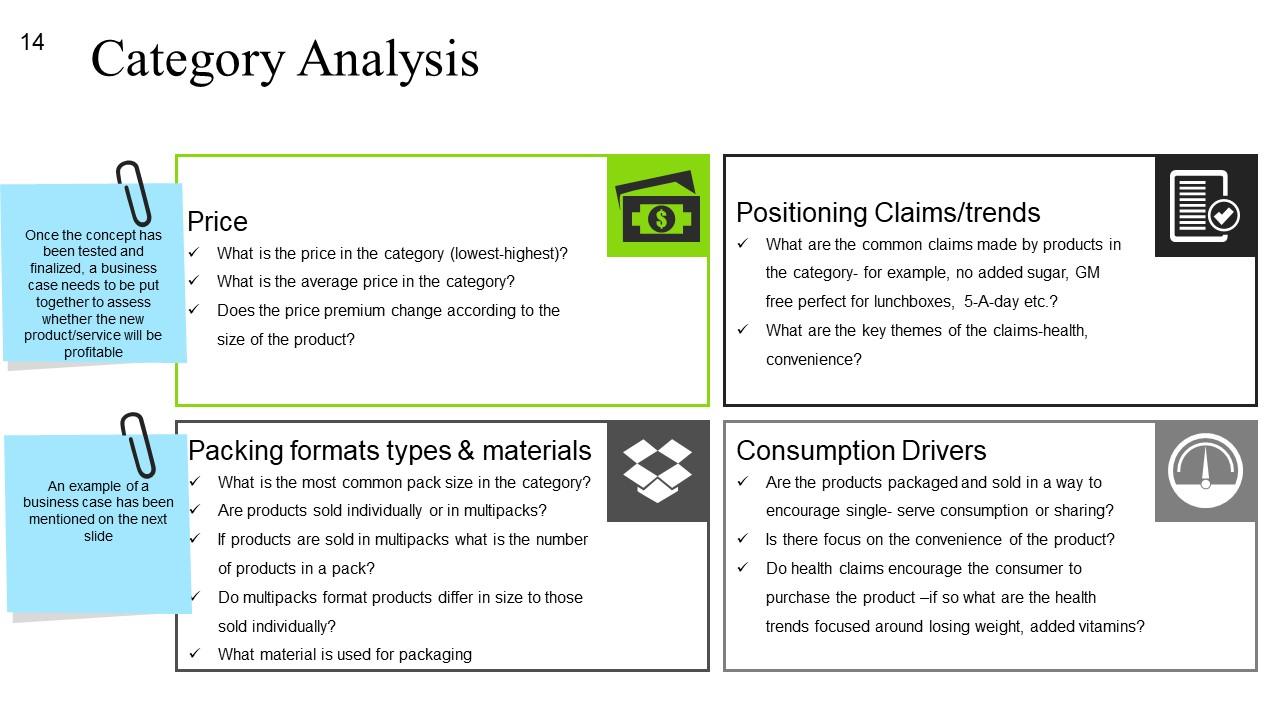
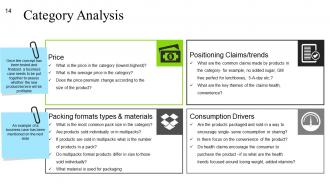
Slide 14: This slide displays Category Analysis with these parameters- Consumption Drivers, Packing formats types & materials, Positioning Claims/trends, Price.
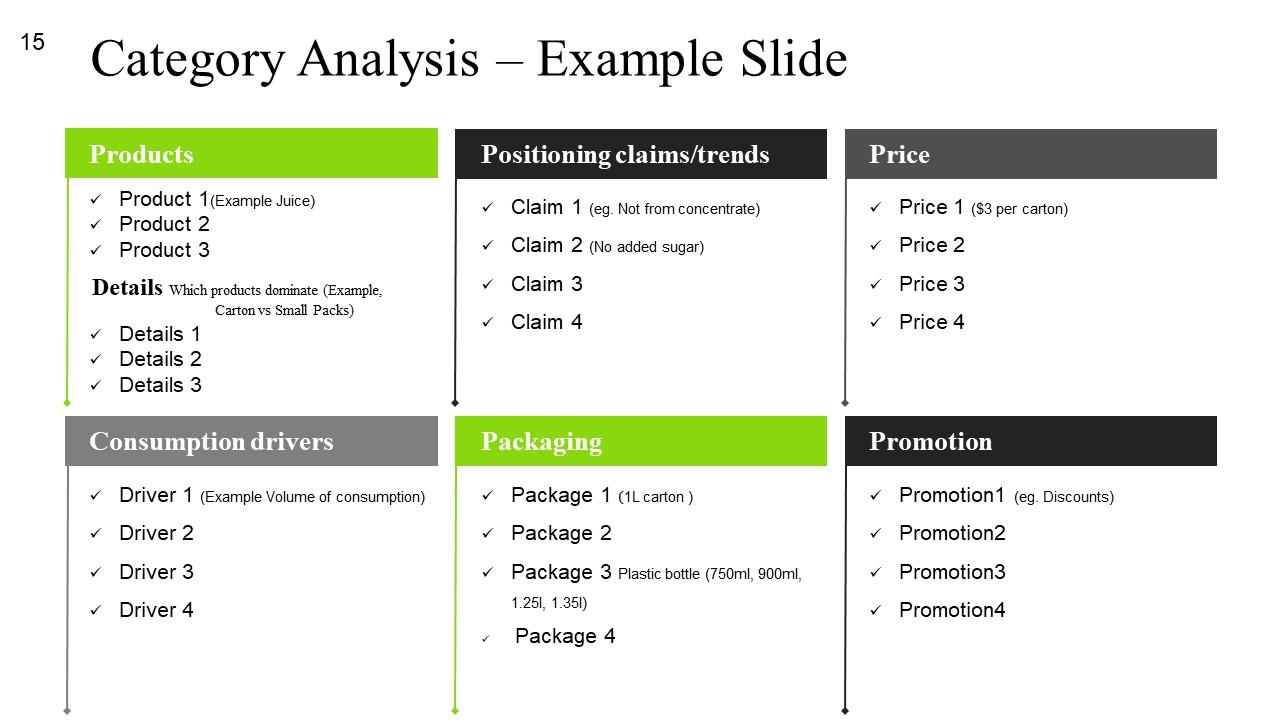
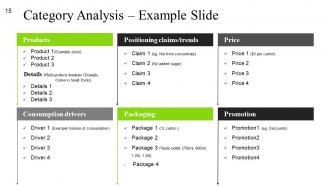
Slide 15: This slide explains about Category Analysis – Example Slide which is divided into sub categories like- Positioning claims/trends, Price, Consumption drivers, Packaging, Promotion, Products.
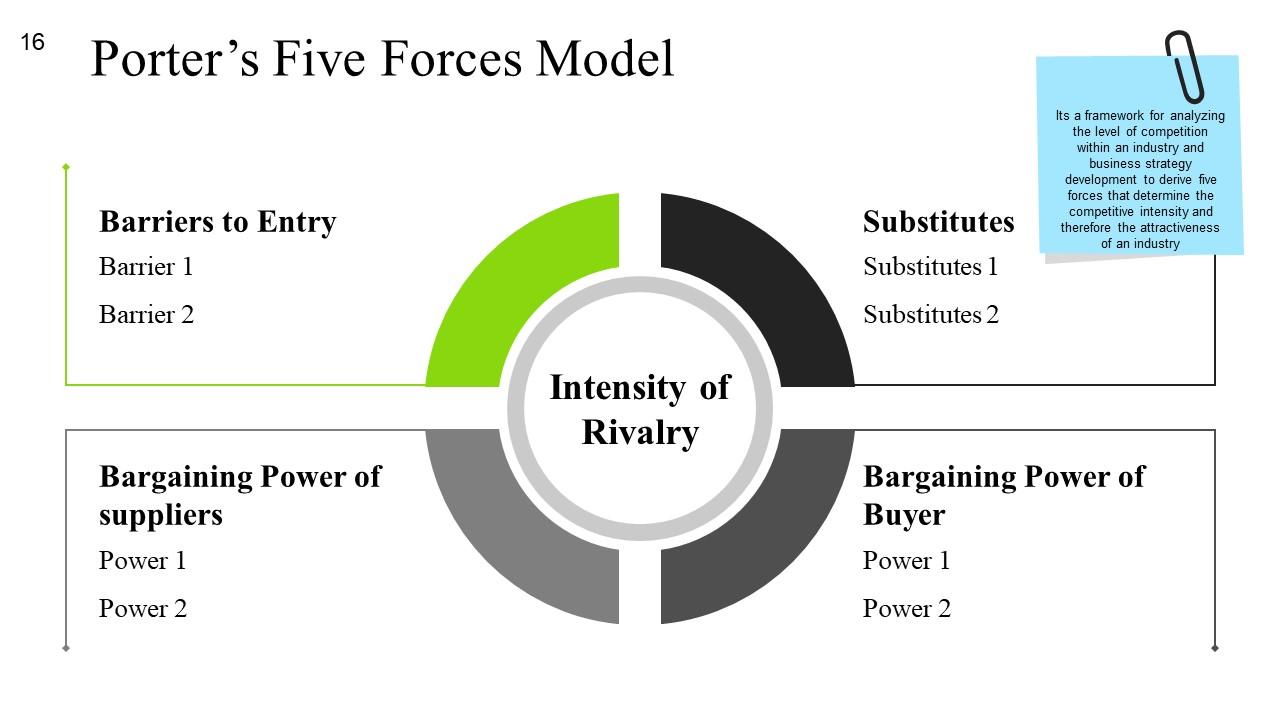
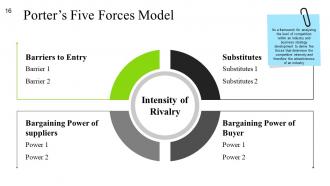
Slide 16: This slide showcases Porter’s Five Forces Model with these parameters- Bargaining Power of suppliers, Bargaining Power of Buyer, Barriers to Entry, Substitutes.
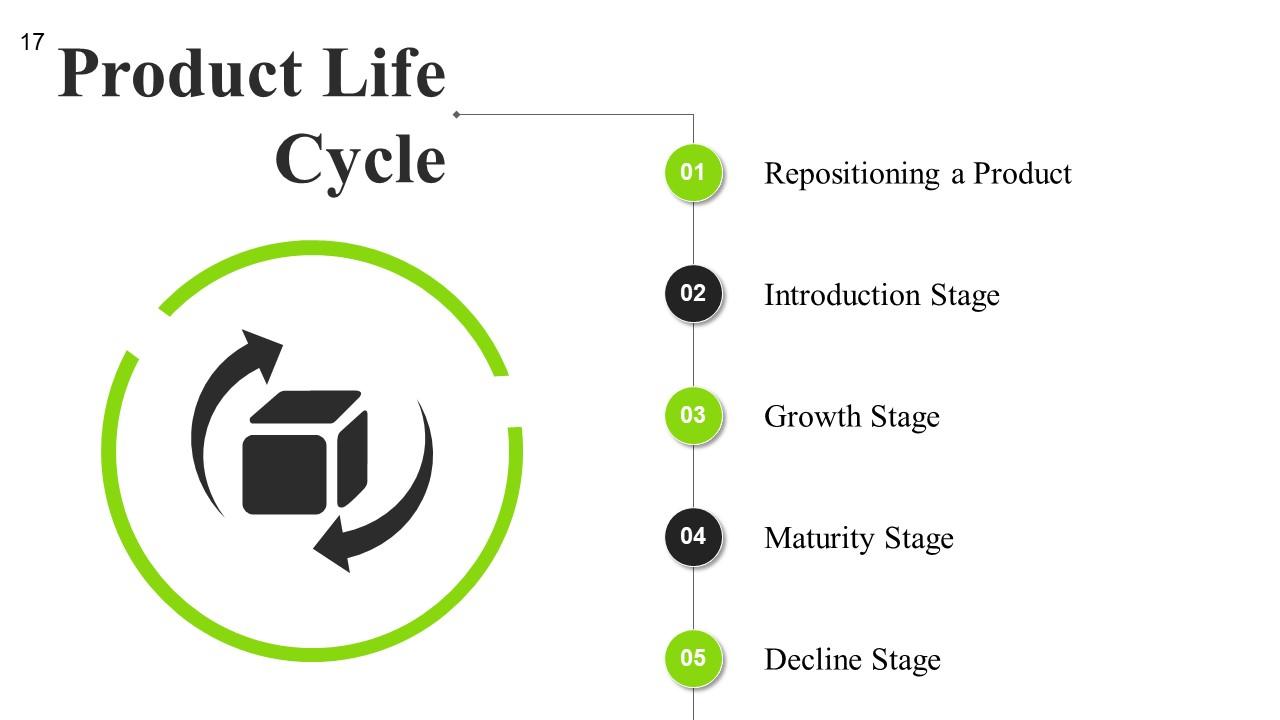
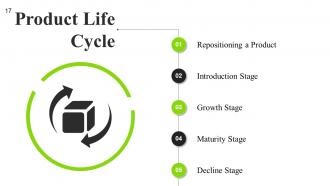
Slide 17: This slide presents Product Life Cycle which includes several stages that are- Repositioning a Product, Introduction Stage, Maturity Stage, Decline Stage, Growth Stage.
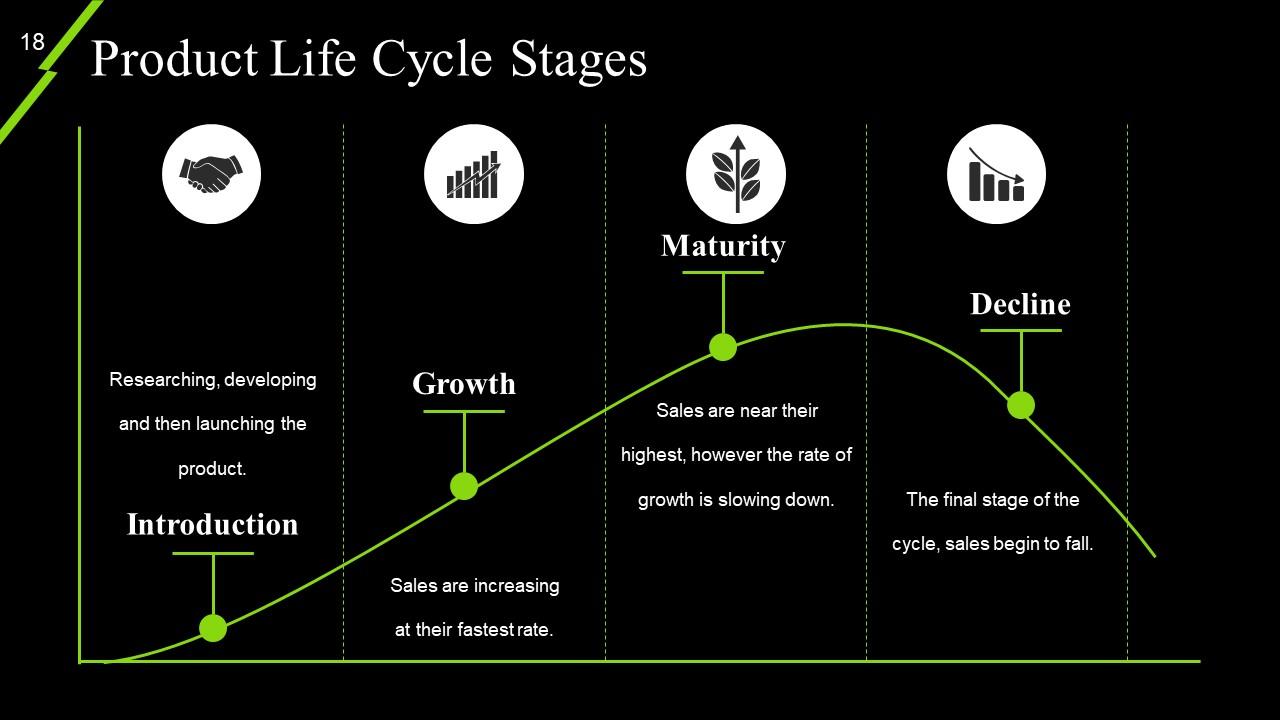
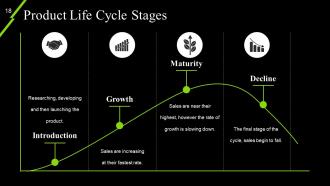
Slide 18: This slide shows Product Life Cycle Stages like- Introduction, Growth, Maturity, Decline.
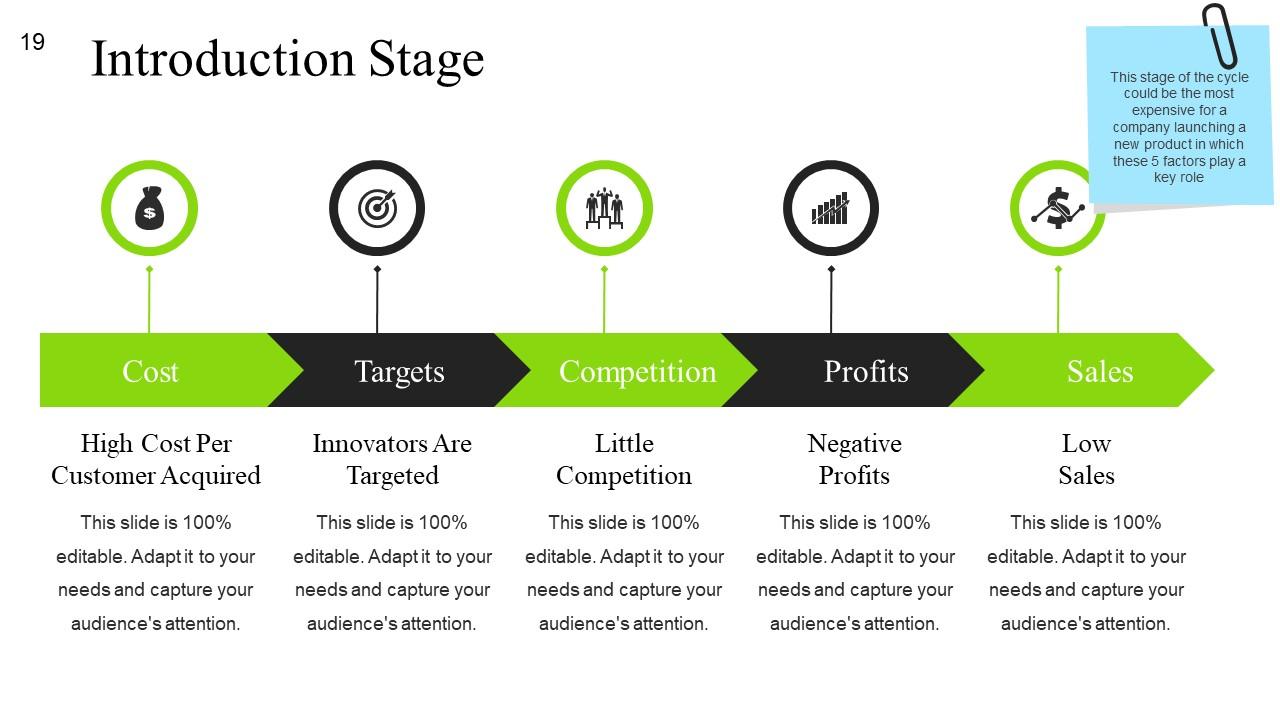
Slide 19: This slide displays Introduction Stage with various factors- Cost, Targets, Competition, Profits, Sales.
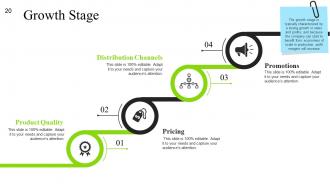
Slide 20: This slide showcases Growth Stage showing various parameters like Pricing, Distribution Channels, Product Quality, Promotions.
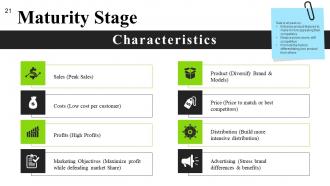
Slide 21: This slide displays Maturity Stage these characterstics ad follows- Sales (Peak Sales), Costs (Low cost per customer), Profits (High Profits) Marketing Objectives (Maximize profit while defending market Share), Product (Diversify Brand & Models), Price (Price to match or best competitors), Distribution (Build more intensive distribution), Advertising (Stress brand differences & benefits).
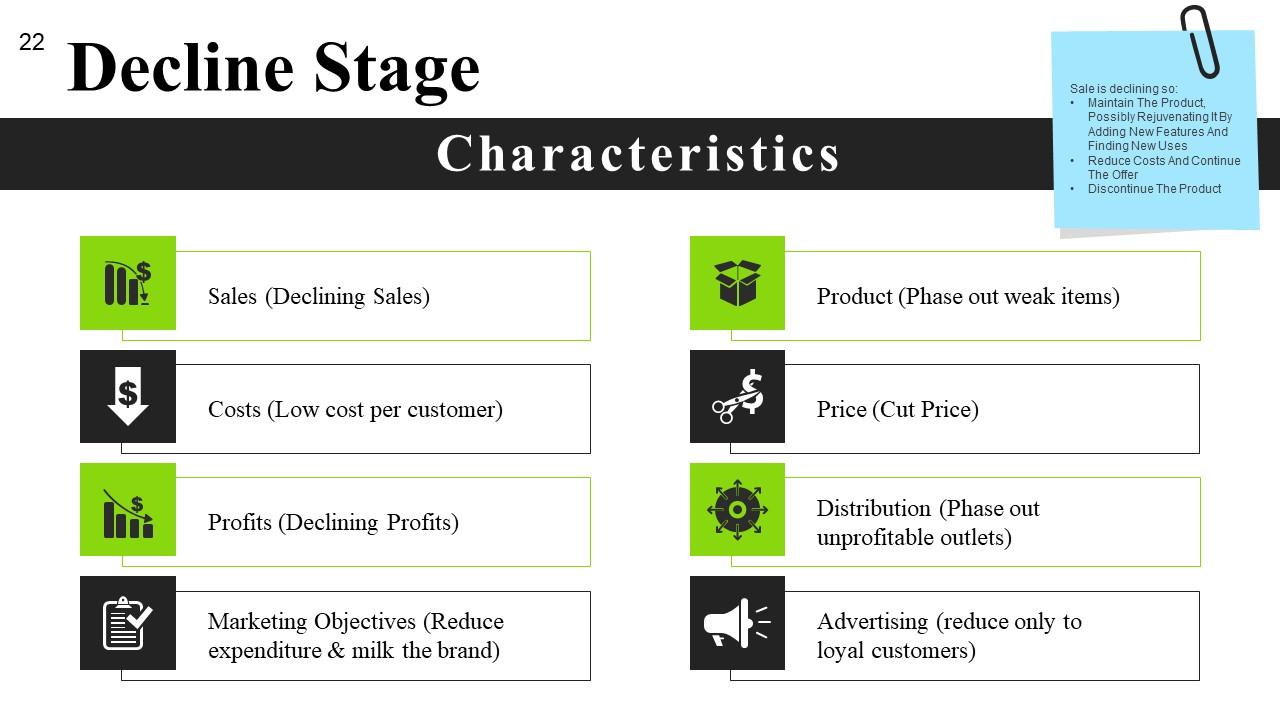
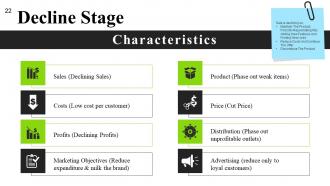
Slide 22: This slide presents decline stage with characteristics as follows- Sales (Declining Sales), Costs (Low cost per customer), Profits (Declining Profits), Marketing Objectives (Reduce expenditure & milk the brand), Product (Phase out weak items), Price (Cut Price), Distribution (Phase out unprofitable outlets), Advertising (reduce only to loyal customers).
Slide 23: This slide is showing Tools & Techniques with following four parameters- BCG matrix, Ansoff matrix, Empathy map, Kano model.
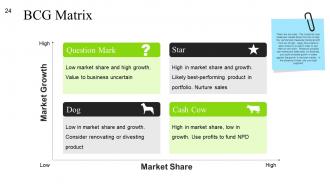
Slide 24: This slide shows BCG Matrix with high to low market growth and market share. You can use this as per your requirements.
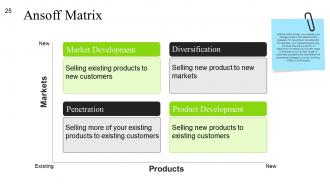
Slide 25: This slide showcases Ansoff Matrix using these following parameters. Diversification, Penetration, Product Development, Market Development.
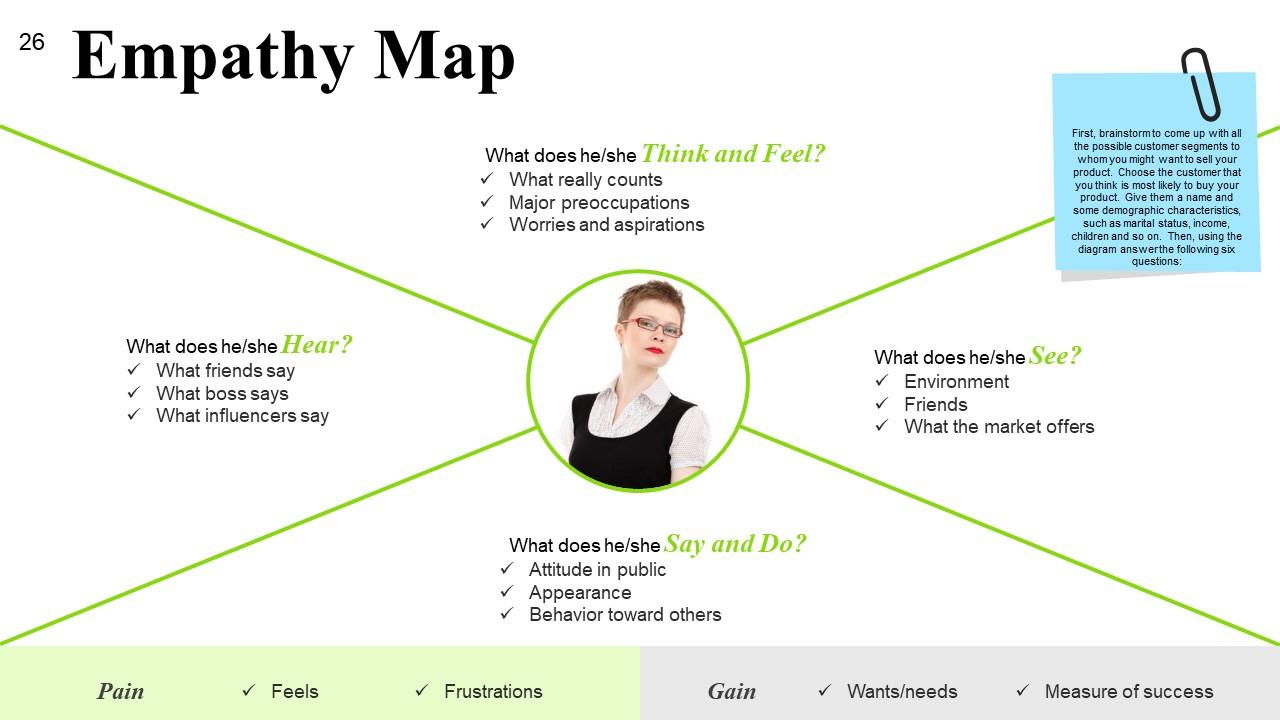
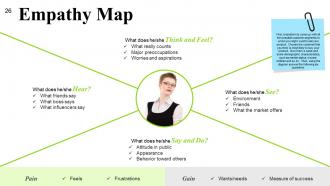
Slide 26: This slide shows Empathy Map shows these categories like- What does he/she Think and Feel? What does he/she Say and Do? What does he/she See? What does he/she Hear?
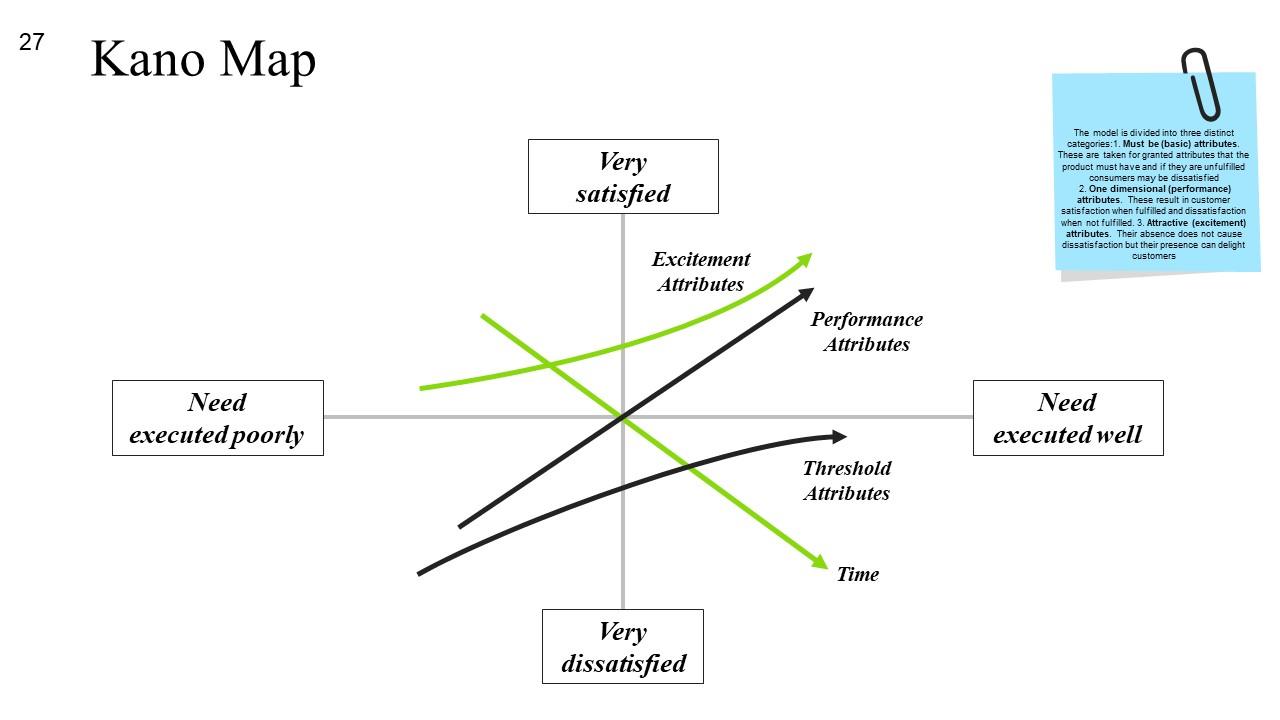
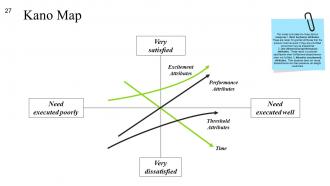
Slide 27: This slide showcases Kano Map which includes- Very satisfied, Very dissatisfied, Need executed poorly, Need executed well.
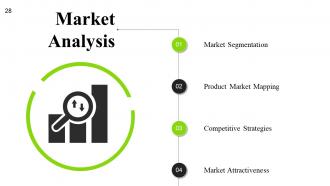
Slide 28: This slide displays Market Analysis- Market Segmentation, Product Market Mapping, Competitive Strategies, Market Attractiveness. You can add your own data and text as per your requirement.
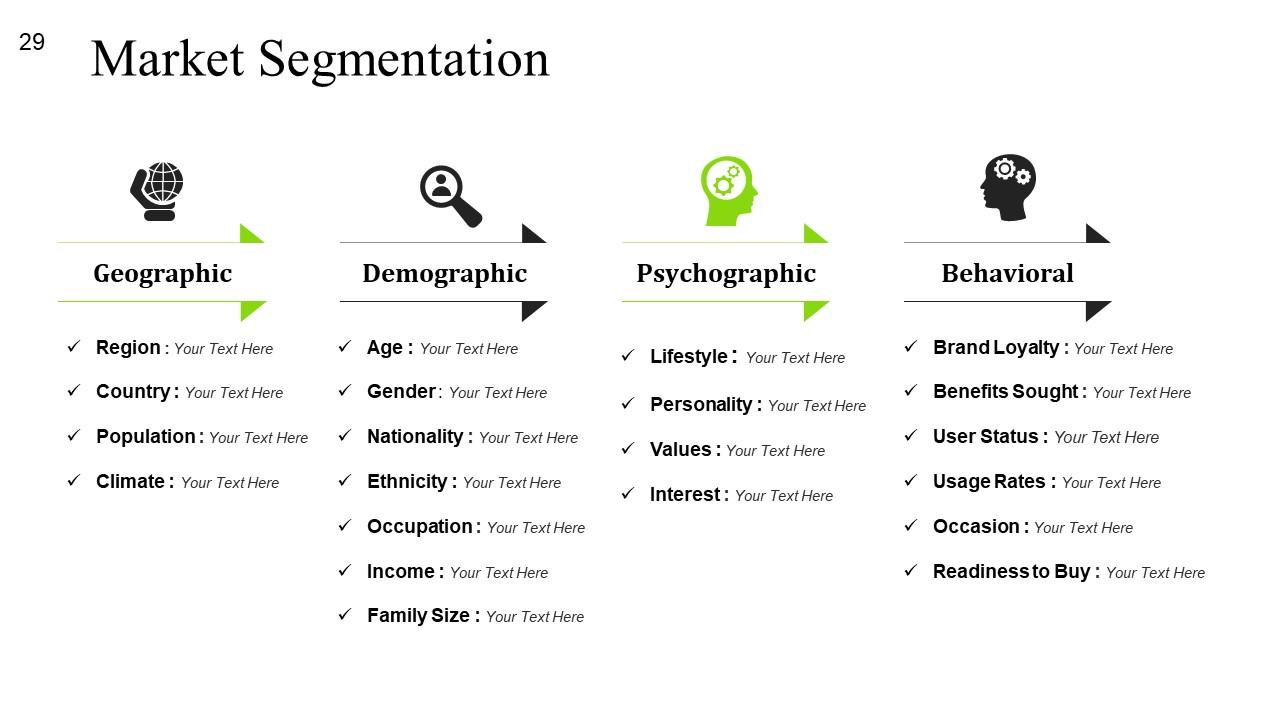
Slide 29: This slide presents Market Segmentation that also shows these steps to be used are- Geographic, Demographic, Psychographic, Behavioral.
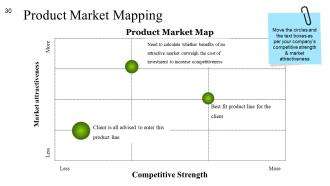
Slide 30: This slide showcase Product Market Mapping that also shows Product Market Map with respect to Market attractiveness, Competitive Strength.
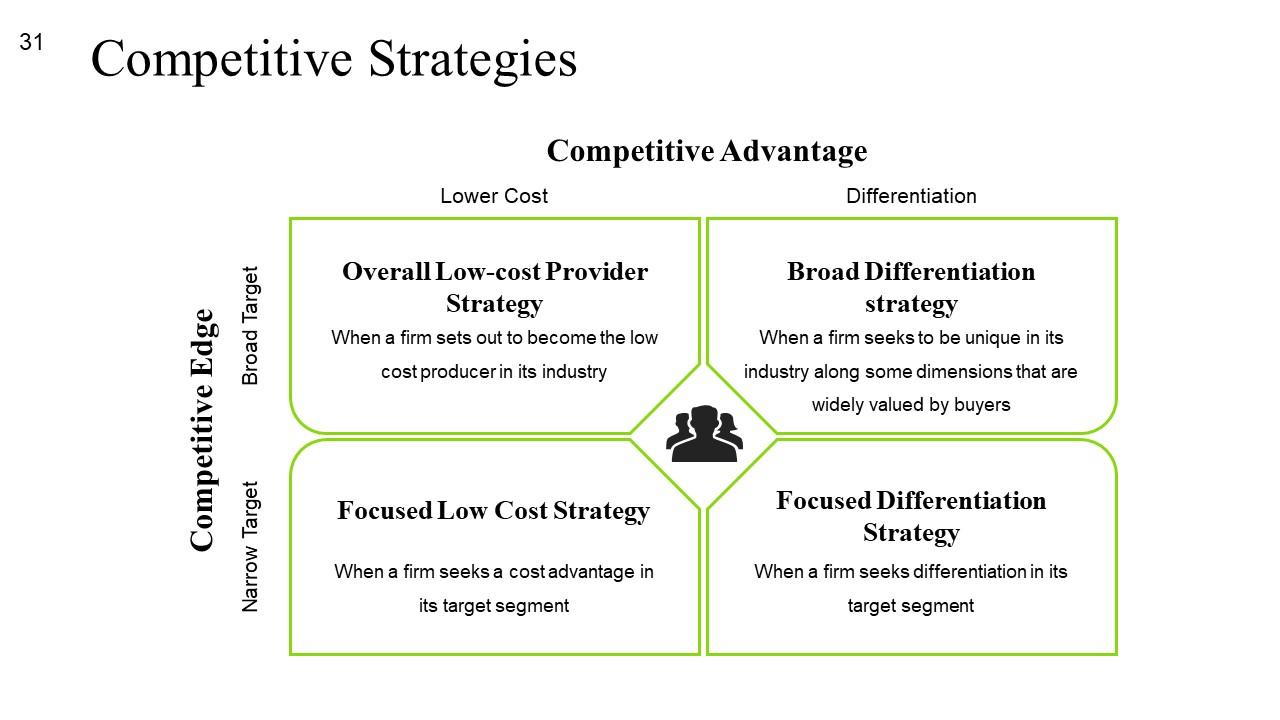
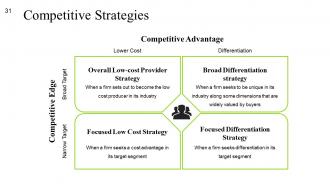
Slide 31: This slide presents Competitive Strategies with respect to Competitive Edge, Competitive Advantage with four categories- Overall Low-cost Provider Strategy, Broad Differentiation strategy, Focused Low Cost Strategy, Focused Differentiation Strategy.
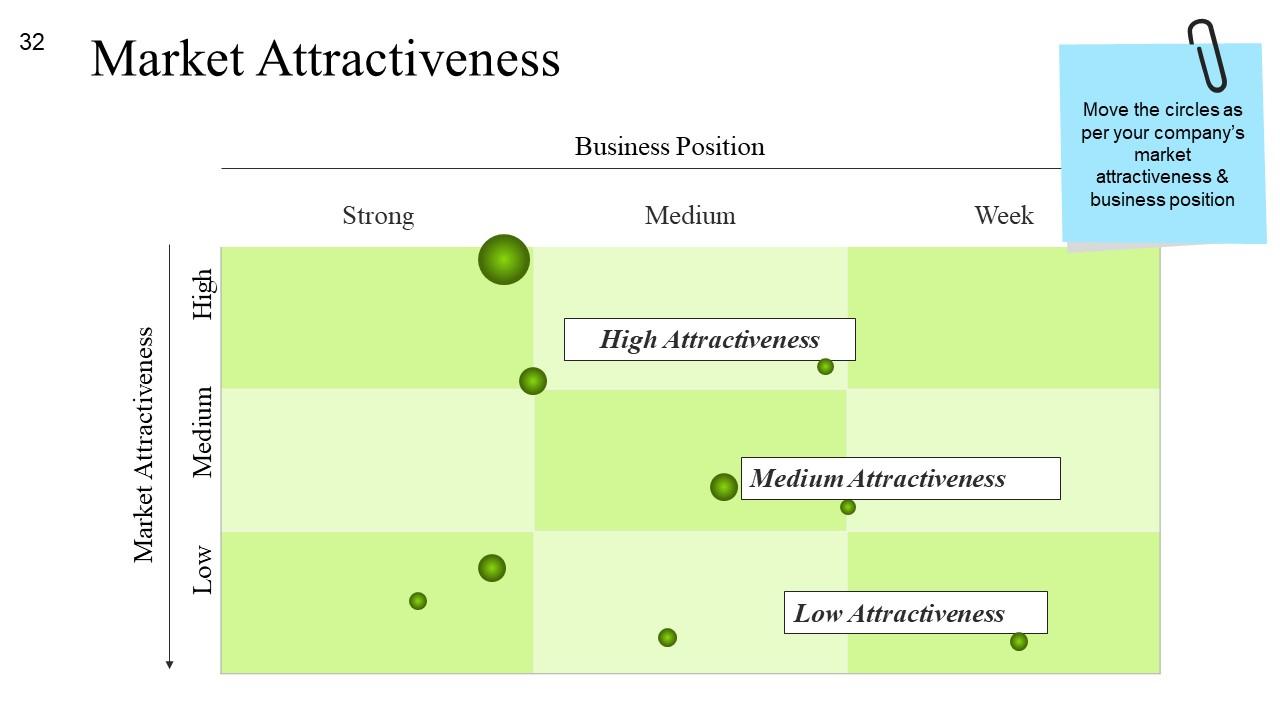
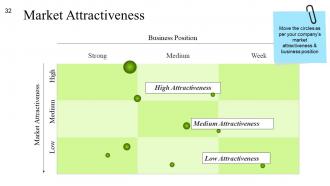
Slide 32: This slide showcase Market Attractiveness with variation of - Medium, High , Low, also showing various points to be measure are- High Attractiveness, Medium Attractiveness, Low Attractiveness.
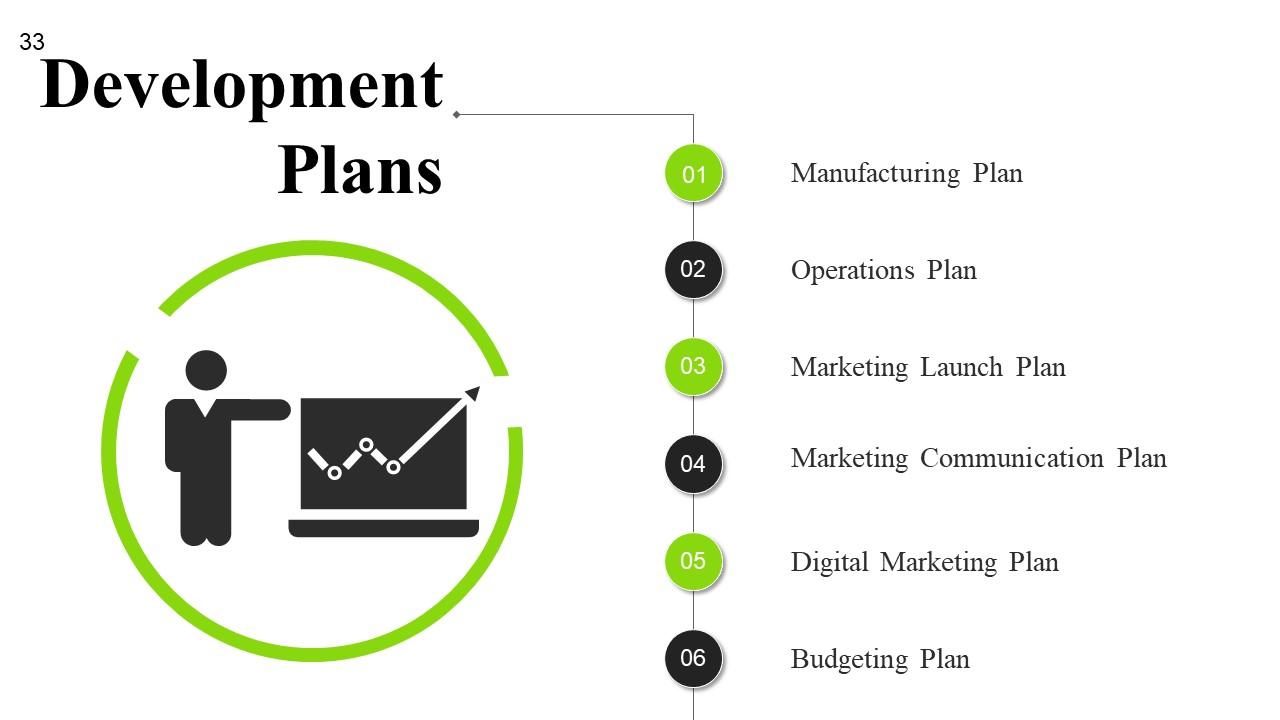
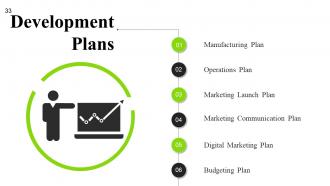
Slide 33: This slide showcase Development Plans with these steps are- Manufacturing Plan, Marketing Communication Plan, Digital Marketing Plan, Operations Plan, Marketing Launch Plan, Budgeting Plan,
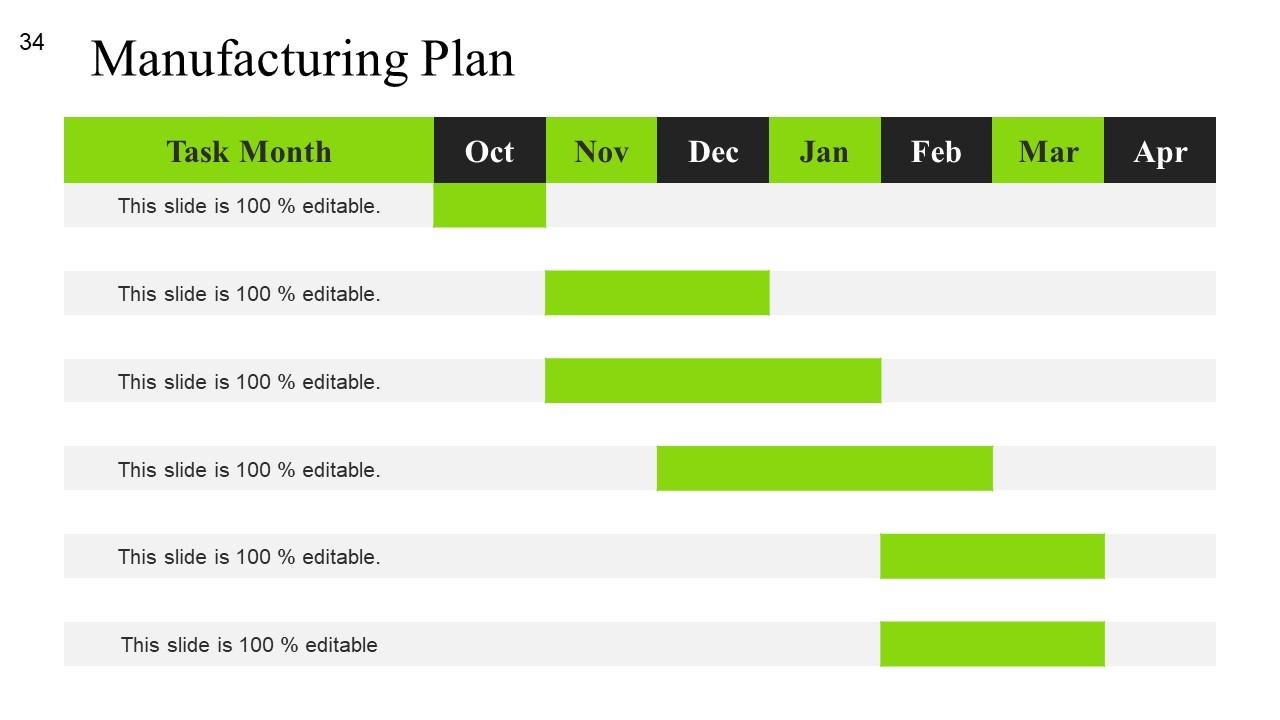
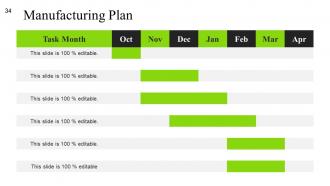
Slide 34: This slide presents Manufacturing Plan table. You can add according to your need.
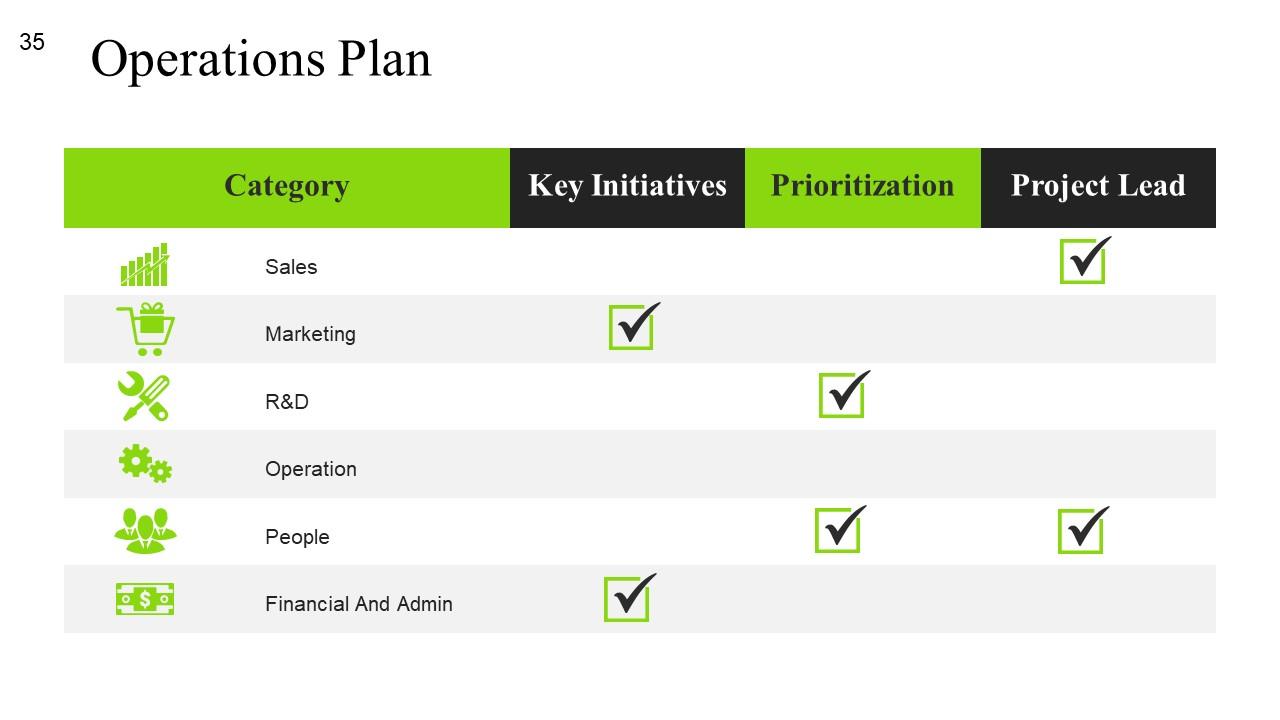
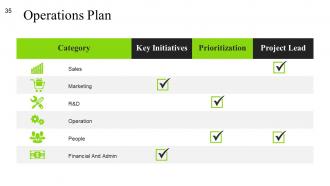
Slide 35: This slide shows Operations Plan table . With the reference of this you can add various categories
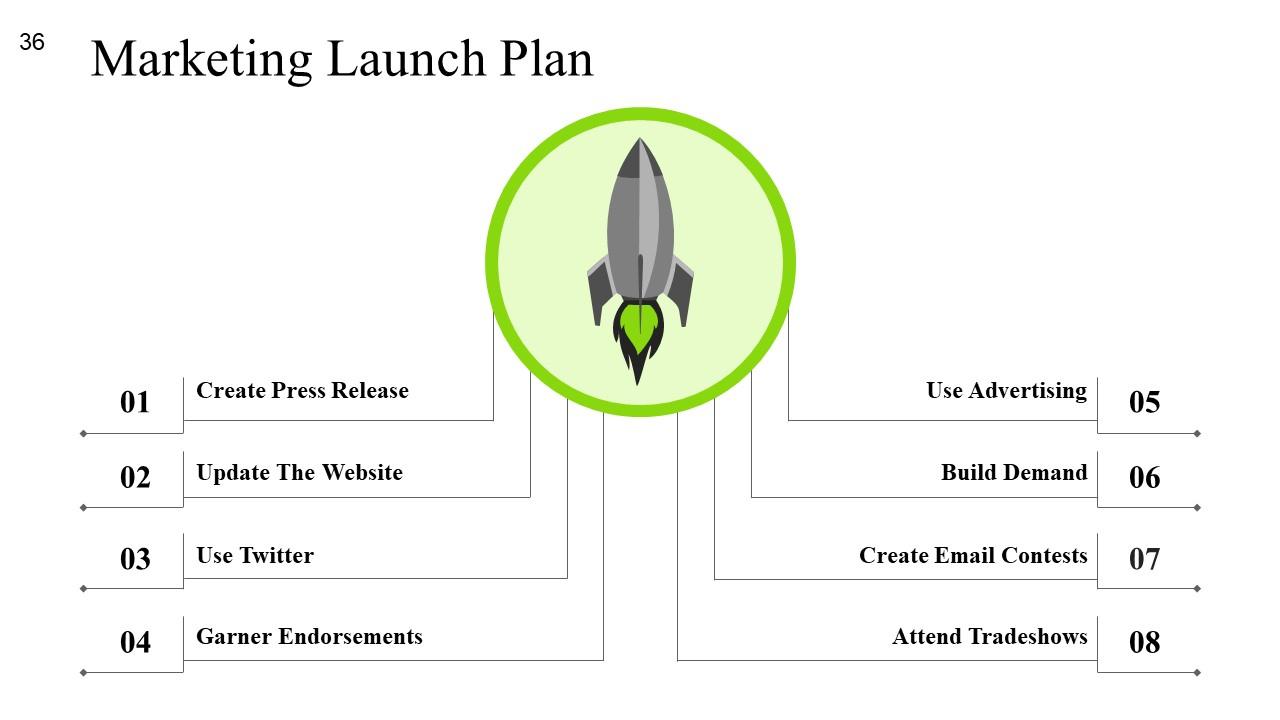
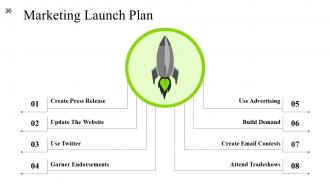
Slide 36: This slide displays Marketing Launch Plan with these steps- Create Press Release, Update The Website, Use Twitter, Garner Endorsements, Use Advertising, Build Demand, Create Email Contests, Attend Tradeshows.
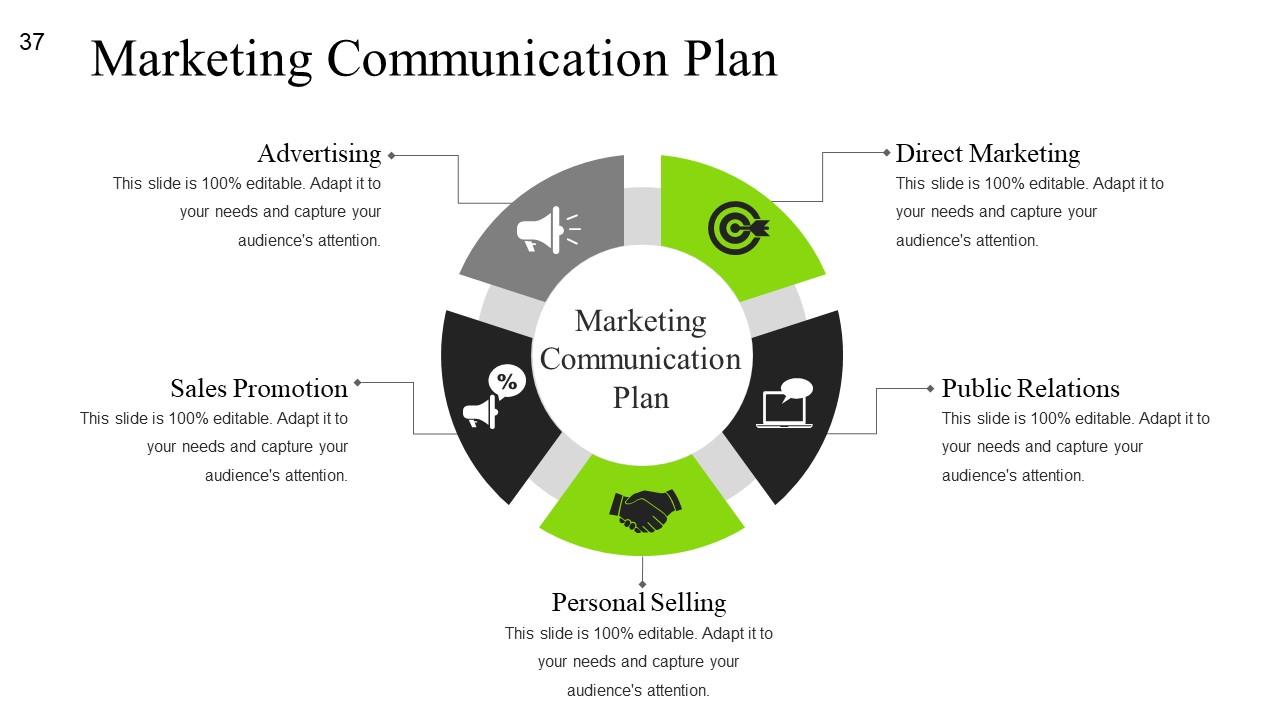
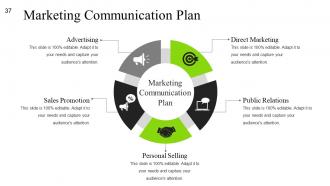
Slide 37: This slide presents Marketing Communication Plan circular diagram showing various important plan- Direct Marketing, Public Relations, Personal Selling, Advertising, Sales Promotion.
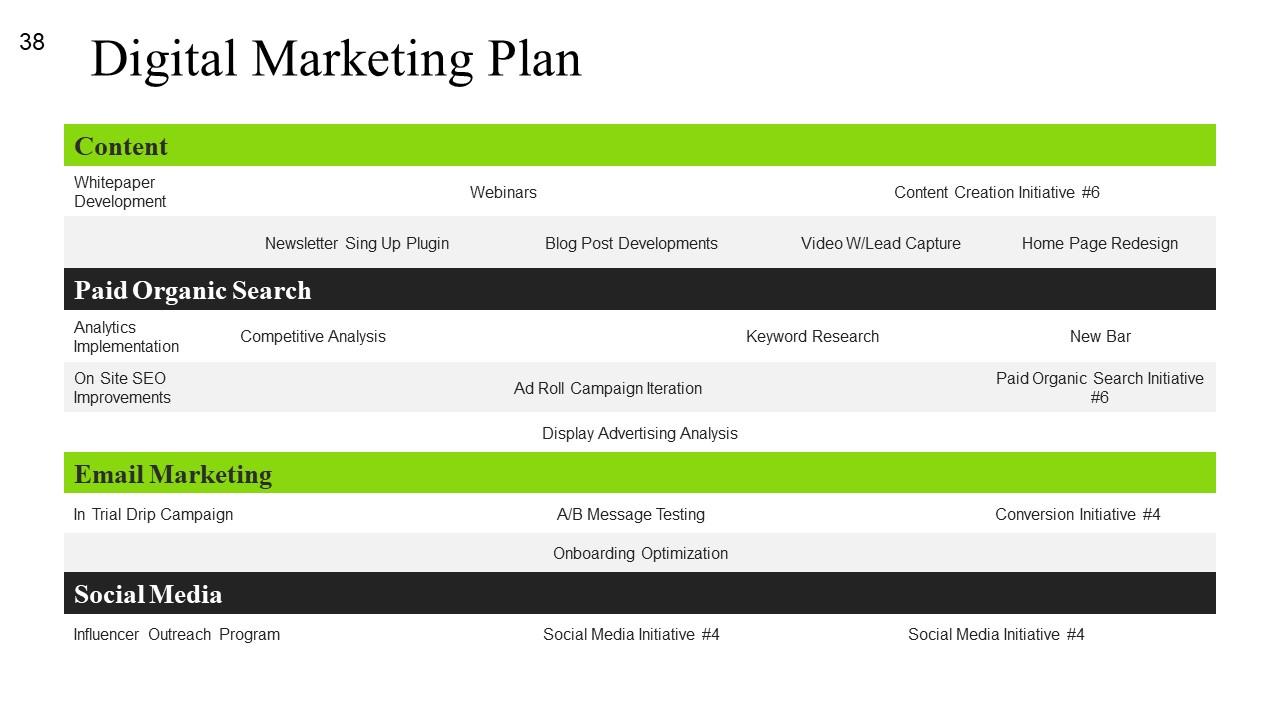
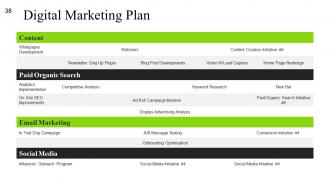
Slide 38: This slide displays Digital Marketing Plan showing various further sub categories that are- Content, Paid organic search, Email marketing, Social media. You can add or edit according to your requirement.
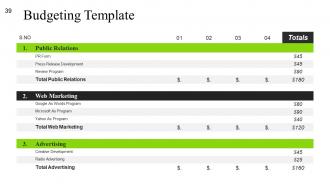
Slide 39: This is Budgeting Template that is giving you brief about budget of Public relations, Web Marketing, Advertising.
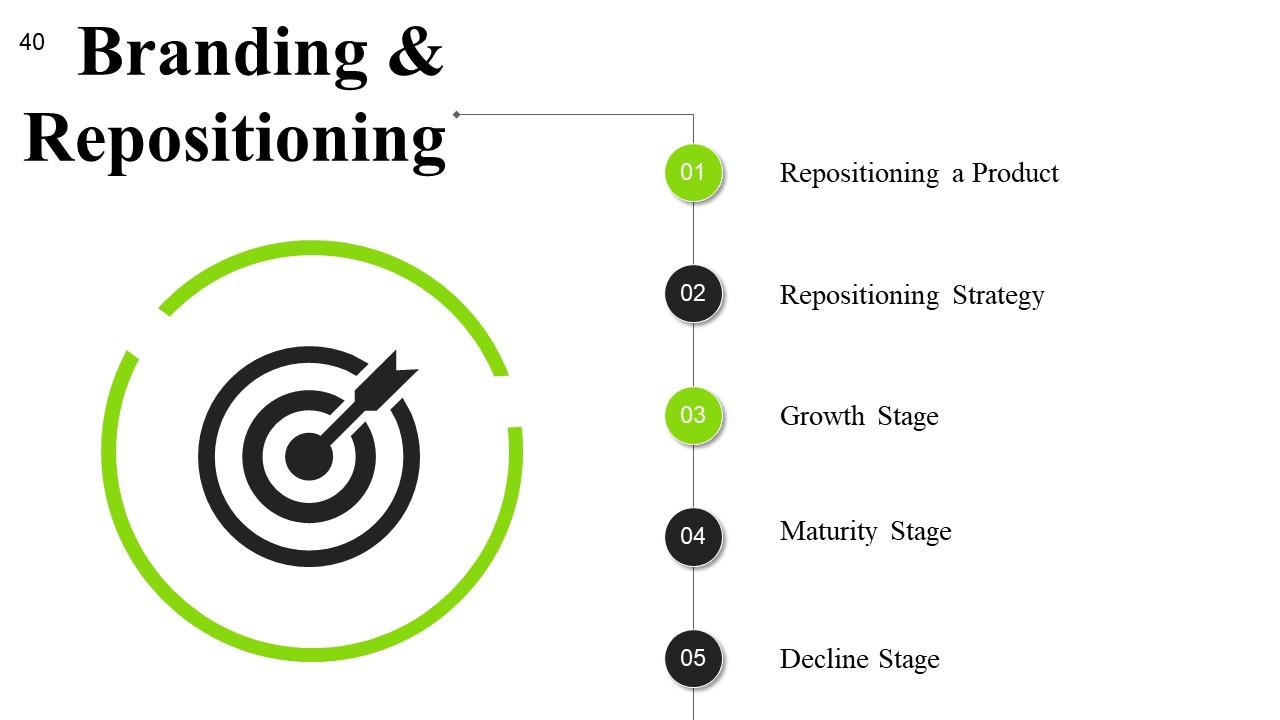
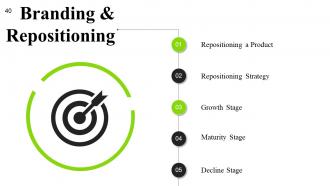
Slide 40: This slide shows Branding & Repositioning showing various stages that includes- Repositioning a Product, Maturity Stage, Repositioning Strategy, Growth Stage, Decline Stage.
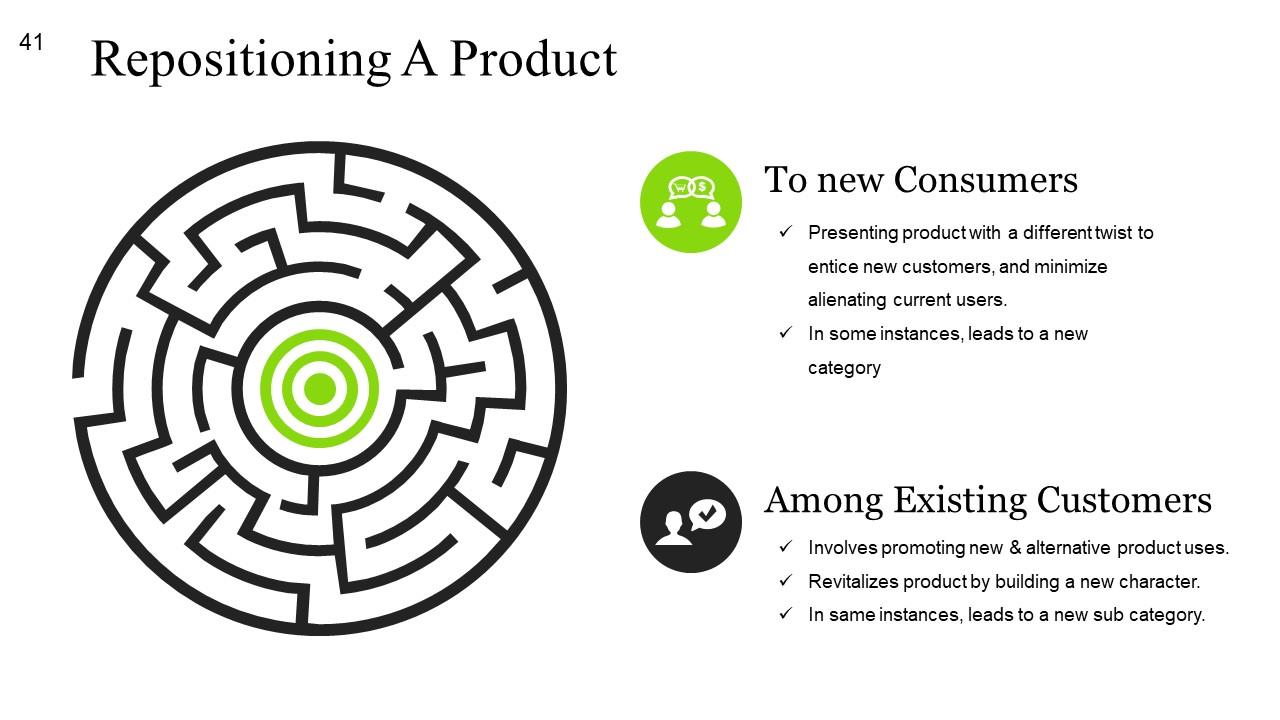
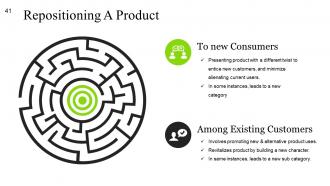
Slide 41: This slide shows Repositioning A Product and also you can edit and customize- Among Existing Customers, To new Consumers.
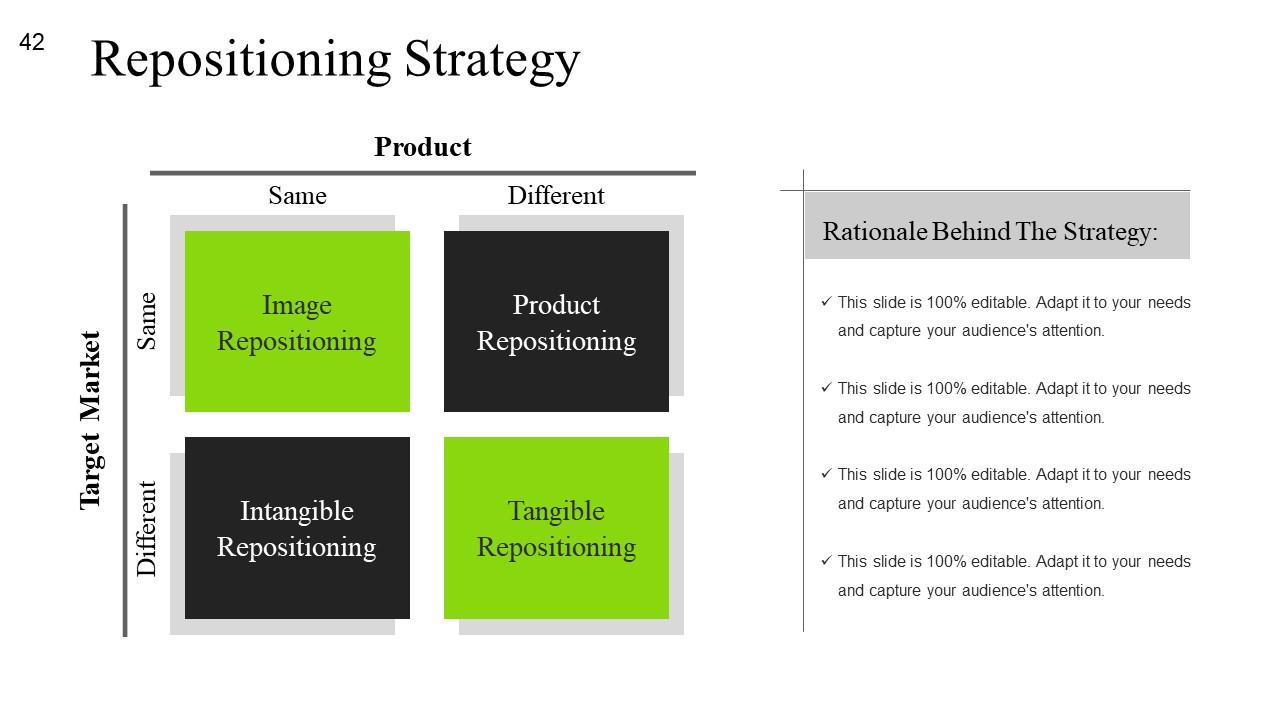
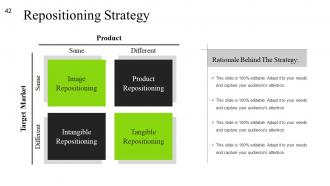
Slide 42: This slide showcase Repositioning Strategy with four quadrant mentioning these points- Image Repositioning, Intangible Repositioning, Tangible Repositioning, Product Repositioning, and also with Rationale Behind The Strategy.
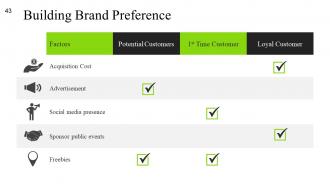
Slide 43: This slide presents Building Brand Preference table with factors and other matters like- Acquisition Cost, Advertisement, Social media presence, Sponsor public events, Freebies.
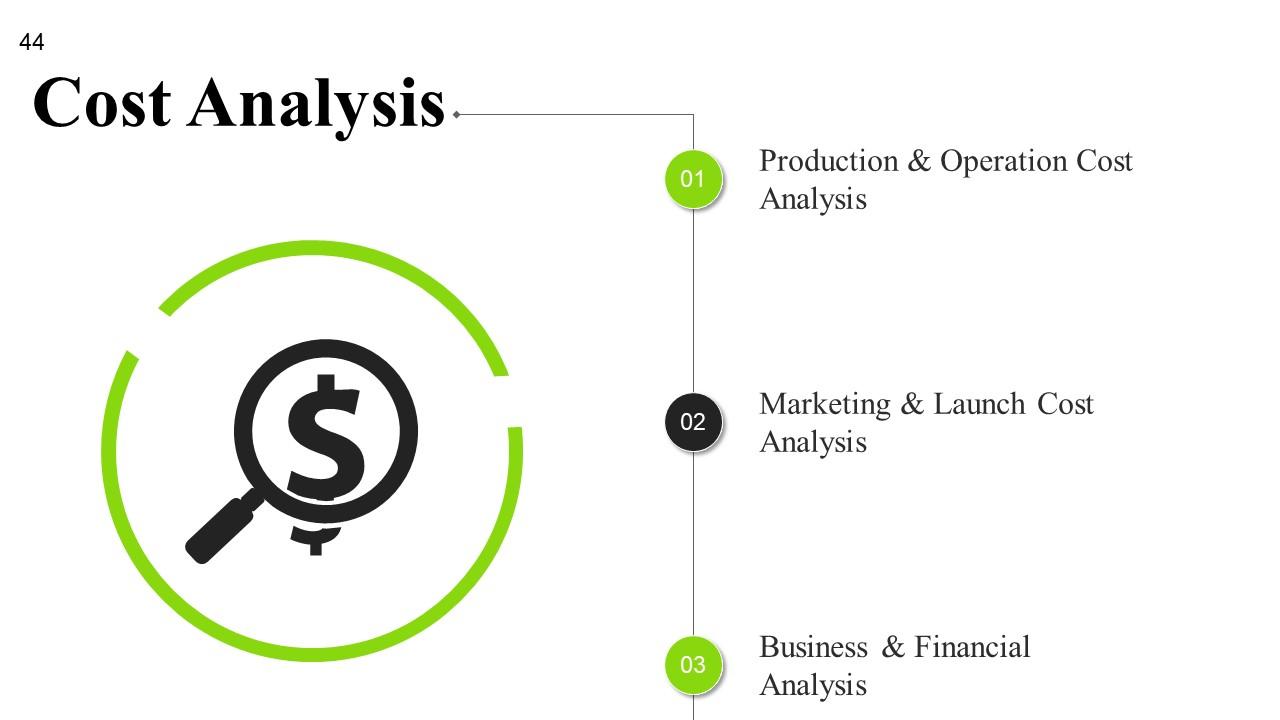
Slide 44: This slide showcases about Cost Analysiswith these three parameters- Production & Operation Cost Analysis, Marketing & Launch Cost Analysis, Business & Financial Analysis.
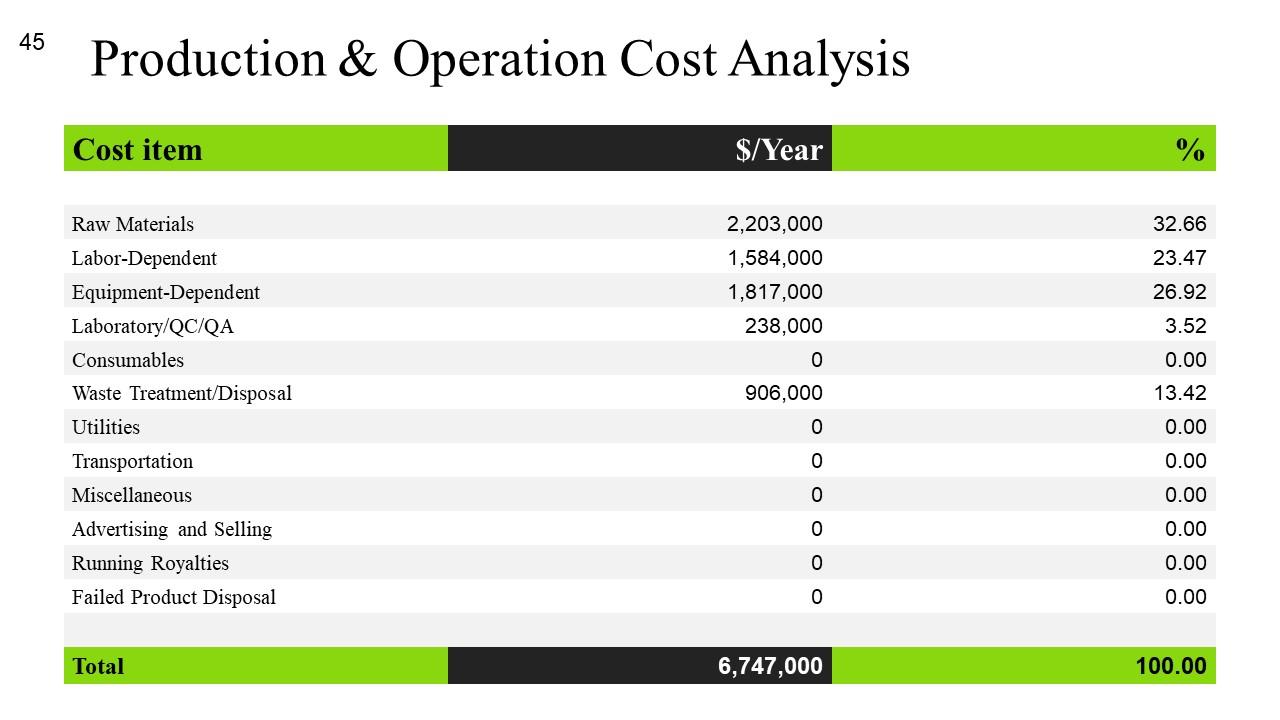
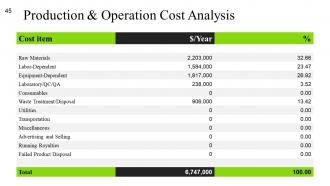
Slide 45: This slide presents Production & Operation Cost Analysis table with cost for the item and cost per year.
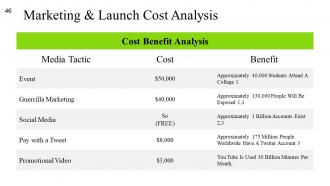
Slide 46: This slide displays Marketing & Launch Cost Analysis. You can edit and modify as per your business requirement.
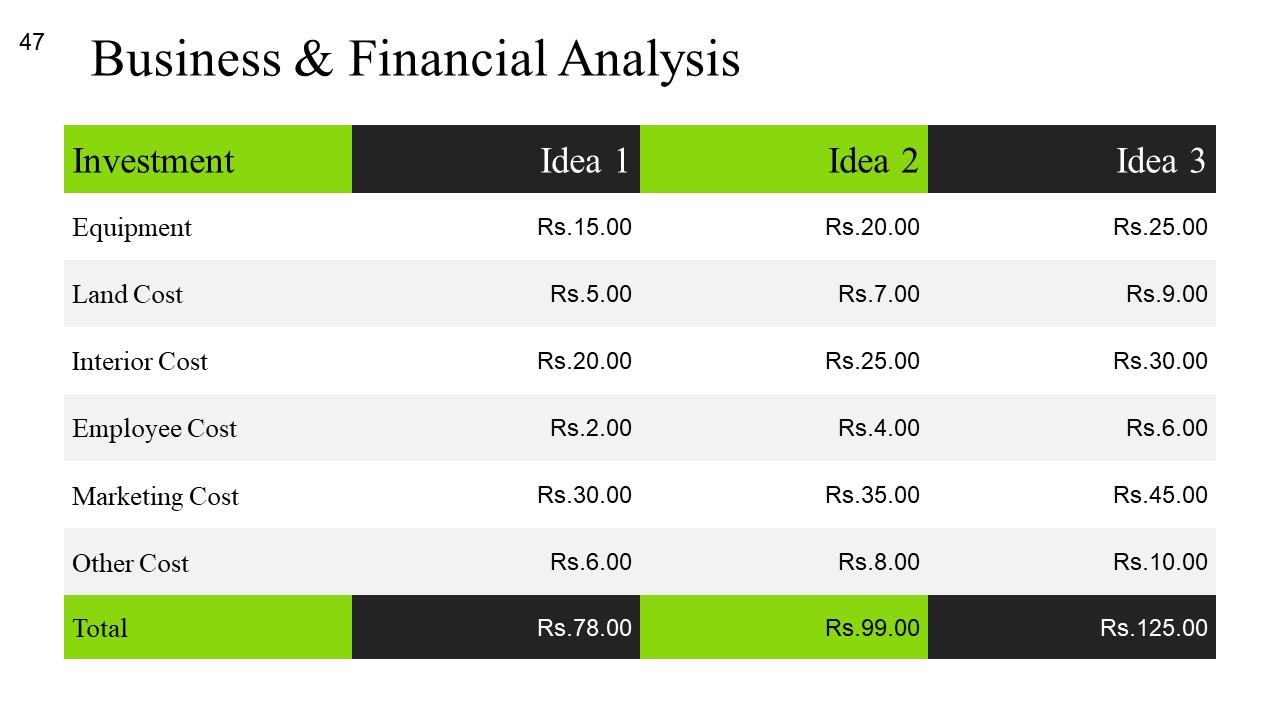
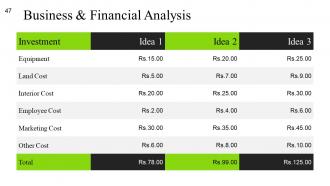
Slide 47: This slide presents Business & Financial Analysis table with types of investment and different ideas.
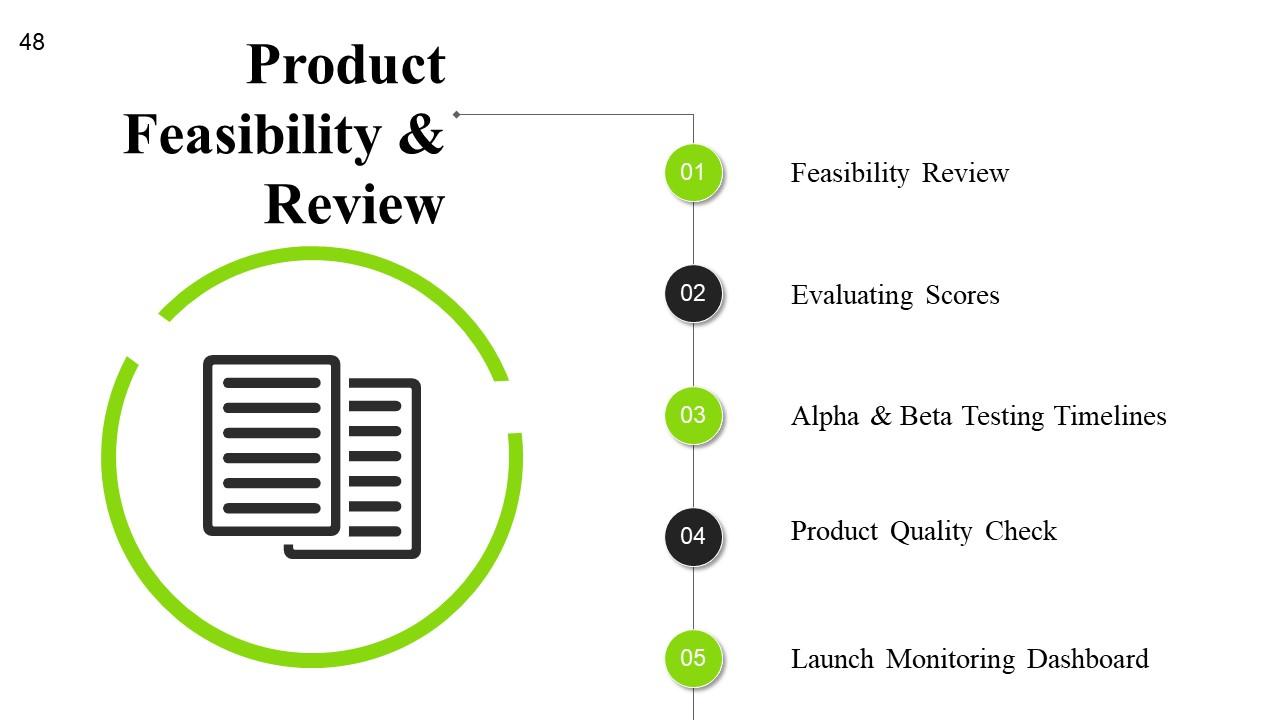
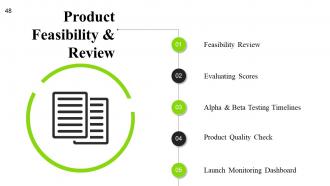
Slide 48: This slide showcases Product Feasibility & Review with these steps- Feasibility Review, Product Quality Check, Evaluating Scores, Alpha & Beta Testing Timelines, Launch Monitoring Dashboard.
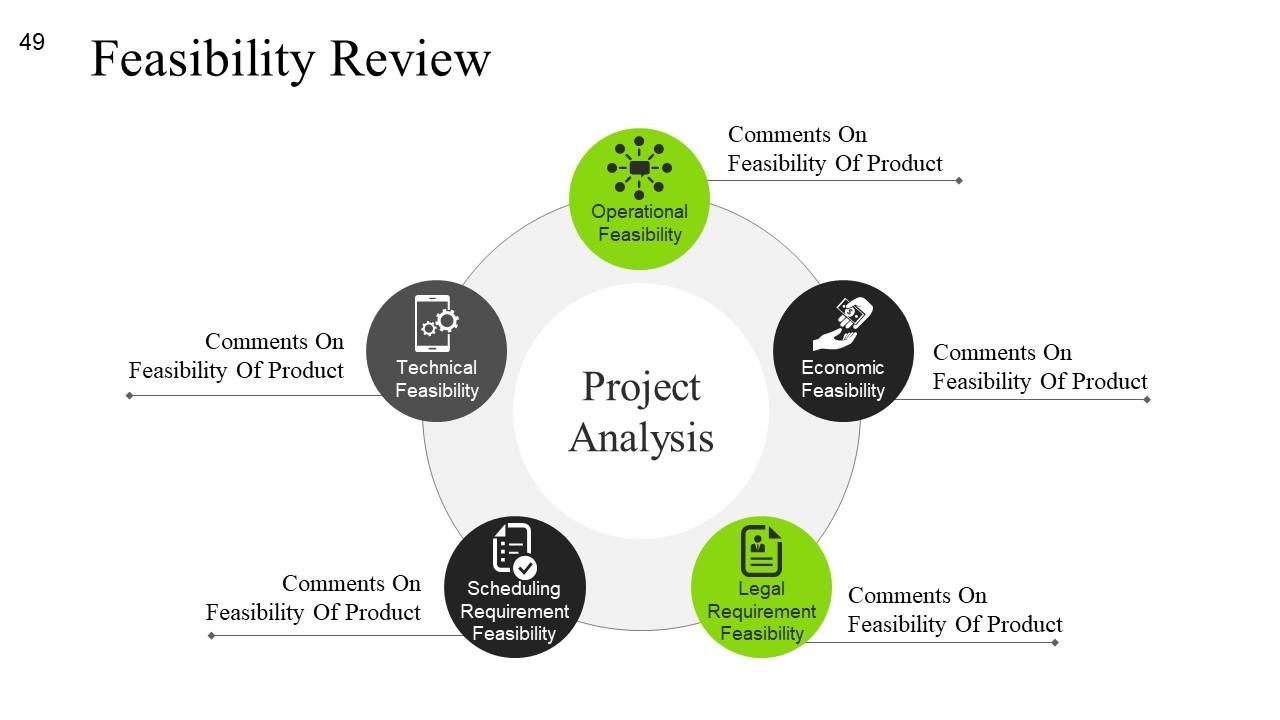
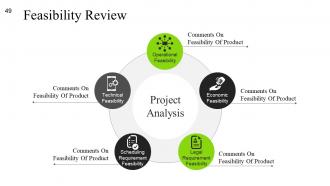
Slide 49: This slide displays Project Analysis flow diagram with data as follows- Feasibility Review, Scheduling Requirement Feasibility, Legal Requirement Feasibility, Economic Feasibility, Operational Feasibility, Technical Feasibility.
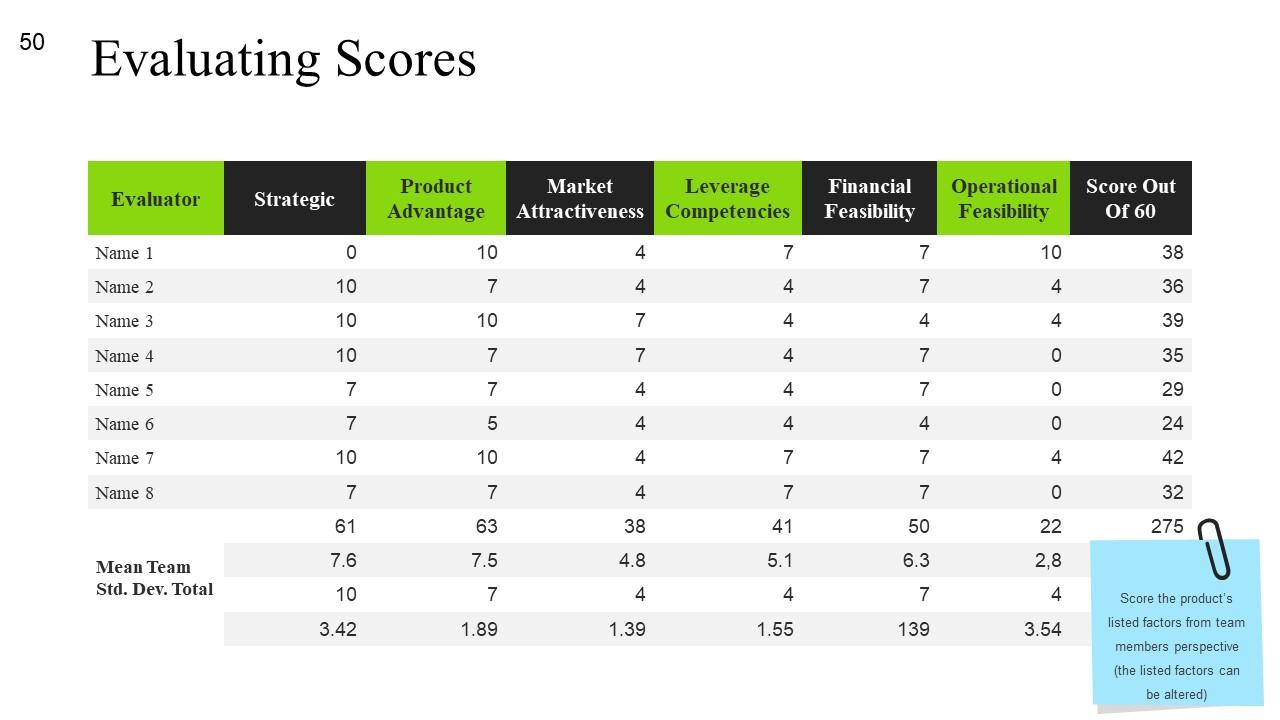
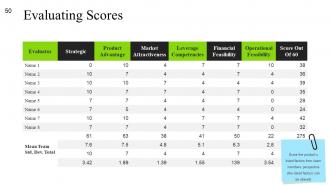
Slide 50: This slide displays Evaluating Scores table. You can mention your score after evaluating.
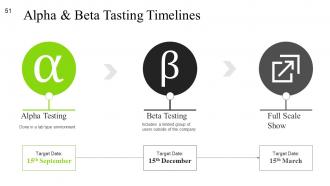
Slide 51: This slide showcases Alpha & Beta Tasting Timelines with mentioning three levels- Alpha Testing, Beta testing Full Scale Show, with target dates .
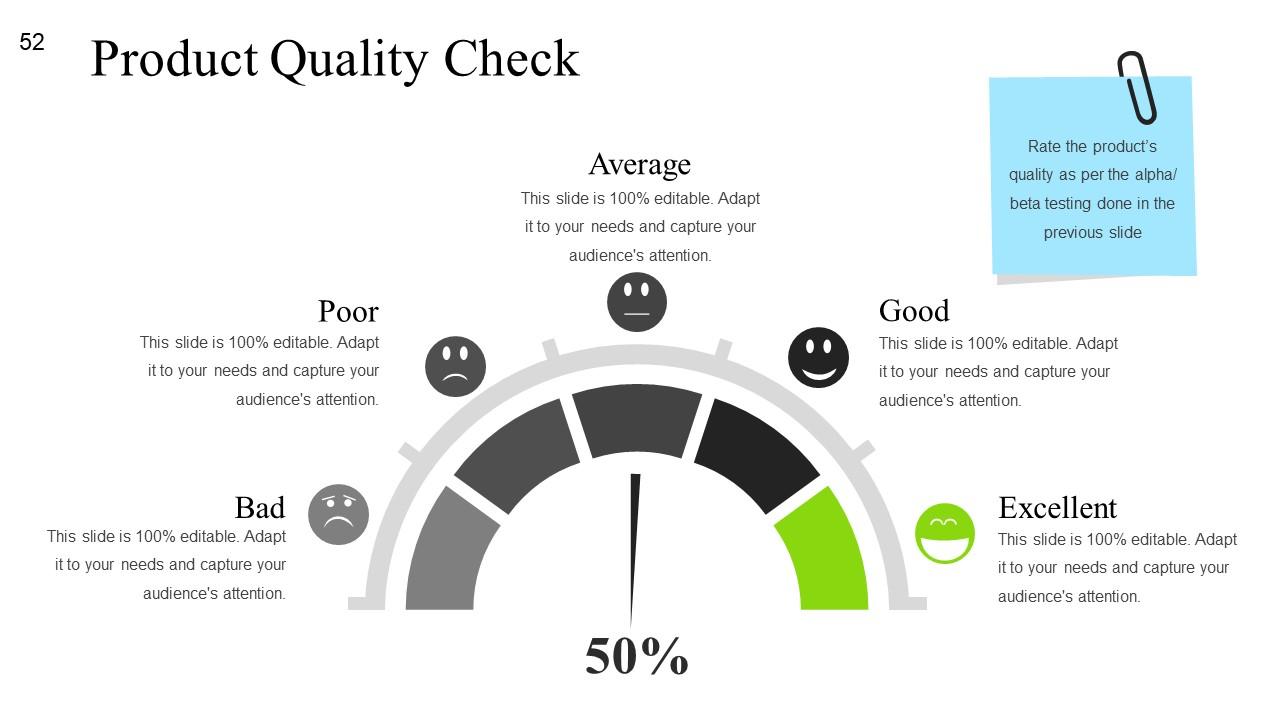
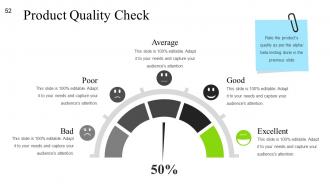
Slide 52: This slide showcase Product Quality Check with these parameters to judge and measure- Bad, Poor, Average, Good, Excellent.
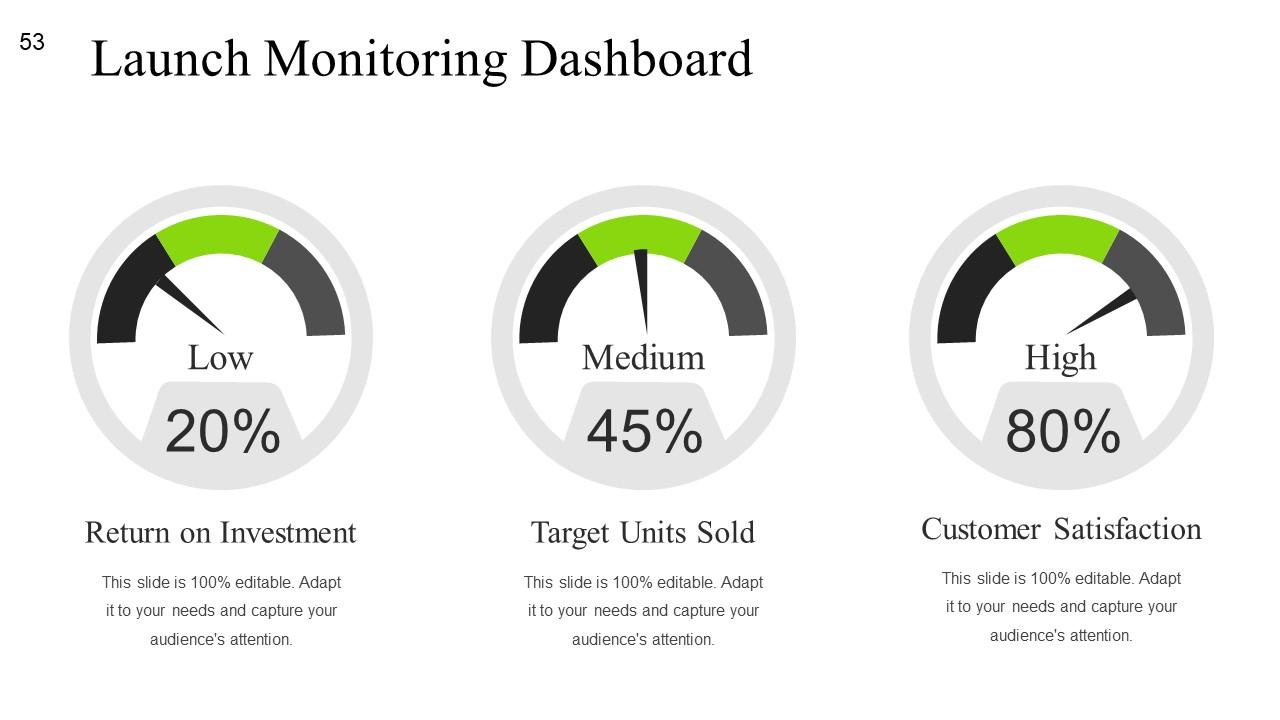
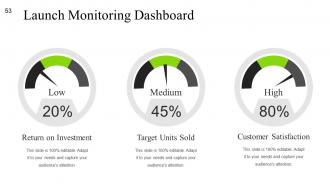
Slide 53: This slide shows Launch Monitoring Dashboard with comparison between three.
Slide 54: This slide shows Icons For NDP. You use as per your requirement.
Slide 55: This slide is titled Additional Slides to proceed forward.
Slide 56: This is Our Mission slide with- Vision, Mission, Goal to state. replace image.
Slide 57: This is an Our Team slide with image box, name and designation.
Slide 58: This is About Us slide. You can add about the company.
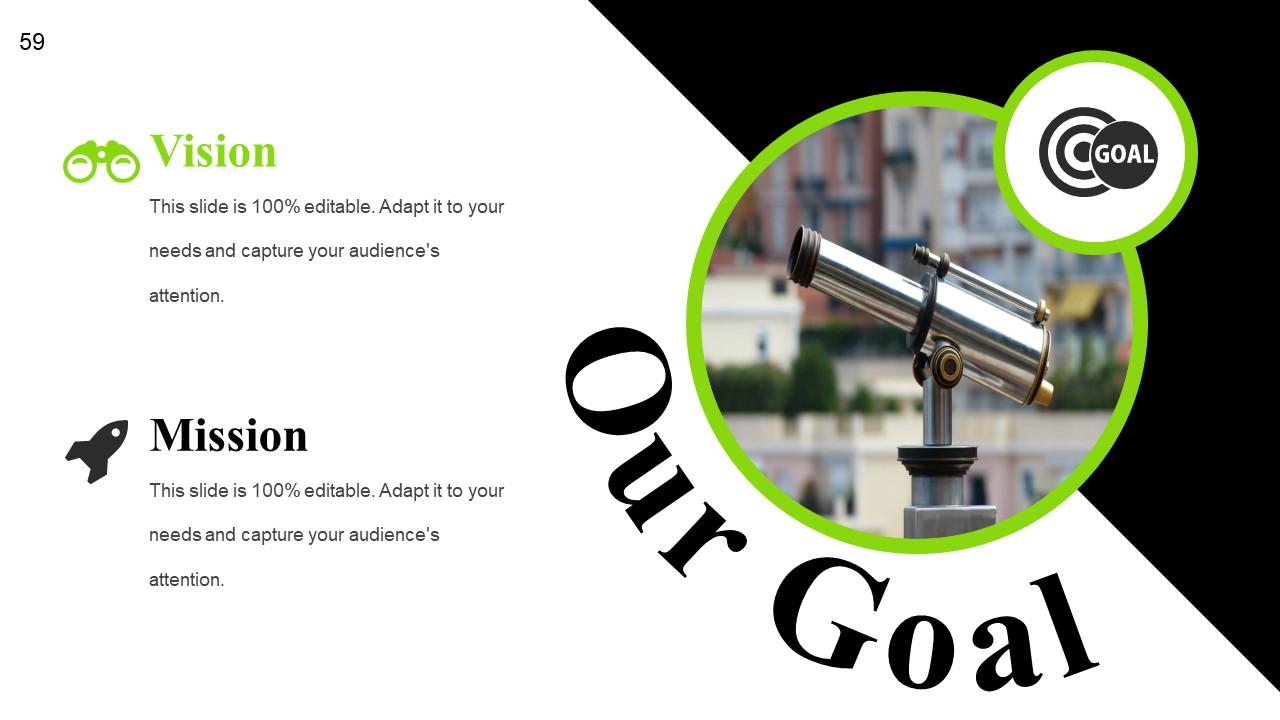
Slide 59: This slide showcases Vision & Mission with Vision, Mission and Goal. State them here.
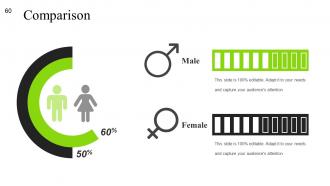
Slide 60: This slide shows Comparison between male and female with pie chart.
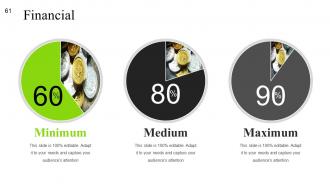
Slide 61: This slide showcases three comparison of minimum medium and maximum.
Slide 62: This slide present Quotes slide. You can edit and modify as per your requirement
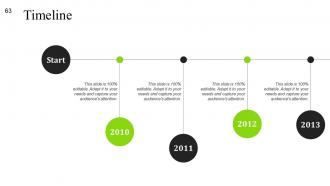
Slide 63: This is a Timeline slide. Show company milestones etc. here.
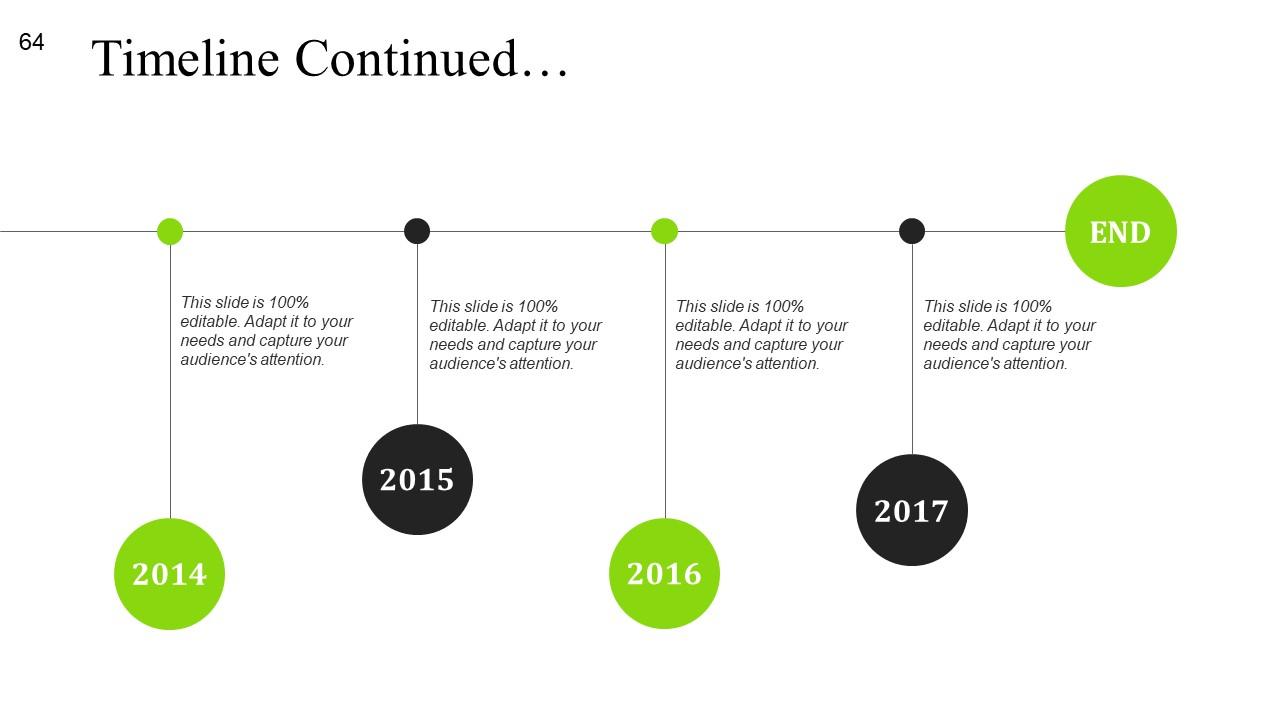
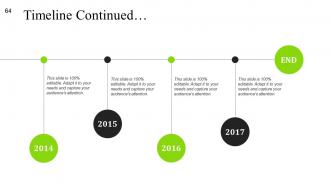
Slide 64: This is a continuation of timeline slide.
Slide 65: This slide is titled Charts & Graphs to proceed forward to use them.
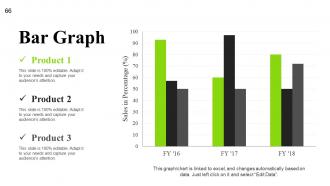
Slide 66: This is a Bar Graph slide to show product comparison in terms of years etc.
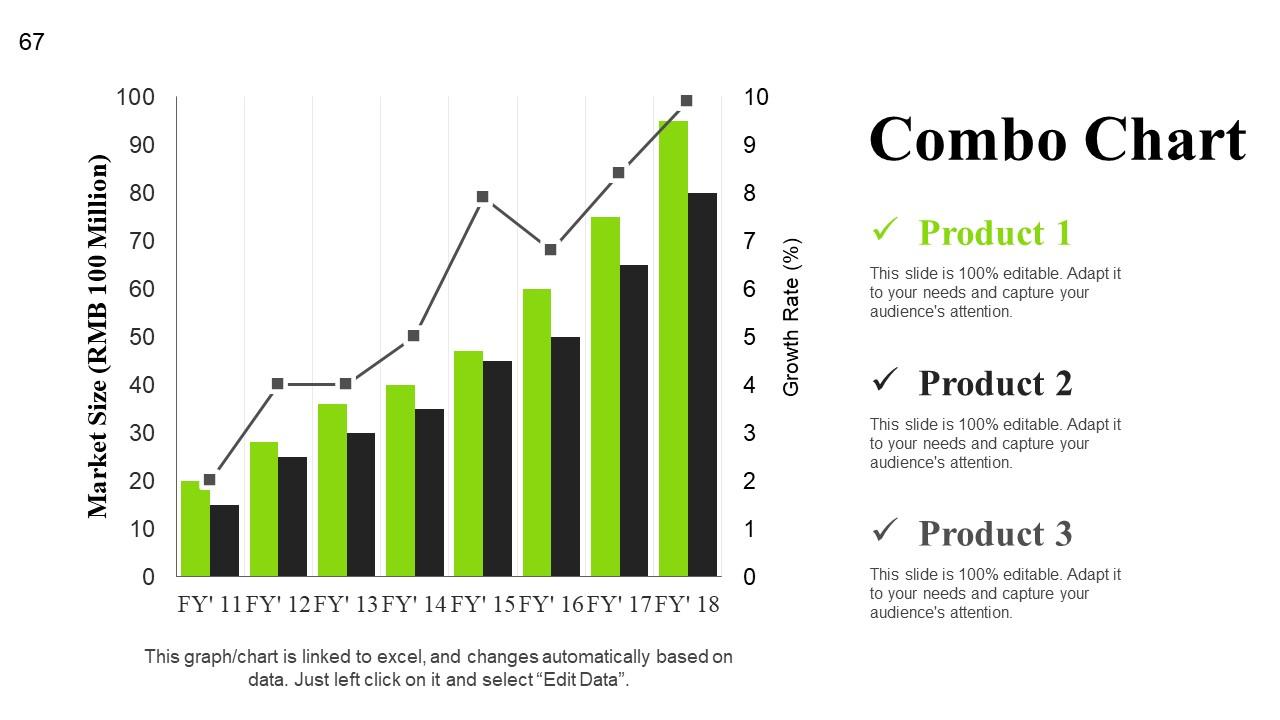
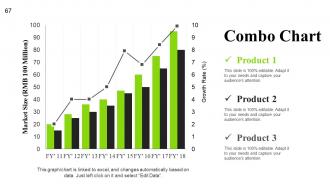
Slide 67: This is a Combo Chart slide to showcase Profit over the years.
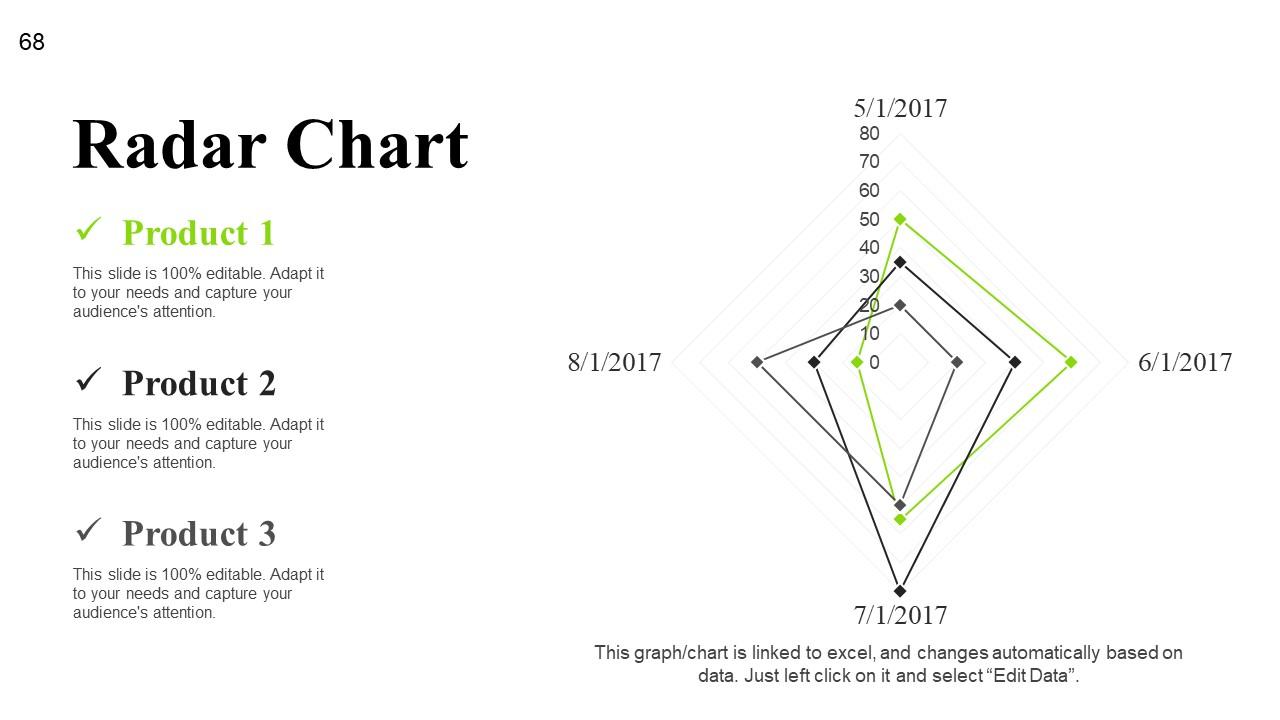
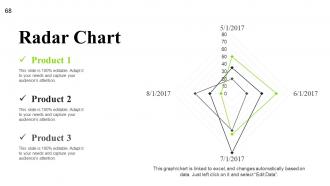
Slide 68: This is a Radar Chart slide to show two products comparison.
Slide 69: This is a Thank You slide with Address# street number, city, state, Contact Numbers, email Address.
New Product Idea Screening And Analysis Powerpoint Presentation Slides with all 69 slides:
Jolt them into action with our New Product Idea Screening And Analysis Powerpoint Presentation Slides. It will get them off their butts.
-
Graphics are very appealing to eyes.
-
Informative presentations that are easily editable.
