

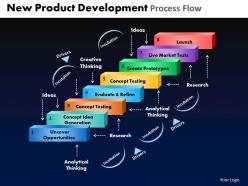
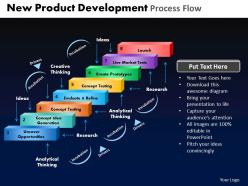
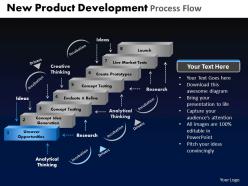
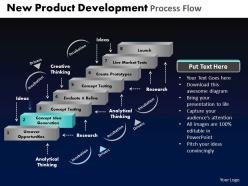
New product development process flow powerpoint slides and ppt templates db





Try Before you Buy Download Free Sample Product
 Impress Your
 Audience
 100%
100% Editable
 Save Hours
 of Time


Open up the doors with our New Product Development Process Flow Powerpoint Slides And Ppt Templates DB. Remove the claustrophobia with your views.
People who downloaded this PowerPoint presentation also viewed the following :
New product development process flow powerpoint slides and ppt templates db with all 13 slides:
Our New Product Development Process Flow Powerpoint Slides And Ppt Templates DB will help you describe your thoughts. They will add colour to the content.
FAQs for New product development process flow powerpoint slides and
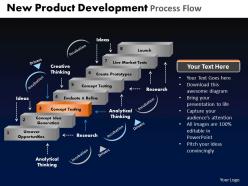
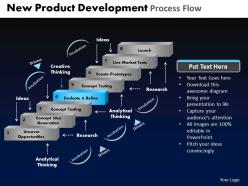
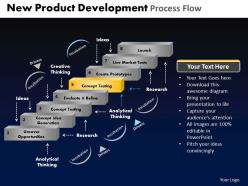
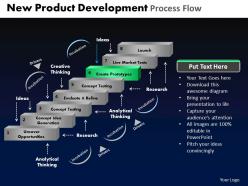
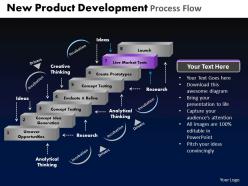
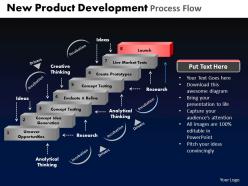
So you've got idea generation first, then developing those into real concepts. Market research comes next - seriously, don't skip this part or you'll hate yourself later. After that it's prototype building and testing (both with your team and actual users). Launch is obviously the final step, but honestly? The whole thing's pretty messy and you'll probably circle back to earlier stages. Oh, and I know deadlines are stressful, but testing is where you catch the expensive problems before they become... well, expensive problems. Way better than fixing stuff post-launch.
Dude, you absolutely need market research for product development - it's not optional. Otherwise you're just throwing stuff at the wall hoping something sticks. Research shows you what customers actually want and what they'll pay for. I learned this the hard way on my first project, honestly. It helps you figure out which features matter most and how to position everything. Plus you can see what your competitors are screwing up. Don't just do it once at the start though. Keep talking to customers throughout the whole process - their feedback will save you from building garbage nobody wants.
Honestly, customer feedback is like your North Star during ideation. Get it from surveys, interviews, social media - wherever people are actually talking. Too many teams (myself included, oops) fall head over heels for their own brilliant ideas without checking if anyone actually wants them solved. Real feedback shows you what problems people genuinely care about, not what you assume they should. I'd say start gathering this stuff before you even sit down to brainstorm. Then let it guide which concepts deserve your time and energy.
Dude, cross-functional teams are seriously worth it. Marketing knows what customers actually want, engineering tells you if it's even possible, and ops can flag manufacturing nightmares early. Way better than that old-school approach where departments just toss stuff to each other and hope for the best. Your dev cycles speed up too since you're not constantly circling back for fixes or approvals. I mean, nobody likes redoing work, right? Try pulling one person from each team for your next project kickoff. You'll be surprised how much better everyone stays aligned from the start.
Honestly, just grab Figma or Sketch if you're doing digital stuff - they're super easy to jump into. Physical products? Cardboard and foam core are your best friends. 3D printing's amazing if you've got the cash for it. Marvel and InVision are clutch for making clickable prototypes that actually feel real when you show them to people. Don't overlook paper prototypes though - sounds basic but you can iterate so damn fast with them. Match your detail level to what you're testing. Low-fi first to see if your concept even makes sense, then get fancy later. Whatever gets you feedback fastest wins.
Honestly, most companies look at three things: how much customers actually want it, how hard it'll be to build, and whether it makes business sense. Start by talking to real users - not just assuming what they need. There's frameworks like MoSCoW or those impact vs effort grids that help rank stuff. The hardest part? Learning to say no to features that seem cool but won't actually help. Oh, and definitely get your dev team involved early - they'll catch things you missed. Users too if you can swing it.
Okay so you'll want to track both money stuff and user stuff to really see how you're doing. Revenue and profit margins are no-brainers, but customer acquisition cost and lifetime value are huge - they show if your product actually makes sense long-term. Don't ignore user adoption rates and engagement either since those predict if people will stick around. Customer satisfaction scores matter too, obviously. Market share growth is good to watch, plus time-to-break-even. Honestly though, it depends on what you're launching. I'd pick maybe 3-5 metrics that match your goals and check them monthly. Too many gets overwhelming fast.
Honestly, competitive analysis is just figuring out what everyone else is doing so you can do something different. Map out their features, pricing, who they're targeting - the whole deal. Then look for the gaps. It's kinda like finding your own lane when traffic's crazy busy. I'd start with your top 5 competitors and really dig into how they position themselves. You'll probably notice patterns in their messaging that you can break away from. The goal is spotting underserved customers or price points nobody's hitting. Don't just copy what works - find what's missing and own that space instead.
Oh man, biggest mistakes I see? Teams skip user research completely - huge red flag. Then they fall in love with their first idea and refuse to pivot even when users hate it. I've watched this happen so many times, it's painful. Scope creep will destroy your timeline too. Plus design and engineering never talk to each other properly, which creates chaos later. My advice: run small experiments first before throwing money at anything. Set your success metrics early and actually follow them when deciding whether to kill something. Don't get emotionally attached to concepts that aren't working.
Honestly, just chop everything into 2-4 week chunks and build one thing at a time. Way better than trying to plan the whole thing upfront - that never works anyway. After each sprint, show people what you built and see what they actually think. Then adjust based on their feedback. I'd start with your MVP and keep each piece small enough to test quickly. The best part? You can totally change direction if the data shows you're off track. Oh, and make sure to loop in stakeholders with regular demos. Focus on the features that'll give you the biggest bang first.
So basically an MVP is your "good enough" version that actually solves the problem but doesn't have all the bells and whistles yet. You test it with real people instead of just assuming what they want - which honestly is way smarter than building a ton of features nobody ends up using. It helps you figure out if there's real demand without spending your whole budget on something that might totally bomb. The trick is making sure it's still useful, not just some half-baked thing. I'd focus on your absolute must-haves first and save the fancy stuff for later once you know it's working.
Honestly, regulations can make or break your timeline depending on what you're building. Pharma and medical devices? You're stuck with years of clinical trials and FDA hoops - total nightmare but obviously necessary for safety. Tech gets way more freedom, though privacy laws are tightening up everywhere now. Food/beverage falls somewhere between those extremes with safety tests and labeling stuff. Here's what I learned the hard way: build those regulatory checkpoints right into your process from the start. Don't just tack compliance on at the end like I did once - huge mistake. Map everything out early so you can actually plan realistic timelines.
Honestly, start with making sure nobody feels like an idiot for throwing out weird ideas - that's the biggest blocker I see. Mix up your teams, pull in people from other departments who think differently. Give everyone some protected time each week to just mess around with stuff, no pressure to deliver anything concrete. Oh, and this is huge - celebrate the smart failures just as much as wins. Teams get so caught up cranking out features they forget to actually innovate. Maybe just start with one 30-minute brainstorm session weekly? See what happens from there.
Don't wait until launch to think about pricing - huge mistake I see all the time. Look into what your target customers are willing to pay and check out competitor prices first. Cost-plus pricing seems easier (trust me, I get it), but value-based usually kills it for new products since you're actually solving real problems. Test different price points while you're still developing. Use prototypes, mockups, whatever - just get actual data instead of guessing. Oh, and start higher than you think. You can always drop prices later, but going up? Good luck with that.
Honestly, start with your target audience - like really dig into who's buying this and why they'd pick you over everyone else. Try a soft launch first if possible. Real feedback beats guessing every time. Your messaging has to be super clear about what problem you're solving - I swear half the launches I see tank because people can't figure out what the product actually does. Get your sales, marketing, and support teams talking to each other beforehand so nobody's caught off guard. Oh, and decide upfront how you'll measure success. You'll want to pivot fast if things aren't clicking.
-
Great product with effective design. Helped a lot in our corporate presentations. Easy to edit and stunning visuals.
-
Design layout is very impressive.