


Product Launch Checklist Go To Market Roll Out Marketing Plan Powerpoint Presentation Slides






Try Before you Buy Download Free Sample Product
 Impress Your
 Audience
 100%
100% Editable
 Save Hours
 of Time


Product launch agenda will help you to manage step or item required for commodity success. With the help of our predesigned and well researched product launch checklist go to market roll out marketing plan PowerPoint presentation slides you can analyse market requirements easily. This new commodity launch PPT templates, product manager of the company can give direction of commodity marketing channel to senior management. Broadly, this deck consists of commodity overview, target audience, product/service positioning, new commodity/service launch, launch timeline, initiate planning, goods initiate detailed plan, phase wise tactics, marketing plan, and process etc. You can use this product line extension PowerPoint templates for all the related topics like marketing strategy, marketing plan, commodity requirements document, marketing requirement document, new goods development, new commodity introduction, software goods launch etc. The best thing about these completed advertising plan PPT is that you need not to stress present it on close deadline. Download now, our product launch checklist go to market roll out marketing plan PowerPoint presentation. Add your data in the editable diagrams and present with confidence to your audience. Add that extra with our Product Launch Checklist Go To Market Roll Out Marketing Plan Powerpoint Presentation Slides. Ensure your views get better coverage.
People who downloaded this PowerPoint presentation also viewed the following :
Content of this Powerpoint Presentation
Slide 1: This slide introduces Product Launch Checklist Go To Market Roll Out Marketing Plan. State Your Company Name and begin.
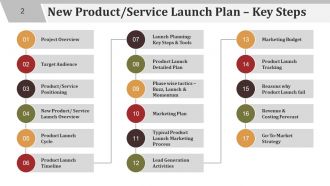
Slide 2: This slide showcases New Product/Service Launch Plan – Key Steps with the following points- Target Audience, Product/Service Positioning, New Product/ Service Launch Overview, Product Launch Cycle, Project Overview, Product Launch Timeline, Launch Planning: Key Steps & Tools, Product Launch Detailed Plan, Phase wise tactics – Buzz, Launch & Momentum, Marketing Plan, Typical Product Launch Marketing Process, Lead Generation Activities, Marketing Budget, Product Launch Tracking, Reasons why Product Launch fail, Revenue & Costing Forecast, Go-To-Market Strategy.
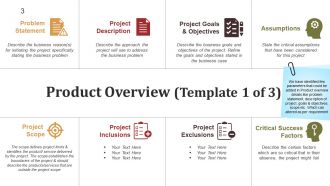
Slide 3: This slide shows Product Overview stating- Critical Success Factors, Project Inclusions, Project Exclusions, Project Scope, Project Goals & Objectives, Assumptions, Problem Statement, Project Description. We have identified few parameters that could be added in Product overview details like problem statement, description of project, goals & objectives, scope etc. which can altered as per requirement.
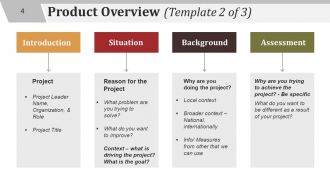
Slide 4: This slide also presents Product Overview showcasing- Introduction, Background, Assessment, Situation.
Slide 5: This slide showcases Product Overview showing- Project Name, Project manager, Executive Sponsor, Project Department Owner, Text/Process/Change, Project Overview Business Issue Opportunity, Issue / Opportunity, Value/Goal, Project Business Goal, Project Business Case.
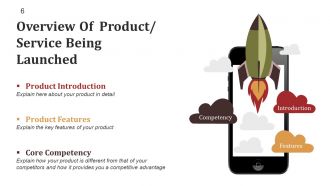
Slide 6: This slide presents Overview Of Product/ Service Being Launched showcasing- Product Introduction, Core Competency, Product Features.
Slide 7: This slide presents Product Portfolio to be shown.
Slide 8: This slide also presents Product Portfolio to be shown.
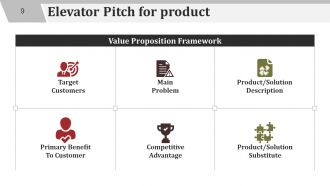
Slide 9: This slide presents Elevator Pitch for product displaying- Value Proposition Framework, Target Customers, Product/Solution Description, Main Problem, Competitive Advantage, Primary Benefit To Customer, Product/Solution Substitute.
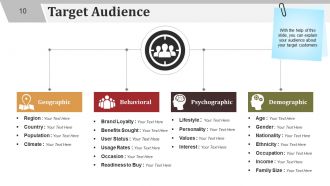
Slide 10: This slide showcases Target Audience segregated into Geographic, Behavioral, Psychographic, Demographic. With the help of this slide, you can explain your audience about your target customers.
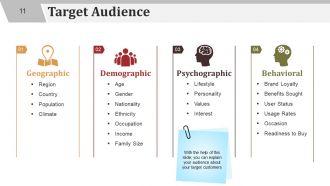
Slide 11: This slide showcases Target Audience segregated into Geographic, Behavioral, Psychographic, Demographic.
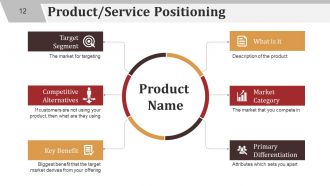
Slide 12: This sldie shows Product/Service Positioning with- Market Category, What is it, Target Segment, Competitive Alternatives, Key Benefit, Primary Differentiation.
Slide 13: This slide presents New product or service launch Overview showing- POST-LAUNCH, PRE-LAUNCH, Buyer personas, Marketing plan, Advertising, Websites, customer demo, social media strategy, Product/ service manuals, Sales kit, sales training, Launch, Customer satisfaction surveys loyalty program. This slide gives an overview about all the stages that are involved during a launch process. It also includes key strategies that could be involved in each stage.
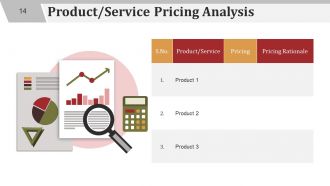
Slide 14: This slide showcases Product/Service Pricing Analysis in tabular form.
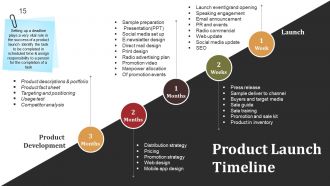
Slide 15: This slide presents Product Launch Timeline displaying- Sample preparation, Presentation(PPT), Social media set up, E-newsletter design, Direct mail design, Print design, Radio advertising plan, Promotion video, Manpower allocation, Of promotion events, Launch event\grand opening, Speaking engagement, Email announcement, PR and events, Radio commercial, Web update, Social media update, SEO, Distribution strategy, Pricing, Promotion strategy, Web design, Mobile app design, Press release, Sample deliver to channel, Buyers and target media, Sale guide, Sale training, Promotion and sale kit, Product in inventory, Product descriptions & portfolio, Product fact sheet, Targeting and positioning, Usage test, Competitor analysis. Setting up a deadline plays a very vital role in the success of a product launch. Identify the task to be completed in scheduled time & assign responsibility to a person for the completion of a task.
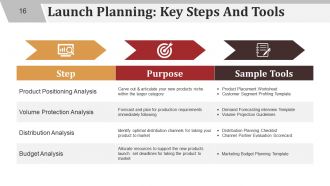
Slide 16: This sldie showcases Launch Planning: Key Steps And Tools.
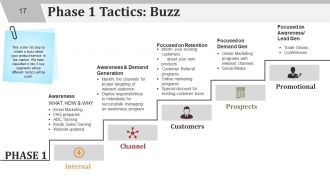
Slide 17: This slide displays Phase 1 Tactics: Buzz showcasing- Internal, Channel, Customers, Prospects, Promotionala aspects. This is the 1st step to create a buzz about your product/service in the market. We have classified it into 5 key segments where different tactics will be used.
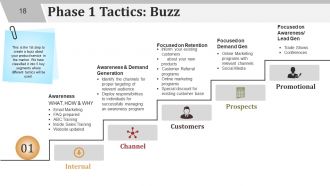
Slide 18: This slide displays Phase 1 Tactics: Buzz showcasing- Internal, Channel, Customers, Prospects, Promotionala aspects. This is the 1st step to create a buzz about your product/service in the market. We have classified it into 5 key segments where different tactics will be used.
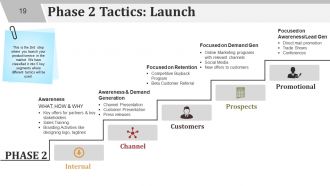
Slide 19: This slide displays Phase 2 Tactics: Launch showcasing- Internal, Channel, Customers, Prospects, Promotional. This is the 2nd step where you launch your product/service in the market. We have classified it into 5 key segments where different tactics will be used.
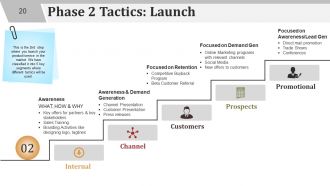
Slide 20: This slide displays Phase 2 Tactics: Launch showcasing- Internal, Channel, Customers, Prospects, Promotional. This is the 2nd step where you launch your product/service in the market. We have classified it into 5 key segments where different tactics will be used.
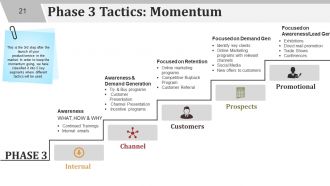
Slide 21: This slide presents Phase 3 Tactics: Momentum displaying- Internal, Channel, Customers, Prospects, Promotional. This is the 3rd step after the launch of your product/service in the market. In order to keep the momentum going, we have classified it into 5 key segments where different tactics will be used.
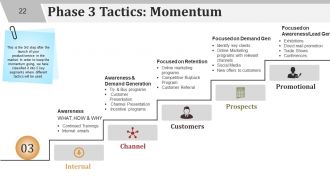
Slide 22: This slide presents Phase 3 Tactics: Momentum displaying- Internal, Channel, Customers, Prospects, Promotional. This is the 3rd step after the launch of your product/service in the market. In order to keep the momentum going, we have classified it into 5 key segments where different tactics will be used.
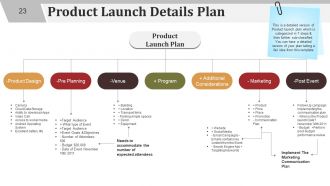
Slide 23: This slide shows Product Launch Details Plan with- Product Design, Pre Planning, Venue, Additional, Considerations, Marketing, Post Event, Program. This is a detailed version of Product launch plan which is categorized in 7 steps & then further sub-classified. You can have a detailed version of your plan taking a fair idea from this template
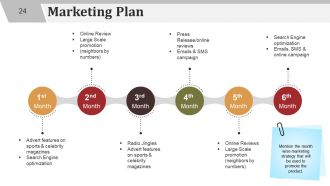
Slide 24: This slide showcases a Marketing Plan displaying- Advert features on sports & celebrity magazines, Search Engine optimization, Online Review, Large Scale promotion (neighbors by numbers), Radio Jingles, Advert features on sports & celebrity magazines, Press Release/online reviews, Emails & SMS campaign, Online Reviews, Large Scale promotion (neighbors by numbers), Search Engine optimization, Emails, SMS & online campaign, Mention the month wise marketing strategy that will be used to promote the product.
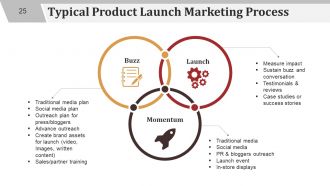
Slide 25: This slide displays a Typical Product Launch Marketing Process showcasing- Buzz, Launch, and Momentum.
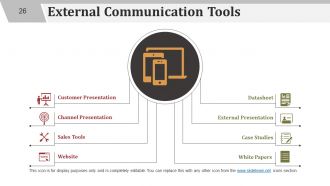
Slide 26: This slide presents External Communication Tools such as- Datasheet, Case Studies, White Papers, External Presentation, Website, Customer Presentation, Sales Tools, Channel Presentation. The icon is for display purposes only and is completely editable. You can replace this with any other icon from the www.slideteam.net icons section.
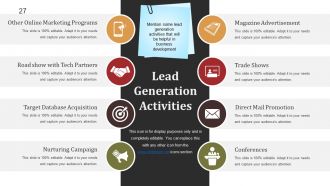
Slide 27: This slide lists Lead Generation Activities such as- Road show with Tech Partners, Conferences, Nurturing Campaign, Other Online Marketing Programs, Direct Mail Promotion, Target Database Acquisition, Trade Shows, Magazine Advertisement. Mention some lead generation activities that will be helpful in business development.
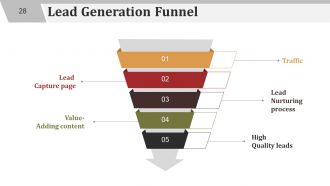
Slide 28: This slide showcases a Lead Generation Funnel displaying- Traffic, Lead Nurturing process, Lead Capture page, Value- Adding content, High Quality leads.
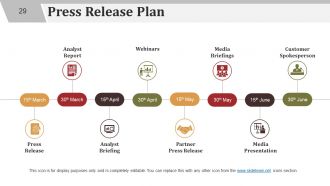
Slide 29: This slide showcases a Press Release Plan.
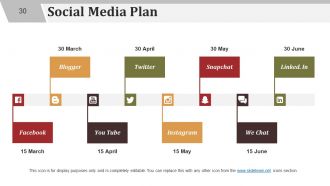
Slide 30: This slide displays a Social Media Plan.
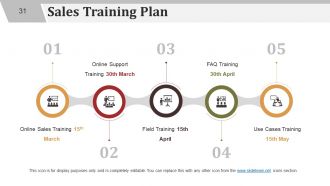
Slide 31: This slide showcases a Sales Training Plan.
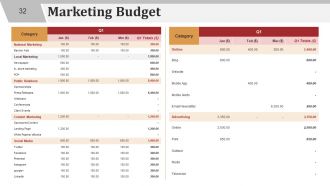
Slide 32: This slide presents Marketing Budget in tabular form.
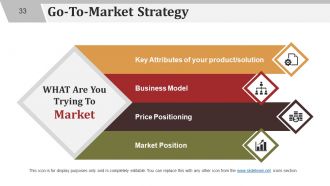
Slide 33: This slide shows Go-To-Market Strategy displaying- Price Positioning, Market Position, Key Attributes of your product/solution, Business Model.
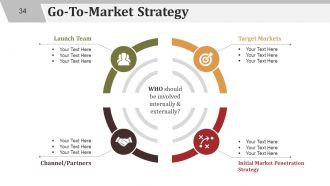
Slide 34: This slide shows Go-To-Market Strategy displaying- Launch Team, Channel/Partners, Target Markets, Initial Market Penetration Strategy.
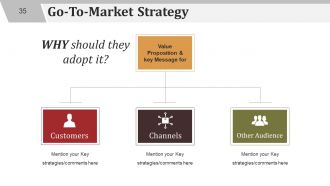
Slide 35: This slide presents Go-To-Market Strategy with the following subheadings- Customers, Channels, Other Audience.
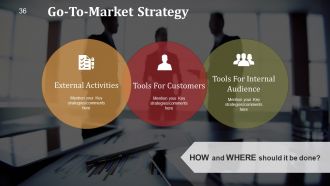
Slide 36: This slide presents Go-To-Market Strategy displaying- Tools For Internal Audience, Tools For Customers, External Activities.
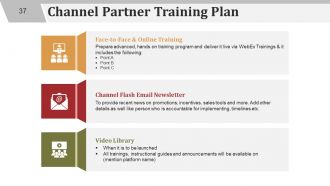
Slide 37: This slide shows a Channel Partner Training Plan with the following subheadings- Video Library, Face-to-Face & Online Training, Channel Flash Email Newsletter.
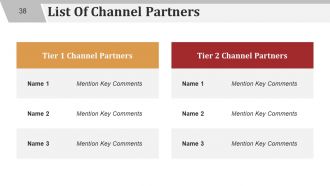
Slide 38: This slide showcases List Of Channel Partners associated.
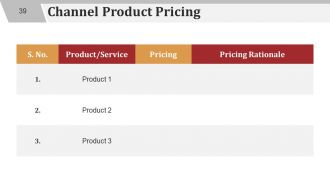
Slide 39: This is a Channel Product Pricing table slide.
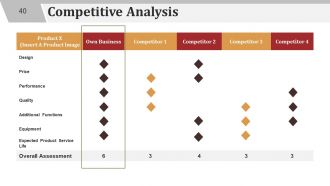
Slide 40: This slide presents Competitive Analysis in tabular form.
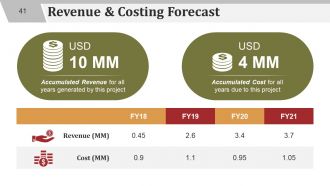
Slide 41: This slide shows Revenue & Costing Forecast to be calculated.
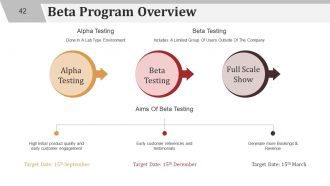
Slide 42: This slide showcases Beta Program Overview displaying- Alpha Testing, Beta Testing, Full Scale Show.
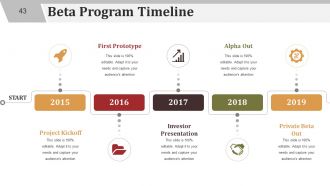
Slide 43: This slide shows a Beta Program Timeline showing- Private Beta Out, First Prototype, Alpha Out, Investor Presentation, Project Kickoff.
Slide 44: This slide shows a Beta Program Timeline Continued… displaying- Roll Out, Public Beta, Plan for Future.
Slide 45: This slide showcases Beta Customer Feedback in terms of- Happy Clients, Customer Complaints Received, Completed Tickets, Working Hours.
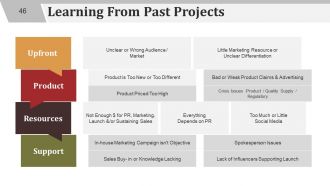
Slide 46: This slide shows Learning From Past Projects divided into- Support, Resources, Product, Upfront.
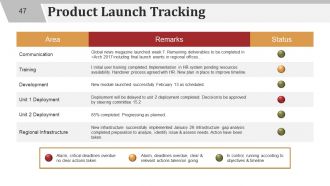
Slide 47: This slide showcases Product Launch Tracking displaying- Area, Remarks and Status.
Slide 48: This is Product Launch Checklist Icon Slide. Use the icons as per need.
Slide 49: This slide is titled Charts and Graphs to move forward. You can change the slide content as per need.
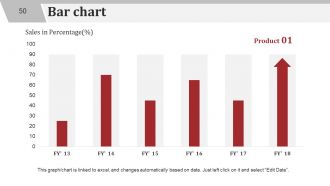
Slide 50: This is a Bar Chart slide. State specifications, comparison of products/entities here.
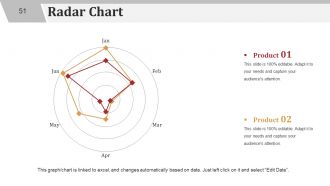
Slide 51: This is a Radar Chart slide. State specifications, comparison of products/entities here.
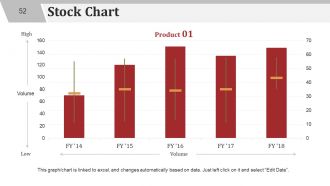
Slide 52: This is a Stock Chart slide. State specifications, comparison of products/entities here.
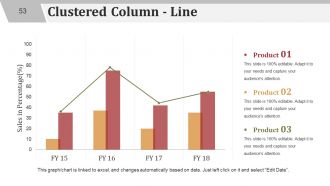
Slide 53: This is a Clustered Column Line graph slide. State specifications, comparison of products/entities here.
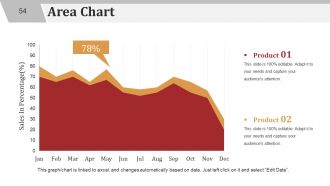
Slide 54: This is an Area Chart slide. State specifications, comparison of products/entities here. t Data”.
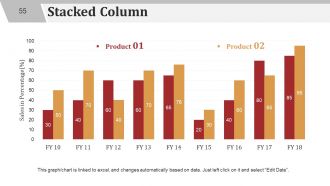
Slide 55: This is a Stacked Column graph slide. State specifications, comparison of products/entities here.
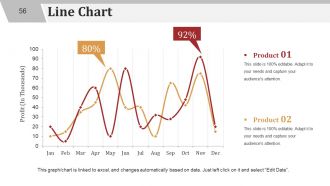
Slide 56: This is a Line chart slide. State specifications, comparison of products/entities here.
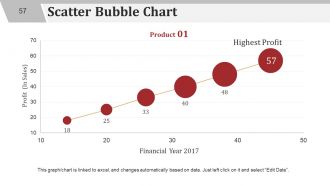
Slide 57: This is a Scatter Bubble chart slide. State specifications, comparison of products/entities here.
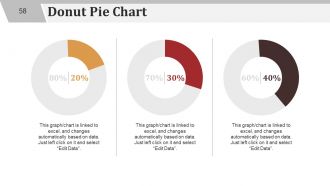
Slide 58: This is a Donut Pie Chart slide to show product/entity comparison, specifications etc
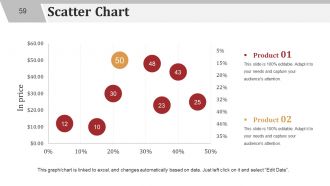
Slide 59: This is a Scatter Chart slide to show product/entity comparison, specifications etc.
Slide 60: This slide is titled Additional Slides to move forward. You can change/modify the slide content as per need.
Slide 61: This slide showcases Mission. Show your company mission etc. here.
Slide 62: This is an About Us slide. State team/company specifications here.
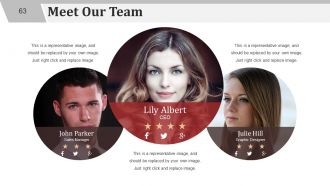
Slide 63: This is Meet Our Team slide with names, designation and text boxes to fill information.
Slide 64: This is a Puzzle image slide. State information, specifications etc. here.
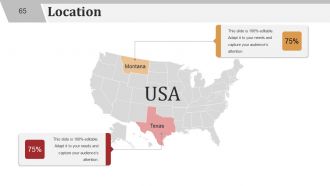
Slide 65: This is a Location slide of USA. Mark specific locations for company growth, market etc. here.
Slide 66: This is a Mind map image slide to show information, segregation, specifications etc.
Slide 67: This is a Hierarchy slide. State team/department, organization information, specifications etc. here.
Slide 68: This slide shows Silhouettes with text boxes. State people related information, specifications etc. here.
Slide 69: This is a Bulb With idea slide to showcase innovative aspects, informative ideas etc.
Slide 70: This is an Important Notes slide to mark reminders, events or anything important.
Slide 71: This is a Timeline slide to show company growth, milestones evolution etc.
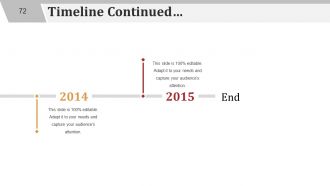
Slide 72: This is a Timeline slide to show company growth, milestones evolution etc.
Slide 73: This is Our Goal slide. State your goals, targets, aspirations here.
Slide 74: This is a Quotes slide to show something you want to convey. You may change the slide content as required.
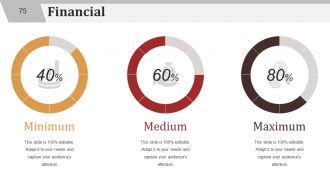
Slide 75: This is a Financial Highlights slide. State financial aspects etc. here.
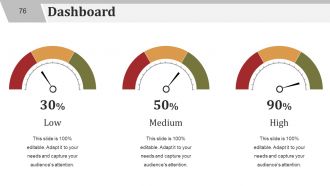
Slide 76: This is a Dashboard slide to state Low, medium and High aspects, kpis, metrics etc.
Slide 77: This is a Venn diagram slide to show information, specifications etc.
Slide 78: This is a Magnifying Glass image slide to show information, specifications etc.
Slide 79: This is a Thank You slide with Address# street number, city, state, Contact Numbers, Email Address.
Product Launch Checklist Go To Market Roll Out Marketing Plan Powerpoint Presentation Slides with all 79 slides:
Elaborate on the fundamentals with our Product Launch Checklist Go To Market Roll Out Marketing Plan Powerpoint Presentation Slides. Give full attention to basic elements.









FAQs for Product Launch Checklist Go To Market Roll Out Marketing Plan
Honestly, you've gotta get super specific about who you're actually selling to first - none of this vague "millennials" stuff. Then figure out your revenue targets and what hitting those numbers actually looks like day-to-day. Also think about how you want people to see your product compared to what's already out there. Set some realistic timelines too, because otherwise you'll just be guessing when things should happen. Oh and definitely write this stuff down and make sure your whole team knows the plan. I've seen too many launches fail because everyone was just winging it.
Market research shows you who actually wants your stuff and what they'll pay for it. I always check out competitor pricing first - seriously saves you from those cringe moments when you're way off. Surveys and focus groups help you nail down what bugs people about existing solutions. Then you can write copy that hits different, you know? Pick 3-4 burning questions about your audience first, then figure out how to get those answers. The data helps you choose where to launch and when to do it. Honestly, skipping this step is how products die quietly.
Honestly, start with figuring out who you're actually selling to - like where do these people spend their time online? Once you know that, work backwards on your messaging and what channels make sense. Social, email, ads, whatever fits your audience. Don't blow your whole budget on Facebook ads though, I've watched so many launches crash because of that. Timeline's everything - you want all this stuff hitting at the right moment. Set up some way to track if it's actually working so you can bail on what sucks and double down on what doesn't.
Honestly, forget trying to reach everyone - that's where most people mess up. Build detailed profiles of your actual customers first. What bugs them? Where do they scroll mindlessly? Once you've got that down, pick 2-3 social platforms max where they actually hang out (I see too many brands spreading themselves thin everywhere). Test different messages with A/B testing to see what clicks. The whole "cast a wide net" thing sounds good in theory, but narrow targeting crushes it every time. Oh, and segment your audience into primary and secondary groups so you're not sending the same bland message to your grandma and your college roommate.
Track conversion rates and sign-up numbers from your launch campaigns first - that's the obvious stuff. But also watch brand awareness lift and social mentions since those matter more than people think. Customer acquisition cost will probably be brutal during launch, so brace yourself. Support tickets spiking usually means your onboarding sucks, which happens to everyone honestly. Early user engagement tells you if people actually stick around. Set up dashboards before launch because your boss will definitely ask "how'd we do?" way sooner than you expect.
Your branding is what people think of before they even touch your product - logo, colors, messaging, the whole vibe. Get this stuff figured out 6-8 weeks before launch because literally everything else builds on it. Your website, ads, packaging - it all needs to match or you'll look super scattered. I learned this the hard way lol. Short version: nail down your brand guidelines first. Makes your product feel legit and recognizable. Without it? Your marketing team's gonna be scrambling to make things look cohesive across different platforms. Trust me, it's way easier to do this upfront than fix it later.
Honestly, start your social buzz like 2-3 weeks out with teasers and behind-the-scenes stuff. Pick maybe 2-3 platforms where your people actually are - I spread myself too thin once and it was a mess. Get some influencers involved if you can. Make sure you've got shareable content ready for launch day. Oh, and create a hashtag for user posts! The whole thing works way better when you're actually engaging with people, not just posting into the void. Set up alerts so you catch mentions quickly. Your customer service team better be ready though - once you go live, the questions will hit like crazy. Trust me on that one.
Honestly, rushing the timeline is the classic mistake everyone makes. Skip user testing and you'll launch something that looks amazing to your team but completely bombs with real users. Also don't just talk about features - people care about what's in it for them. Your support team needs a heads up too or they'll hate you when the questions start flooding in. QA always takes longer than you think (learned that one the hard way). Oh and have a backup plan because stuff will break. Start by figuring out your three biggest risks, then work backwards from your launch date.
Dude, don't skip beta testing - it's seriously make-or-break. Your team's gonna miss stuff because you're way too close to it. Real users will break your product in the weirdest ways (honestly, some of the feedback will make you laugh). They'll spot bugs and usability problems you never saw coming. Here's the thing though - listen to what hurts. That stinging feedback is usually the most valuable. Give yourself at least 2-3 weeks for this phase. Without beta testing, you're basically throwing your launch into the void and crossing your fingers.
Okay so definitely cover the main problem you're solving and who you're targeting. Show off your key features that beat competitors. Pricing and your go-to-market plan are must-haves too, plus realistic timelines. Use actual screenshots or demo footage - trust me, stakeholders get annoyed when they see mockups of real products. Talk about potential risks and how you'd handle them. Success metrics are huge so everyone knows what good looks like. Keep slides visual since text-heavy ones make people's eyes glaze over. Oh, and practice with someone who'll actually tell you if it sucks!
Honestly, work backwards from launch day - that's been a game changer for me. Start your teaser content around 6-8 weeks out, but don't go crazy yet. Ramp things up with demos and social proof in those final 2-3 weeks. I've watched so many teams blow their load in launch week and just exhaust everyone. Get your PR stuff and influencer outreach going early since that takes forever to actually happen. Space out the big announcements so each one lands properly. Save your best reveal for launch day, then ride that wave with user content after. Map it all on a calendar though - trust me on this one.
Start teasing early with behind-the-scenes stuff on social. Get some influencers talking about it - but pick ones who actually fit your vibe, you know? Your email list is pure gold since those people already care about what you're doing. Media outreach can be huge if you've got a decent story angle. Oh, and definitely do some kind of early access thing. People eat that exclusive insider stuff up, honestly. Just make sure you're hitting all these channels consistently so everything builds up momentum. Timing is everything - you want that crescendo effect leading to launch day.
Dude, partnerships are a game changer for launches. Find brands that target similar people but aren't competing with you directly - then pitch co-marketing stuff or joint webinars. Way cheaper than ads, plus their audience already trusts them so you get that credibility boost automatically. I always think cross-promotions work better than people expect. You'll want to start conversations like 6-8 weeks out though, because good collabs take time to plan. Oh and make sure there's real value for both sides - nobody wants a one-sided deal.
Honestly, email's your best bet for existing customers - direct line to people who already care. Social media works great for finding new people, and a blog post helps with SEO stuff (plus gives you room to actually explain things). Oh, and don't forget your internal team! Sales and support need to know what's happening so they're not caught off guard. PR might be worth it if this launch is actually a big deal. I'd probably start with those first three and see what sticks. No point spreading yourself too thin right away.
First thing - pull your sales numbers and see where you actually landed vs what you projected. Customer feedback is huge too, so dig through reviews and support tickets. Marketing-wise, check conversion rates and which channels actually worked (spoiler: it's probably not the expensive one you loved). Operational stuff matters - inventory screwups, shipping delays, site crashes. User analytics will show you how people really used your product. Oh, and schedule that post-mortem meeting soon while everyone still remembers what went wrong.
-
Easy to edit slides with easy to understand instructions.
-
Excellent products for quick understanding.