


Product launch marketing plan powerpoint presentation slides




Try Before you Buy Download Free Sample Product
 Impress Your
 Audience
 100%
100% Editable
 Save Hours
 of Time


Every organization makes a rough plan before actually launching the product in the market. And to beat the current level of cut-throat competition, it becomes imperative to be equipped with such tools that help you market your product better. Check out our competently designed template on the Product Launch Marketing Plan that assists you in creating tactics to bring a new product to the market. Conducting a comparative analysis of your competitors market share has become easy with this PPT slide that incorporates a customizable pie chart. Find out the need for launching the new product and introduce your product by giving a brief overview of the same with the help of this readily available PowerPoint template. Address the product lifecycle stages and highlight the concept of market segmentation, targeting, and positioning. This slide will also help you frame a product launch event and the marketing tactics used for its promotion. Throw some light on the challenges faced while launching the product and make your audience aware of the post-launch measures. Get access to this 100 percent editable template now.
People who downloaded this PowerPoint presentation also viewed the following :
Content of this Powerpoint Presentation
Slide 1: This slide introduces Product Launch Marketing Plan. State Your Company Name and begin.
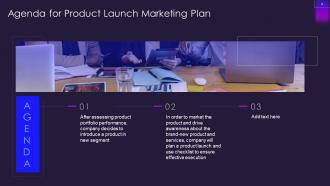
Slide 2: This slide shows Agenda for Product Launch Marketing Plan.
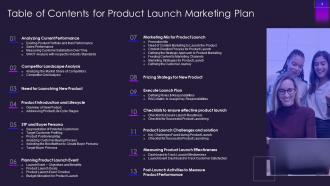
Slide 3: This slide presents Table of Content for the presentation.
Slide 4: This slide shows title for topics that are to be covered next in the template.
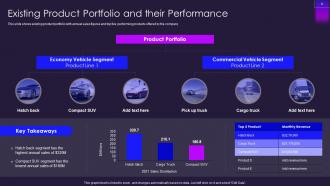
Slide 5: This slide displays existing product portfolio with annual sales figures and top five performing products offered by the company.
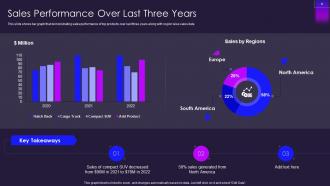
Slide 6: This slide represents Sales Performance Over Last Three Years.
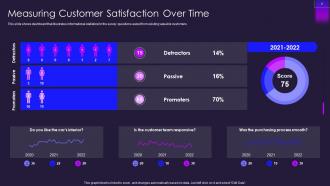
Slide 7: This slide shows dashboard that illustrates informational statistics for the survey questions asked from existing valuable customers.
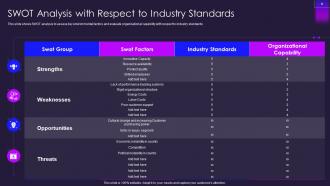
Slide 8: This slide presents SWOT Analysis with Respect to Industry Standards.
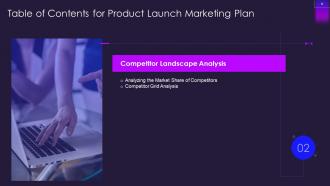
Slide 9: This slide shows Table of Content for the presentation.
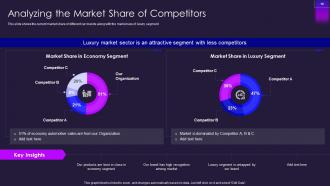
Slide 10: This slide displays the current market share of different car brands along with the market size of luxury segment.
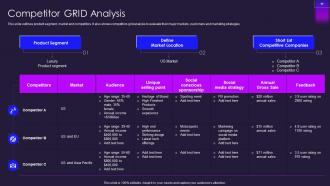
Slide 11: This slide represents Competitor Grid Analysis for Market Evaluation.
Slide 12: This slide shows Table of Content highlighting Need for Launching New Product in Market.
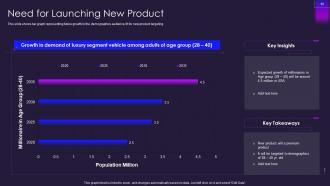
Slide 13: This slide presents bar graph representing future growth in the demographics audience, fit for new product targeting.
Slide 14: This slide shows Table of Content highlighting Product Introduction and Lifecycle.
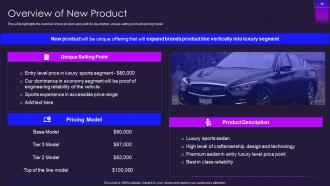
Slide 15: This slide highlights the overview of new product along with its description, unique selling point and pricing model.
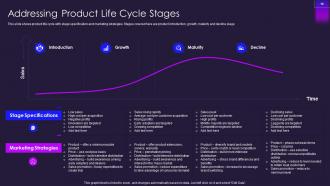
Slide 16: This slide represents product life cycle with stage specification and marketing strategies.
Slide 17: This slide shows Table of Content highlighting STP and Buyer Persona.
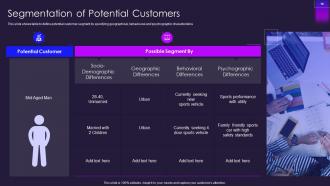
Slide 18: This slide presents Segmentation of Potential Customers to Boost Sales.
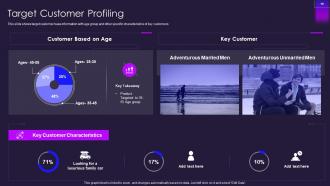
Slide 19: This slide shows target customer base information with age group and other specific characteristics of key customers.
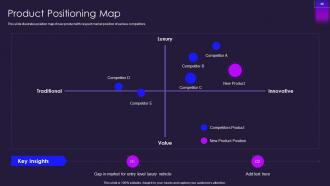
Slide 20: This slide displays Product Positioning Map for Various Competitors.
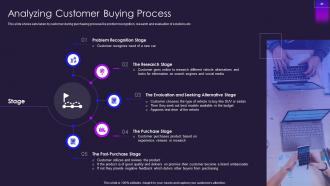
Slide 21: This slide represents sets taken by customer during purchasing process like problem recognition, research and evaluation of solutions etc.
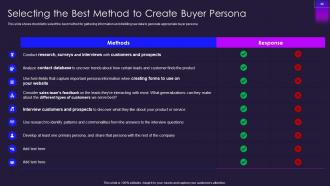
Slide 22: This slide shows Selecting the Best Method to Create Buyer Persona.
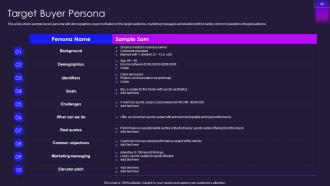
Slide 23: This slide presents Target Buyer Persona to Enhance Sales Performance.
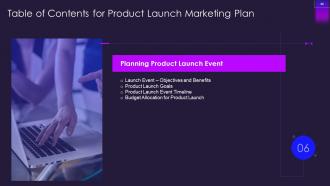
Slide 24: This slide shows Table of Content highlighting Planning Product Launch Event.
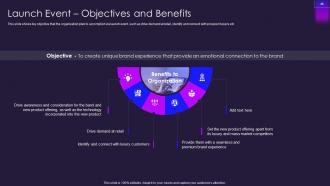
Slide 25: This slide displays key objective that the organization plan to accomplish via launch event.
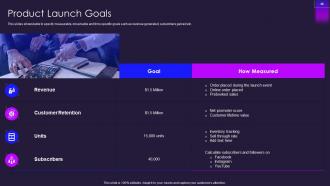
Slide 26: This slide represents Product Launch Goals and Performance Indicators.
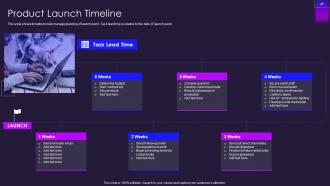
Slide 27: This slide shows timeline to help manage planning of launch event.
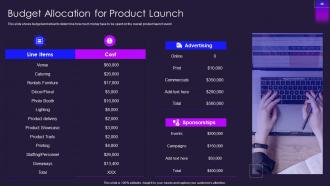
Slide 28: This slide presents budget worksheet to determine how much money have to be spent on the overall product launch event.
Slide 29: This slide shows Table of Content highlighting Marketing Mix for Product Launch.
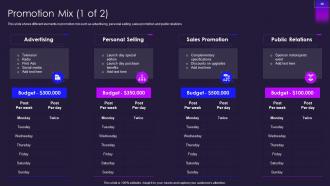
Slide 30: This slide displays different elements in promotion mix such as advertising, personal selling, etc.
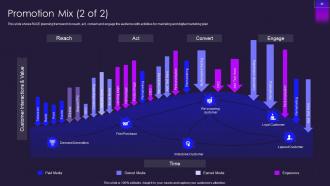
Slide 31: This slide represents RACE planning framework to reach, act, convert and engage the audience with activities.
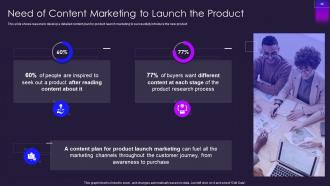
Slide 32: This slide shows reasons to develop a detailed content plan for product launch marketing.
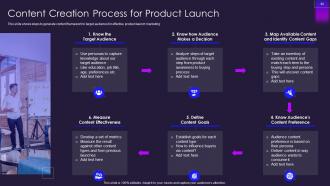
Slide 33: This slide presents steps to generate content framework to target audience for effective product launch marketing.
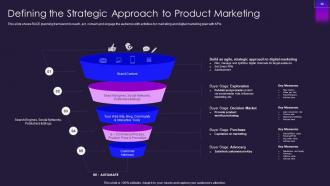
Slide 34: This slide shows Defining the Strategic Approach to Product Marketing.
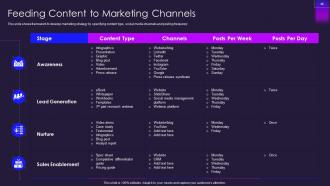
Slide 35: This slide displays framework to develop marketing strategy by specifying content type.
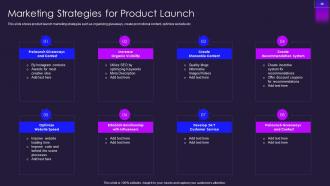
Slide 36: This slide represents product launch marketing strategies such as organizing giveaways, create promotional content, etc.
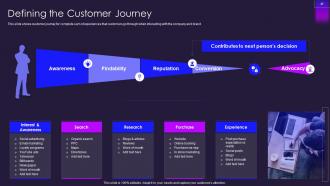
Slide 37: This slide shows customer journey for complete sum of experiences that customers go through.
Slide 38: This slide presents Table of Content highlighting Pricing Strategy for New Product.
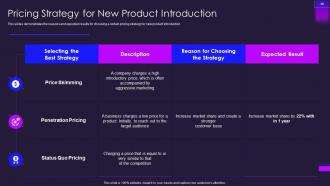
Slide 39: This slides demonstrates the reasons and expected results for choosing a certain pricing strategy for new product introduction.
Slide 40: This slide displays Table of Content highlighting Execute Launch Plan.
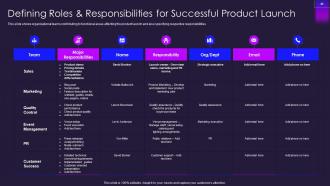
Slide 41: This slide represents Defining Roles & Responsibilities for Successful Product Launch.
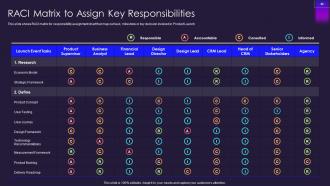
Slide 42: This slide shows RACI matrix for responsibility assignment chart that map out task, milestone or key decision, etc.
Slide 43: This slide presents Table of Content highlighting Checklists to Ensure Effective Product Launch.
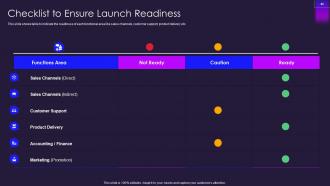
Slide 44: This slide shows table to indicate the readiness of each functional area like sales channels, customer support, etc.
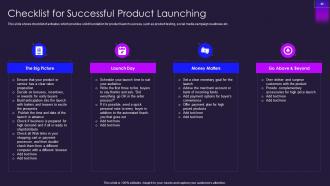
Slide 45: This slide displays checklist of activates which provides solid foundation for product launch success.
Slide 46: This slide represents Table of Content highlighting Product Launch Challenges and Solution.
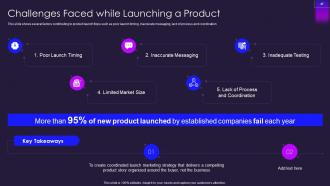
Slide 47: This slide shows Challenges Faced while Launching a Product.
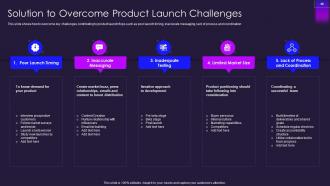
Slide 48: This slide presents Solution to Overcome Product Launch Challenges.
Slide 49: This slide shows Table of Content highlighting Measuring Product Launch Effectiveness.
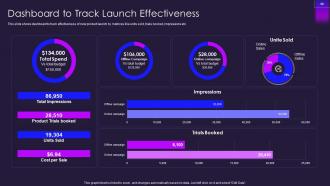
Slide 50: This slide displays Dashboard to Track Product Launch Effectiveness.
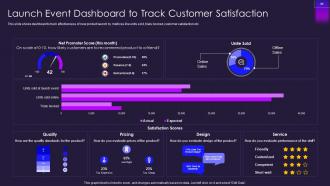
Slide 51: This slide represents Launch Event Dashboard to Track Customer Satisfaction.
Slide 52: This slide shows Table of Content highlighting Post-Launch Activities to Measure Product Performance.
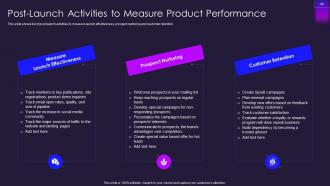
Slide 53: This slide presents list of post launch activities to measure launch effectiveness, prospect nurturing and customer retention.
Slide 54: This slide displays Icons for Product Launch Marketing Plan.
Slide 55: This slide is titled as Additional Slides for moving forward.
Slide 56: This is About Us slide to show company specifications etc.
Slide 57: This is Our Team slide with names and designation.
Slide 58: This is Our Mission slide with related imagery and text.
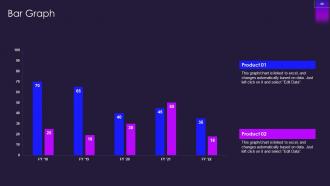
Slide 59: This slide presents Bar chart with two products comparison.
Slide 60: This slide provides 30 60 90 Days Plan with text boxes.
Slide 61: This slide presents Roadmap with additional textboxes.
Slide 62: This is a Timeline slide. Show data related to time intervals here.
Slide 63: This slide shows Circular Diagram with additional textboxes.
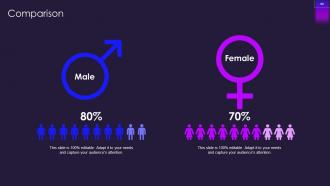
Slide 64: This is a Comparison slide to state comparison between commodities, entities etc.
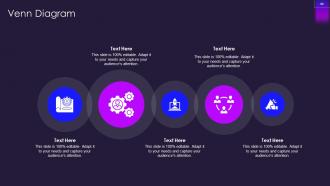
Slide 65: This slide depicts Venn diagram with text boxes.
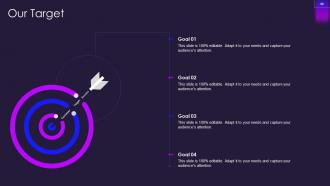
Slide 66: This is Our Target slide. State your targets here.
Slide 67: This is a Thank You slide with address, contact numbers and email address.
Product launch marketing plan powerpoint presentation slides with all 72 slides:
Use our Product Launch Marketing Plan Powerpoint Presentation Slides to effectively help you save your valuable time. They are readymade to fit into any presentation structure.





FAQs for Product launch marketing plan
Okay so first thing - figure out who you're actually trying to reach, because that drives literally everything else. Map out what makes you different and set some real goals with numbers you can track. Work backwards from your launch date to build a timeline with key milestones. The pre-launch phase is honestly where you can make or break the whole thing - don't sleep on building that early buzz. Plan your launch day stuff, get all your marketing channels talking to each other (easier said than done lol), then have a game plan for keeping momentum after. Oh and definitely put together that detailed timeline first - it'll save your sanity later.
Dig into your current customer data first - who's actually buying and why? Demographics matter, but so do behaviors and what they're spending on. Building those detailed buyer personas is honestly kind of a drag, but you'll thank yourself later. I'd also peek at what your competitors are doing audience-wise. Maybe there's a gap you can jump on? Before you blow your whole budget though, run some surveys or quick focus groups to test your hunches. Way better to be laser-focused on one group than trying to please literally everyone.
Competitive analysis shows you exactly where your product fits and how to stand out from everyone else. Map out what competitors are doing with pricing and messaging - trust me, you don't want to accidentally copy them. The real goldmine is finding gaps you can jump into. Look at their weak spots, that's your opening. Their strengths? Yeah, avoid those battles entirely. Honestly, pricing research alone saved my last launch from being a total disaster. Just throw together a simple comparison chart with 3-4 main competitors before you nail down your strategy.
Definitely hit up your email list first since those people already know you. Social media's solid for getting people hyped - try to get some early users posting about it. Blog posts and demos are clutch, especially if your product's kinda complicated to explain. PR can be massive but timing matters. Honestly though, it really comes down to where your actual customers spend their time online. I'd pick like 2-3 channels max and focus there instead of trying to be everywhere at once (learned that one the hard way). Test what works, then double down on those.
Start teasing people like 2-3 weeks out with countdowns and behind-the-scenes stuff. Those "accidental" leaks work surprisingly well - I swear people love feeling like they're getting inside info. Get some influencers to do unboxings if your budget allows. Make a hashtag that doesn't suck and push user-generated content hard once you launch. Each platform needs its own flavor though - what works on TikTok won't fly on LinkedIn. Oh, and sneak peeks of the actual product being used always get more engagement than just product shots sitting there.
Track the money stuff first - sales revenue, conversion rates, how much you're spending to get each customer. That's what actually matters. Website traffic and social engagement are useful too, shows if people care about what you're saying. Email open rates, press coverage, all that jazz. Just don't obsess over follower counts because honestly, they're pretty meaningless if nobody's buying. Brand surveys help but they're kinda a pain to set up. Oh, and get your dashboard ready before you launch - trust me on this one. You don't want to be frantically pulling numbers when your boss starts asking for updates.
Honestly, just build your whole launch around one big story. What problem made you create this thing in the first place? Start there - maybe talk about your own struggles or what customers were complaining about. Way more interesting than boring feature lists, trust me. Then show how people's lives actually change after using your product. Real stories, not made-up testimonials. Spread this narrative everywhere - social, emails, videos, whatever. But here's the thing: make your customers the heroes, not your product. Oh, and definitely create a "story bank" early so your whole team knows what to say. Makes everything feel connected.
Honestly, forget listing features - customers don't care about your cool tech specs. Figure out what's actually driving your target customer crazy, then show how you fix it better than everyone else. Be crazy specific too. Don't say "saves time" - say "cuts report generation from 3 hours to 15 minutes." The "what's in it for me" question is literally all they're thinking about. Oh, and definitely test this with real customers first. If they can't explain your value prop back to you in their own words, you've overcomplicated it. Keep tweaking until they get it instantly.
Honestly? Influencer marketing can totally work for launches, but only if your people actually follow influencers in that space. Don't bother with mega-celebrities who obviously don't use your stuff - people see right through that BS. Micro-influencers are where it's at. They're cheaper and way more authentic. Find 3-5 whose followers match your target customers and hit them up early in your planning. Oh, and make sure they actually align with your brand values or it'll just look fake and hurt you.
Honestly, teaser campaigns are so fun to plan. Start mysterious - cryptic posts, maybe a countdown timer (though don't go overboard with those). Then slowly pull back the curtain with behind-the-scenes stuff or team updates. Email your subscribers first with exclusive peeks - they'll feel special and you'll build buzz. Get some influencers doing "something big is coming" posts too. Oh, and definitely set up a waitlist! You'll actually see if people want this thing before you fully launch. The whole point is creating momentum without spilling everything upfront. Think movie trailer vibes, not documentary.
Don't just slap feedback on at the end - weave it throughout everything. Beta test first, obviously. Get real reactions before you go big. Set up surveys, focus groups, whatever works. Honestly though? Some of my best insights have come from random conversations over coffee - people are way more honest when they're not in "formal feedback mode." Use what you learn to tweak messaging, pricing, maybe even features if you've got time. Build in buffer time so you can actually pivot when customers tell you something unexpected. Way better than guessing what they want.
Honestly? Most people mess up by not knowing who they're actually selling to. Like, they think "everyone" is their audience which is basically no one. Market validation is huge too - don't just assume people want what you're building. I've seen so many launches flop because timing was awful, like going up against Apple's keynote or something dumb like that. Oh, and never overpromise features. Trust me on this one - underpromise and overdeliver beats the opposite every time. Your internal messaging probably sounds way different to actual customers, so test that stuff early. The weirdest mistake though? Having zero plan for after launch. You need momentum or you'll just... fade out.
Start with a teaser email like 2-3 weeks out - just enough to get people curious without giving everything away. Launch day hits? Send the big announcement with your main call-to-action. After that, testimonials work crazy well because everyone wants to see other people already buying (honestly, we're all just followers at heart). Space these maybe every 3-5 days so you're not that annoying brand blowing up inboxes. If you've got limited stock or early pricing, throw in a "last chance" email at the end. One goal per email though - don't confuse people. Oh, and definitely track those open rates to figure out your best send times.
Honestly, PR is like having your cool friends hype you up instead of bragging about yourself. Third-party validation hits different - way more believable than your own marketing spiel. The trick is building those media relationships early, not scrambling last minute. You'll want compelling angles too, not just "we launched something!" Nobody cares about that. I learned this the hard way once. Start hitting up journalists 4-6 weeks out. Find influencers who actually match your vibe. Time everything right and you've got people vouching for you instead of crickets.
Work backwards from launch day - that's your north star. I'd map out the big stuff first: content creation, PR outreach, influencer collabs, then figure out realistic timelines for each. Always pad your schedule because everything takes longer than you think (learned this the hard way!). Break it into chunks: pre-launch buzz starting 8-12 weeks out, then ramp-up 4-6 weeks before, launch week itself, and post-launch follow-up. Asana works great for tracking dependencies - like you can't start email sequences until creative is done. Weekly check-ins are clutch for adjusting on the fly.
-
Awesome use of colors and designs in product templates.
-
Perfect template with attractive color combination.