


Launching a new service powerpoint presentation with slides go to market





Try Before you Buy Download Free Sample Product
 Impress Your
 Audience
 100%
100% Editable
 Save Hours
 of Time


It is a proven fact that launching a new service is a challenge. A casual attitude indeed can prove detrimental for an organization. This is the reason that before any business launch professionals looks for PPT sample presentations to give insights about their service launch marketing plan. To address all such issues here we are introducing readymade complete PowerPoint slide deck covering all significant aspects about launching a new service. Best part is that in this PPT sample file we have incorporated PowerPoint templates like of customer need analysis, SWOT analysis, targeting, market entry strategy and many more to meticulously address the topic. In short, our PPT model assists launch managers, strategic thinkers and marketing managers to deliver an engaging PowerPoint presentation. By and large this supports them in organizing their work force to overcome technical, legal, regulatory and promotional challenges that a launch event comes across.
People who downloaded this PowerPoint presentation also viewed the following :
Content of this Powerpoint Presentation
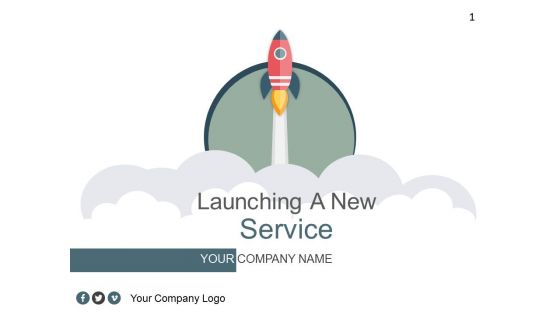
Slide 1: This slide introduces Launching A New Service. State Your Company Name and get started.
Slide 2: This is an Agenda Slide. State your agendas here.
Slide 3: This is Mission slide. State your mission here.
Slide 4: This is Our Mission slide with image boxes department heads names/designation.
Slide 5: This is Our Team slide with image boxes department heads names/designation.
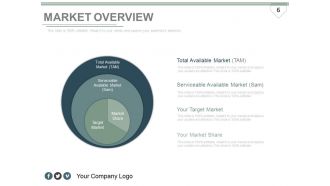
Slide 6: This slide presents Market Overview having- Total Available Market (TAM), Serviceable Available Market (Sam), Your Target Market, Your Market Share.
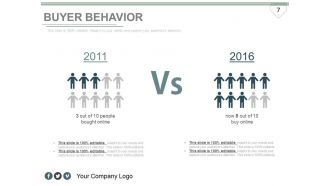
Slide 7: This slide shows Buyer Behavior in comparison of years.
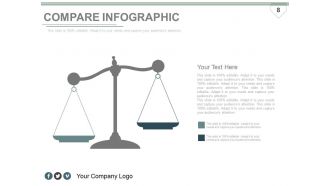
Slide 8: This slide shows a Compare infographic with scale image and text boxes.
Slide 9: This is a Business Quotes slide to show what you believe in or want to convey.
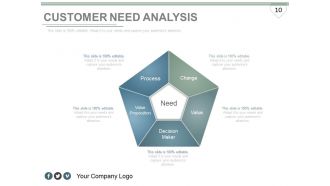
Slide 10: This slide presents Customer need analysis with the following sub headings - Change, Value, Decision Maker, Value Proposition, Process.
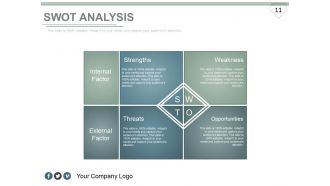
Slide 11: This slide presents a SWOT analysis as internal and external factors.
Slide 12: This slide shows Segmentation in terms of High Mid and Low.
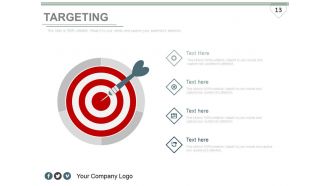
Slide 13: This slide showcases Targeting. State goals/aspirations here.
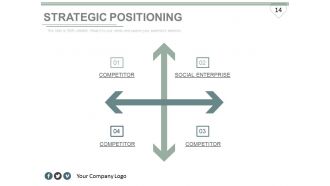
Slide 14: This slide shows Strategic Positioning with competitor and social enterprise as variants.
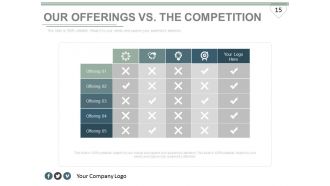
Slide 15: This slide showcases Our Offerings v/s the competition in table form.
Slide 16: This slide shows Competitive Brands market share of different brands.
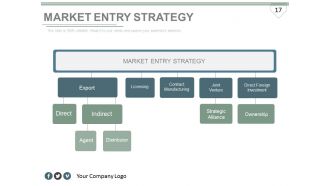
Slide 17: This slide displays Market Entry Strategy with the following headings- 1: Export (Indirect, Agent, Distributor, Direct) 2: Licensing 3: Contract Manufacturing 4: Joint Venture(Strategic Alliance) 5: Direct Foreign Investment(Ownership)
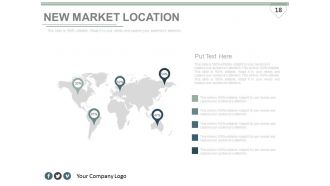
Slide 18: This slide shows New Market Location with world map to mark on and present to others.
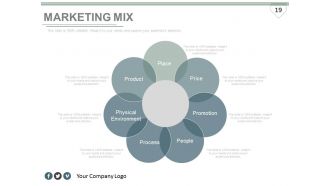
Slide 19: This slide showcases 7 Ps of Marketing Mix- Place, Price, Promotion, People, Process, Physical Environment, Product.
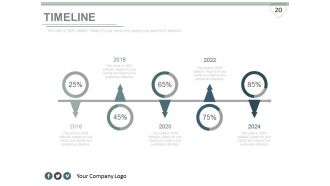
Slide 20: This slide shows Timeline to indicate growth, milestones achieved etc.
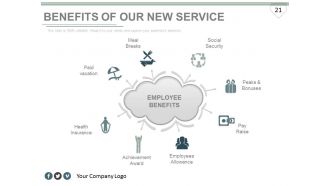
Slide 21: This slide showcases Benefits of Our New Service with the following constituents- Health Insurance, Paid vacation, Meal Breaks, Social Security, Peaks & Bonuses, Pay Raise, Employees Allowance, Achievement Award.
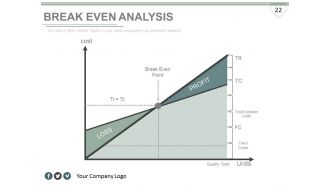
Slide 22: This slide presents a Break even analysis to cover costs of doing business.
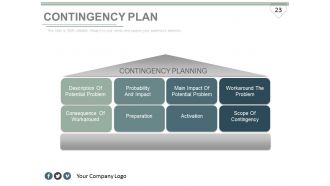
Slide 23: This slide showcases a Contingency Plan with the following content- Description Of Potential Problem, Consequence Of Workaround, Preparation, Probability And Impact, Activation, Main Impact Of Potential Problem, Workaround The Problem, Scope Of Contingency.
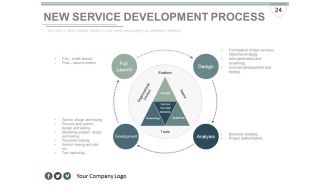
Slide 24: This slide shows New Service Development Process. The sub headings include- 1: Development- (Service design and testing, Process and system design and testing, Marketing program design and testing, Personnel training, Service testing and pilot run, Test marketing.) 2: Analysis- Business analysis, Project authorization, 3: Design- Formulation of new services objective/strategy, Idea generation and screening, Concept development and testing. 4: Full Launch- Full–scale launch, Post–launch review.
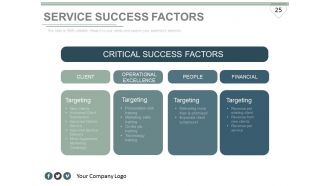
Slide 25: This slide presents Service Success Factors with the following segregation- CRITICAL SUCCESS FACTORS 1: CLIENT (New Clients, Increased Client Satisfaction, Improved Clients Service, Improved Service Delivery, More Aggressive Marketing Campaign). 2: OPERATIONAL EXCELLENCE (Presentation skill training, Marketing skills training, On the job training, Technology training). 3: PEOPLE (Delivering more than is promised, Improved client turnaround) 4: FINANCIAL (Revenue per existing client, Revenue from new clients, Revenue per service).
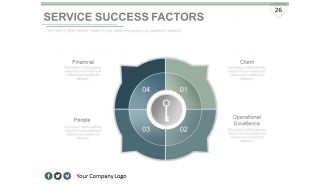
Slide 26: This slide presents Service Success Factors with the following sub headings- Client, Financial, Operational Excellence, People.
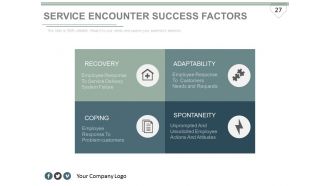
Slide 27: This slide showcases Service Encounter Success Factors with the following headings- RECOVERY- Employee Response To Service Delivery System Failure. COPING- Employee Response To Problem customers. SPONTANEITY- Unprompted And Unsolicited Employee Actions And Attitudes. ADAPTABILITY- Employee Response To Customers Needs and Requests.
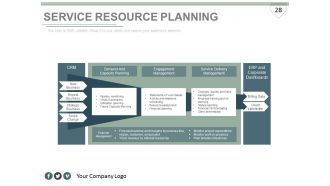
Slide 28: This slide shows Service Resource Planning with the following subheadings- CRM, Demand & Capacity Planning, Engagement management, Service delivery management and ERP&Corporate dashboards.
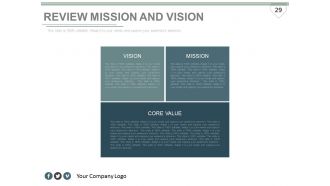
Slide 29: This slide shows Review Mission and Vision with Core value with text boxes.
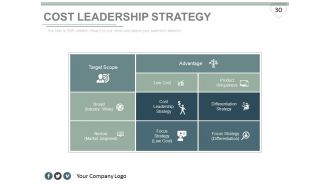
Slide 30: This slide presents Cost Leadership strategy with the following constituents- Advantage, Target Scope, Broad (Industry Wide), Cost Leadership Strategy, Differentiation Strategy, Narrow (Market Segment), Focus Strategy (Low Cost), Focus Strategy (Differentiation), Product Uniqueness.
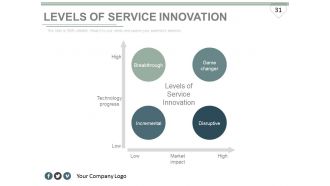
Slide 31: This slide showcases Levels of Service Innovation in terms of High and Low& Technology progress- Market Impact with the following constituents- Breakthrough, Game changer, Disruptive, Incremental.
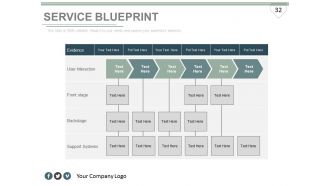
Slide 32: This slide shows a Service Blueprint.
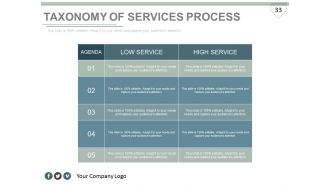
Slide 33: This slide displays Taxonomy of Services Processes.
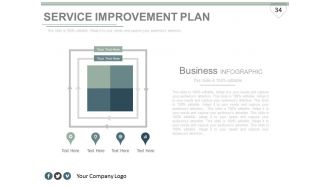
Slide 34: This slide shows Service Improvement Plan. State your plan here.
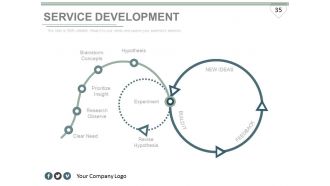
Slide 35: This slide showcases Service Development with the following points- New ideas, Clear Need, Research Observe, Prioritize Insight, Brainstorm Concepts, Hypothesis, Experiment, Revise Hypothesis, Feedback, Build it.
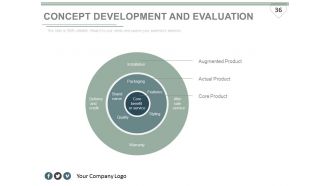
Slide 36: This slide presents Concept Development and Evaluation. The concentric circles image include- Installation, Delivery and credit, Brand name, Quality, Warranty, Packaging, Features, Styling, Aftersale service, Core benefitor service, Augmented Product, Actual Product, Core Product.
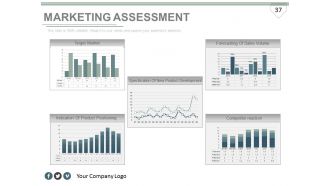
Slide 37: This slide presents Marketing asessment with the following sub headings- Target Market, Forecasting Of Sales Volume, Indication Of Product Positioning, Competitor reaction, Specification Of New Product Development.
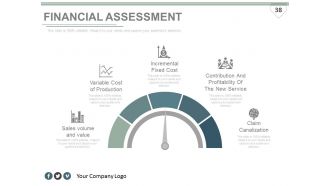
Slide 38: This slide shows Financial assessment with the following sub headings- Claim Canalization, Variable Cost of Production, Sales volume and value, Incremental Fixed Cost, Contribution And Profitability Of The New Service.
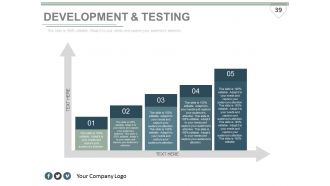
Slide 39: This slide shows Development and Testing stages.
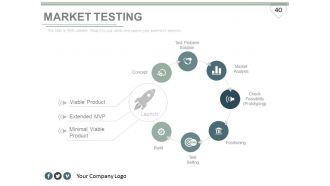
Slide 40: This slide showcases Market Testing under three main sub headings- 1: Viable Product 2: Extended MVP and 3: Minimal Viable Product divided into- Launch, Concept, Test Problem Solution, Market Analysis, Check Feasibility (Prototyping), Positioning, Test Selling, Build.
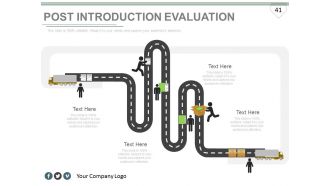
Slide 41: This slide introduces to Post Introduction Evaluation.
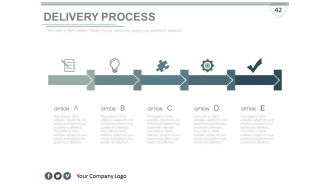
Slide 42: This slide shows Delivery Process with different options.
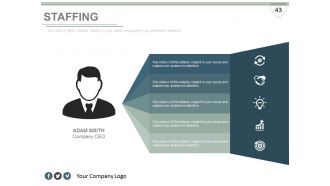
Slide 43: This slide showcases Staffing displaying Company CEO at the helm.
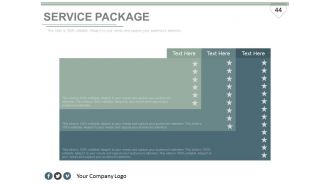
Slide 44: This slide shows Service package of the company.
Slide 45: This slide shows another variation of Service package of the company.
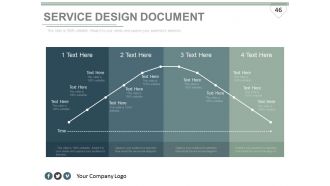
Slide 46: This slide shows Service Design Document in graph form.
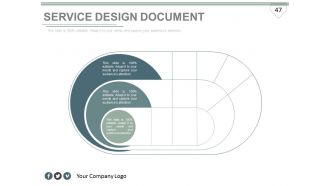
Slide 47: This slide shows another variation design on Service Design Document.
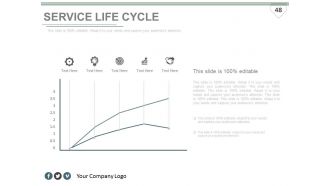
Slide 48: This slide shows Service Life Cycle in graph form.
Slide 49: This is a Thank You slide with image and text box to state your specifications etc.
Launching a new service powerpoint presentation with slides go to market with all 49 slides:
Make a mark with our Launching A New Service Complete Powerpoint Deck With Slides. Establish your mastery of your field.






FAQs for Launching a new service powerpoint presentation with slides
Honestly, start with who you're actually selling to - and I mean get super specific, not just "small businesses" or whatever. From there, figure out your value prop and how you'll price against competitors. Distribution channels matter too - where will you actually find these people? Your launch plan should be phased, not some big bang approach that usually flops. Oh, and don't sleep on your messaging - that's where most people screw up. I'd map out your ideal customer first since everything else kinda flows from that. Makes the whole process way less overwhelming when you're not trying to be everything to everyone.
Basically, instead of blasting the same message to everyone, you split customers into groups and talk to each one differently. A startup has completely different problems than some huge corporation, so why would you pitch them the same way? That's just dumb. Figure out what each group actually cares about - their specific pain points, how they buy stuff, what matters to them. Then build your messaging around that. Your conversion rates will improve because you're not being generic anymore. I'd start with maybe 2-3 segments and create different playbooks for each. Way more effective than the spray-and-pray approach most people use.
Dude, customer feedback is everything for GTM. Without it you're just guessing what people want. I'd start collecting it super early - surveys, interviews, watching how they actually use your stuff. It shows you if you're solving the right problems and helps nail your messaging. Plus you'll figure out the best ways to reach them and what they're willing to pay. Honestly, I've watched teams (including mine once, whoops) build whole strategies without talking to customers first. Total disaster. The data keeps you grounded in reality instead of making assumptions.
Honestly, just map out your customer segments first. Score each one on market size, how easily you can reach them, and how badly they need what you're selling. The highest scorers win. Don't overthink this part – sometimes the obvious answer is actually right. Go for segments where you've got some connections or credibility already. Breaking into brand new markets is expensive and takes forever (learned that the hard way). Narrow it down to maybe 2-3 segments, then actually talk to people in each group before you spend money. You'd be surprised how wrong your assumptions can be.
Track your core metrics but don't go crazy with too many at first. CAC and conversion rates are must-haves. Monthly recurring revenue, obviously. Customer lifetime value matters more than most people think. I'd grab 3-5 metrics that actually match what you're trying to do right now. Churn rate and sales cycle length will tell you if things are working. NPS is kinda fluffy but whatever, it still helps with product-market fit stuff. Time to first value is huge too - people forget about that one. Once you've got those basics down, then you can add more fancy tracking.
Honestly, competitive analysis is like detective work - you're hunting for market gaps and figuring out how to be different. Map out what your competitors are actually saying and who they're talking to. Then find your weird little corner that nobody else has claimed. I get way too into this stuff, but whatever. Don't just try to be "better" - that's boring. You need something genuinely different. Check out 3-5 competitors' websites first. Look for segments they're ignoring or messages everyone's somehow missed. Once you see the whole landscape, you can position yourself to actually stand out instead of just... existing.
Okay so three things you really need to nail: figure out exactly who your customers are and what pisses them off, then hit them with messaging that speaks to that. Launch everywhere at once - social, digital, maybe even some old school stuff. Most people mess this up because they're all over the place with timing. Also, find some partners or influencers who make sense for your brand. I learned this the hard way but coordination is everything - you want all this stuff hitting at the same time to build real momentum. Make a timeline with who's doing what and when, or it'll be chaos.
Look, digital marketing is basically how you amplify your whole go-to-market thing - gets you in front of the right people without breaking the bank. Content builds awareness. Targeted ads grab people who are already looking. Email nurtures them toward actually buying stuff. Social's solid for launch buzz too, though honestly don't expect miracles overnight (learned that one the hard way). Map each channel to where people are in their journey - like, figure out where your customers actually spend time online first. Then you create touchpoints that push them from "never heard of you" to "take my money." Track everything religiously so you'll know what's actually moving the needle.
Honestly, the biggest pain is that sales and marketing are basically on different planets. Marketing's thinking long-term brand stuff while sales is like "WHERE ARE MY LEADS??" Then they fight over lead quality - sales says the leads suck, marketing says sales isn't even calling them back. Oh, and they're using totally different tools so nobody knows what's actually happening. Set shared revenue goals and make them sit in the same room weekly to look at one dashboard. Force them to agree on what makes a "good" lead or they'll argue forever.
Honestly, partnerships are like a marketing cheat code. You get access to another company's customers without spending a fortune on ads. Find businesses that serve your same audience but aren't competitors - like, if you sell software, maybe partner with a consulting firm that works with similar clients. Their customers already trust them, so you don't have to start from zero building credibility (which is such a pain). Cross-promotions work great. So do joint campaigns or bundling products together. I'd start by literally making a list of who serves your ideal customers already.
Honestly, just look at what everyone else is charging first - gives you a baseline. Figure out your actual costs too, obviously. But here's the thing: whatever price you think will work probably won't, so test different amounts with your first customers. Try to price based on the value you're giving them rather than just your costs plus markup. People pay for results, not your overhead. Test a few different price points with different customer groups - some might be way less price-sensitive than you think. Write everything down because you'll definitely need to explain your pricing logic later. Oh, and don't lock yourself into anything permanent. You're gonna want to tweak prices as you figure out what actually works.
Figure out where your customers actually hang out and buy stuff first. Are they online researchers? Do they work through resellers? Some want that direct sales relationship. B2B folks usually need more hand-holding, while B2C can go wider with digital - though honestly, there's always weird exceptions that'll throw you off. Don't blow your budget testing everywhere at once. Pick a couple channels that match how your customers buy and make financial sense for where you're at. Cost vs reach vs how much control you have - that's your basic math. Test small, see what works, then double down.
People remember stories way better than boring feature lists, so build your GTM around a narrative that actually matters. Map out your customer's problem like it's a real story - what conflict are they facing, how does your solution change everything, and what does winning look like for them? Honestly, most GTM strategies are just dry bullet points that nobody remembers. Your story needs to run through everything - sales calls, marketing stuff, demos, all of it. Don't just tell people what you're selling. Show them why they should give a damn. Start with their journey and make it compelling.
Honestly, your personas should drive pretty much everything in your GTM strategy. What channels you focus on, how you price things, what messaging actually works - it all comes back to who you're targeting. Take busy executives for example - long email campaigns are basically useless for them. They want quick, punchy value props instead. Your sales process changes too, plus what features you demo and how you create content. I'd definitely map each persona to specific tactics rather than doing the same thing for everyone. Maybe start by looking at what you're doing now versus your personas? You'll probably spot some obvious gaps.
Hit the big four first: who you're targeting, how you stack against competitors, pricing, and your sales channels. Timeline and budget stuff comes next - execs always want to know what they're spending. Revenue projections will eat up most of your Q&A time, so have those assumptions rock solid. Oh, and definitely throw in a risks section because they love seeing you've thought ahead. Honestly, the whole thing should focus on what decisions they actually need to make. Don't dump your entire research project on them - learned that one the hard way.
-
It perfect and clear
-
Easily Understandable slides.
-
Qualitative and comprehensive slides.