


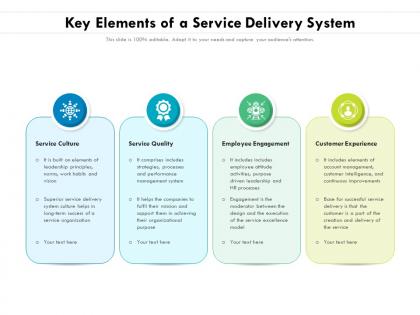
Key elements of a service delivery system




Try Before you Buy Download Free Sample Product
 Impress Your
 Audience
 100%
100% Editable
 Save Hours
 of Time


Our Key Elements Of A Service Delivery System are topically designed to provide an attractive backdrop to any subject. Use them to look like a presentation pro.
People who downloaded this PowerPoint presentation also viewed the following :
Key elements of a service delivery system with all 2 slides:
Use our Key Elements Of A Service Delivery System to effectively help you save your valuable time. They are readymade to fit into any presentation structure.
FAQs for Key elements of a
So you'll need clear processes, good tech, trained people, and feedback systems. First thing - document what you're doing now, then figure out where the biggest problems are. Your workflows should map everything from start to finish. Tech-wise, make sure your systems actually connect (seriously, nothing's worse than stuff that doesn't talk to each other). Train your staff on the what AND the when - like when they should escalate instead of just winging it. Oh, and build in ways to catch problems early before they blow up on you.
Honestly, tech can be a game changer for your service stuff. Chatbots handle the boring customer questions so your team doesn't have to. Automated scheduling saves tons of time, and those mobile apps let field workers update everything instantly instead of calling back to the office. The analytics part is probably the best though - you'll catch problems before they explode and figure out when you're gonna be swamped. Oh, and customers actually prefer those self-service portals where they can check their own status. My advice? Pick whatever's driving you crazy right now and automate that first.
Track response times and resolution rates for the efficiency piece. Customer satisfaction scores are huge too - plus first-call resolution rates and whether you're hitting your SLAs. Your team's happiness matters more than people think, so don't skip employee satisfaction surveys. Happy workers = better service, honestly. System uptime and ticket volumes help you catch problems before they blow up. Oh, and cost per service if budget's tight. I'd start with maybe 3 metrics that match your main goals, then add more once you've got those dialed in. Don't try tracking everything at once - it gets overwhelming fast.
Honestly, most companies mess this up by collecting feedback but never doing anything with it. Start simple - send surveys after interactions, maybe add a quick feedback form on your website. Social media monitoring helps too if you've got the bandwidth. The real magic happens when you actually fix stuff based on what people tell you. I'd focus on spotting patterns first - like if everyone complains about your hold times, that's your priority. Don't try to tackle everything at once though. Pick one feedback method, get it working smoothly, then add more channels later.
Look, good training is everything for service quality. Your staff gets the actual skills to handle customer problems without fumbling around. I've watched teams where people just figure it out as they go - total disaster. Customers get pissed, service is all over the place. But when you train people properly? They're faster at solving issues, way clearer when they talk to customers. The confidence thing is huge too - you can literally hear it in their voice. Oh, and don't skip the soft skills stuff like listening and empathy. Technical knowledge only gets you so far.
Good communication literally makes or breaks your whole service. I've watched so many businesses mess this up - it's wild. Your team needs to know what they're doing and when things shift. Clear messaging for customers about what they're getting and timing is huge too. Most failures happen because someone didn't talk to someone else properly. Set up regular team check-ins and keep your customer messaging simple throughout their experience. Oh, and make sure people know who to call when stuff goes sideways. It sounds basic but you'd be surprised how often this gets overlooked.
Look, first thing you gotta do is figure out what different customer groups actually want. Speed freaks vs people who need hand-holding vs bargain hunters - they're all totally different. We tried the same approach for everyone once and it was a disaster lol. Build your system so you can switch things up depending on who you're dealing with. Survey your best customers about what matters to them, then create different paths that hit those specific points. Think of it like having building blocks you can rearrange. Way better than forcing everyone through the same boring process.
Honestly, the worst part is usually departments that don't talk to each other - creates these ridiculous delays. Your processes are probably all over the place too, which makes it impossible to see what's actually working. Old tech that barely connects is another nightmare (been there). Plus nobody really knows what "good service" looks like because standards are fuzzy. Measuring anything becomes a joke when you can't even track basics properly. Oh, and people hate change, so good luck with that. Start by just mapping out how things work now - you'll spot the worst bottlenecks pretty quick.
Honestly, service delivery changes so much depending on your industry. Healthcare's all about patient pathways and protocols. Retail? More like customer touchpoints and getting inventory right. Tech companies love their agile stuff - constant updates, user feedback, you know the drill. Manufacturing focuses on supply chains and quality checks. But here's what's interesting - when you really look at it, most successful models actually share the same basics. Customer feedback, performance tracking, planning for growth. Your regulatory requirements and what customers expect will probably be your biggest factors in figuring out the right approach.
Automation's pretty much changing everything when it comes to service delivery. Gets rid of all those boring repetitive tasks and speeds things way up. Your team can actually focus on stuff that needs real thinking instead of just clicking through the same requests over and over. Tickets get resolved faster, quality stays consistent - honestly, most customers would rather get their problem fixed quickly than have a long conversation anyway. Downside is yeah, some jobs disappear and you lose the personal connection sometimes. Best bet? Map out what you're doing now and spot the repetitive junk first.
Honestly, you've gotta nail down your processes first - like actual written SOPs for everything customer-facing. Then train people properly on them (which is honestly the hardest part). I'd start by mapping what you're doing at each location right now and find the biggest mess-ups. Regular check-ins between locations help too, so good ideas actually spread instead of staying stuck at one spot. Oh, and get everyone on the same tech systems if possible - nothing kills consistency like half your team using different tools. Audits sound boring but they catch problems before customers do.
Honestly, automation is your best friend here - get those routine tasks running themselves. Cross-train your people so they're not stuck doing just one thing, way more flexible that way. Self-service portals save you tons since customers can handle basic stuff without calling in. Digitizing workflows is huge too, I know it sounds boring but no more shuffling papers around. Consider outsourcing the stuff that isn't core to what you do - specialists often do it cheaper anyway. Just don't change everything at once or you'll go crazy. Pick one process, test it out, then expand from there. Oh and track your quality metrics throughout so nothing breaks without you noticing.
Honestly, once you start tracking your service metrics properly, it's like having x-ray vision into what's actually happening. You'll catch bottlenecks before they blow up, see demand spikes coming, and know exactly where to throw your resources. No more guessing or relying on last month's reports that are already useless. The patterns that emerge are pretty wild - you can predict failures, spot which services are dragging, and time your peak demand perfectly. Even a basic dashboard will completely change how you make decisions day to day. Trust me on this one.
Honestly, you gotta overcommunicate like crazy at first. Set up way more check-ins than feels necessary - daily standups are a lifesaver for catching problems early. Get religious about your project management tools and nail down clear expectations with everyone. Document your backup plans too because someone's wifi will definitely crap out at the worst moment. I'd start by looking at what you're doing now - figure out what actually needs everyone online at once versus stuff people can handle on their own time. The real-time vs async thing is huge and most people don't think about it enough.
Dude, culture affects literally everything about service delivery. Communication styles, timing expectations, relationship stuff - it all varies wildly. You can't just take what works in one place and drop it somewhere else (trust me on this one). Sure, language barriers are the obvious thing, but there's deeper stuff too. Some cultures want formal processes first, others need that personal connection before they'll even listen to you. Power dynamics, individual vs group mentalities, even how people view time - it's all different. I always dig into the local preferences before launching anything. What kills it in New York might totally bomb in Tokyo, you know?
-
Editable templates with innovative design and color combination.