


Service Management Powerpoint Presentation Slides






Try Before you Buy Download Free Sample Product
 Impress Your
 Audience
 100%
100% Editable
 Save Hours
 of Time


Devise a good framework with our Service Management Powerpoint Presentation Slides. Get all the backing you ever desired.
People who downloaded this PowerPoint presentation also viewed the following :
Content of this Powerpoint Presentation
Slide 1: This slide introduces Service Management. State the name of your company and proceed.
Slide 2: This slide presents the Service Excellence Outline. We have also mentioned its components which you can make use of as per your requirement.
Slide 3: This slide presents a brief Service Excellence Introduction. Along with introducing what service excellence stands for we have also given text boxes for you to add relevant information.
Slide 4: This slide explains Excellent Service is.... on the basis of Customer Perception and Customer Expectation.
Slide 5: This slide shows Service Excellence Key Statistics. These are- Omni-Channel Availability, Competitive Differentiation, Disconnected Systems, Customer Importance.
Slide 6: This slide shows Service Excellence Step by Step Process.
Slide 7: This slide shows Service Excellence Internal and External Perspective. External Perspective includes Excellent Service Quality, Customer Delight, Customer Loyalty. Internal Perspective includes Excellent Work Quality & Environment, Employee Engagement and Employee Loyalty.
Slide 8: This slide shows Six Principles of Service Excellence. These are- Vision & Mission Statement, Business Objective, Service Standards, Intervention & Learning Strategy, Organizational Alignment, Measurement & Leadership Accountable.
Slide 9: This slide shows Service Excellence Framework- Stakeholder, Service Delivery, Service Environment.
Slide 10: This slide shows Six Pillars of Service Excellence- Action, Interest, Verbal Language, Body Language, Attitude, Tone of Voice.
Slide 11: This slide presents Service Excellence Model. This model contains the following four questions to be stated- Are we there yet? How do we get there? Where are we now? Where do we want to be?
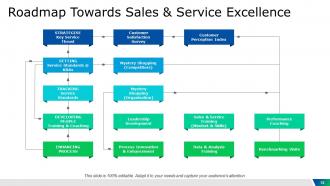
Slide 12: This slide presents a Roadmap Towards Sales & Service Excellence with three main sub headings- STRATEGISE Key Service Thrust, Customer Satisfaction Survey, Customer Perception Index and its subpoints.
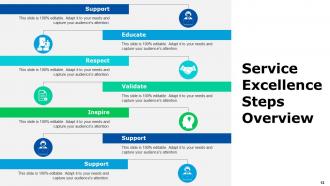
Slide 13: This slide presents a Service Excellence Steps Overview- Support, Inspire, Validate, Respect, Educate.
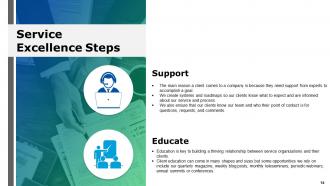
Slide 14: This slide shows two Service Excellence Steps- Support, Educate.
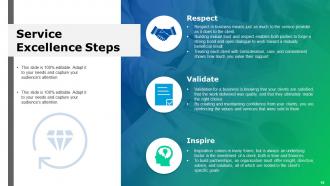
Slide 15: This slide also shows Service Excellence Steps- Respect, Inspire, Validate.
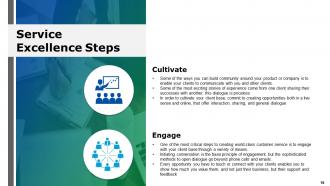
Slide 16: This is another slide showing Service Excellence Steps- Cultivate, Engage.
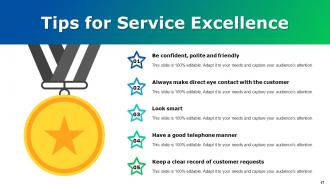
Slide 17: This slide gives Tips for Service Excellence. Some of them being- Be confident, polite and friendly, Always make direct eye contact with the customer, Look smart, Have a good telephone manner, Keep a clear record of customer requests.
Slide 18: This slide shows Service Management Icons Slides. Alter/ modify the icons as per your requirement.
Slide 19: This slide is titled Additional Slides to move forward. You can change the slide content as per need.
Slide 20: This slide helps depict Our Team with text boxes.
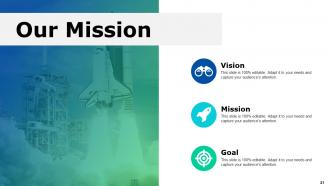
Slide 21: This slide contains Our Mission, Vision, Goal with icon imagery and text boxes.
Slide 22: This is Our Goal slide. State your goals here.
Slide 23: This is an About Us slide showing Target Audiences, Values Client, and Preferred by Many as examples.
Slide 24: This is a Financial score slide with parameters like Gold, Silver, Platinum and Bronze.
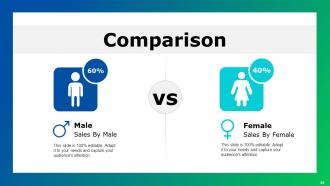
Slide 25: This is a Comparison slide for male and female. Compare gender aspects here.
Slide 26: This is a Timeline slide. You can present yearly growth etc. with it.
Slide 27: This slide shows Our Target. Write down your targets achieved or yet to achieve with their respective icons.
Slide 28: This is a Venn diagram image slide to show information, specifications etc.
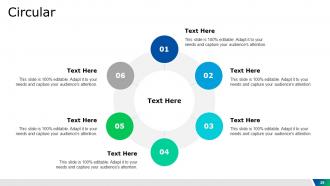
Slide 29: This is a Circular image slide. State specifications, information here.
Slide 30: This is a Mind Map image slide with text boxes to fill information.
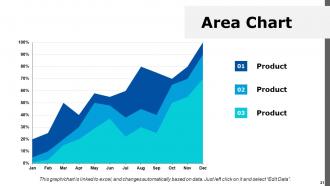
Slide 31: This slide presents an Area Chart for showcasing product/ company growth, comparison etc.
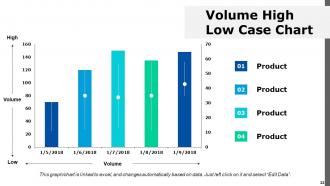
Slide 32: This slide presents a Volume High Low Case Chart for showcasing product/ company growth, comparison etc.
Slide 33: This is a Thank You slide with Address# street number, city, state, Contact Numbers, Email Address.
Service Management Powerpoint Presentation Slides with all 33 slides:
Guard against disappointments with our Service Management Powerpoint Presentation Slides. They ensure you continue to achieve.
-

Service Management
-
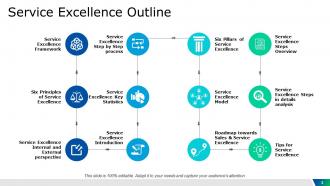
Service Excellence Outline
-
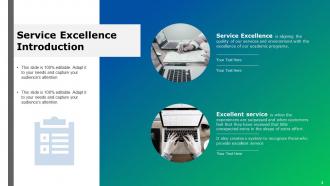
Service Excellence Introduction
-
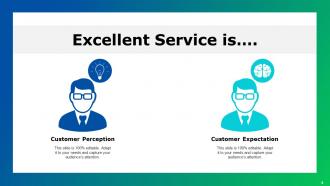
Excellent Service is
-
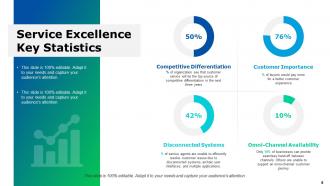
Service Excellence Key Statistics
-
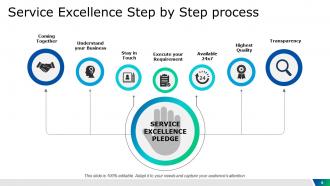
Service Excellence Step by Step process
-
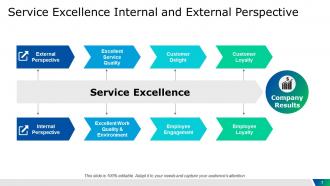
Service Excellence Internal and External Perspective
-
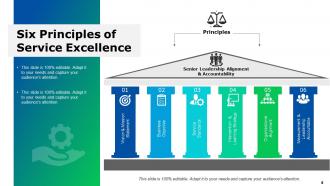
Six Principles of Service Excellence
-
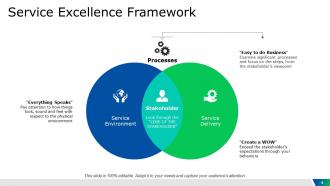
Service Excellence Framework
-

Six Pillars of Service Excellence
-

Service Excellence Model
-
Roadmap Towards Sales Service Excellence
-
Service Excellence Steps Overview
-
Service Excellence Steps
-
Service Excellence Steps
-
Service Excellence Steps
-
Tips for Service Excellence
-
Service Management Icons Slides
-

Additional Slides
-

Our Team
-
Our Mission
-

Our Goal
-

About us
-
Financial
-
Comparison
-
Timeline
-
Our Target
-

Venn
-
Circular
-
Mind Map
-
Area Chart
-
Volume High Low Case Chart
-

Thank You Slide
FAQs for Service Management
So there's really four main things to nail down: obsess over what customers actually want, look at your whole process instead of just your department, keep improving constantly, and use real data to make calls. People matter way more than whatever fancy tool you're using though - I've watched so many teams get lost in the weirdest frameworks. You'll want to think about the entire customer experience too. Honestly, just pick one service you're running now and map it out from their perspective. You'll probably find a ton of annoying handoffs that don't need to exist.
Honestly, I'd go with post-service surveys first - keep them short though, like 1-10 scale plus maybe one open question. People hate long surveys. NPS is everywhere these days, maybe too much honestly, but it works. Track your response times and resolution rates too since happy customers usually correlate with faster fixes. Social media gives you the real unfiltered opinions - sometimes brutal but useful. Oh, and sentiment analysis on support tickets catches stuff you might miss. The biggest thing? Actually do something with the feedback or people will just ignore your surveys next time.
So tech is what makes service management actually work without you losing your mind. ITSM platforms are clutch for routing tickets and tracking SLAs - plus they keep your knowledge base organized. Chatbots take care of the boring repetitive requests (seriously a lifesaver). Analytics dashboards show you what's broken in real time, which is super helpful for spotting bottlenecks. Integration tools make sure all your systems talk to each other properly. Honestly though, don't just grab whatever's popular - pick stuff that actually fixes your specific headaches or you'll just create new ones.
Honestly, the worst part is when your teams aren't talking to each other and customers get frustrated. Service delivery becomes this inconsistent mess. You're always scrambling with resources - never enough people or budget for what you actually need to do. Legacy systems are the absolute worst though, nothing connects properly and integration becomes this nightmare. Plus trying to measure if you're actually doing well across different areas? Good luck with that. My advice - start by getting your processes standardized first. Then work on feedback loops so you can see what's broken before customers start complaining.
Hey! So for remote teams, you really need cloud-based tools and self-service options. Automated workflows are huge now since nobody's walking over to bug their coworker anymore. Your incident management has to work across time zones too - honestly, coordinating that stuff is such a pain sometimes. Build in proactive monitoring that actually catches issues early. Also, clear escalation paths that don't need everyone in the same room. I'd start by looking at which processes assume people are physically together, then fix those first. Trust me, it'll save you headaches later.
Honestly, you've gotta break down those silos with regular touchpoints. Weekly cross-department standups help - but focus on actual problems, not boring status updates. Shared dashboards are clutch so everyone sees how service requests mess with other teams. Transparency seriously cuts down on so much friction. Oh, and definitely loop other departments into your incident post-mortems. They catch stuff you'll totally miss. The real game-changer though? Embed service management liaisons with major departments. Sounds fancy but it works. Start small with one department as a pilot, then expand. Trust me on this one.
Dude, training is HUGE in service management. Your team's juggling new tech constantly, plus customer expectations keep shifting. ITIL frameworks get updated too - can't ignore that stuff. Both technical skills and people skills matter since you're basically translating between IT and business folks all day. Honestly? I've watched teams crash and burn because they thought skipping training would save time. Spoiler alert: it doesn't. Budget for certs and workshops if you can. Even those random lunch sessions where someone teaches Excel tricks - that stuff adds up. Don't let your team fall behind.
So I'd focus on the metrics that actually matter - response times, resolution times, customer satisfaction scores, and first-call resolution rates. Those directly hit your bottom line. Also track uptime and service availability. Customers definitely notice when stuff's broken. Honestly? Most teams I know get obsessed with fancy dashboard metrics that look impressive but don't help you fix anything. It's like... why are we measuring this again? Start with these basics first. You can always add more complex stuff later once you've got solid baselines. But these core ones will tell you if customers are actually happy and if your team's working efficiently.
Honestly, customer feedback is pure gold for figuring out what's broken and what's actually working. I'd set up surveys and reviews, but the real gems come from just talking to people directly - those casual conversations always surprise me. Hunt for patterns in the complaints to see what needs fixing first. Don't skip the good feedback either since that tells you what to keep doing. Oh, and here's the thing most people mess up - you've gotta close the loop. Make the changes, then tell customers "hey, we fixed this because you told us to." That's how you build real loyalty.
Honestly, ITIL's pretty solid for getting your service processes standardized. Fewer random fires to deal with, you know? Incident response gets way faster, change management becomes less of a mess, and you actually know what's going on with your services. Your whole team starts speaking the same language too - no more weird handoff confusion. The documentation part is kind of a pain initially, not gonna lie. But when everything's going sideways during an outage, you'll be glad you did it. I'd start with just incident management if you're thinking about it, then build out from there once that's working.
Look, service management is huge for brand loyalty - it's literally how customers experience your company after they buy. Good service that fixes problems fast? Those customers stay and tell their friends. Mess it up and they'll bolt immediately. Here's the thing though - getting new customers costs like 5x more than keeping current ones (I learned that the hard way). So you've got to train your team well, actually track satisfaction scores, and make your processes smooth. Don't treat service as some side thing you'll figure out later.
So basically, product management is about building actual stuff - features, roadmaps, launch plans. Service management? That's keeping everything running once people are already using it. Product folks think in releases. Service people live in the day-to-day chaos of "why isn't this working?" and customer support tickets. Way more reactive, honestly. The biggest thing I've learned - and this might sound obvious but whatever - is that service management needs like 3x more monitoring than you'd expect. You're constantly putting out fires, so having good feedback systems saves your sanity. Products you can plan. Services... they'll surprise you.
Honestly, start by standardizing one process really well before trying to fix everything at once. Get your workflows documented so they don't fall apart when someone's out sick (learned that the hard way). Automation tools are worth the investment - they'll save you tons of headaches later when things get crazy busy. Self-service options help cut down on repetitive requests too. The key thing though? Actually look at your numbers regularly to catch problems early. I'd pick your messiest process first and make it foolproof, then move on to the next one.
So much is changing right now with AI handling basic support calls and actually predicting problems before they happen. Companies are getting paid for outcomes instead of just keeping systems running - which honestly makes way more sense. Everything's becoming "as a service" now too, like you can pretty much slap XaaS on anything these days. What's interesting is how much focus there is on keeping employees happy, not just customers. My advice? Don't overthink it - just pick one small area where automation could help your team and try it out. You'll figure out what works faster than sitting around planning forever.
So service management is actually pretty solid for sustainability stuff. Better maintenance means your equipment lasts way longer, and you're not constantly buying replacements. Plus you can track where you're wasting resources and cut that out - honestly saves more money than you'd think. The whole thing makes your services more reliable too, which communities love. Oh, and it helps when you're picking vendors since you can choose the ones doing things responsibly. I'd start by just looking at what you're using now and see where optimizing services could shrink your environmental impact. It's one of those rare things that's good for business AND the planet.
No Reviews