

Network Security Roadmap For Network Security Training




Try Before you Buy Download Free Sample Product
 Impress Your
 Audience
 100%
100% Editable
 Save Hours
 of Time


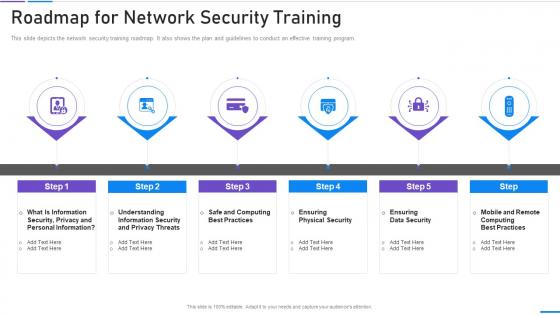
This slide depicts the network security training roadmap. It also shows the plan and guidelines to conduct an effective training program.
People who downloaded this PowerPoint presentation also viewed the following :
Network Security Roadmap For Network Security Training with all 6 slides:
Use our Network Security Roadmap For Network Security Training to effectively help you save your valuable time. They are readymade to fit into any presentation structure.





FAQs for Network Security Roadmap For
So first things first - do a security assessment to find your weak spots, then build around those. Cover the basics: malware/phishing threats, access controls, incident response, data protection, plus whatever compliance stuff your industry needs. Definitely include hands-on labs because people zone out during slide presentations. Real-world scenarios work way better than those cheesy generic examples nobody relates to. Oh, and make sure you're covering social engineering - that's where most people actually mess up. The whole program should focus on situations your team might realistically encounter, not just textbook cases.
Honestly, phishing simulations are where it's at - they show you what people actually retain vs. what they claim to know. Start with basic before/after assessments to track knowledge gains. Then watch for real behavior changes like better password habits or fewer security incidents. Your help desk tickets tell a story too. When those "oops I clicked something sketchy" calls drop off, that's a good sign the training worked. Don't just do one-and-done sessions though - I'd set up quarterly phishing tests to keep tabs on how well people remember stuff over time. It's really about mixing knowledge tests with actual behavioral data, not just checking compliance boxes.
Honestly, incident response training is a game-changer for network security. Your team learns to spot threats as they happen instead of just reading about them. They get hands-on practice with real scenarios - phishing, malware, breaches, all that fun stuff. It's way better than boring PowerPoints. Everyone starts thinking like a security person, watching for weird activity. Once people see how bad incidents can get, they'll actually follow the rules instead of taking shortcuts. Tabletop exercises are perfect for starting out. My old boss used to say they're like war games but for IT - sounds dramatic but it's true!
Honestly? Every 2-3 months if you can swing it. I know quarterly sounds more reasonable, but cyber stuff moves crazy fast now. Like, remember how AI attacks weren't even a thing last year and now they're everywhere? Focus on whatever's actually happening - new phishing tricks, social engineering garbage, the latest malware that's all over the news. Maybe set up some alerts for big security incidents in your field too. Quick refresher sessions work great when something major hits. The whole point is staying current with what hackers are doing today, not playing catch-up with old threats.
Dude, the worst myth is thinking IT handles all the security stuff. Your employees are actually your best defense! People assume antivirus catches everything (it doesn't) or that hackers only go after huge corporations - totally wrong. Just because an email lands in your inbox doesn't mean it's legit, which is exactly how those phishing scams work. Strong passwords help, but they're not magic shields. Everyone needs to watch for sketchy links and keep their software updated. Oh, and definitely report anything weird ASAP - better safe than sorry, you know?
Honestly, just throw some points and badges at your security training - people eat that stuff up. Scenario-based challenges work great too, like fake phishing attacks where everyone scrambles to "defend" the network. Progress bars are surprisingly motivating. My old job did capture-the-flag competitions between departments and it got weirdly competitive (in a good way). Team challenges definitely beat solo learning. The whole point is tricking people into thinking they're gaming instead of sitting through another boring training session. Start simple - add scoring to whatever you've already got running.
So for your IT team, dive deep into the technical stuff - firewall configs, intrusion detection, vulnerability assessments, incident response. They need to know penetration testing and network monitoring tools inside and out. Regular employees? Keep it super basic. Teach them to spot phishing emails, use decent passwords, recognize social engineering tricks. Most breaches happen because Karen from accounting clicked a sketchy link, so focus there first. Bottom line: IT builds the fortress, everyone else just needs to not leave the gates open. Oh, and use real scenarios they'll actually face - makes it stick better.
Make the training mandatory first - platforms like KnowBe4 work great for tracking who's actually done it. Focus on VPN stuff, phishing, and home network security since remote threats are totally different. The hardest part? Getting people to pay attention when they're sitting next to their couch and Netflix is calling. Run fake phishing tests and use realistic scenarios they'll recognize. Oh, and set up quarterly check-ins because people forget this stuff fast. Create some easy way for them to flag weird emails or just ask questions when something feels off.
Honestly, you've gotta stop treating everyone the same - executives deal with totally different threats than your IT folks or regular employees. Map out who accesses what systems first, then work backwards. Finance teams? Hit them with wire fraud scenarios. HR needs social engineering stuff, developers need secure coding training. The generic examples are such a waste of time. I always tell people to use situations they'll actually face, not some random phishing email about winning a lottery. Oh and definitely run those phishing tests, but make them specific to each group. One-size-fits-all security training is basically useless.
Look at what's actually happening to companies like yours - that's where you'll find the good training material. Those generic "bad guy gets in" exercises? Total waste of time. I'd dig into recent attacks on your industry first, then build scenarios around those specific methods. Make your team handle a simulated breach with missing info and crazy time pressure - that's when you see how they really perform. Tabletop exercises work great for this. The messier and more realistic, the better. You want them sweating a bit, not following some textbook playbook.
Start with NIST Cybersecurity Framework - it's the go-to standard everyone uses. Skip the boring slide presentations though. Set up hands-on labs instead with Wireshark and Metasploit in VirtualBox. Way more engaging. SANS modules are fantastic but honestly pretty expensive. KnowBe4 and Cybrary have decent alternatives that won't break the bank. Real-world scenarios work best - people actually remember stuff when they're clicking around and breaking things themselves. Oh, and definitely pilot test with a small group first before rolling it out company-wide. Trust me on that one.
Make network security training mandatory for any third-party vendors accessing your systems. First, assess what they actually know - most think they're experts but don't understand your specific setup. Create tailored training covering your policies, access protocols, and incident response stuff. Regular refresher sessions are crucial, and make them sign off on everything. Treat them exactly like internal employees for security standards. Oh, and set up a basic certification process to track completions and renewal dates. Trust me, skipping this step always comes back to bite you later.
So track stuff like fewer security incidents and better phishing test scores - that's the obvious stuff. Response times should get faster too. What I love seeing is when people actually start reporting sketchy emails instead of just deleting them (or worse, clicking on them). Policy violations drop, assessment scores go up. But honestly? The best sign is when your help desk isn't constantly fielding "is this spam?" calls anymore. People finally get it. Check these numbers every quarter and you'll have solid proof it's working.
Create multiple touchpoints after the initial training - that's the secret. Monthly newsletters with real breach stories work great. Set up a Slack channel for quick security questions. Trust me, people actually use those way more than I expected. Keep an internal knowledge base updated too. Do quarterly refreshers on new threats, maybe throw in some gamification. Oh and simulations are clutch. The whole point is having resources ready when someone needs help in the moment, not just during those boring formal sessions nobody remembers anyway.
Honestly, your leaders need to actually show up for this stuff. If they're just sending emails about security training but skipping it themselves, employees will totally phone it in. The best results happen when managers jump into sessions alongside their teams and actually talk about it afterward. They should share their own screwups too - builds way more trust than pretending they're perfect. I've watched companies bomb at this because executives treat it like some HR requirement instead of something that actually protects the business. Your team will mirror whatever energy leadership brings to it.
-
Colors used are bright and distinctive.
-
Helpful product design for delivering presentation.