

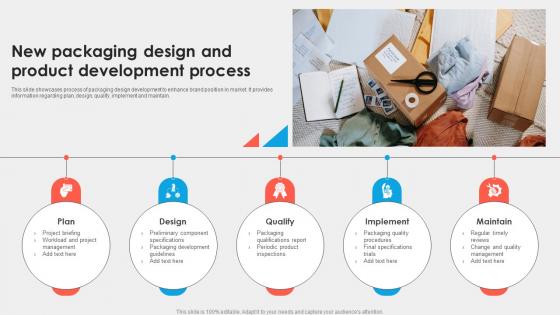
New Packaging Design And Product Development Process




Try Before you Buy Download Free Sample Product
 Impress Your
 Audience
 100%
100% Editable
 Save Hours
 of Time


This slide showcases process of packaging design development to enhance brand position in market. It provides information regarding plan, design, qualify, implement and maintain.
People who downloaded this PowerPoint presentation also viewed the following :
New Packaging Design And Product Development Process with all 6 slides:
Use our New Packaging Design And Product Development Process to effectively help you save your valuable time. They are readymade to fit into any presentation structure.





FAQs for New Packaging Design And
Oh man, there's so much cool stuff happening right now! Plant-based plastics are everywhere - seaweed, mushroom roots, even agricultural waste. They're getting surprisingly tough too. Refillable systems are huge, and brands are switching to mono-materials since they're way easier to recycle. Edible packaging is trendy but honestly, I'm not ready to eat my container yet lol. Also, minimalist design is winning - turns out less is often better anyway. I'd check what plant-based options your current suppliers have first. Material swaps are usually the easiest place to start.
QR codes are probably your best bet to start - they're cheap and you can link them to product info, how-to videos, whatever. Just point, scan, done. NFC chips are honestly way cooler (customers just tap their phone) but they'll cost you more upfront. There's even some wild stuff happening with sensors that detect freshness and ping your phone, though that might be overkill depending on what you're selling. I'd go with QR codes first since you'll actually get data on who's engaging. Plus if it flops, you're not out a ton of money.
Dude, it's wild how much consumer behavior drives packaging changes. People start wanting eco-friendly stuff? Boom - suddenly every company's racing to make biodegradable materials. The convenience craze gave us resealable bags and those single-serve packets (though honestly, some are just wasteful). Your customers basically tell you what to innovate next through their complaints and shopping habits. Environmental concerns, lifestyle shifts - all that stuff becomes R&D priorities real quick. I always tell people to watch what annoys customers about current packaging. That frustration? That's your goldmine for the next big thing.
Don't make aesthetics and functionality fight each other - they work way better as a team. Figure out your practical stuff first (protection, storage, how people will actually use it), then make it look good within those limits. Honestly, I've watched so many beautiful packages fail because nobody could open the damn things without scissors! Get prototypes in people's hands early. Maybe try splitting things up - like a boring but functional inner layer with a pretty outer sleeve? Your brand still comes through with smart color choices and materials that actually do double duty. Oh, and always test with real products inside, not empty boxes.
Honestly, it's mostly about money and not wanting to mess up what's already working. Equipment costs are brutal, and good luck convincing your boss to spend big without guarantees. Training everyone on new systems takes forever too. Then you've got regulatory nightmare stuff - food and pharma companies basically live in approval hell. What really gets me is how consumers freak out over packaging changes, even when it's objectively better for them. My advice? Start small with pilot runs on just a few products. Prove it actually makes money before you try scaling up everywhere.
So packaging tweaks can actually save you a ton on supply chain costs. Lighter materials mean way cheaper shipping - seriously, the weight difference is huge when you're moving stuff by truck or air. Better designs also cut down on damaged products, which saves you from dealing with returns and refunds (such a headache). Space optimization is another big one - if you can fit more units per shipment, that's instant savings. Oh, and sustainable options often end up being cheaper over time, plus they handle faster in warehouses. I'd start by just measuring what you're currently using. Weight and dimensions will show you where the money's hiding.
Yeah, eco-friendly packaging definitely helps with how people see your brand. Younger customers especially eat this stuff up - they really care about sustainability. Though honestly, at this point it's kinda what people expect rather than being impressed by it. You'll stand out from competitors who haven't made the switch yet, which can actually influence buying decisions. Just make sure whatever sustainable option you pick doesn't suck to use or look cheap. People want to feel good about supporting you, but not if the packaging falls apart or whatever. I'd look at what you're using now and find one simple swap to start with.
Dude, 3D printing is a game changer for packaging prototypes. Instead of waiting weeks, you're talking hours to test your ideas. Complex shapes that would be a total pain to mold traditionally? No problem now. I've seen people create custom bottle designs and protective inserts that fit perfectly. The best part - you can brainstorm without worrying about manufacturing limits. It's also great for small batch stuff and local production, which cuts down shipping costs. Honestly, if you're doing anything custom or low-volume, you should definitely try it for your next prototype round.
Honestly, minimalistic packaging is a game changer - you'll cut material waste by like 20-40% just by ditching unnecessary layers. Apple's the perfect example, swapping plastic inserts for molded cardboard and it looks way cleaner. Fewer materials also means recycling gets way less complicated since there's less mixed stuff to deal with. Plus consumers actually love the premium feel now, which is kinda ironic since you're doing less work. Just don't go crazy with it though - I've seen companies strip away too much protection and then wonder why everything arrives broken. Start by looking at what you actually need vs what you're doing out of habit.
AR packaging is actually getting really good now - you scan your phone over a product and boom, 3D demos or tutorials pop up. Cosmetic brands do virtual try-ons, food companies show recipes. The trick is making it useful, not just flashy. Start simple though. Maybe show where ingredients come from or how to use the product properly. Just don't make people download some random app because honestly? Most won't. I tried one last week and gave up after like 30 seconds. Keep it accessible and actually helpful.
Look, biodegradable stuff breaks down naturally instead of sitting around forever like regular plastic. Most of it's made from plant materials too, which is way better than petroleum-based junk. Your customers will definitely appreciate it - especially younger people who actually care about this stuff. Honestly? It just feels better knowing you're not adding to that giant trash pile we've created. The downside is it usually costs more and might not be as tough. Oh, and definitely test it with your products first - learned that one the hard way with a client last year. Some biodegradable packaging gets weird with certain items.
Honestly, regulations are what's really driving all the cool packaging stuff we're seeing now. EU has those intense producer responsibility laws that make brands totally rethink everything, while California's recycling rules push companies in a completely different direction than what works in Asia. Same company, totally different strategies depending on the market - it's wild. Oh, and here's the thing that could help you - most regulatory changes have like 2-3 year rollout windows. So if you start working on solutions now instead of waiting, you'll actually have a leg up on competitors who scramble at the last minute. Pretty smart way to turn compliance into an advantage.
Think of packaging as your product's bodyguard - it blocks oxygen, moisture, light, all that stuff that makes things go bad. Those fancy barrier films? Game changer. I've watched companies go from basic plastic wrap to multilayer packaging and boom - shelf life triples overnight. Some of the newer "smart" packaging is wild too, with built-in oxygen absorbers and antimicrobial coatings that literally fight spoilage for you. Temperature swings are another killer people forget about. First thing though - figure out what's actually destroying your product. Could be moisture, could be light exposure. Once you know that, you'll know which tech to throw money at.
Think of your packaging like a tiny billboard - it's telling your brand story before anyone even opens the box. Colors, fonts, textures, all that stuff communicates your vibe. Earthy materials scream sustainability. Bold graphics say innovation. Apple nailed this with their super clean, minimal packaging that just feels premium, you know? Craft breweries do it too with those labels that tell the whole backstory. Honestly, I've seen some brands get so creative with unboxing experiences - it's wild how much storytelling you can pack into design. Figure out your story first, then make everything else support it.
Dude, sustainable packaging is about to explode. Companies are going all-in on plant-based materials and edible wrappers - sounds weird but it's real. Smart labels will track if your food's still good too. Zero-waste is becoming non-negotiable with customers, so refillable systems are huge now. Some packaging literally disappears in soil within months, which is pretty cool. Oh, and AI's helping cut shipping costs by perfecting box sizes. My advice? Start researching suppliers doing this stuff because when regulations hit (and they will), you'll want those connections already locked down.
-
Wide collection of templates available. SlideTeam has made it easier to create presentations in just a few minutes.
-
Great experience, I would definitely use your services further.