


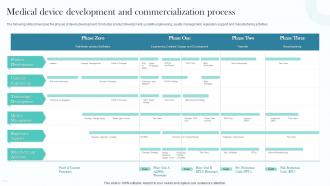
Medical Device Development And Commercialization Process





Try Before you Buy Download Free Sample Product
 Impress Your
 Audience
 100%
100% Editable
 Save Hours
 of Time


The following slide showcases the phases of device development. It includes product development, usability engineering, quality management, regulatory support and manufacturing activities.
People who downloaded this PowerPoint presentation also viewed the following :
Medical Device Development And Commercialization Process with all 6 slides:
Use our Medical Device Development And Commercialization Process to effectively help you save your valuable time. They are readymade to fit into any presentation structure.





FAQs for Medical Device Development
Ugh, the regulatory stuff is brutal. FDA wants one thing, CE marking in Europe is totally different, and don't get me started on all the local requirements on top of that. Clinical trials? They'll drain your budget and take forever - especially if you're working on higher-risk devices. ISO 13485 compliance is its own special hell, plus you've got post-market surveillance breathing down your neck constantly. Honestly, each regulatory body acts like they're the only ones that matter and wants their own special documentation. Get a good regulatory consultant before you think you need one. Oh, and whatever timeline you're planning? Double it. Maybe triple it if you're feeling optimistic.
So telemedicine basically forced device companies to get their act together and make stuff patients can actually handle at home. Blood pressure cuffs that connect to your phone, portable heart monitors, all that jazz. COVID obviously sped everything up since nobody wanted to sit in waiting rooms. Companies had to dumb down the interfaces too - can't expect grandma to figure out some complicated medical gadget, you know? Honestly, it's pretty cool that patients can get hospital-level monitoring from their couch now. Doctors catch problems faster and you don't have to schlep to appointments for every little thing.
Honestly, wearables are turning into like 24/7 health monitors that never clock out. Your watch can literally detect heart rhythm issues or early diabetes signs before you even feel sick - which is kind of insane when you think about it. Instead of just treating problems after they happen, doctors can actually prevent them now. All that constant data helps them make way better decisions too. Oh, and if you're looking at medical device investments or whatever, the whole wearable-to-health-record integration thing is where it's headed. My cousin's Apple Watch caught her irregular heartbeat last month and she had no clue.
Dude, this AI stuff in medical devices is seriously blowing up right now. Imaging machines can spot cancers way earlier than before. Monitoring equipment actually predicts when patients might crash hours ahead of time - which is honestly kind of scary but amazing? These devices learn from every single patient they see, so they keep getting better. Real-time pattern analysis means they catch weird stuff way faster than doctors could. Treatment protocols can even adjust themselves automatically now. Oh and heads up - FDA rules are changing constantly with all this AI integration, so you'll want to keep an eye on that mess if you're in the field.
Honestly, this stuff is no joke - you've got to encrypt everything, both when data's moving around and when it's just sitting there. Set up proper authentication so random people can't just waltz into patient records. Updates are a pain but you literally have no choice, vulnerabilities pop up constantly. I'd also segment your network to keep these devices isolated from everything else. Oh, and do a security audit first so you know what you're actually dealing with. Medical data is basically the holy grail for hackers, so don't mess around.
Medical devices help with compliance by automating stuff patients normally forget. Smart insulin pens track doses automatically. Pill dispensers send reminders. Wearables collect vitals without patients doing anything. The less mental work for patients, the better - that's honestly the secret sauce. You get real-time data, they make fewer mistakes. Most connect to apps so you can monitor progress together. Just make sure whatever device you pick actually makes their life simpler, not more complicated. Nobody needs another gadget that's a pain to use.
Honestly, the robotics stuff is getting insane - surgeons have crazy precision now. AI's helping with real-time navigation too, which is pretty cool. Imaging keeps getting clearer, and they're making instruments smaller and smarter with built-in sensors for better feedback. The miniaturization tech is wild when you see it up close. Companies mixing robotics with AI seem like the sweet spot for growth right now. That's where I'd look if you're thinking investment-wise or just curious about the space.
Oh man, this is huge - cultural stuff can totally make or break your device launch. Religious beliefs matter way more than people think (Muslims often want same-gender providers). Economic reality hits different everywhere too. Here's something wild - we learned that white devices seem "medical" to us but mean death in parts of Asia. Oops. Language barriers are obvious, but literacy levels? That's trickier to plan for. Same with local healthcare systems - they're all over the place. Honestly, you've gotta do user research in each region and work with local teams. Don't just copy-paste your US strategy.
So the big stuff you'll deal with is patient safety vs how fast you can innovate - that's always messy. Informed consent gets complicated too, especially with vulnerable groups who might get taken advantage of. Access is huge - like what's the point if only wealthy people can use it? Risk-benefit gets really weird with terminal patients because they'll obviously accept way more risk than healthy people. Oh and the FDA is basically juggling all these competing priorities constantly, which honestly sounds exhausting. My advice? Map out what each stakeholder cares about ethically before you even start your approval process.
So basically you want patients involved from the very beginning, not just tacked on at the end. Companies do interviews, focus groups, usability tests - the whole nine yards. Multiple rounds throughout development, not just once. Patients catch stuff engineers totally miss, like workflow issues and real-world problems. Honestly the devices that actually work well always had users testing them early and often. Just make sure you budget for it properly because doing it right isn't cheap. Oh and don't forget clinicians too - they're using this stuff daily.
Dude, 3D printing is totally changing the medical device game. Instead of those crazy expensive traditional manufacturing costs, you can make prosthetics and implants that actually fit each patient perfectly. Speed's insane too - we're talking days instead of weeks. Honestly, I think the coolest part is how it levels the playing field. Small companies can finally compete without needing huge factories. Patient outcomes are way better since everything's custom-fitted to their anatomy. Oh, and if you're thinking about jumping in, definitely research biocompatible materials first and figure out the FDA approval process.
Ok so basically you want a rock-solid design control process from day one - document everything obsessively. Follow your device through concept, design, testing, manufacturing, all of it. Constantly collect user feedback and track any adverse events or performance issues. FDA reviewers are basically detectives who love a good paper trail, trust me on this. Update your risk management as you discover how people actually use the thing in real life (always surprises). Oh and schedule those lifecycle reviews regularly - way easier to catch problems early than scramble later.
Dude, FDA approval is gonna be your biggest nightmare - takes forever and costs a fortune depending on what class your device is. Clinical trials will drain your bank account before you make a dime. Healthcare moves at like turtle speed compared to regular startups, which is frustrating as hell. Breaking into hospitals is tough too since they stick with vendors they already know. Oh and the R&D costs upfront are insane. Start schmoozing with doctors early though - that's clutch. Really dig into the regulatory stuff for your specific device before you blow all your cash on the wrong approach.
So mobile health apps basically take your regular medical gadgets and make them way more useful. Your blood pressure cuff just spits out numbers, right? But the app lets you see patterns over weeks, reminds you to actually take readings, and shoots the data straight to your doctor. Pretty neat stuff. You also get bonus features like pill reminders and symptom tracking that the device alone can't do. Oh, and there's usually educational stuff thrown in too - though honestly some of it's hit or miss. I'd just download a couple popular ones and mess around to see how they connect with whatever devices your patients are already using.
Honestly, reimbursement policies control everything in med device development. Companies won't dump money into R&D if insurance doesn't cover it - there's literally no point. I've seen amazing tech just collect dust because nobody figured out the payment side. But when coverage is good, it can drive tons of innovation (though prices tend to get crazy). The annoying part? These policies are always like 3-5 years behind actual innovation. My advice - and I learned this the hard way - is build your reimbursement strategy right into development from the start. Don't treat it like some afterthought.
-
Professional and unique presentations.
-
Awesomely designed templates, Easy to understand.