


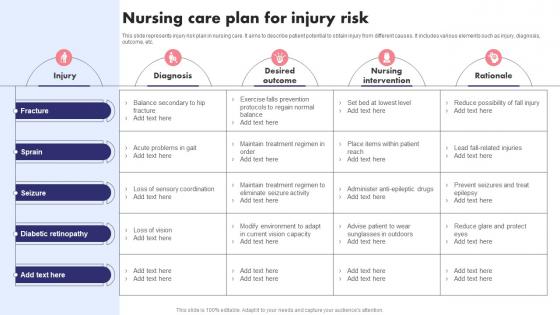
Nursing Care Plan For Injury Risk




Try Before you Buy Download Free Sample Product
 Impress Your
 Audience
 100%
100% Editable
 Save Hours
 of Time


This slide represents injury risk plan in nursing care. It aims to describe patient potential to obtain injury from different causes. It includes various elements such as injury, diagnosis, outcome, etc.
People who downloaded this PowerPoint presentation also viewed the following :
Nursing Care Plan For Injury Risk with all 9 slides:
Use our Nursing Care Plan For Injury Risk to effectively help you save your valuable time. They are readymade to fit into any presentation structure.








FAQs for Nursing Care Plan
Okay so basically you need five things for your injury care plan. Risk assessment first - use something like the Morse Fall Scale because honestly that's what drives everything else you do. Based on what you find, pick specific interventions. Could be bed alarms, those grippy socks, timing meds differently, whatever fits. Document everything and keep reassessing since their risk changes. Oh, and teach the patient and family what's going on. The whole point is tailoring it to each person's actual risks instead of doing the same thing for everyone. Makes way more sense that way.
So for fall risk assessments, I always start with the obvious stuff - mobility problems, how they're walking, any confusion or meds that might make them dizzy. Blood thinners are tricky because even small falls become a bigger deal. Check their room for hazards too, like those awful hospital socks that are basically ice skates. Age matters obviously, but don't forget to actually look at their shoes and ask about feeling weak or off-balance. Vision and hearing issues are huge factors people miss. Just document what you see and stay ahead of it instead of cleaning up after falls happen.
Patient education is huge for preventing injuries - like, it's your best defense really. Teach them about fall risks, body mechanics, med side effects, all that stuff. When patients actually understand how to use their walker properly or know their blood pressure meds might make them dizzy, they can protect themselves way better. I swear, half the incidents I see could've been prevented if someone just explained things clearly first. Use that teach-back method to make sure they actually get it, not just nodding along. And document everything you taught them - covers your butt and helps the next shift know where they're at.
Start with the basics - bed alarms, non-slip socks, call lights in reach. Good lighting makes a huge difference, and honestly, just keeping hallways clear of random stuff helps more than you'd think. Use the Morse Fall Scale for risk assessments consistently (I know it's tedious but it works). Check their meds regularly since some increase fall risk like crazy. Tell patients to move slowly when getting up - simple but effective. Oh, and don't just copy-paste care plans. Base interventions on each patient's actual risk factors instead.
So here's the thing - when you get other disciplines involved, you're not trying to catch every injury risk by yourself anymore. PT can spot mobility issues you might miss. Pharmacy reviews meds that increase fall risk. Even housekeeping knows which rooms have hazards (honestly didn't think about that one until recently). Each person sees different red flags, so your prevention plans get way better. Plus when someone's condition changes, the whole team responds faster. Figure out which disciplines match your patient's biggest risks and bring them in early. It's basically like having backup instead of going solo.
So first thing - check their mobility and if they're mentally sharp. Sensory stuff too, like can they see/hear properly? Meds are huge, especially anything that makes them dizzy or sleepy. Room setup matters more than people think - lighting, how high the bed is, clutter. Are they actually using their walker correctly? Sometimes family pushes them too hard or babies them, which screws up compliance. Oh and don't just focus on the obvious fall risks. Pain throws off balance big time, same with recent surgeries. Do your full assessment first, then target whatever's making them most vulnerable.
So there's actually a bunch of cool stuff you can use! Fall detection sensors and bed alarms are pretty standard now. Wearable devices track movement and vitals constantly - honestly the data they collect is kind of insane. Your electronic health records can automatically flag high-risk patients and send alerts. Some places are using AI to predict falls based on patient patterns, which sounds crazy but apparently works. Mobile apps let patients do their own assessments at home too. I'd say start with whatever addresses your biggest problem first, then add more tech gradually.
You've got to keep checking on patients constantly because things change fast in hospitals. Someone stable yesterday might be wobbly today from new meds or just feeling off. I'd reassess fall risks, how they're moving around, mental status - basically every shift minimum. Sometimes way more if they seem sketchy. Honestly, it's kinda like being a detective - you're looking for clues that something's shifting before they actually fall. Document what you see and actually change your approach based on it. Don't just check boxes, you know? Missing those changes is how people get hurt.
So many injuries happen just because of basic environmental stuff that gets overlooked. Bad lighting? People fall. Cluttered hallways? Trip hazards everywhere. I swear, decent housekeeping alone would probably cut incidents in half. Equipment breaks down and hurts both patients and staff if nobody's checking it. Don't forget about noise levels either - they can drown out important alarms. Temperature matters too since it affects how well patients can move around. The trick is actually walking through areas regularly, writing down what you find wrong, then bugging people until it gets fixed.
Ask patients what they think their biggest risks are first - they usually have better insights than we do. Then explain why each safety measure matters instead of just barking orders. I've found using their personal goals works way better, like "this'll help you stay in your own place longer." Have them help build the safety checklist with you. The teach-back thing is gold - make them walk through the plan in their words. Honestly, people are way more likely to stick with something they helped create. Oh, and tie it back to what they actually care about staying independent or whatever that looks like for them.
You'll want to amp up your risk assessment for these populations. Elderly folks need serious fall prevention - grab bars, non-slip mats, and definitely review their meds since they're usually on like ten different pills. With disabled patients, think about mobility issues, vision/hearing problems, and cognitive stuff that ups their injury risk. Family education is clutch here because they're doing most of the caregiving anyway. Check in more frequently too - their baseline shifts way faster than you'd expect. The key is working with them and their families to set safety goals that actually make sense for how they live. No point creating a plan they can't follow.
So the biggest pain is usually getting buy-in from patients - they hate being told what they can't do. Risk assessments are often incomplete too, which makes your job harder. Staff shortages mean you can't monitor everyone consistently, and don't even get me started on documentation. It's this weird balance between being thorough but not spending forever on charts. My take? Start with the highest-risk stuff first. Get patients involved in their own care plans so they actually follow them. Keep interventions simple - nobody's gonna stick to some crazy complicated protocol anyway.
Documentation is honestly a lifesaver. Every nurse who takes over your patient needs to know their risks and what's already been tried. I can't tell you how many preventable injuries I've seen because someone didn't know their patient gets confused at night or has a fall history. When you write down what safety equipment they need, how meds affect them, or family concerns - that becomes the blueprint for the next shift. Also document what actually works for each patient, not just the problems. Your detailed notes help everyone give consistent care and honestly? They prevent so many injuries.
Track stuff like fall rates, med errors, pressure ulcers, and patient satisfaction - those are your bread and butter metrics. Also watch compliance rates because honestly, what's the point of planning hourly rounds if nobody's doing them? Length of stay and readmissions tell you if you're actually preventing complications. Don't go crazy trying to measure everything though. Pick 3-4 that really matter for your patients and check them weekly. That way you'll catch problems early and can tweak things before they get worse. Way better than realizing months later that your plan isn't working.
Start tracking the injuries you're seeing on your unit - actual data gets attention. Join nursing organizations that push for better staffing and equipment standards (they have way more pull than people realize). When injuries happen, get involved in those root cause meetings. Don't hold back about the systemic problems you see every day. Your manager and safety committee need to hear this stuff. Hospital policy committees are another route, or hit up local nursing groups. Honestly, your clinical experience is gold when showing how policy changes affect patient safety. Maybe start with smaller unit-level policies first though.
-
Their products can save your time, effort and money. What else you need. All in one package for presentation needs!
-
Making a presentation has never been this easy for me. Thank you SlideTeam for offering a splendid template library.