


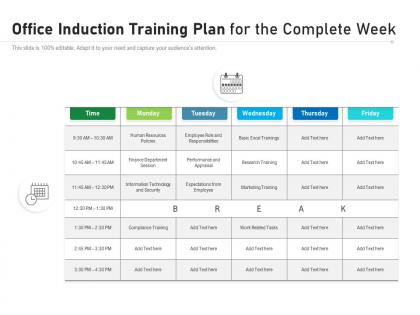
Office induction training plan for the complete week




Try Before you Buy Download Free Sample Product
 Impress Your
 Audience
 100%
100% Editable
 Save Hours
 of Time


Our Office Induction Training Plan For The Complete Week are topically designed to provide an attractive backdrop to any subject. Use them to look like a presentation pro.
People who downloaded this PowerPoint presentation also viewed the following :
Office induction training plan for the complete week with all 2 slides:
Use our Office Induction Training Plan For The Complete Week to effectively help you save your valuable time. They are readymade to fit into any presentation structure.
FAQs for Office induction training plan for
Okay so basically you want new people feeling comfortable with how things work around your office, plus making sure they actually know their job expectations. Company policies are boring but necessary - gotta cover that stuff. The social piece is honestly way more important than most places realize for keeping people around. Set them up with their team, show them practical things like coffee spots and meeting room booking. Oh and definitely have someone they can bug for IT problems because that always comes up. I'd make a simple checklist covering culture stuff, the mandatory compliance things, and all those little day-to-day details that seem obvious but aren't.
Send out a quick survey before people start - what's their background, how do they like to learn, any accessibility stuff you should know about. Modular tracks work way better than one-size-fits-all garbage. Fast-track the experienced folks, give newbies the full rundown. Mix up your materials too - videos, hands-on stuff, written guides. People learn differently and honestly it's pretty obvious when companies just phone it in with boring cookie-cutter training. Oh and make sure your examples aren't all the same demographic - that's just awkward in 2024. Ask what's working as you go.
Dude, forget those endless paperwork sessions - tech can actually make induction training bearable. LMS platforms track everything automatically. Interactive modules beat PowerPoint death any day (seriously, who thought 50 slides was a good idea?). VR office tours are pretty cool if you've got the budget. New hires can access stuff on their phones whenever, which is clutch for remote people. Analytics tell you exactly where everyone gets confused so you can fix the broken parts. Don't go crazy though. Pick one tool that solves your worst problem first, then expand from there.
Every 6 months works well, or whenever new hire feedback shows consistent issues. Also check it after big company changes - new software rollouts, policy shifts, whatever. Most companies just set it up once and never touch it again, which is honestly pretty dumb. I'd put recurring reminders on your calendar to actually talk to recent hires and their managers about what sucked or felt overwhelming. Throw it on your team meeting agenda too - you'll probably hear stuff you never expected. The patterns usually jump out pretty quick once you start asking.
Definitely cover company culture, HR policies, and their specific role stuff first. IT setup and security protocols too - that's always a pain if you skip it. I'd spread everything across the first week though, not dump it all on day one. Nobody retains anything when they're overwhelmed. Oh, and make sure they meet the people they'll actually work with regularly. The boring compliance training and emergency procedures can wait a few days honestly. Create a checklist so you don't forget anything important. Trust me, new hires appreciate not feeling like they're drinking from a fire hose.
Honestly, just match each new person with someone who's been there a while - like, from their very first day. That mentor becomes their lifeline for random questions and all the unspoken office weirdness. Schedule some real check-ins at weeks 1, 2, and 4, but also encourage those random coffee walks. Your mentor can translate the boring training stuff into "here's how we actually do things." Oh, and definitely give mentors a quick rundown on what to cover - don't just wing it and hope for the best.
Honestly, I'd start with simple surveys and quick knowledge tests - they're super easy to set up and you'll get instant feedback. Follow-up interviews work really well too, maybe at 30 and 90 days when people feel more comfortable being honest. You could track stuff like how fast new hires hit their productivity goals or retention rates. Oh, and asking about confidence levels is huge - if someone doesn't feel confident in their role after training, that's a red flag. Performance metrics are useful but take longer to show results. I'd go with surveys first since you can tweak things quickly.
Honestly, just bake feedback collection right into your onboarding. Quick pulse surveys work great - hit them at week one, month one, and three months. Ask what confused them, what they wish they'd known earlier, stuff like that. Coffee chats are where you'll get the real tea though, people are way more honest face-to-face. Here's the thing everyone messes up: you've gotta actually USE the feedback. Update your materials based on what they tell you, then let the next batch know their suggestions changed things. Makes people feel heard and your program doesn't stay stuck in 2019.
Definitely start with the basics - employee handbook, org chart so they're not totally lost about who does what. Online training modules are clutch for the technical stuff. But honestly? The buddy system is where it's at. Having someone you can bug with random questions without feeling dumb makes all the difference. Set them up with software tutorials and contact lists too. Oh, and those 30-60-90 day plans really help - gives them something to focus on instead of just drowning. Just dump everything in a shared folder they can actually find later.
Start by figuring out what regs actually hit your industry - safety stuff, data protection, whatever applies to your specific roles. Build those straight into your onboarding with clear objectives and some way to test people actually got it. Your compliance team is gold here, seriously. They'll tell you what's legally required vs just corporate wishful thinking. Document everything and keep good records - regulations shift constantly and you don't want to get caught behind. I'd probably check the whole program every few months, maybe quarterly? New requirements pop up faster than you'd think.
Oh definitely pair them with buddies - that's huge. Mix up those boring PowerPoint marathons with actual hands-on stuff, maybe office scavenger hunts or whatever fits your vibe. Switch formats every 15-20 minutes or people will totally check out. Coffee chats with different team members work great too. Honestly, the checklist thing is weirdly effective - everyone loves ticking boxes lol. Just keep asking questions throughout instead of that awkward "any questions?" at the end. Real scenarios they'll actually face beat theoretical stuff every time.
Honestly, just block out specific days for different departments during onboarding. Map out who they'll actually work with most - sales, ops, marketing, whatever - and start there. Shadowing beats those awful PowerPoint dumps every time (seriously, does anyone retain that stuff?). Coffee chats work great too, way less formal. The trick is keeping it interactive instead of just having people talk at them. Half-days usually work better than full ones since nobody's attention span lasts that long anyway. Focus on the teams they'll collaborate with most - don't waste time on departments they'll barely interact with.
Oh man, culture stuff is absolutely critical during onboarding! New people need to see how things actually work around your office, not just read some boring handbook. Without it, they're basically guessing at everything - like, should I speak up in meetings or stay quiet? Is it cool to grab lunch with my boss? I've seen people struggle for months because nobody showed them the unwritten rules. Don't just tell them your values exist - give them real stories and examples. Maybe throw in some casual interactions with different team members too. It's honestly what separates someone who just shows up from someone who actually gets it and clicks with everyone.
Honestly, good onboarding makes a huge difference for keeping people around. New hires stick when they feel confident right away instead of wandering around lost for weeks. You'll want to cover the basics - expectations, company culture, introduce them to the team. Don't dump everything on them though, that's overwhelming. I'd assign someone as their buddy too. What really matters is showing you actually care about their success from the start. Oh and definitely check in with them regularly that first month - like actually ask how they're doing, not just assume everything's fine.
So behavioral training is basically teaching your new people how to actually *work* with other humans - reading the room, speaking up at the right times, giving feedback without being a jerk. You know, all that stuff nobody explains but everyone expects you to know? Role-playing helps them practice first before they mess up for real. I'd start with basic communication skills, then add conflict stuff and team dynamics over their first month. Honestly, it prevents so many headaches later when people don't accidentally step on each other's toes.
-
Very well designed and informative templates.
-
Excellent Designs.
-
I discovered this website through a google search, the services matched my needs perfectly and the pricing was very reasonable. I was thrilled with the product and the customer service. I will definitely use their slides again for my presentations and recommend them to other colleagues.
-
Good research work and creative work done on every template.