

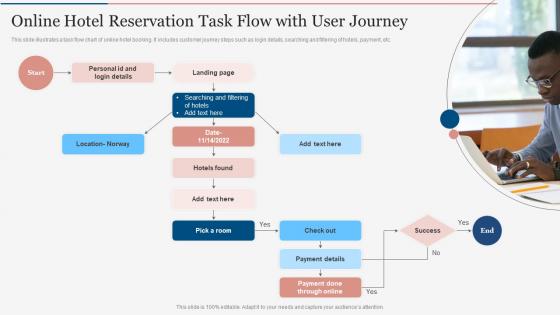
Online Hotel Reservation Task Flow With User Journey




Try Before you Buy Download Free Sample Product
 Impress Your
Audience
 100%
Editable
 Save Hours
of Time


This slide illustrates a task flow chart of online hotel booking. It includes customer journey steps such as login details, searching and filtering of hotels, payment, etc.
People who downloaded this PowerPoint presentation also viewed the following :
Online Hotel Reservation Task Flow With User Journey with all 6 slides:
Use our Online Hotel Reservation Task Flow With User Journey to effectively help you save your valuable time. They are readymade to fit into any presentation structure.






FAQs for Online Hotel Reservation Task Flow
Definitely go for real-time availability updates and mobile booking - people expect that stuff now. Payment processing needs to be built in, obviously. Automated confirmation emails are clutch, plus easy cancellation management. If you get international guests, multi-language support helps a ton. Make sure it syncs with your PMS though - trust me, you don't want to be doing manual data entry all day. Channel management integration is super important since you're probably on Airbnb, Booking.com, whatever. The reporting dashboard should show occupancy and revenue without being a total nightmare to navigate. Honestly just test drive it yourself first before you commit to anything.
Oh dude, PMS integration is a lifesaver - it connects your booking platform directly to the hotel's backend systems. So when someone reserves a room, everything updates instantly across their whole operation. No more manually entering guest info or updating availability. The best part? It kills overbookings since inventory syncs in real-time. Plus check-ins become way smoother. Trust me, build this integration early or you'll be drowning in angry customer emails later when people show up and there's no room available.
Dude, UI can make or break your whole thing. People bounce SO fast if they can't figure out how to search or book - like, we're talking seconds before they're on Expedia instead. Clean navigation is everything. Make your filters obvious and don't overcomplicate the checkout (nobody wants to enter their info 47 times). Mobile's huge since everyone's scrolling on their phone anyway. Oh and definitely test it with actual people first - you'd be surprised how differently others navigate compared to what you expect. Trust me on this one.
Oh man, real-time availability is a game changer. Nothing worse than customers getting pumped about a room and then BOOM - "actually we're booked" at checkout. Talk about killing the mood. It shows actual room counts as things change, so people aren't booking ghost rooms that vanished 10 minutes ago. Your system needs to update super fast though - like within seconds. Otherwise you'll get those annoying calls asking "wait, is this room really available or not?" Trust me, customers hate feeling tricked even when it's not intentional.
Honestly, you've gotta give people options or they'll just bounce. Some folks are die-hard PayPal users, others want their credit card points. International customers especially need local payment methods - learned that the hard way. When one gateway crashes (happens more than you'd think), at least your other options keep working. Yeah, setting it up is annoying at first, but I've watched conversion rates jump just from adding variety. Start with PayPal, Stripe, and maybe two others. You can always add more later based on who's actually booking with you.
Honestly, get an online reservation system - it'll save your sanity. Last-minute cancellations? The system updates everything instantly and can even email people on your waitlist automatically. No more panicking at 9pm trying to fill rooms. It tracks your real capacity so you won't overbook, and the smart ones adjust pricing based on demand (hello, extra revenue). Everything gets logged too, which is clutch because you won't have those "wait, did they actually cancel or not?" moments anymore. Just make sure your cancellation policies are crystal clear upfront. Trust me on this one.
SSL/TLS encryption is a must for everything - don't even think about skipping it. Use PCI-compliant payment gateways obviously. Hash and salt those passwords properly, and 2FA wherever you can swing it. Only let the right people access customer data, no exceptions. Oh and security audits saved my butt once, so do those regularly. Set up logging too so you know who's poking around in what data. Honestly, just pretend it's your own credit card info getting stored - that mindset'll keep you paranoid enough to do it right.
Your reservation system has SO much good stuff buried in there. Booking patterns will show you when to jack up prices and which rooms people actually want. Peak season data helps with staffing - nobody wants to be understaffed during a crazy weekend. Here's what's really helpful though: match guest complaints with booking data. If everyone's bitching about slow check-ins on Tuesdays, you'll see it clearly. Don't sleep on cancellation trends either. They'll tell you if your policies suck or if something's consistently going wrong. Just track 3-4 key things weekly to start.
Dude, mobile compatibility is everything. Hotels with mobile-friendly booking see conversion rates 20-40% higher - that's huge money. Think about it: most people search for hotels on their phones now, like 60%+ of searches. When your booking system sucks on mobile, people just bail immediately. Tiny buttons, slow pages, forms that break... it's so annoying. I've watched friends literally give up mid-booking because the site was being weird on their phone. Honestly, if you're not thinking mobile-first these days, you're just watching potential bookings walk away every day.
Oh totally, loyalty programs work because people get hooked on that "almost there" feeling with points and rewards. Your customers won't shop around as much when they're invested in their status with you. Member-only rates are honestly such a flex - everyone wants to feel like a VIP. But here's the thing, if your system's buggy and points don't show up properly, you'll piss people off fast. I'd set up those automated emails about point balances too. Keeps them thinking about you instead of your competitors, you know?
Honestly, staff pushback is the worst part - people hate change and your front desk will probably freak out about learning something new. Data migration is scary too because you can't mess up existing bookings or you're screwed. Training always takes way longer than you think it will. Oh, and that weird phase where you're running both systems at once? Total nightmare. Internet goes down and suddenly you're back to pen and paper like it's 1995. My advice - train everyone weeks early, not days. Trust me on this one.
For multilingual stuff, I'd start with Google Translate API or similar - the quality is honestly insane now. Auto-detect their location and throw language options in your header. You'll still want real translators for the important bits though, like booking confirmations and cancellation policies. Don't forget the small stuff either - error messages, room descriptions, local attractions. I learned this the hard way on a project last year. Store everything in your database so it loads fast. Pick your top 3 languages first, then expand based on what your booking data shows you.
Honestly, start with SEO - get your site ranking for "hotels in [your city]" and stuff like that. Your Google Business Profile needs to be 100% filled out too. Instagram is where you'll really shine though, post those gorgeous property shots! I'm always scrolling through hotel feeds myself lol. Google Ads work great for targeting people actively searching for places to stay. Oh, and definitely get on Booking.com but offer better deals on your own site to pull people there directly. SEO's your foundation though - nail that first.
Dude, reviews are everything for hotel bookings. I mean, when's the last time you booked anything without checking what other people said first? Most travelers won't even look at places with crappy ratings. The booking sites actually use review scores to rank search results too - better reviews = higher placement. Hotels get way more bookings when they have solid review sections because that's what pushes people from just browsing to actually hitting "book now." Oh, and the platforms can spot patterns in negative feedback to help hotels fix their problems. Honestly just build good review features from day one.
So basically, automation saves you tons of money by handling all that tedious stuff your team normally does. No more manual bookings or answering the same customer questions over and over. Your system works around the clock - doesn't call in sick or take vacation days, which is pretty sweet honestly. Labor costs drop since staff can focus on bigger things. Plus you'll avoid those expensive mistakes like overbooking (been there, nightmare). Oh and it keeps track of inventory automatically so you don't miss out on selling rooms. Start with whatever repetitive tasks are driving your team crazy first.
-
Excellent template with unique design.
-
Placing an order on SlideTeam is very simple and convenient, saves you a lot of your time.