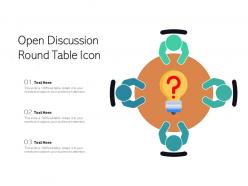
Open discussion round table icon

Open discussion round table icon
Slide 1 of 5

or

Favourites Favourites

Try Before you Buy Download Free Sample Product

Audience Impress Your
Audience
Editable 100%
Editable
Time Save Hours
of Time
The Biggest Sale is ending soon in
0
0
:
0
0
:
0
0
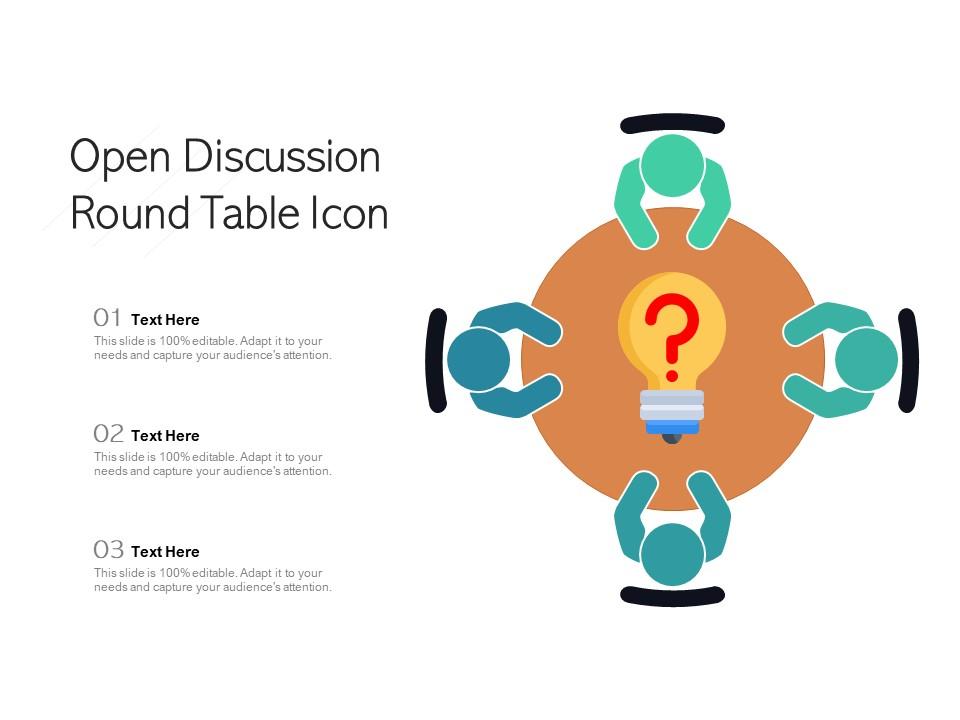
Presenting this set of slides with name Open Discussion Round Table Icon. This is a three stage process. The stages in this process are Open Discussion, Business Open, Conversion Icon. This is a completely editable PowerPoint presentation and is available for immediate download. Download now and impress your audience.

People who downloaded this PowerPoint presentation also viewed the following :

FAQs for Open discussion

Honestly, roundtables are so much better than regular presentations because everyone actually participates equally. No one's stuck at the front "presenting" while others zone out. People listen way more and build off each other's ideas instead of just waiting their turn. You get all these different perspectives since everyone's positioned the same way - nobody feels intimidated to speak up. Way less boring than another slideshow too, let's be real. The whole setup just naturally pushes people toward real problem-solving conversations rather than someone talking at you for an hour. Next time just say "let's roundtable this" and watch how different it feels.

Honestly, roundtables are genius because nobody's stuck presenting while everyone else zones out. The whole circular thing forces people to actually look at each other, which sounds dumb but it works. You get way better ideas when it's just organic conversation instead of formal speeches. Quiet people finally speak up, and someone always throws out those random "wait, what if..." thoughts that end up being brilliant. I've seen the weirdest half-formed ideas turn into real solutions. Oh, and here's the thing - don't start with some massive broad topic. Pick one specific problem you're trying to crack and let people riff on it.

Honestly, set some ground rules or the loudest people will just take over - happens every time. Do quick intros where everyone shares one thing right off the bat. Gets the quiet ones talking before they clam up. Maybe throw in a facilitator who can actually call on people who haven't said much? Time limits help too, otherwise some guy will ramble for ten minutes straight. If it's a huge group, try breaking into smaller chunks first then come back together. You kinda have to force it because balanced participation never just happens on its own.

Oh man, cultural stuff definitely messes with roundtable dynamics! Some people won't speak up because of hierarchy respect, while others will straight-up challenge everything. Disagreement comfort levels are all over the place too. Plus storytelling styles differ - and silence? Could mean agreement OR total discomfort, honestly depends on the person's background. Time-wise, some cultures want to hash everything out thoroughly while others just want to get through it efficiently. I'd probably set some ground rules first and maybe do a quick preferences check before jumping into the real discussion topics.

Honestly, you're gonna need solid video software first - Zoom or Teams work great for the face-to-face stuff. Breakout rooms are clutch for splitting into smaller groups. Throw in some polling tools for quick feedback and maybe a digital whiteboard if you're doing brainstorming (though those can get messy fast). Document sharing is obvious but don't forget it. The real trick? Pick stuff people already know how to use. Nothing kills momentum like watching someone fumble with the mute button for five minutes. Oh, and always have a backup plan because tech will inevitably fail at the worst moment.

Okay so basically stay neutral and frame it like "I'm hearing two different approaches here" instead of letting people go at each other directly. Set some ground rules upfront - time limits, respectful dialogue, that stuff. Honestly? Sometimes a little tension actually helps if you can work with it. When it gets heated, pivot to what people actually want underneath their arguments. You're more like a traffic controller than a referee - keep things moving and make sure the quiet people get to talk too. Oh and definitely don't let the loud voices steamroll everyone else, that's the worst.

Start by just calling people out directly - "Sarah, what do you think about this?" Usually does the trick. I also like doing quick go-arounds where everyone says something short, puts everyone on equal footing. Breaking into smaller groups first helps a ton too since big meetings can feel intimidating (I mean, who actually enjoys being stared at by 12 people?). Oh, and try collecting written thoughts before you discuss - gives the quieter folks time to organize their ideas. The whole thing works better when participation feels normal, not forced. Just make it clear from day one that you want everyone's input.

Yeah, companies totally customize these based on their vibe. Tech folks do quick problem-solving sessions - super fast-paced. Healthcare needs way more structure because of all their compliance headaches. Finance teams are obsessed with data and metrics (obviously), but creative agencies? They go nuts with brainstorming - whiteboarding everywhere, sticky notes covering the walls. Manufacturing usually sticks to old-school formats about efficiency stuff. Oh, and definitely survey people first about what discussion style they want and what they're hoping to get out of it.

Honestly, an agenda is your best friend here - people will derail things SO fast otherwise. Set some ground rules upfront about speaking time so the chatty ones don't take over. I'd prep 2-3 good discussion questions beforehand, then don't feel bad about redirecting when things go sideways. Your job is facilitating, not talking the whole time. Make sure quieter people feel safe to jump in - that's where the real good stuff happens. Oh, and definitely wrap up with key takeaways so everyone leaves feeling like they didn't just waste an hour.

Pick someone to take notes ahead of time, or just record it if everyone's cool with that. Honestly, people only really care about the action items afterward anyway. Get a summary out within a day or two while it's all still fresh - include the main points, decisions, and who's doing what by when. You might want to do different versions too, like a detailed one for the higher-ups and quick bullet points for everyone else. Stick it in your shared drive or whatever tool you use so people can actually find it later when they inevitably forget what was decided.

Honestly, start by figuring out what success looks like before you even begin - saves you from guessing later. Check who actually spoke up during the discussion, especially if the quiet people finally chimed in. Send out a quick survey afterward asking if they felt heard or learned something new. The real test though? Did concrete action items come out of it, and are people actually following through on what they promised to do. I also look at whether folks made new connections or left with a clearer picture of whatever you were discussing. Participation rates tell you a lot too.

Honestly, don't let people walk out without knowing exactly who's doing what and by when. Make a quick shared doc - could be Google Docs, whatever works for your team. List the tasks, owners, deadlines. I learned this the hard way after watching brilliant ideas just... disappear into the void. Set up a follow-up meeting in 2-3 weeks. Send gentle nudges before stuff is due. Here's the thing though - making commitments visible to everyone creates this natural accountability that actually works. Oh, and always kick off your next roundtable by going through what people actually completed from last time.

Oh god, don't let those two chatty people hijack everything - you know the type. Have some kind of plan going in, even if it's super basic. I learned this the hard way lol. Keep people from going off on random tangents that burn through your time. And honestly? Don't invite half the office - once you hit 8-10 people it gets messy fast. Set some ground rules about who talks when. The worst meetings are when someone just presents at everyone for an hour. You're there to guide the conversation, not give a lecture. Trust me on this one.

Honestly, roundtables beat panels and webinars hands down for actual collaboration. Panels are just people talking *at* you from a stage, and webinars? Basically fancy lectures with maybe questions at the end. But roundtables are different - everyone's equal, jumping in naturally, actually building off each other's thoughts. Way messier, sure, but that's what makes it engaging. People drop the performance act and just dig into problems together. You get way better insights that way. Plus nobody's stuck being "the audience" - everyone contributes. If you want real problem-solving instead of just information dumps, roundtable's your best bet.

Honestly, mixing up your team makes such a difference. You get people challenging each other's ideas instead of just nodding along. Different backgrounds mean someone's gonna spot the obvious thing everyone else missed - you know those "oh duh" moments? Way better than another boring meeting with the usual suspects saying the same stuff. I swear, sometimes the best solutions come from whoever's NOT an expert in that area. They ask the weird questions that actually matter. Next time you're stuck on something, grab people from totally different departments or backgrounds. Game changer.

Ratings and Reviews

0% of 100
Review Form
Write a review
Most Relevant Reviews

No Reviews