


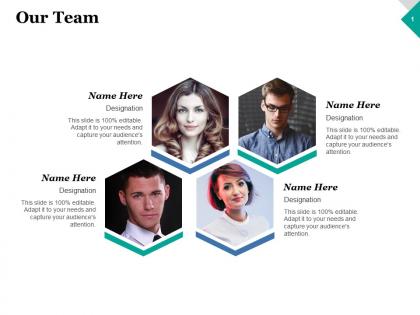
Our team introduction ppt inspiration graphics example




Try Before you Buy Download Free Sample Product
 Impress Your
 Audience
 100%
100% Editable
 Save Hours
 of Time


Compel folks to arrive at a decision with our Our Team Introduction Ppt Inspiration Graphics Example. Be able to force the issue.
People who downloaded this PowerPoint presentation also viewed the following :
Our team introduction ppt inspiration graphics example with all 5 slides:
Bright design for your brightest ideas. Our Our Team Introduction Ppt Inspiration Graphics Example are ready to spotlight your ideas.
FAQs for Our team introduction ppt
Team members typically bring specialized expertise including project management, technical development, strategic planning, quality assurance, and stakeholder communication skills. These diverse competencies work together by ensuring comprehensive project coverage, facilitating cross-functional collaboration, and delivering integrated solutions, with many organizations finding that clearly defined roles enhance accountability and accelerate project timelines.
Team diversity enhances creativity and problem-solving by bringing varied perspectives, experiences, and approaches to challenges, enabling more comprehensive analysis and innovative solutions. Different educational backgrounds, cultural viewpoints, and industry experiences help teams identify blind spots, generate multiple solution pathways, and develop strategies that resonate across diverse markets, ultimately delivering more robust outcomes and competitive advantage.
Team members ensure effective communication through regular check-ins, clear documentation protocols, defined communication channels, active listening practices, and structured feedback systems. These strategies streamline collaboration by minimizing misunderstandings, accelerating decision-making, and enhancing project transparency, with many organizations finding that consistent communication frameworks ultimately deliver improved productivity and stronger team cohesion.
Teams prioritize presentation tasks through strategic project planning, deadline mapping, content hierarchy assessment, and collaborative workflow management. By implementing milestone-based scheduling, delegating responsibilities according to expertise, and maintaining regular progress check-ins, teams streamline development processes while ensuring quality deliverables, ultimately enabling faster project completion and enhanced stakeholder satisfaction across organizational presentations.
Effective presentation collaboration tools include Google Slides, Microsoft PowerPoint with real-time co-authoring, Figma for design-heavy presentations, Miro for brainstorming, and Slack for streamlined communication. These platforms enhance team productivity by enabling simultaneous editing, version control, and seamless feedback integration, with many organizations finding that strategic tool combinations ultimately deliver faster turnaround times and more polished presentations.
Our team handles feedback through structured review cycles, collaborative discussion sessions, open communication channels, and systematic implementation tracking. These approaches streamline project refinement by encouraging diverse perspectives, facilitating rapid iterations, and maintaining quality standards, with many organizations finding that such feedback integration ultimately delivers enhanced outcomes and stronger team cohesion.
Effective teams balance individual strengths with group dynamics by mapping member capabilities, establishing clear role definitions, and creating collaborative frameworks that leverage diverse skills. Through strategic team composition and regular communication, organizations enhance project outcomes, minimize conflicts, and accelerate decision-making, with many finding that structured approaches ultimately deliver improved performance and stronger team cohesion.
Common presentation challenges include time constraints, design inconsistency, content organization, resource limitations, and maintaining audience engagement across different stakeholder groups. These obstacles often result in rushed deliverables, misaligned messaging, and reduced impact, with many organizations finding that streamlined templates, collaborative workflows, and strategic content frameworks significantly enhance presentation quality while reducing development time.
The team ensures presentation resonance by conducting thorough audience analysis, customizing content depth and messaging, and incorporating relevant industry examples and case studies. Through strategic adaptation of visual elements, terminology, and focal points, teams deliver targeted presentations that address specific stakeholder concerns and objectives, ultimately enhancing engagement and achieving desired outcomes across diverse professional contexts.
Teams maintain engaging presentations through strategic visual hierarchy, consistent color schemes, compelling storytelling frameworks, interactive elements, and data visualization techniques. These methods work by simplifying complex information, creating emotional connections with audiences, and ensuring content flows logically, with many organizations finding that well-designed presentations significantly enhance stakeholder buy-in and decision-making outcomes.
Our team stays updated through industry publications, design conferences, webinar participation, competitor analysis, and continuous learning platforms. These approaches enhance our understanding by tracking emerging visual trends, studying successful case presentations across sectors like consulting and finance, and incorporating user feedback, ultimately delivering contemporary designs that maintain competitive advantage in an increasingly visual business landscape.
Research serves as the foundation for the team's presentation development, involving audience analysis, content validation, market trends assessment, and competitive intelligence gathering. This comprehensive approach enables teams to create targeted, credible presentations that resonate with stakeholders, support strategic decision-making, and deliver compelling narratives, ultimately enhancing presentation effectiveness and business outcomes.
Teams measure presentation effectiveness through audience feedback surveys, engagement metrics during delivery, follow-up questions received, and tracking of desired outcomes like project approvals or stakeholder buy-in. These assessment methods enable presenters to refine their communication strategies, enhance future presentations, and demonstrate measurable business impact, with many organizations finding that systematic evaluation significantly improves their overall presentation success rates.
The team actively pursues continuous learning through industry conferences, certification programs, advanced training workshops, mentorship opportunities, and cross-functional project collaborations. These development initiatives enhance individual expertise while strengthening collective capabilities, with many organizations finding that such strategic investment in team growth delivers improved innovation, higher employee retention, and sustained competitive advantage in an increasingly dynamic marketplace.
The team cultivates innovation through structured brainstorming sessions, cross-functional collaboration, dedicated experimentation time, and failure-tolerant project phases that encourage creative risk-taking. By implementing design thinking workshops, prototype testing cycles, and knowledge-sharing forums, teams across industries like technology, healthcare, and financial services streamline creative processes while delivering breakthrough solutions and enhanced competitive advantage.
No Reviews