

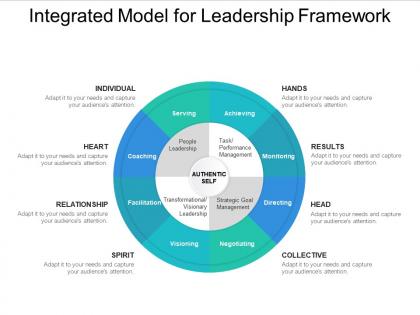
Integrated model for leadership framework




Try Before you Buy Download Free Sample Product
 Impress Your
 Audience
 100%
100% Editable
 Save Hours
 of Time


You have a driving passion to excel in your field. Our Integrated Model For Leadership Framework will prove ideal vehicles for your ideas.
People who downloaded this PowerPoint presentation also viewed the following :
Integrated model for leadership framework with all 5 slides:
You are well armed with penetrative ideas. Our Integrated Model For Leadership Framework will provide the gunpowder you need.



FAQs for Integrated model
So you'll want vision, communication, decision-making processes, and accountability structures. Also clear role definitions and feedback loops so people aren't guessing what they're supposed to do. Most of these frameworks are way overcomplicated though - they just sit in someone's drawer forever. Focus on those core pieces and actually stick with them. Oh, and start by figuring out how decisions get made right now. That's where you'll find the biggest mess-ups, plus it's pretty easy to fix compared to other stuff.
Think of it like having clear rules for a group project - everyone knows who decides what and nobody's stepping on toes. Your team won't waste time going "uh, is this my thing or yours?" which honestly happens way too much. People get stuff done faster when they're not confused about roles. The cool part is it actually helps people level up too because they can see exactly what they need to work on. Just don't copy someone else's system though - what works for Google probably won't work for your scrappy startup, you know?
Look, communication is literally what makes or breaks leadership. Your brilliant ideas mean nothing if you can't get them across clearly. I've seen so many smart leaders fail because they couldn't explain their vision - their teams just wandered around confused. You've got to nail both parts: what you're saying AND how you say it. Communication basically acts like a multiplier for everything else you do. It builds trust, gets everyone on the same page, amplifies your influence. Start simple though - just check how you communicate now. Are you being clear enough? Talking to people often enough? Being real with them? Those basics matter more than you'd think.
Honestly? Most companies are total hypocrites about their values, so figure out what yours actually rewards first. Watch how decisions really get made and who gets promoted. Then build your leadership framework around that reality - don't copy some generic corporate model if you're actually a scrappy startup. Get people from different departments involved in creating it, not just the usual HR suspects. I'd definitely test it with a small group first because rolling out something broken company-wide is embarrassing. Oh, and if you're risk-averse, own it instead of pretending you want rebels leading teams.
Dude, don't try doing everything at once - huge mistake. Get your team on board first or you're screwed. Also, skip the trendy frameworks that don't actually fit your company culture. I swear, everyone just chases whatever's hot on LinkedIn. Your people need to get why you're changing things, not just what you're changing. Oh, and patience - this stuff takes forever to actually work. Maybe start with one small thing? Get feedback fast and tweak as you go instead of following some perfect playbook that doesn't exist anyway.
Honestly, the biggest game-changer is making inclusion part of how you actually evaluate leaders - not just some side thing. Build it into performance reviews and promotion decisions so there's real accountability. Focus on concrete stuff like creating psychological safety and making equitable decisions. Most leaders won't figure this out on their own (shocking, I know), so you need clear competencies they can work toward. The framework gives you something measurable instead of crossing your fingers and hoping. Pick maybe 2-3 specific behaviors you want to see first - don't try to boil the ocean.
Track the obvious stuff first - engagement scores, who's sticking around, promotion patterns. Numbers tell the real story. But honestly? The softer signs matter just as much. Are people actually using this thing day-to-day or just nodding along in meetings? Do your managers seem more confident when they're making calls? I'd run quick pulse surveys every few months and just... talk to people. Different levels, different teams. The golden test is whether someone brings up the framework naturally during a crisis, not because HR reminded them to.
Honestly, you've gotta check in with your team way more often - they see stuff you're totally missing from up there. Don't get stuck using the same old playbook just because it worked two years ago (guilty of this myself). Communication changes should come first since it affects literally everything else. After that, speed up how you make decisions when timing matters. Monthly check-ins with yourself sound nerdy but actually work pretty well for catching what needs fixing. Small adjustments beat waiting around for some massive overhaul that never happens anyway.
Oh right, so transformational leadership is when you inspire people to grow and push past what they thought they could do. Pretty cool when it works. Transactional is more straightforward - clear rules, rewards, consequences. You know exactly what you're getting. Honestly, the transformational stuff can feel a bit much sometimes, but it does get people fired up about change. Meanwhile transactional leaders are great at keeping things organized and following through. Most good leaders mix both though. Really depends what your team needs right now - motivation to grow or just solid structure and accountability?
Honestly, I'd start with the basics - weekly one-on-ones and monthly team check-ins. Quarterly 360 reviews are gold too, but don't wait for crises to ask for feedback (learned that one the hard way!). Mix formal stuff like surveys with casual coffee chats. People open up differently depending on the setting. The part everyone forgets? Actually following up on what you hear. Nothing kills trust faster than asking for input then radio silence. Oh, and make it predictable - same time, same energy every week so your team knows you're serious about it.
Okay so first grab some assessment tools - 360 feedback surveys, personality tests like DISC or Myers-Briggs, whatever clicks with your team. Pick a solid model as your base (I'm big on situational leadership personally, but transformational works too). Don't overthink it honestly - the magic happens when you just commit to one approach instead of constantly switching gears. You'll need competency mapping templates and development planning stuff. Oh, and definitely pilot everything with a small group first. Trust me on this one. Iron out the messy parts before you go company-wide or you'll regret it.
Here's the thing - you need that framework to actually know what you're looking for in future leaders. Map out the skills and experience needed at each level first. Then you can spot who's got potential and who needs more time to develop. Honestly, most companies wait too long to think about this stuff. Start by writing down what good leadership looks like in your org - sounds boring but it works. That becomes your blueprint for succession planning. You'll catch pipeline gaps early instead of scrambling when someone leaves unexpectedly.
Tech makes rolling out leadership frameworks way less painful. Learning management systems handle training consistency - no more wondering if everyone got the same message. Performance platforms track who's actually developing those competencies you mapped out. 360-degree feedback becomes painless with digital tools (seriously, remember passing around those paper forms?). Analytics dashboards show you trends and gaps fast. Collaboration platforms work great for remote mentoring too. Here's my take: don't go crazy digitizing everything at once. Pick whatever tool fixes your biggest headache first, then build from there.
Think of your values as the blueprint for how you lead. They shape every decision you make and what you actually care about achieving. Like if transparency matters to you, you'll naturally build in open communication and regular feedback. Fairness? You'll focus on inclusive practices - though honestly, that one should be a given for everyone. Start simple: write down your top 3-5 values. Then connect each one to actual behaviors you want to show up with consistently. Otherwise you're just talking about values instead of living them. It's basically turning your beliefs into your daily leadership style.
Honestly, mentorship and coaching are what separate real leaders from people who just boss others around. You're building a growth culture instead of relying on those boring corporate training sessions nobody remembers anyway. Most of us picked up our best leadership skills from someone who actually gave a damn about our development - that's not a coincidence. Make it part of your routine though. Regular one-on-ones work better than random conversations. Ask questions that make people think rather than spoon-feeding answers. Oh, and actually care about where they want to go long-term. Pick someone to start mentoring this month.
No Reviews