


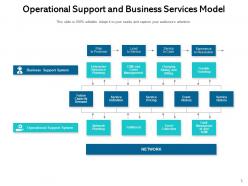
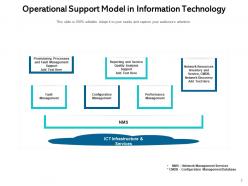
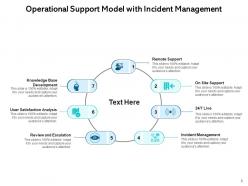
Operational Support Model Business Service Customer Incident Management Strategic




Try Before you Buy Download Free Sample Product
 Impress Your
 Audience
 100%
100% Editable
 Save Hours
 of Time


Our Operational Support Model Business Service Customer Incident Management Strategic are topically designed to provide an attractive backdrop to any subject. Use them to look like a presentation pro.
People who downloaded this PowerPoint presentation also viewed the following :
Operational Support Model Business Service Customer Incident Management Strategic with all 12 slides:
Use our Operational Support Model Business Service Customer Incident Management Strategic to effectively help you save your valuable time. They are readymade to fit into any presentation structure.

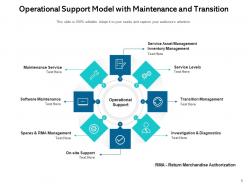
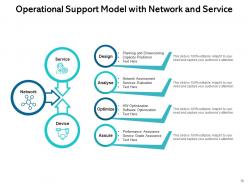
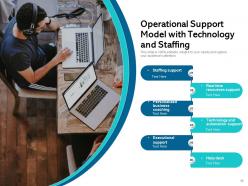

FAQs for Operational Support Model Business Service Customer
Key components include incident detection and logging, prioritization and categorization, automated escalation workflows, real-time communication channels, and comprehensive resolution tracking. These systems streamline response times by centralizing customer issues, automating routing protocols, and maintaining detailed audit trails, with many organizations finding that integrated platforms ultimately deliver faster resolution times and significantly improved customer satisfaction scores.
Organizations measure incident management success through key performance indicators including mean time to resolution, first-call resolution rates, customer satisfaction scores, incident volume trends, and escalation frequencies. These metrics enable businesses to identify operational bottlenecks, optimize resource allocation, and enhance service delivery, with many companies finding that comprehensive measurement frameworks ultimately deliver improved customer experiences and reduced operational costs.
Customer feedback serves as a critical catalyst for improving incident management through identifying recurring issues, revealing process gaps, highlighting communication deficiencies, and exposating resolution timeframes that impact satisfaction. This feedback enables organizations to streamline response protocols, enhance transparency measures, and optimize resource allocation, with many companies finding that systematic feedback integration ultimately delivers faster resolution times and strengthened customer relationships.
Technology enhances customer incident management workflows by automating ticket routing, providing real-time status tracking, and enabling predictive analytics for proactive issue resolution. Through AI-powered chatbots and integrated communication platforms, organizations streamline response times, improve customer satisfaction, and reduce operational costs, while delivering seamless experiences that ultimately strengthen customer relationships and competitive advantage.
Common challenges include delayed response times, poor communication across teams, inadequate tracking systems, inconsistent escalation procedures, and lack of comprehensive incident documentation. These issues can be addressed by implementing automated ticketing systems, establishing clear communication protocols, creating standardized escalation workflows, and utilizing real-time dashboards, with many organizations finding that integrated incident management platforms ultimately deliver faster resolution times and improved customer satisfaction.
Companies should prioritize incidents using a matrix that combines impact (number of users affected, revenue implications) with urgency (time sensitivity, regulatory requirements), creating priority levels like critical, high, medium, and low. This systematic approach enables support teams to allocate resources strategically, minimize business disruption, and maintain service quality standards, ultimately delivering faster resolution times and improved customer satisfaction across all incident categories.
Essential training includes incident classification and prioritization, de-escalation techniques, technical troubleshooting procedures, communication protocols, and documentation standards. These programs enhance service delivery by building diagnostic skills, improving customer interactions, and ensuring consistent response quality, with many organizations finding that comprehensive training reduces resolution times while significantly improving customer satisfaction and team confidence.
Cross-department collaboration improves incident resolution times by enabling faster information sharing, coordinating specialized expertise, and streamlining communication channels across teams. When IT, customer service, and operations work together seamlessly, organizations can identify root causes more quickly, implement solutions efficiently, and prevent recurring issues, ultimately delivering faster resolution and enhanced customer satisfaction.
Essential metrics include Mean Time to Acknowledgment (MTTA), Mean Time to Resolution (MTTR), First Call Resolution Rate, Customer Satisfaction Scores, and Incident Recurrence Rate. These performance indicators enable organizations to streamline response processes, enhance service quality, and optimize resource allocation, with many companies finding that tracking these metrics reduces operational costs while significantly improving customer experiences and competitive advantage.
Incident management systems integrate with CRM tools through APIs, automated data synchronization, and unified dashboards that consolidate customer interactions, incident histories, and resolution tracking. This strategic combination enables support teams to access comprehensive customer profiles during incidents, automatically update service records, and trigger follow-up workflows, ultimately delivering faster resolution times and enhanced customer experiences.
Customer incident documentation best practices include capturing detailed incident descriptions, timestamps, customer impact assessments, resolution steps taken, and root cause analysis. These comprehensive records streamline future troubleshooting, enable pattern recognition for proactive improvements, and enhance team knowledge sharing, with many organizations finding that thorough documentation reduces resolution times and ultimately delivers improved customer experiences and operational efficiency.
A knowledge base streamlines incident resolution by providing instant access to documented solutions, troubleshooting guides, escalation procedures, and historical case resolutions, enabling faster diagnosis and consistent responses. Through searchable repositories, support teams can quickly identify patterns, apply proven fixes, and reduce resolution times significantly, with many organizations finding that comprehensive knowledge bases decrease repeat incidents while improving first-contact resolution rates.
Strategies to reduce incident recurrence include root cause analysis, proactive monitoring systems, knowledge base optimization, staff training enhancement, and process standardization across service channels. Through predictive analytics and continuous feedback loops, organizations streamline issue resolution, minimize repeat contacts, and ultimately deliver improved customer experiences, with many service teams finding that systematic prevention approaches significantly reduce operational costs while enhancing satisfaction.
Communication is critically important during incident resolution, serving as the foundation for effective coordination, stakeholder alignment, and customer trust preservation. Clear, timely communication enables teams to collaborate efficiently, keeps customers informed about progress and expected resolution times, and prevents confusion that can escalate incidents, ultimately maintaining service credibility and customer satisfaction.
Emerging trends in customer incident management include AI-powered predictive analytics, automated incident routing, real-time customer communication platforms, proactive monitoring systems, and integrated omnichannel support solutions. These technologies streamline response times, enhance issue resolution accuracy, and improve customer satisfaction by enabling faster detection, smarter resource allocation, and seamless communication across touchpoints, ultimately delivering competitive advantage in service delivery.
-
Easy to edit slides with easy to understand instructions.