

Pakistan maps flags landmarks monuments city and skyline deck powerpoint template





Try Before you Buy Download Free Sample Product
 Impress Your
Audience
 100%
Editable
 Save Hours
of Time


Showcase a wonderful presentation of data with our Pakistan maps flags landmarks monuments city and skyline deck PowerPoint template. This Pakistan plan PPT deck showcases the most fascinating cities of the country such as- Lahore, Karachi, Islamabad, Peshawar, and many more. Showcasing the skyline vector of Lahore city, this PowerPoint layout focuses on the marker image of Lahore city which shows the capital of Punjab’s province and one of the largest and wealthiest cities of Pakistan. This Pakistan chart creative PPT set presents the viewers with Shalimar garden which was built by the Mughals and declared a world heritage site by UNESCO constructed during the reign of Shah Jahan. For a religious audience, this Pakistan design PowerPoint bundle gives detailed information on Islamabad city landmarks which has the Faisal mosque, a national capital of the country that accommodates 3,00,000 worshippers. The visual depiction of some of the prominent cities of the Pakistan nation is very eye-appealing to the viewers which leaves a long lasting impact on everybody around. Download it now to attract a maximum number of clients.
People who downloaded this PowerPoint presentation also viewed the following :
Content of this Powerpoint Presentation
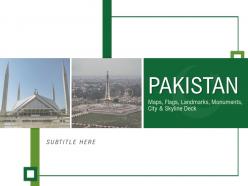
Slide 1: This slide introduces PAKISTAN Maps, Flags, Landmarks, Monuments, City & Skyline Deck. State Your Company Name and begin.
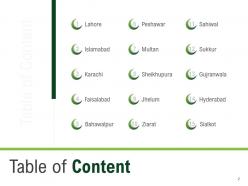
Slide 2: This slide shows Table of Content for the presentation.
Slide 3: This slide presents skyline vector of Lahore city, capital of Punjab’s province and one of the largest and wealthiest cities in the Pakistan
Slide 4: This slide covers Shalimar garden built Mughals also known as Shalimar garden which is declared UNESCO.
Slide 5: This slide displays minar e Pakistan in Lahore city constructed during 1960 to 1968 AD also known as liberty tower of Pakistan.
Slide 6: This slide represents landmark vector of Wazir Khan Mosque built in Sufi architectural style and completed in 1641 AD
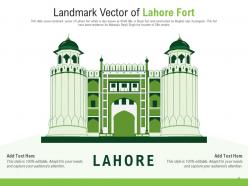
Slide 7: This slide covers landmark vector of Lahore fort which is also known as Shahi Qila or Royal Fort.
Slide 8: This slide presents landmark vector Tomb of Ali Mardan built in Mughal architectural style and completed in 1630s AD
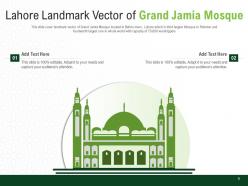
Slide 9: This slide cover landmark vector of Grand Jamia Mosque located in Bahria town.
Slide 10: This slide displays flyover built over Azadi chowk in Lahore with Badshahi Mosque in back ground which was built by Mughal emperor Shah Jahan.
Slide 11: This slide represents landmark image of Shahi Mosque also known as Badshahi Mosque located in outskirts of walled city.
Slide 12: This slide covers skyline vector of federally administrative capital city of Islamic republic of Pakistan which is famous for being first planned city of the country.
Slide 13: This slide presents national monument of Pakistan in Islamabad which predicts culture of Pakistan through ages through audio description.
Slide 14: This slide shows Faisal mosque at national capital of Pakistan with capacity of 300,000 worshippers and built in contemporary architecture during 1986 AD
Slide 15: This slide displays skyline vector of financial center of Pakistan located near Arabian sea.
Slide 16: This slide represents Karachi city’s clock tower constructed during British Raj in empress market.
Slide 17: This slide covers Islamic cemetery named Chaukhandi tomb of Jokhio tribe built during 15th century.
Slide 18: This slide presents Mazar E Quaid resting place of Muhammad Ali Jinnah the founder of Pakistan and construction 1971 AD
Slide 19: This slide covers covers Faisalabad third most populated city of Pakistan formerly known as Lyallpur which is famous for textile industry.
Slide 20: This slide displays skyline vector Bahawalpur city located in Punjab province founded in 1748 AD on edge of Cholistan desert as capital of princely desert of Bahawalpur.
Slide 21: This slide represents Bahawalpur city landmark image which is Noor Mahal palace owned by Pakistan army built in 1872 AD.
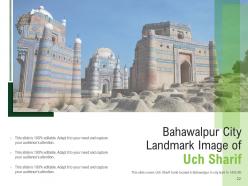
Slide 22: This slide covers Uch Sharif tomb located in Bahawalpur in city built in 1453 AD
Slide 23: This slide presents Abbasi mosque landmark vector which is located within Cholistan desert near Derawar fort built by Nawab Bahawal Khan in 1849 AD
Slide 24: This slide covers Derawar fort in Bahawalpur located in heart of Cholistan desert built in 9th century AD Rai Jajja Bhatti
Slide 25: This slide displays Bahawalpur city landmark of Darbar Mahal which is built with red brick and in style of Lahore fort.
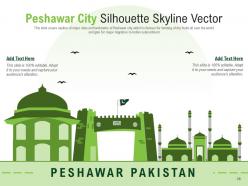
Slide 26: This slide represents skyline of major sites and landmarks of Peshawar city which is famous for farming of dry fruits all over the world.
Slide 27: This slide covers landmark vector of Islamia college in Peshawar Quaid E Azam Muhaamad Ali Jinaah.
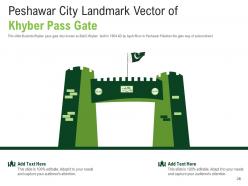
Slide 28: This slide illustrate Khyber pass gate also known as Bab-E-Khyber built in 1964 AD by Ayub Khan in Peshawar Pakistan the gate way of subcontinent.
Slide 29: This slide covers skyline vector of Multan city located near Chenab river famous of Sufi shrines and ancient name of city is Kashep Puri as per old text.
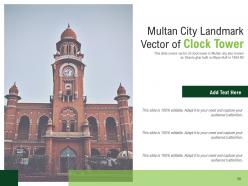
Slide 30: This slide displays vector of clock tower in Multan city also known as Ghanta ghar built on Ripon Hall in 1884 AD
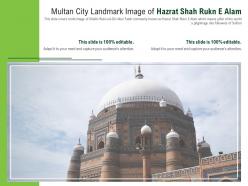
Slide 31: This slide represents tomb image of Sheikh Rukn-ud-Din Abul Fateh commonly known as Hazrat Shah Rukn E Alam.
Slide 32: This slide shows Hiran Minar Landmark Image of Sheikhupura City.
Slide 33: This slide presents landmark vector of tomb named Hiran Minar built to owner Mughal emperor’s beloved antelope named Mansraj.
Slide 34: This slide covers Jhelum city landmark vector named Rohtas Fort which was built by Raja Todar Mal.
Slide 35: This slide displays Ziarat residency of Quaid E Azam Muhammad Ali Jinnah the founder of Pakistan.
Slide 36: This slide represents Yadgar monument Sahiwal built in remembrance of Eidal Sahi
Slide 37: This slide covers Sukkur Lansdowne bridge constructed over river Indus which allows easier rail access between Sindh and Balochistan
Slide 38: This slide presents landmark vector a martyr's monument named Nishan E Manzil at Gujranwala city which is recognized as pride of nation and army
Slide 39: This slide covers landmark image of Hyderabad city historical clock tower located in Naval Rai market which was built in 1914 AD
Slide 40: This slide displays Sialkot clock tower situated in Saddar bazaar also known as Iqbal square.
Slide 41: This template represents Pakistan map with neighboring countries names which are India, Afghanistan and Iran.
Slide 42: This slide shows Islamic Republic of Pakistan Flag.
Slide 43: This is a Thank You slide with address, contact numbers and email address.
Pakistan maps flags landmarks monuments city and skyline deck powerpoint template with all 43 slides:
Use our Pakistan Maps Flags Landmarks Monuments City And Skyline Deck Powerpoint Template to effectively help you save your valuable time. They are readymade to fit into any presentation structure.











FAQs for Pakistan maps flags landmarks monuments city and skyline
So 1947's Partition created Pakistan - that's the big starting point. Then you've got the 1971 war that basically ripped East Pakistan away to become Bangladesh. Pakistan went nuclear in '98, which was huge. The Kargil thing with India in '99 was pretty intense too. Military coups happened a lot, but Zia's 1977 takeover really changed everything. Oh and the Soviet-Afghan War in the 80s? That completely flipped Pakistan's role in the region - honestly probably more than people realize. These events still mess with their politics today, so if you're studying this stuff, definitely look at how it all connects to current tensions with India.
Dude, Pakistan's geography totally shapes everything there. Up north you've got insane mountains - like world record tall stuff - which means tourism and hydro power. Punjab's where the money is though, super fertile plains growing most of their wheat and cotton. Karachi down south handles all the international shipping and fishing. Then there's places like Balochistan - mostly desert but loaded with natural gas and minerals, just not many people. Oh and each region speaks different languages and has totally different vibes, so you can't just use the same business approach everywhere. Pretty wild how diverse it is.
Dude, Pakistan's farming sector is a mess right now. Water shortage is killing them - their irrigation is ancient and climate change makes everything worse. Most farmers can't afford modern equipment or better seeds, so they're stuck with old methods. The land gets split into tiny plots too, which makes farming super inefficient. Plus these middlemen jack up all the prices, which honestly just pisses everyone off. If you're thinking about investing there, I'd probably look at water tech first. Maybe agricultural equipment too, but start with the water stuff since that's their biggest headache.
Dude, Pakistan's geography is honestly kind of insane when you think about it. It's wedged between South Asia, Central Asia, and the Middle East - perfect spot for trade routes. China's obsessed with using it for Belt and Road stuff to reach the Arabian Sea. The US needed Pakistan big time for Afghanistan (that whole relationship was messy though). India obviously sees them as the main rival next door. Iran wants energy deals, Gulf states treat them like a key ally. Honestly sounds exhausting trying to keep everyone happy. But yeah, Pakistan's location basically makes it impossible to ignore in regional politics.
So Pakistan's education scene is kinda all over the place right now. Urban schools in Karachi and Lahore are getting pretty tech-savvy, but rural areas? Still fighting for basic stuff like electricity. The government's really pushing STEM hard these days, which makes sense given the job market. Private schools are way ahead on innovation - no surprise there since they move faster than public bureaucracy. Oh, and they're finally trying to match skills training with what employers actually want. If you're thinking about diving into this, I'd start by checking out what's happening in the big cities first. The digital push is real but super uneven across regions.
Dude, Pakistan's tech scene is actually exploding right now. Their IT exports are bringing in serious money - we're talking billions. The government has this whole Digital Pakistan Vision thing going, but honestly it's the young people there who are really driving change. Fintech startups are changing how everyone banks and shops. Remember Careem? That was huge before Uber snagged them. Karachi and Lahore have become legit tech hubs now. If you're thinking business opportunities, Pakistan's definitely worth a look - though I'd probably start with those two cities first.
So Pakistan's actually doing some interesting stuff on climate - they've got this massive "10 Billion Tree Tsunami" thing going on. Pretty ambitious name, right? They're also pushing hard into solar and wind energy, which makes sense given how much sun they get. The government set up a Climate Change Authority to handle coordination, plus they have this comprehensive policy framework. Flood management is huge for them since monsoons wreck havoc every year. They're honestly in a tough spot being so climate-vulnerable. Oh, and if you need specifics for work stuff, their National Adaptation Plan has all the sector breakdowns laid out pretty well.
Pakistan has some amazing festivals you should know about. Eid al-Fitr and Eid al-Adha are the big nationwide ones. Hindu communities celebrate Diwali and Holi too. The Shandur Polo Festival is insane - they literally play polo at 12,000 feet altitude. Punjab does this huge kite flying thing called Basant. There's also Lok Virsa folk festivals and the Chilam Joshi festival in the Kalash valleys, which honestly sounds fascinating. Each region kind of does its own thing though. If you're working with Pakistani colleagues, just ask them about their local celebrations - people love talking about their traditions and you'll get way better info than anything I could tell you.
Honestly, if you want to understand Pakistan, dive into their art and literature first. Authors like Saadat Hasan Manto capture all that partition trauma and political chaos perfectly. Modern artists are tackling gender issues and class problems too - there's this cool trend where they're mixing traditional miniature painting with contemporary social critique. The whole creative scene is pretty raw about corruption and democratic struggles. I mean, the literature especially doesn't sugarcoat anything about religious identity or social justice issues. It's like getting an unfiltered look at the country's soul, you know?
So Pakistan's doing some interesting stuff with healthcare right now. They're expanding this Sehat Sahulat program - basically trying to get universal coverage going. New hospitals are being built, old ones upgraded. The brain drain thing is killing them though, so they're really pushing to train more doctors and nurses locally. Telemedicine is huge for their remote areas, which makes sense. Private companies are jumping in with partnerships too. Honestly, if you're tracking this space, watch what they do in rural areas - that's where the real game-changer potential is.
Dude, Pakistan's youth situation is wild - 64% of people are under 30. That's insane potential if they can get decent education and jobs. The tricky part? Actually creating enough work for everyone (government's been struggling with this forever). These young people are already changing politics and starting businesses like crazy. Tech adoption is through the roof too. But here's the thing - if unemployment stays high and schools keep failing kids, all that potential turns into a major headache. I'd watch their voting trends and startup scene closely. Those'll tell you everything about where the country's actually going.
Honestly, it's all over the place depending where you are. Big cities have women judges and politicians, which is awesome. Rural areas though? Still dealing with forced marriages and honor violence - it's pretty rough. Literacy is getting better overall, but the gap between social classes is wild. Pakistan has decent laws on paper, but enforcing them is hit or miss. Oh, and if you're doing research or whatever, definitely talk to local women's groups. They'll tell you what's really going on vs what looks good in reports.
Dude, Pakistan's a mess right now. Inflation is crushing regular people while the government and military are basically at each other's throats. Imran Khan going from prime minister to jail cell? That's some serious drama right there. Corruption's still everywhere, Afghanistan keeps being a nightmare neighbor, and don't get me started on the floods and heat waves. Oh, and here's the thing - the military runs the show no matter who's officially in charge. That's honestly the only way to make sense of any of this chaos.
So remittances are literally what keeps Pakistan's economy running - we're talking $30+ billion a year from people working overseas. Most of it comes from the Gulf, US, and UK where there's huge Pakistani communities. Honestly, without this money the currency would be in way worse shape. When exports tank (which happens a lot), these cash flows are what save the balance of payments. Families spend the money locally too, so it boosts the whole domestic economy. If you're ever trying to figure out how Pakistan's doing financially, just check the remittance numbers first - they'll tell you everything.
So Pakistan's tourism is basically held back by safety concerns, even though the country has insane natural beauty - we're talking Himalayas, K2, ancient Indus Valley stuff. Infrastructure's been sketchy but the government's actually putting real money into roads and trying to fix their visa nightmare. Monsoons and crazy mountain weather don't help either. Honestly, if you're thinking business-wise, I'd skip the international tourist thing for now. Domestic tourism is blowing up and way easier to navigate. Plus you won't have to deal with all the international perception issues.
-
Perfect template with attractive color combination.
-
Best Representation of topics, really appreciable.
-
Very unique and reliable designs.
-
Best Representation of topics, really appreciable.