


Parallel Computing Powerpoint Presentation Slides
Parallel Processing gives a brief idea about parallel processing, its importance, how it is different from serial processing, its architecture, and various types. In this Parallel Computing PowerPoint, we have discussed the overview of parallel processing, fundamentals of parallel computer architecture, the importance of parallel processing, and business benefits. In addition, this Parallel Processing PPT contains a section architecture of parallel processing. Furthermore, this Parallel Processing Overview template includes the different types of parallel processing. Moreover, this deck caters to the hardware supporting parallel processing. Lastly, this Parallel Processing deck comprises parallel processing applications in different sectors such as agriculture, science, research, etc. It also includes a timeline, a roadmap, and a dashboard. Download our 100 percent editable and customizable template, which is also compatible with Google Slides.
Parallel Processing gives a brief idea about parallel processing, its importance, how it is different from serial processin..


















-

- Google Slides is a new FREE Presentation software from Google.
- All our content is 100% compatible with Google Slides.
- Just download our designs, and upload them to Google Slides and they will work automatically.
- Amaze your audience with SlideTeam and Google Slides.
-

Want Changes to This PPT Slide? Check out our Presentation Design Services
-

- WideScreen Aspect ratio is becoming a very popular format. When you download this product, the downloaded ZIP will contain this product in both standard and widescreen format.
-
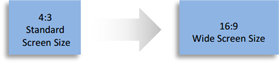
- Some older products that we have may only be in standard format, but they can easily be converted to widescreen.
- To do this, please open the SlideTeam product in Powerpoint, and go to
- Design ( On the top bar) -> Page Setup -> and select "On-screen Show (16:9)” in the drop down for "Slides Sized for".
- The slide or theme will change to widescreen, and all graphics will adjust automatically. You can similarly convert our content to any other desired screen aspect ratio.
Compatible With Google Slides

Get This In WideScreen
You must be logged in to download this presentation.


Do you want to remove this product from your favourites?
PowerPoint presentation slides
This complete deck covers various topics and highlights important concepts. It has PPT slides which cater to your business needs. This complete deck presentation emphasizes Parallel Computing Powerpoint Presentation Slides and has templates with professional background images and relevant content. This deck consists of total of fifty slides. Our designers have created customizable templates, keeping your convenience in mind. You can edit the color, text and font size with ease. Not just this, you can also add or delete the content if needed. Get access to this fully editable complete presentation by clicking the download button below.

People who downloaded this PowerPoint presentation also viewed the following :
Content of this Powerpoint Presentation
Slide 1: This slide introduces Parallel Computing. Begin by Stating Your Company Name.
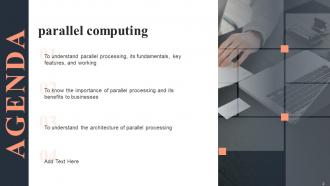
Slide 2: This slide depicts the Agenda of the presentation.
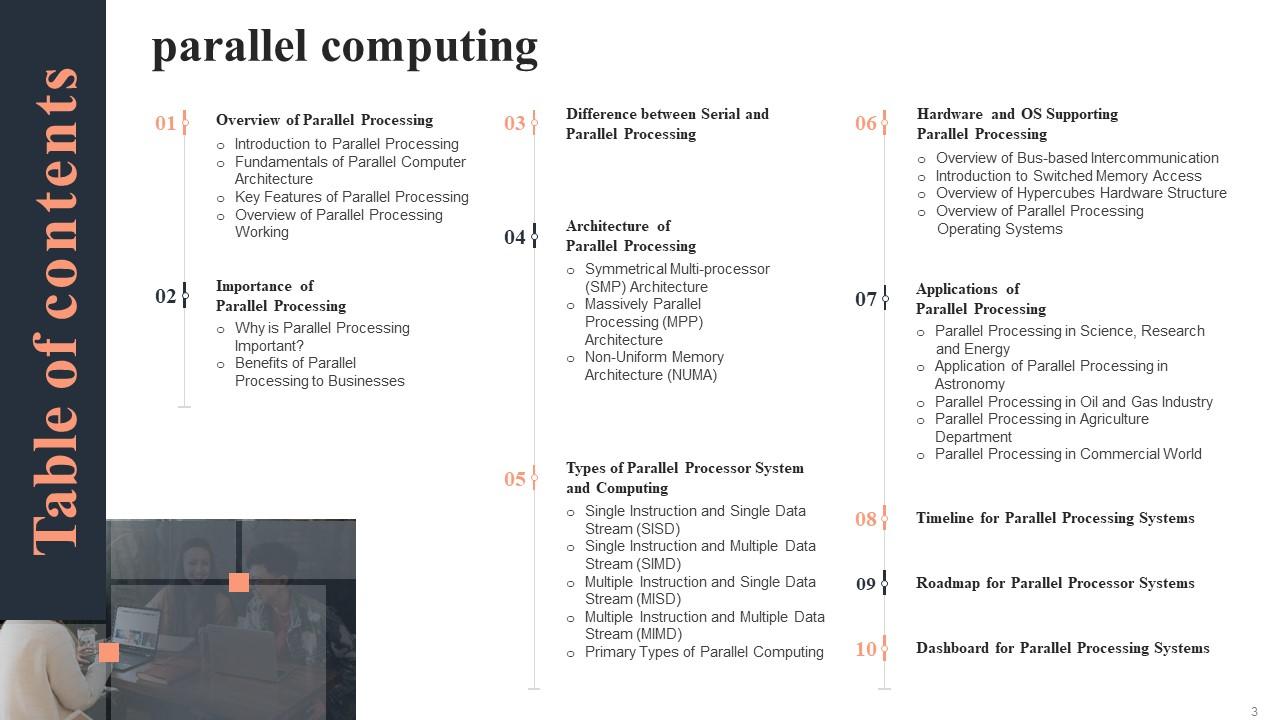
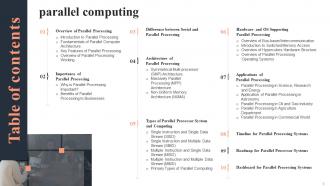
Slide 3: This slide includes the Table Of Contents.
Slide 4: This slide reveals the Title for the Topics to be covered in the next template.
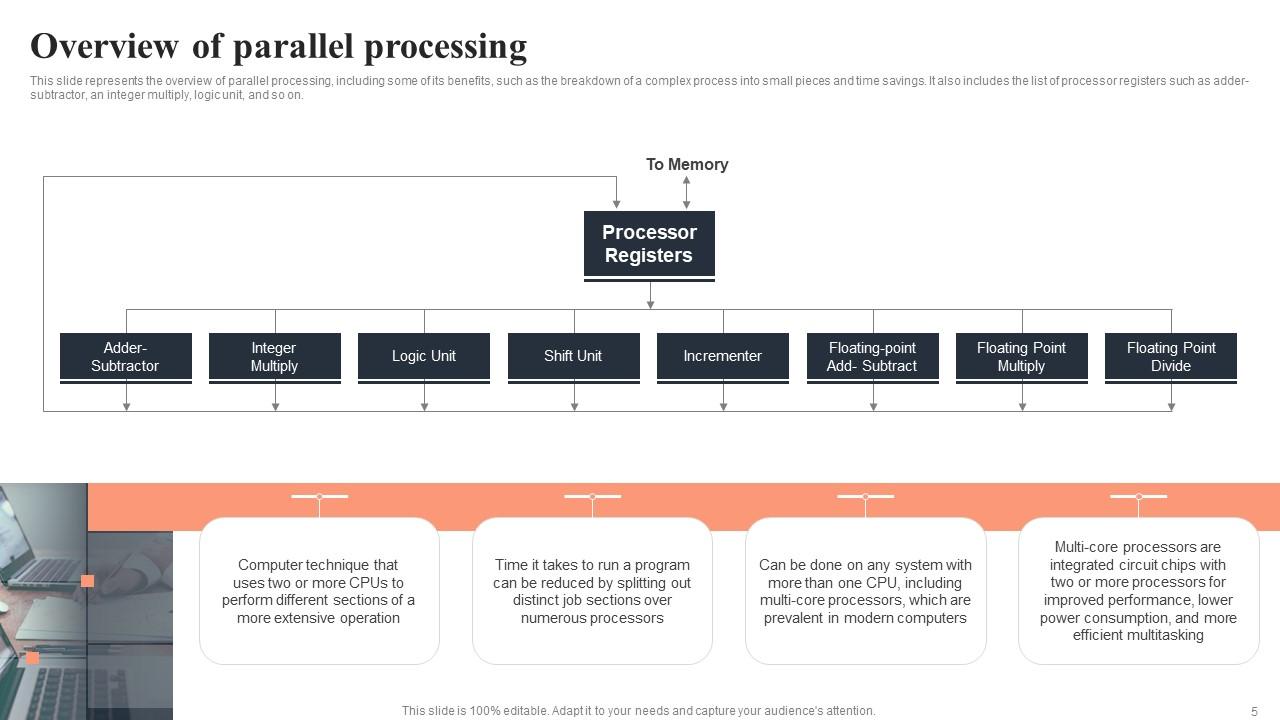
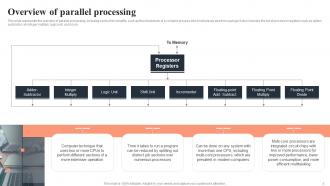
Slide 5: This slide presents the Overview of parallel processing.
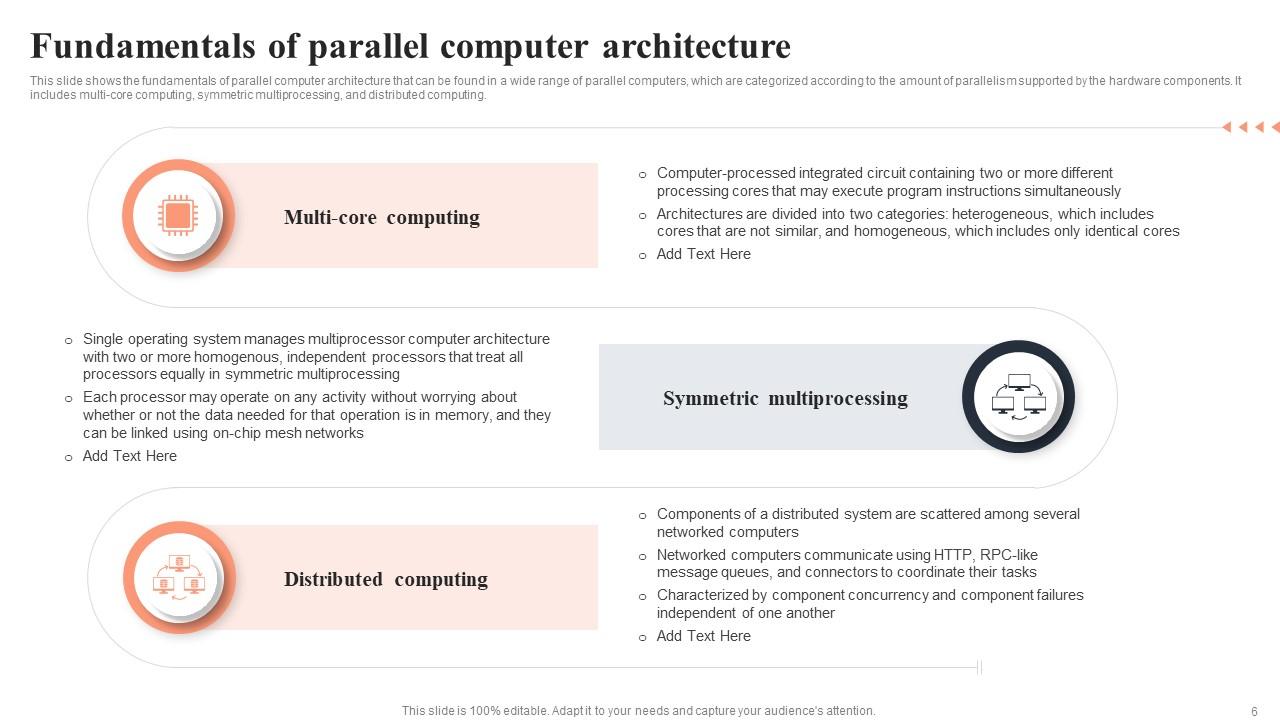
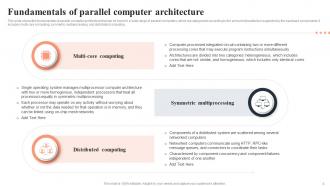
Slide 6: This slide showcases the Fundamentals of parallel computer architecture.
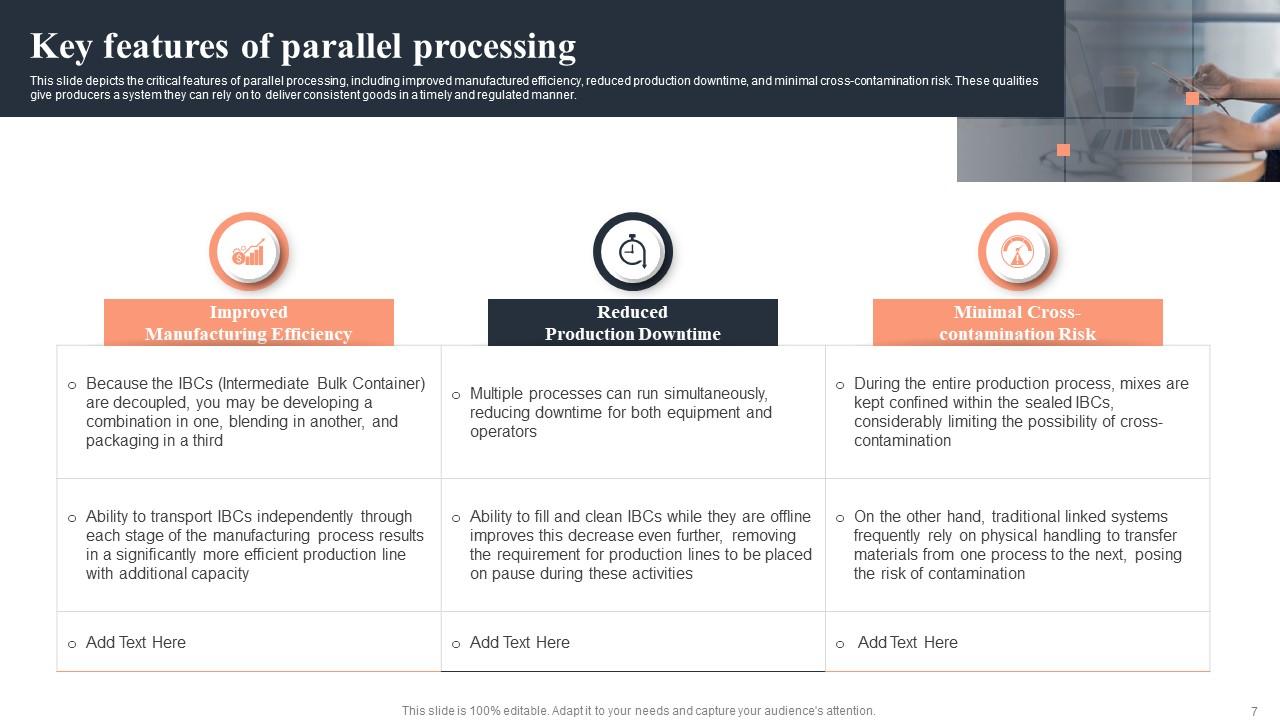
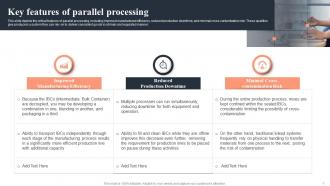
Slide 7: This slide lists the Key features of parallel processing.
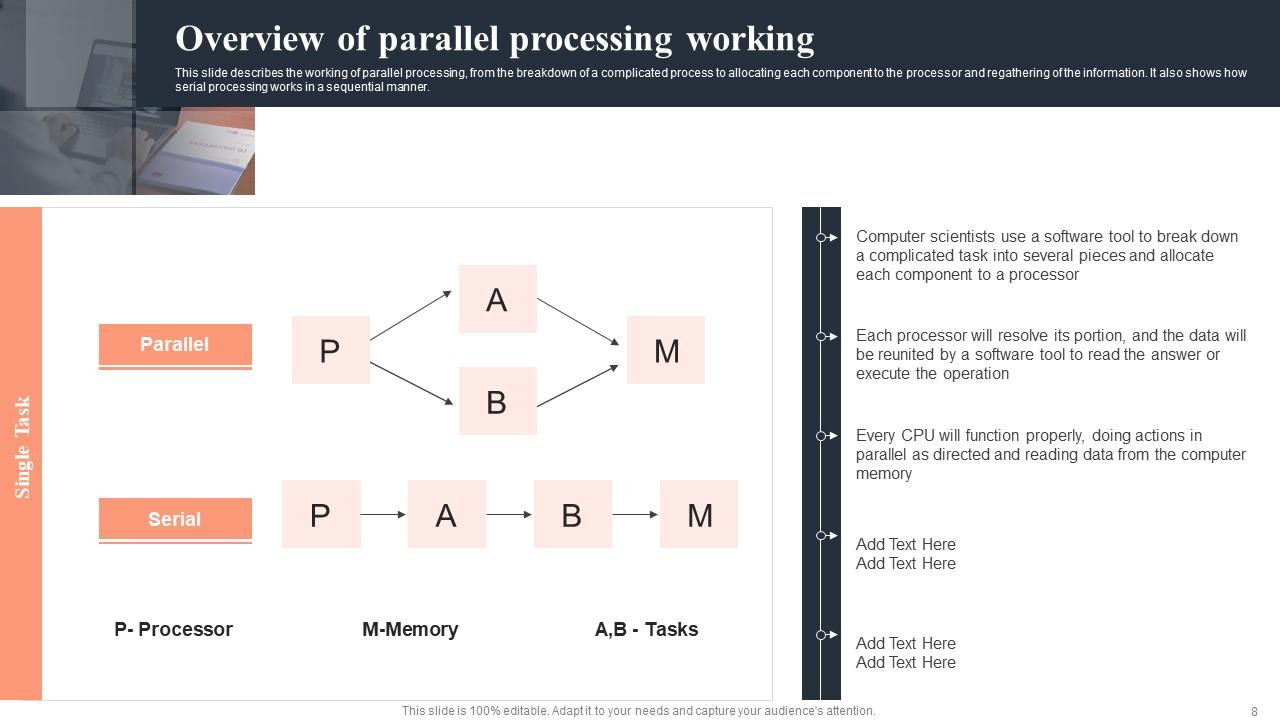
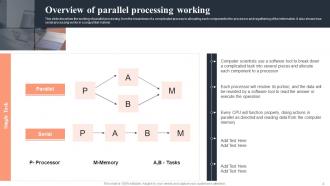
Slide 8: This slide displays the Overview of parallel processing working.
Slide 9: This slide includes the Headings for the Topics to be covered further.
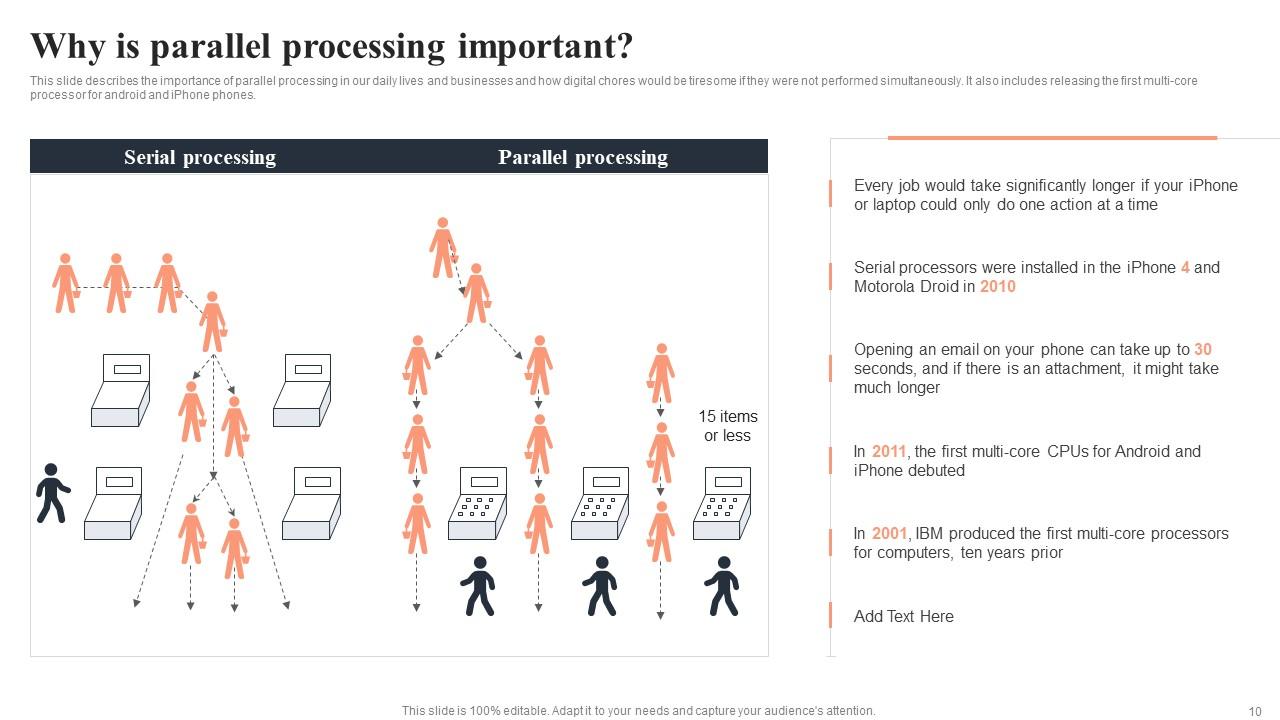
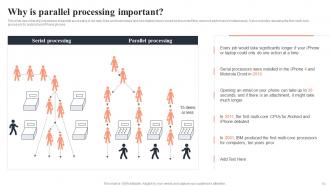
Slide 10: This slide deals with the significance of the Parallel processing.
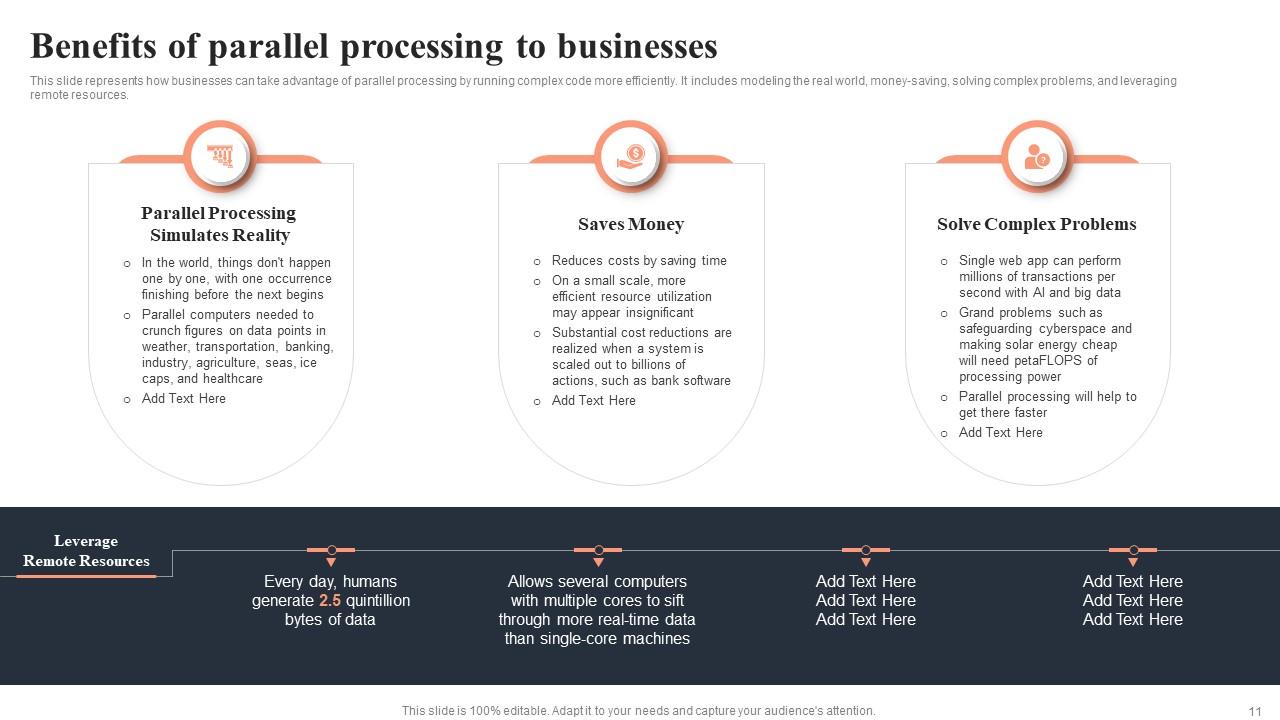
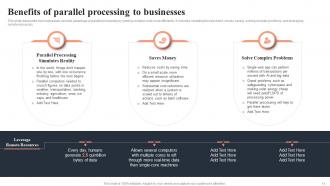
Slide 11: This slide showcases the Benefits of parallel processing to businesses.
Slide 12: This slide incorporates the Headings for the Ideas to be discussed in the following template.
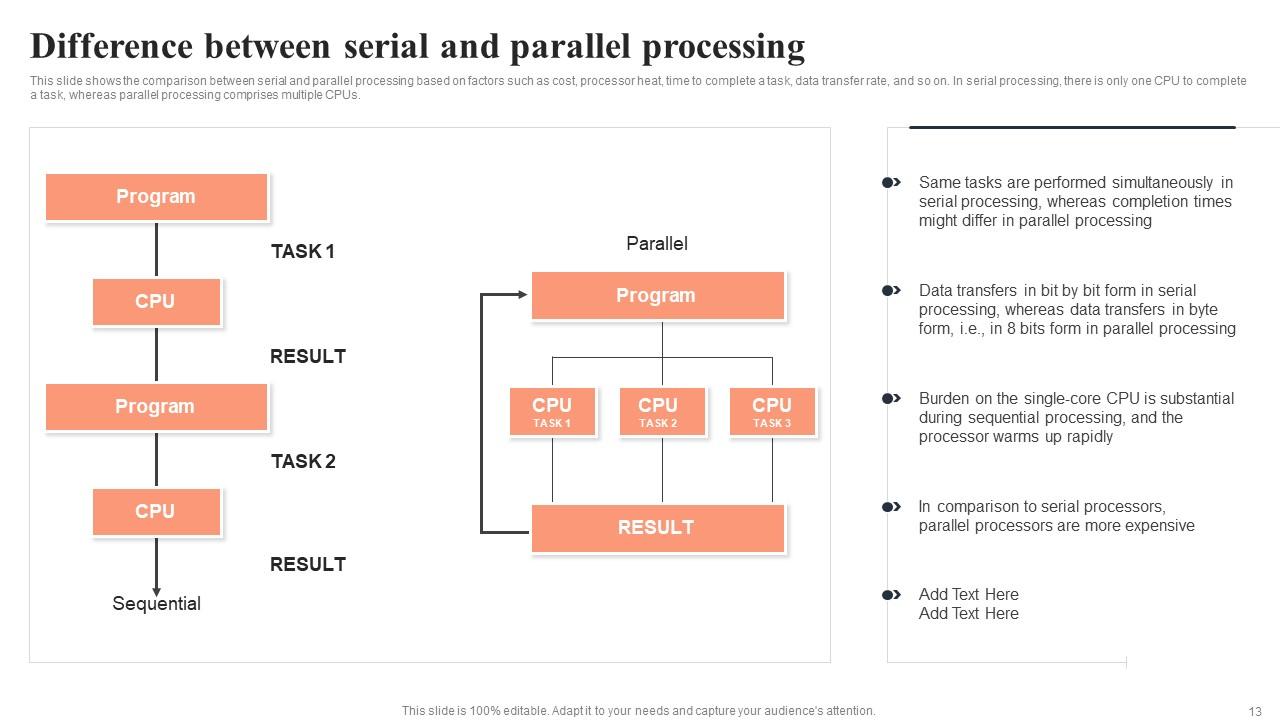
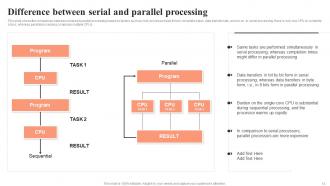
Slide 13: This slide presents the Difference between serial and parallel processing.
Slide 14: This slide deals with the Title for the Contents to be discussed in the forth-coming slide.
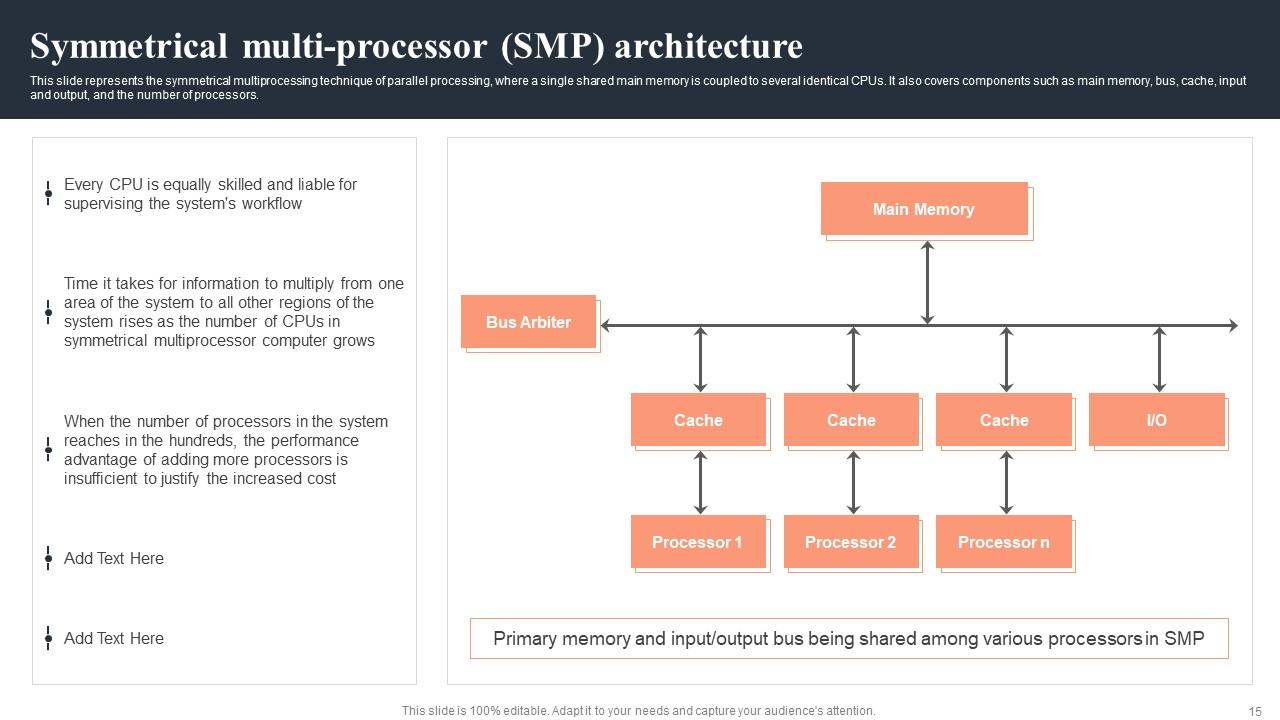
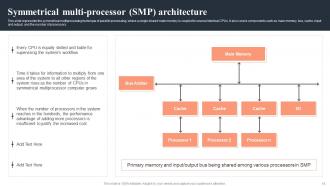
Slide 15: This slide focuses on the Symmetrical multi-processor (SMP) architecture.
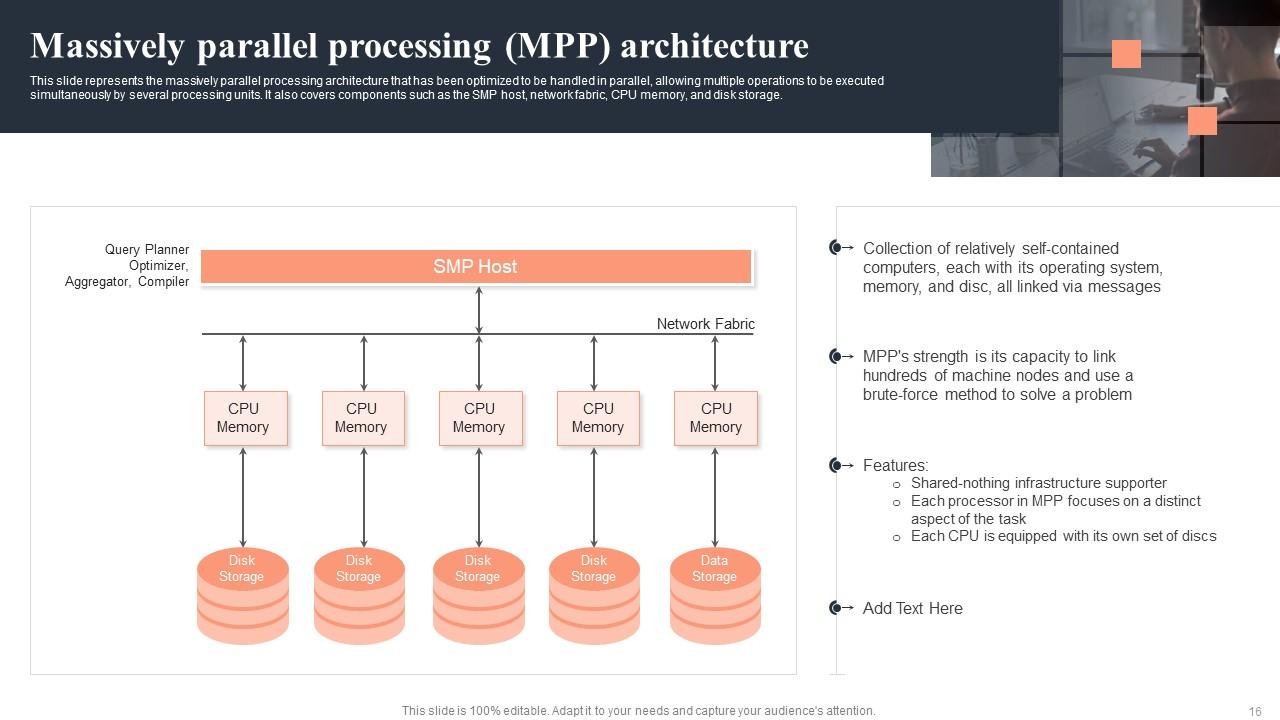
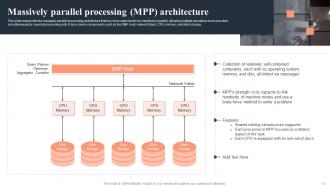
Slide 16: This slide potrays the Massively parallel processing (MPP) architecture
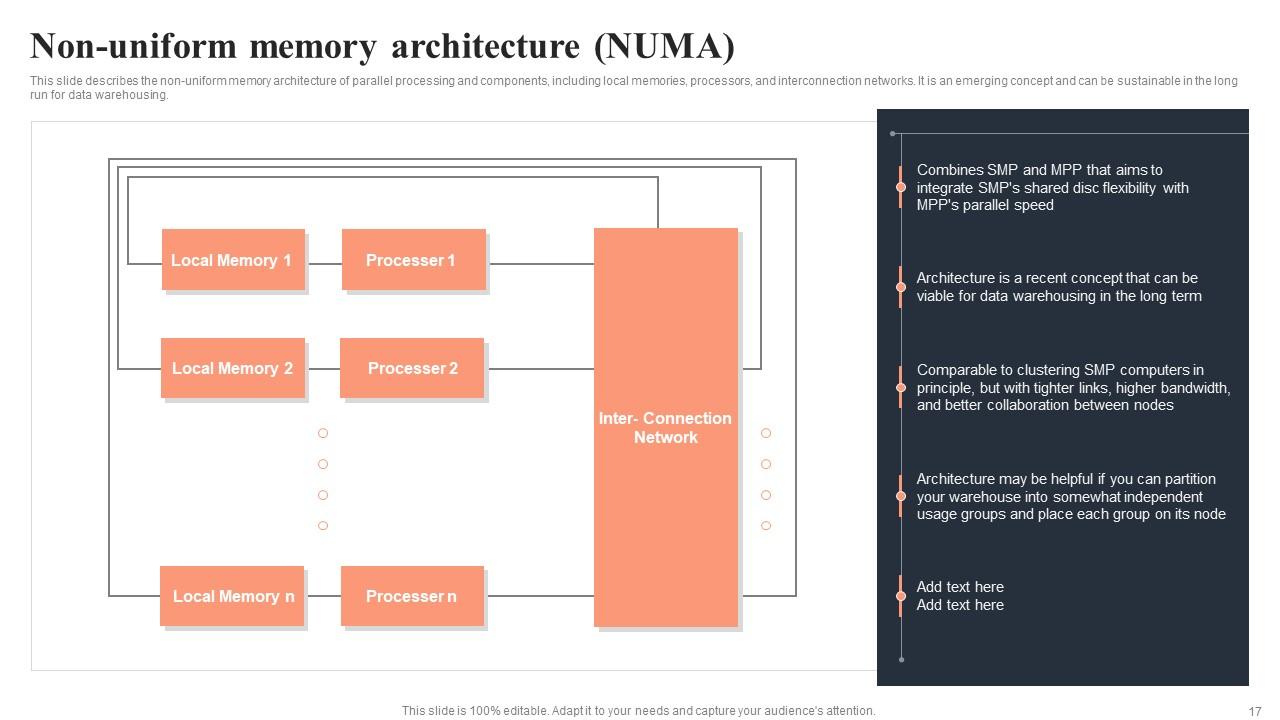
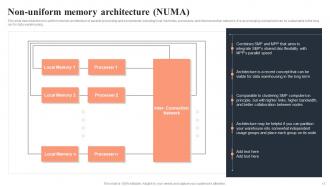
Slide 17: This slide describes the Non-uniform memory architecture(NUMA).
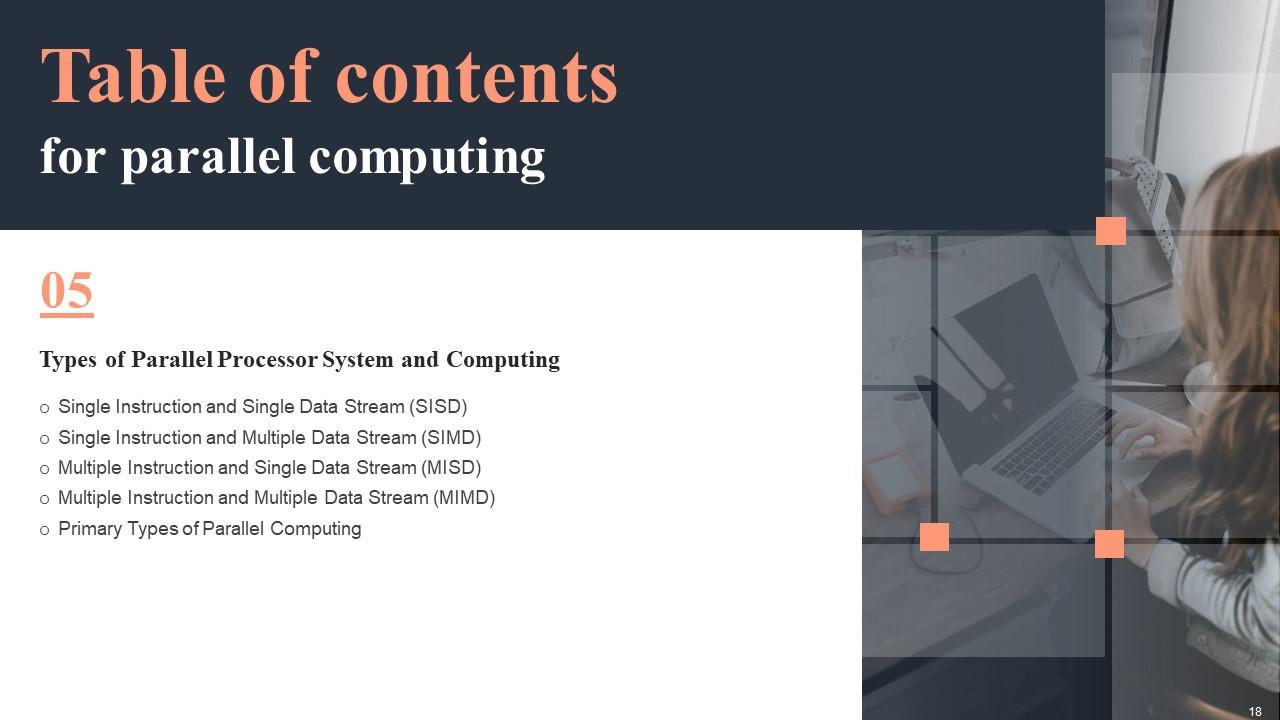
Slide 18: This slide depicts the Heading for the Contents to be covered in th next slide.
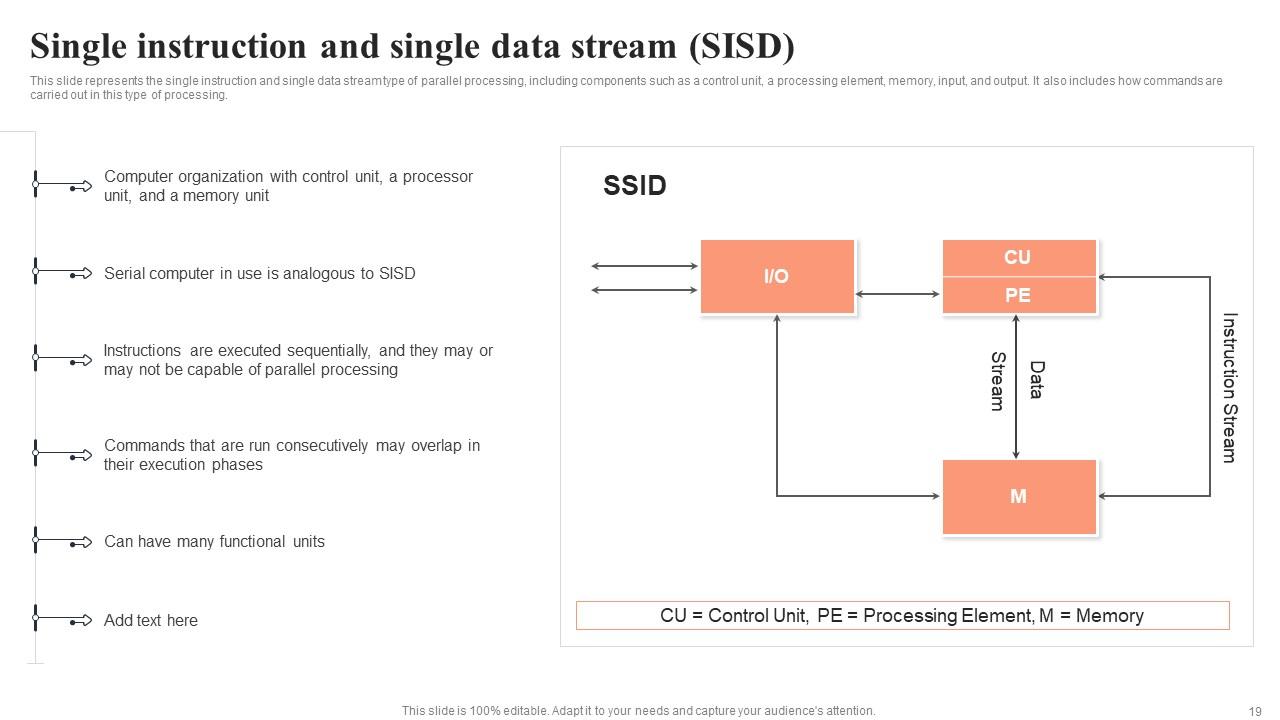
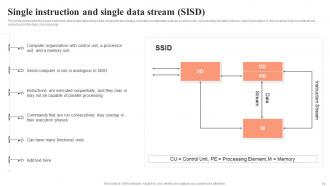
Slide 19: This slide reveals the Single instruction and single data stream (SISD).
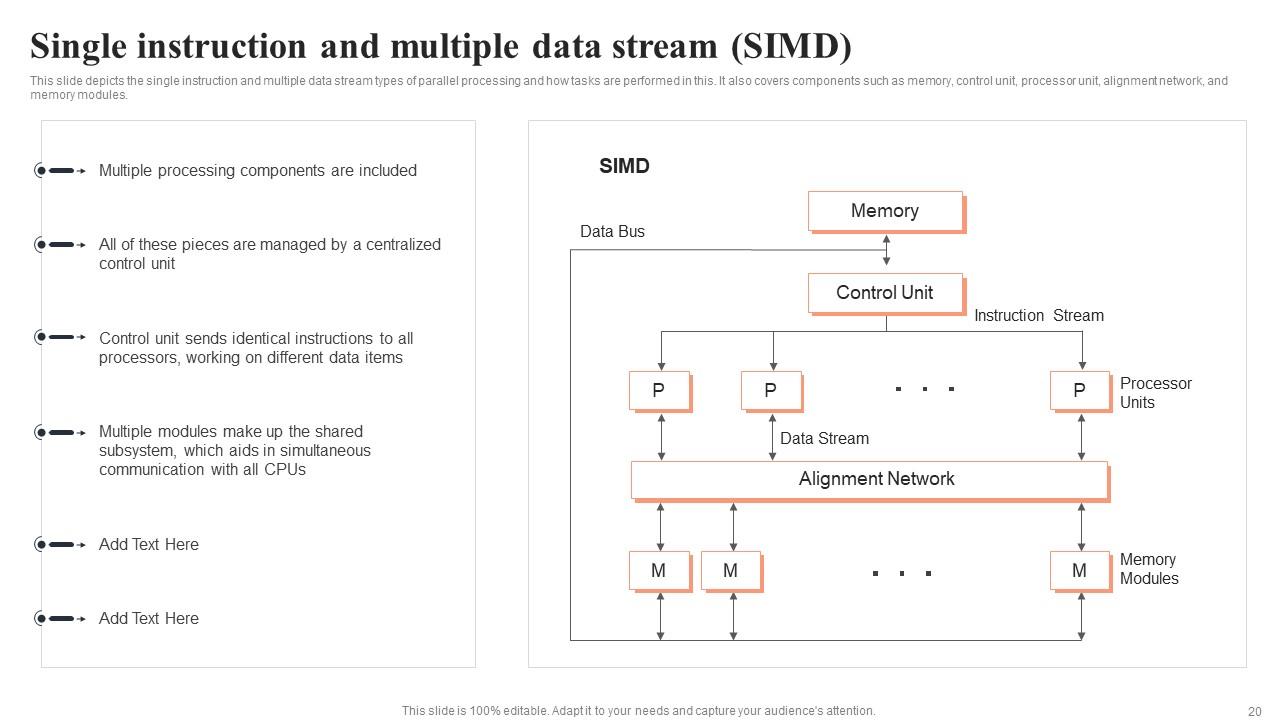
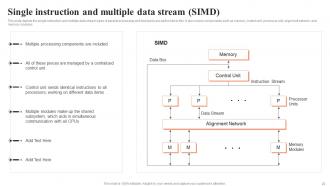
Slide 20: Single instruction and multiple data stream (SIMD).
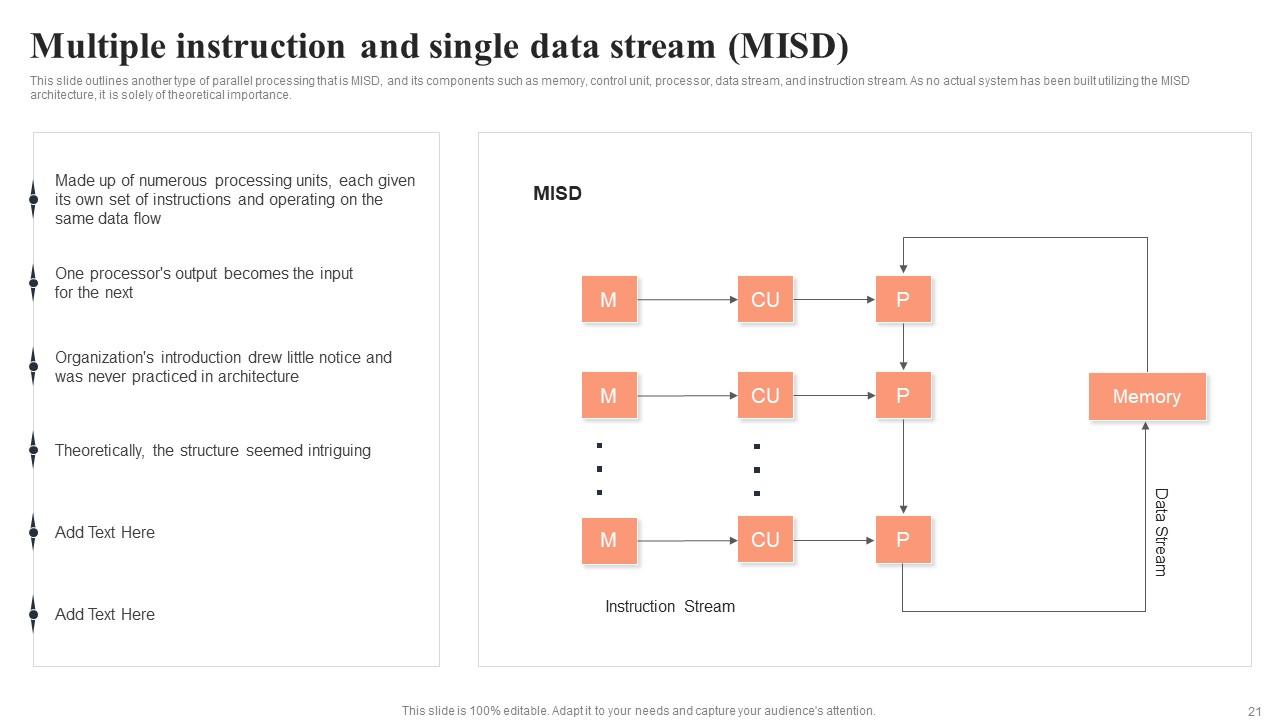
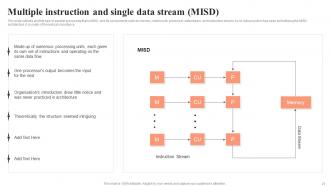
Slide 21: This slide includes the Multiple instruction and single data stream (MISD).
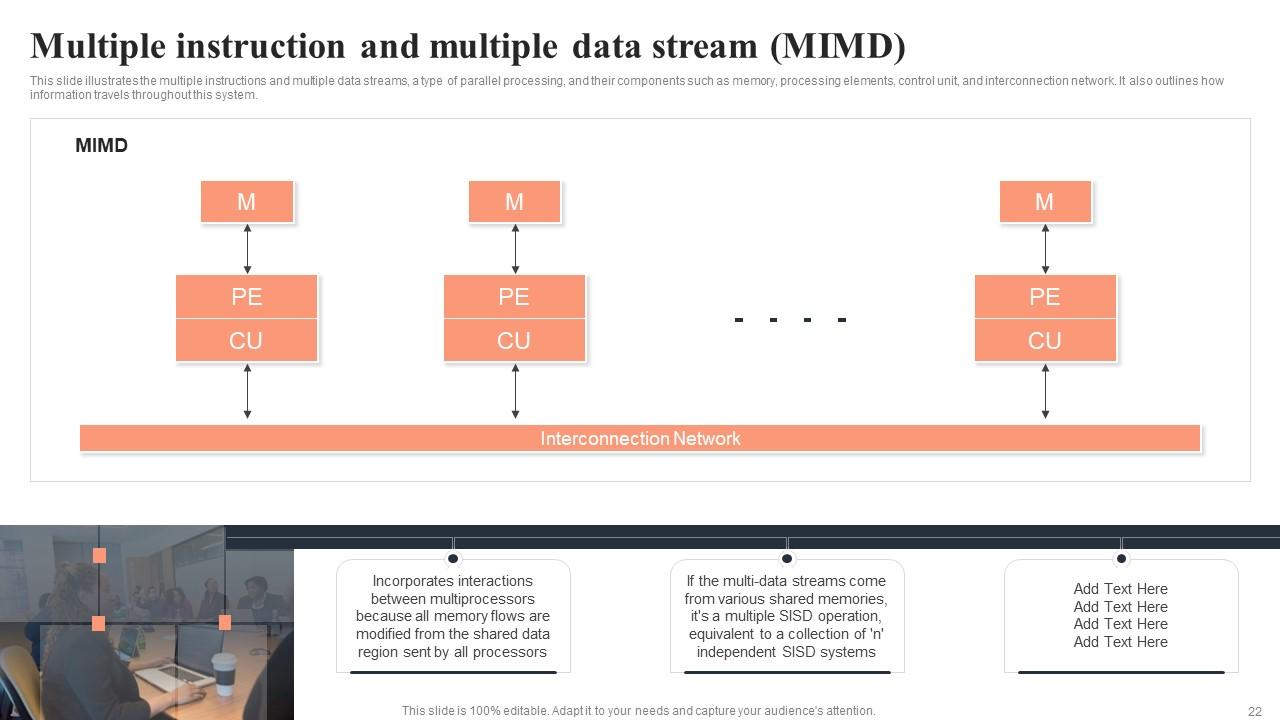
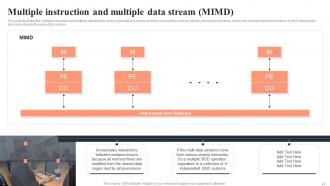
Slide 22: This slide shows the Multiple instruction and multiple data stream (MIMD).
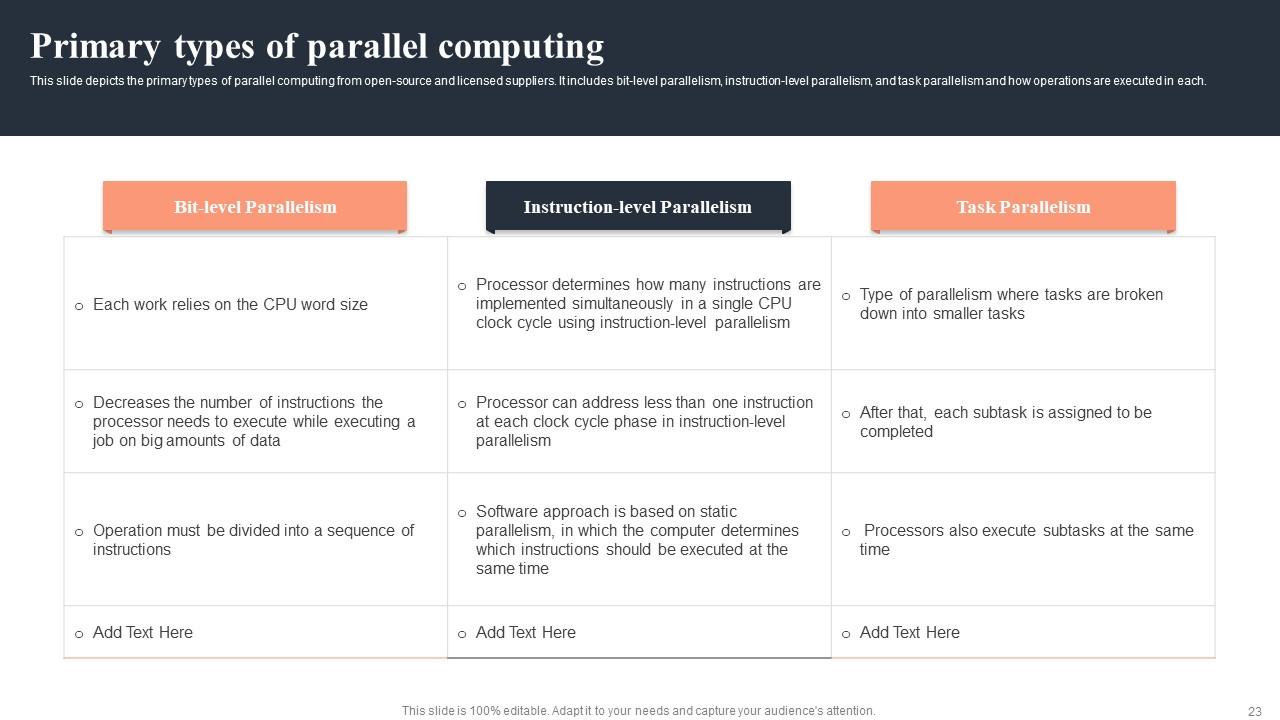
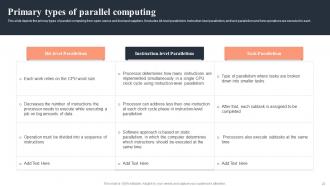
Slide 23: This slide potrays the Primary types of parallel computing.
Slide 24: This slide mentions the Title for the Topics to be covered in the following template.
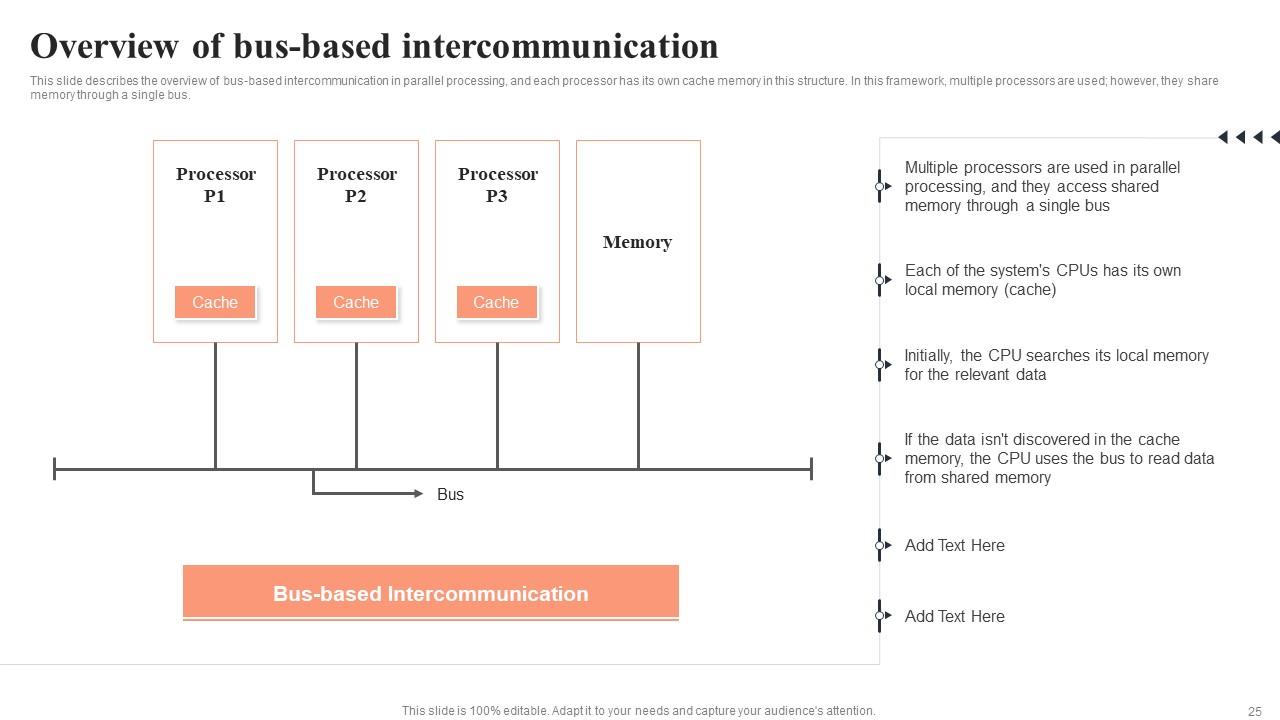
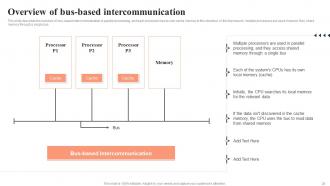
Slide 25: This slide presents the Overview of bus-based intercommunication.
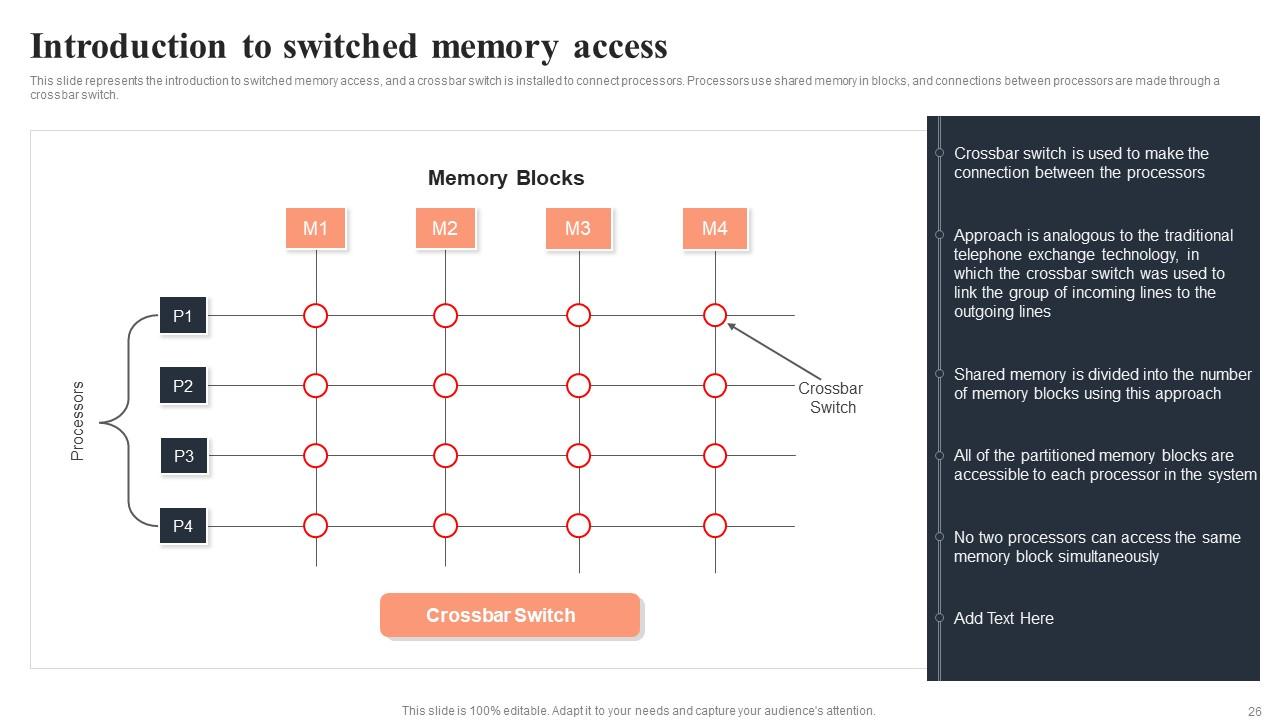
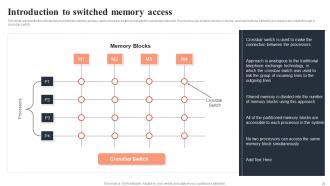
Slide 26: This slide covers the topic of Introduction to switched memory access.
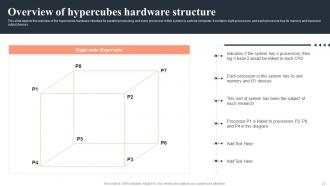
Slide 27: This slide presents the Overview of hypercubes hardware structure.
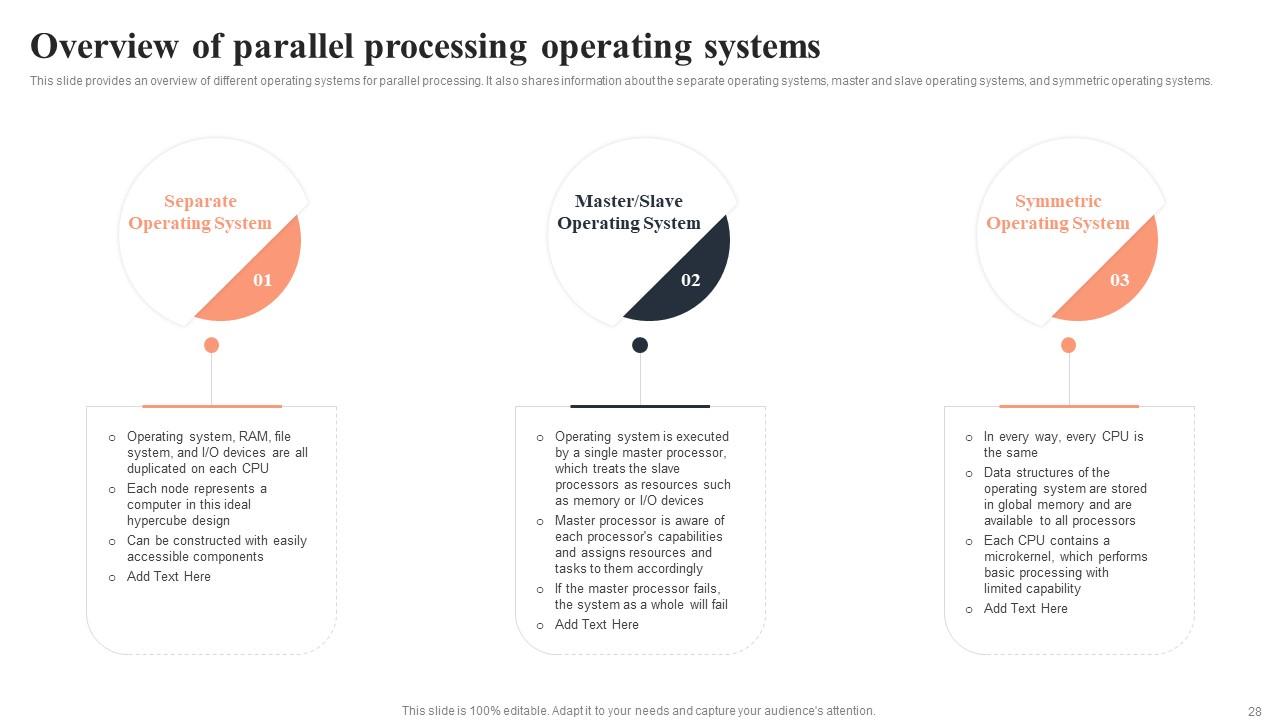
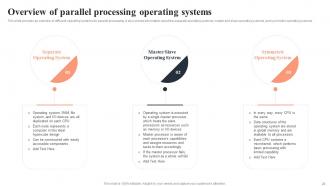
Slide 28: This slide displays the Overview of parallel processing operating systems.
Slide 29: This slide contains the Heading for the Contents to be discussed further.
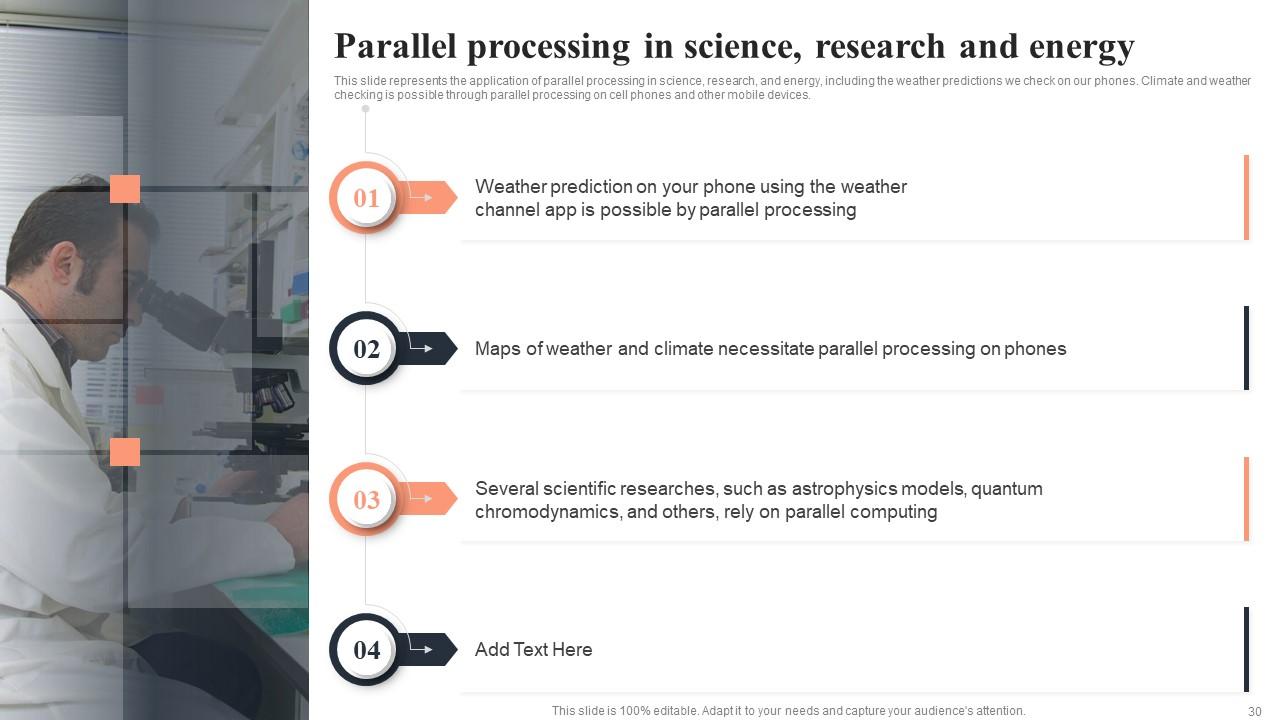
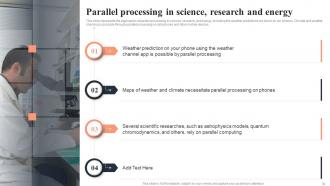
Slide 30: This slide mentions the Parallel processing in science, research and energy.
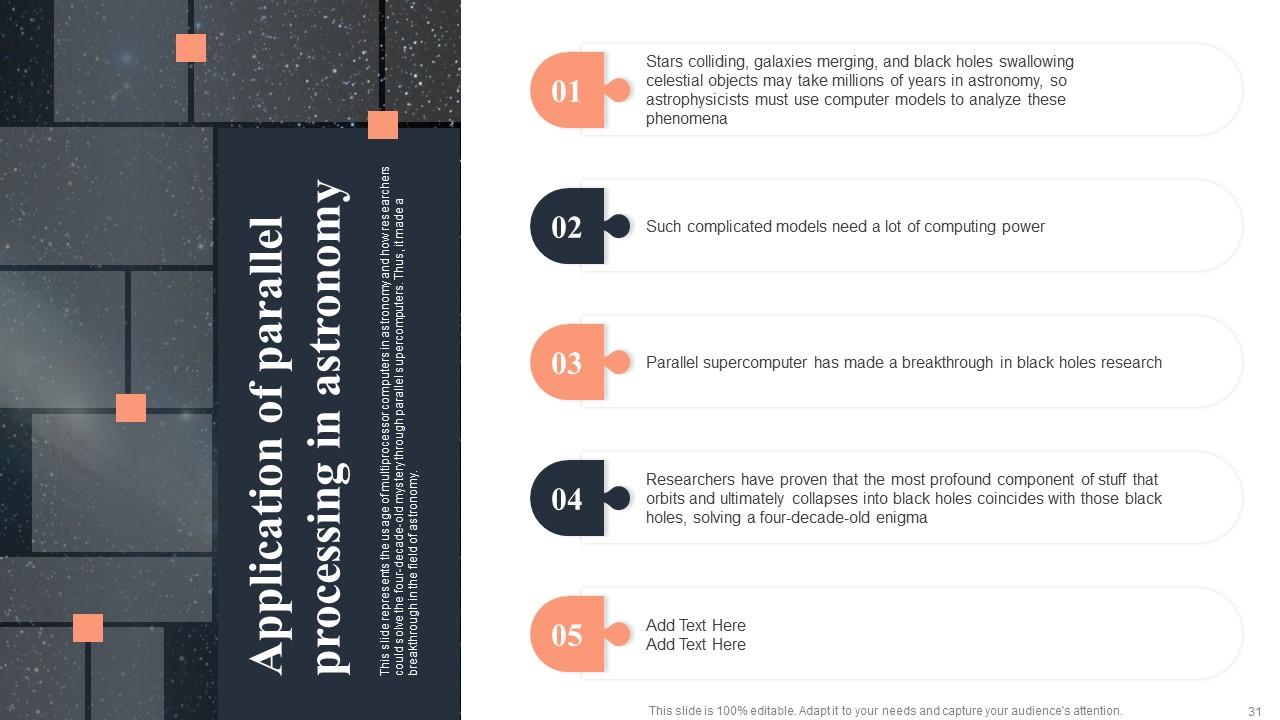
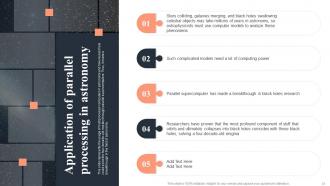
Slide 31: This slide focuses on Application of parallel processing in astronomy.
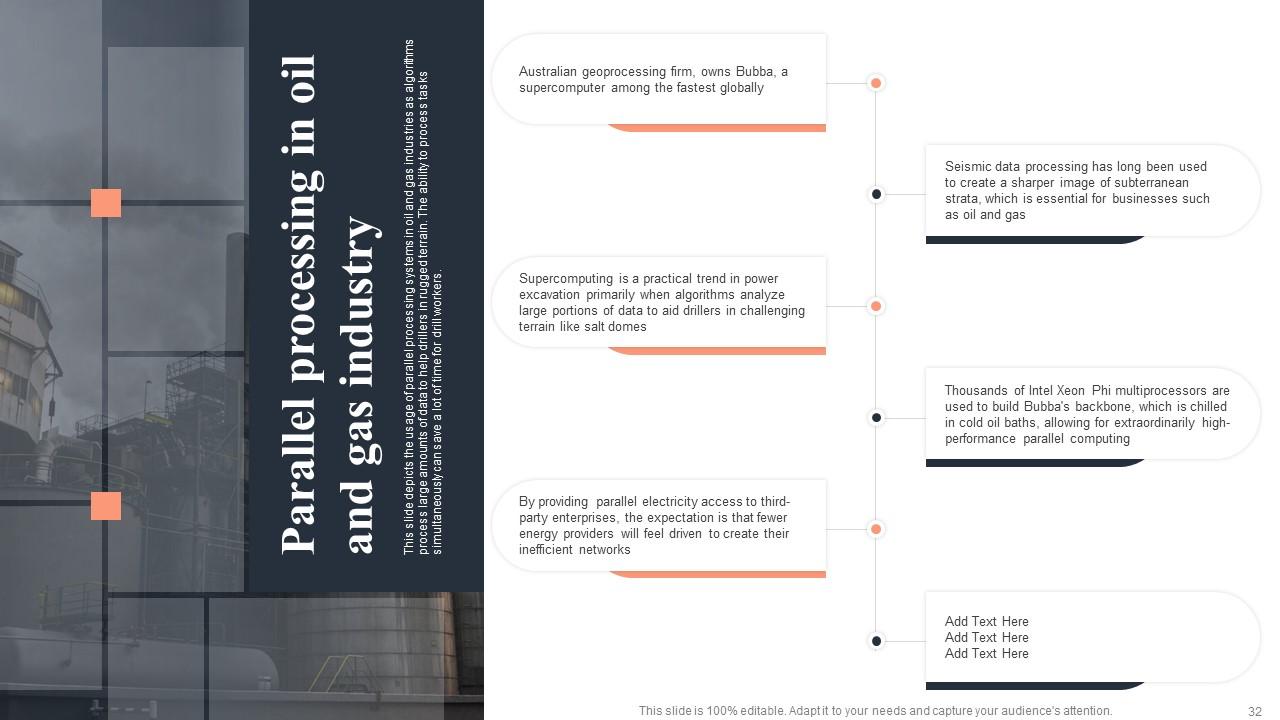
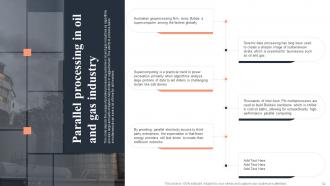
Slide 32: This slide emphasizes on the Parallel processing in oil and gas industry.
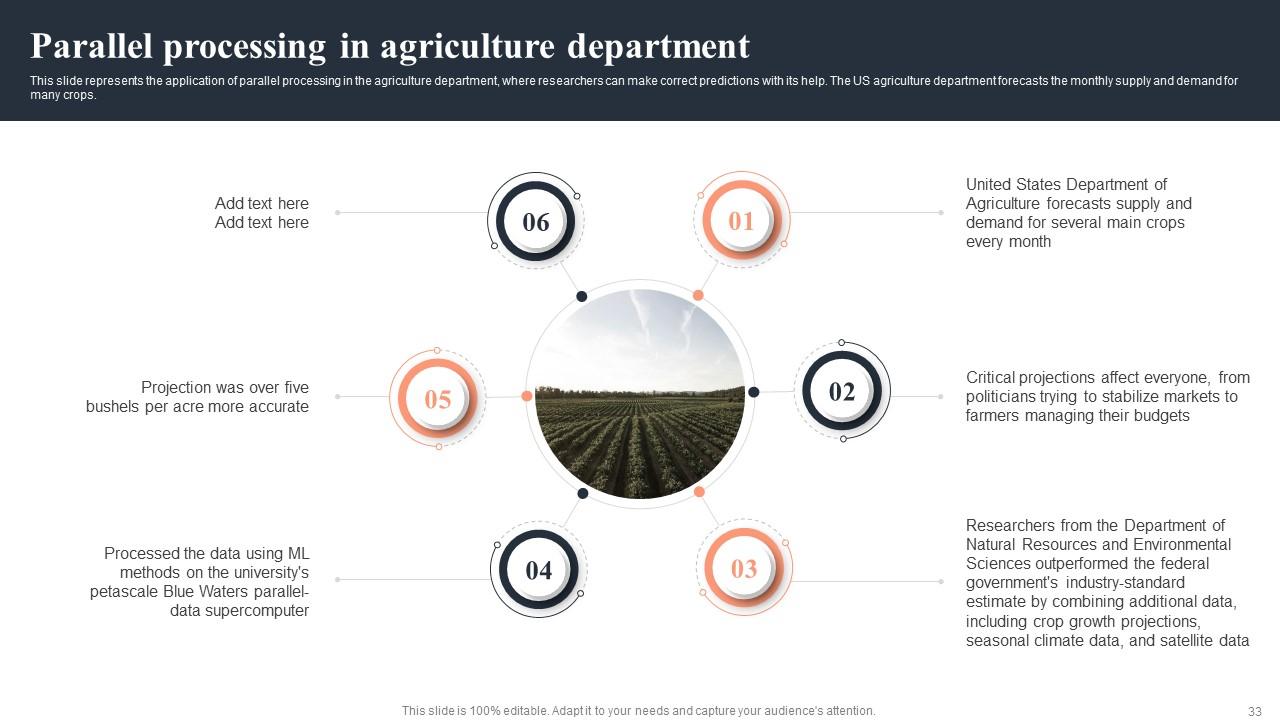
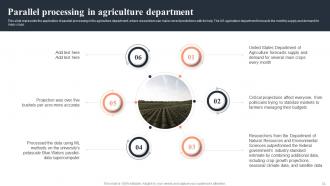
Slide 33: This slide reveals the Parallel processing in agriculture department.
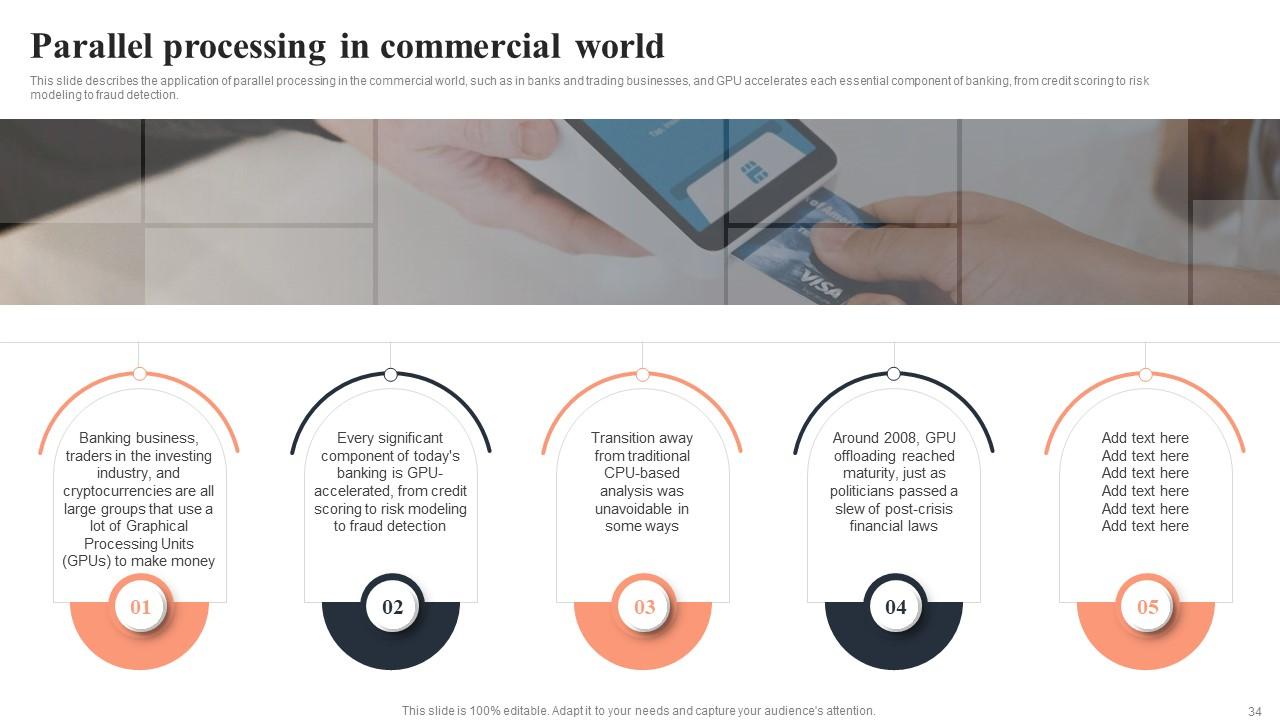
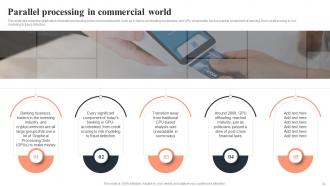
Slide 34: This slide represents the Parallel processing in commercial world.
Slide 35: This slide contains the Heading for the Topics to be covered in the upcoming slide.
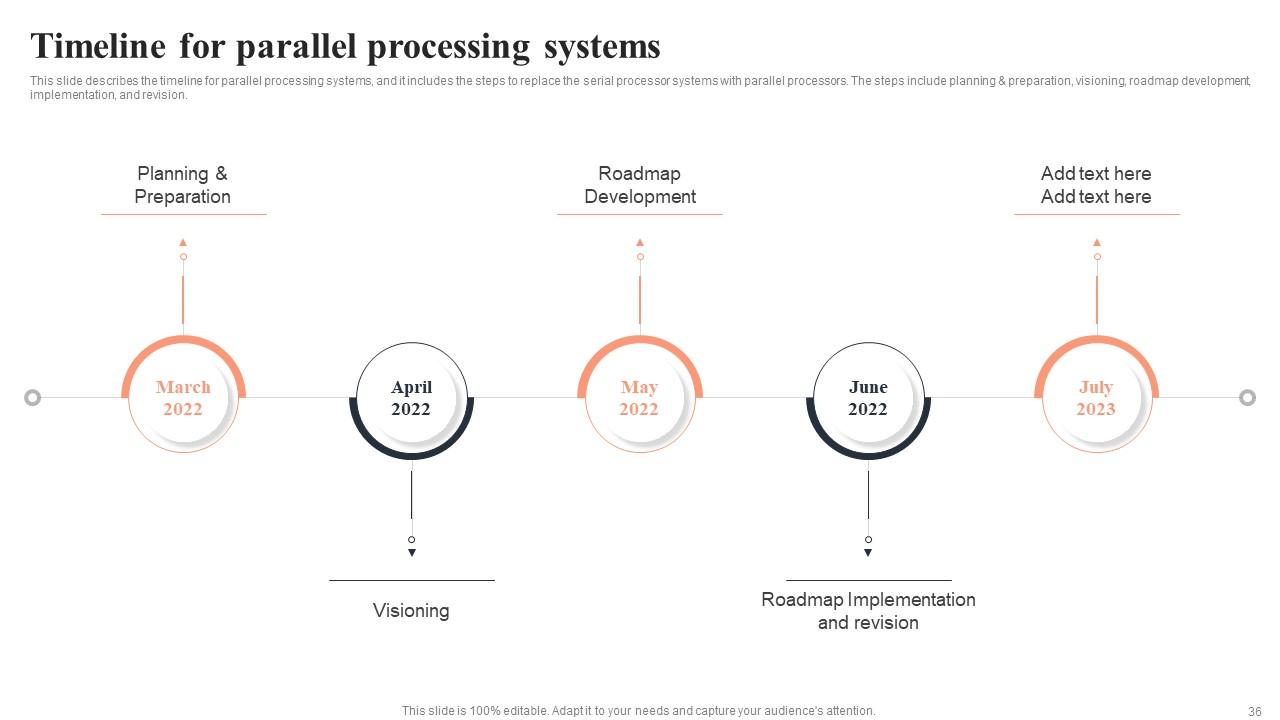
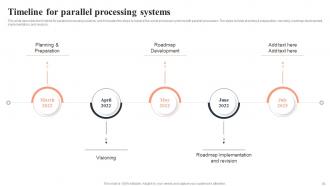
Slide 36: This slide focuses on the Timeline for parallel processing systems.
Slide 37: This slide lists the Heading for the Contents to be discussed in the forth-coming slide.
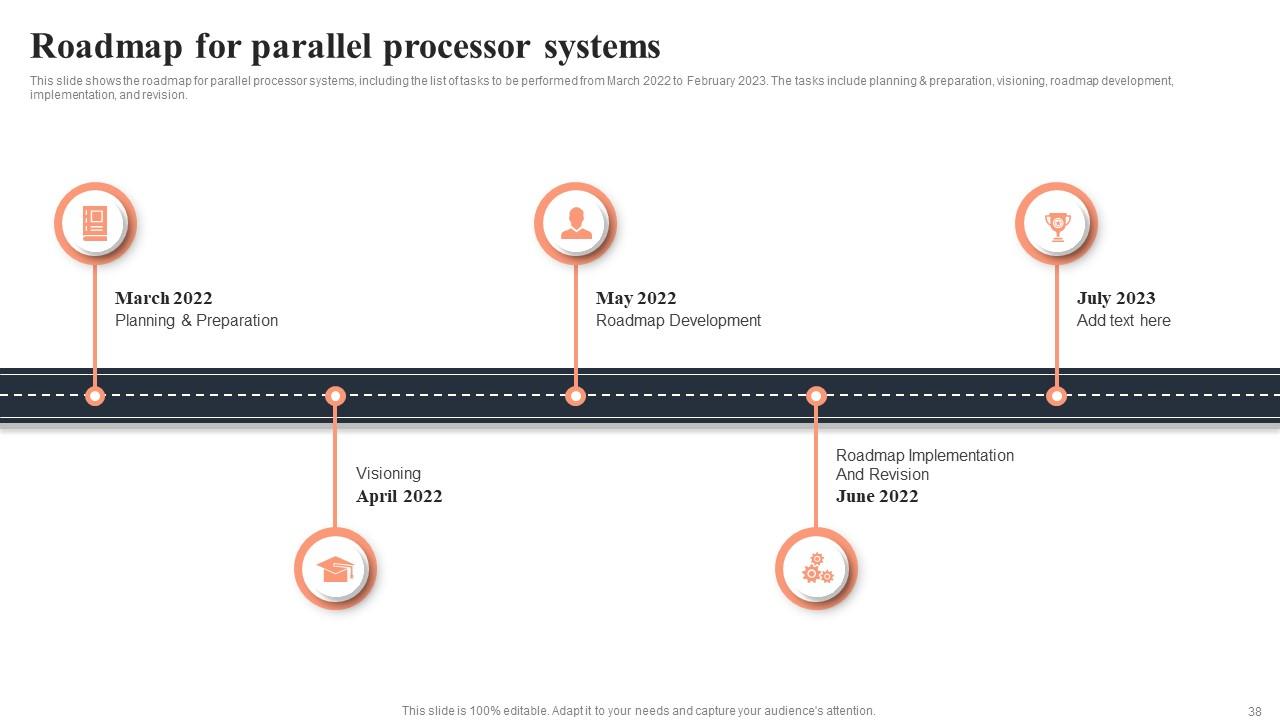
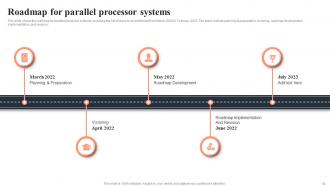
Slide 38: This sldie depicts the Roadmap for parallel processor systems.
Slide 39: This slide exhibits the Title for the Ideas to be discussed further.
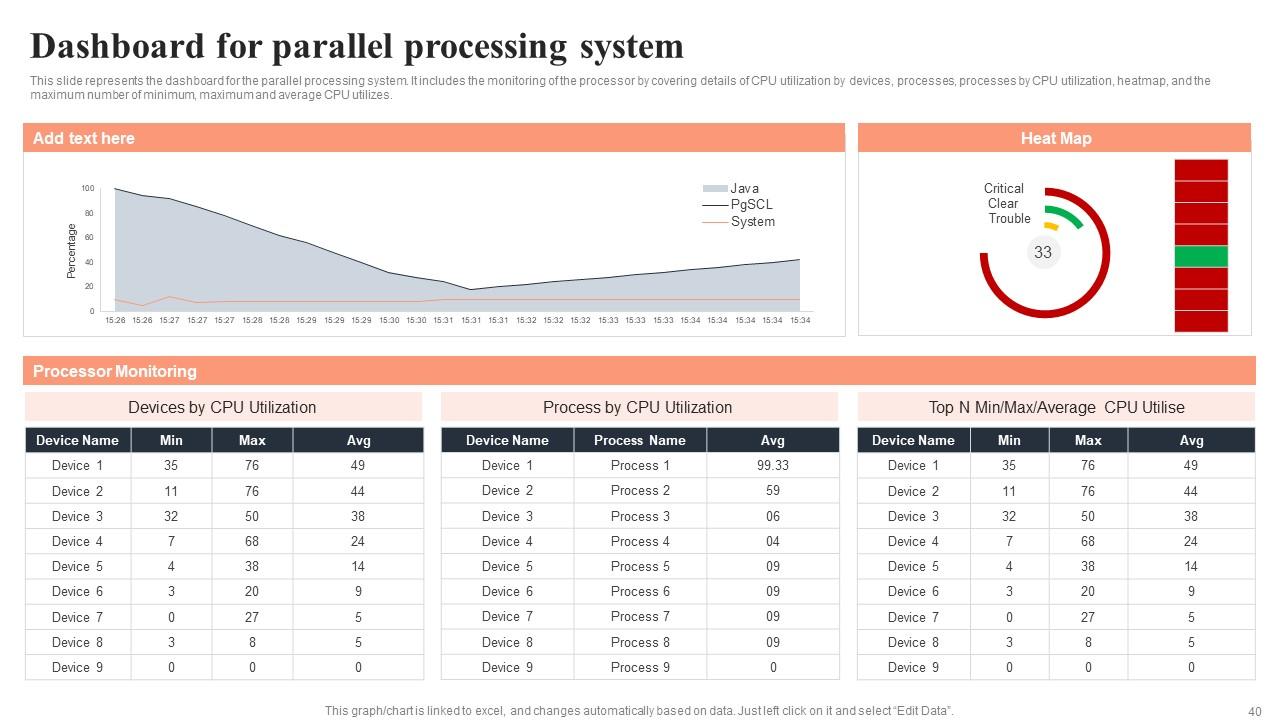
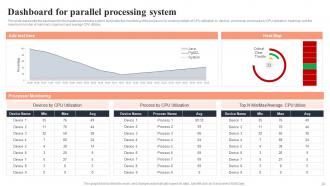
Slide 40: This slide contains the Dashboard for parallel processing system.
Slide 41: This is the Icons slide for parallel processing containing all the Icons used in the plan.
Slide 42: This slide is titled as the Additional slides for providing some additional information.
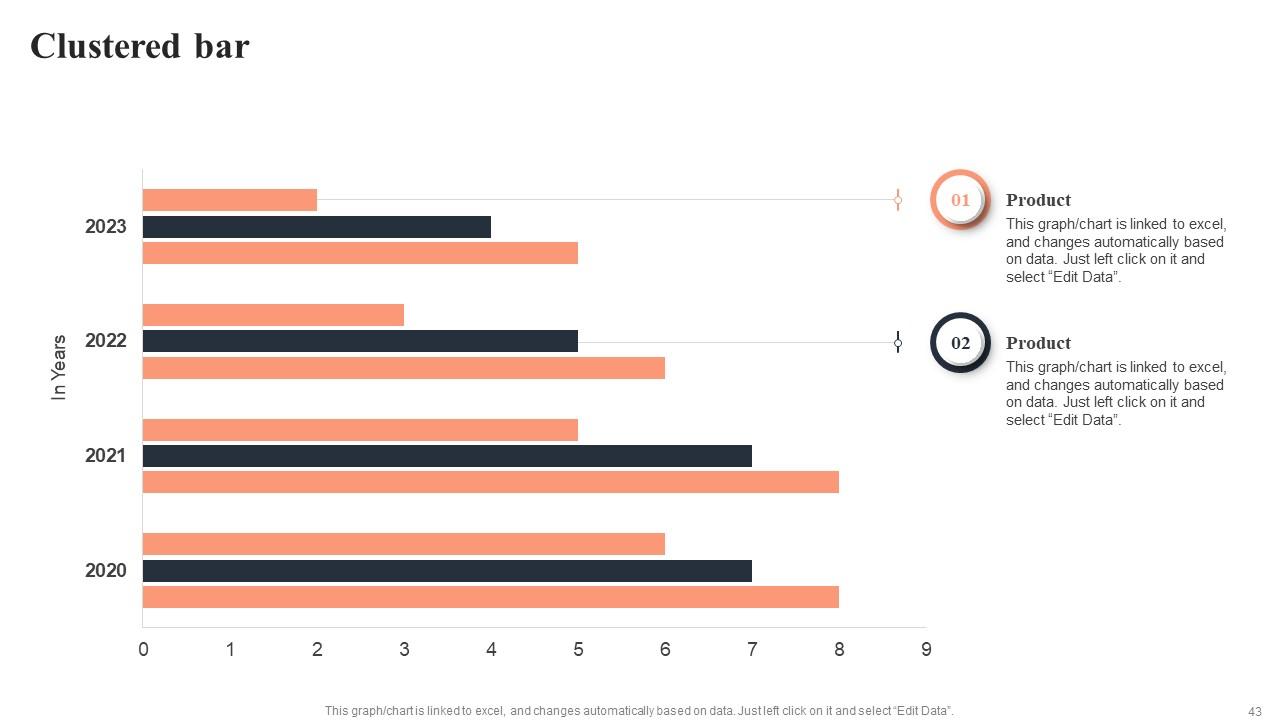
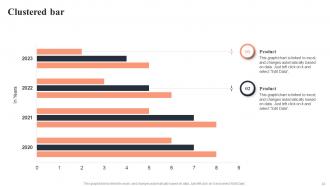
Slide 43: This slide includes the Clustered bar showcasing horizontal Bar-Graphs for comparison.
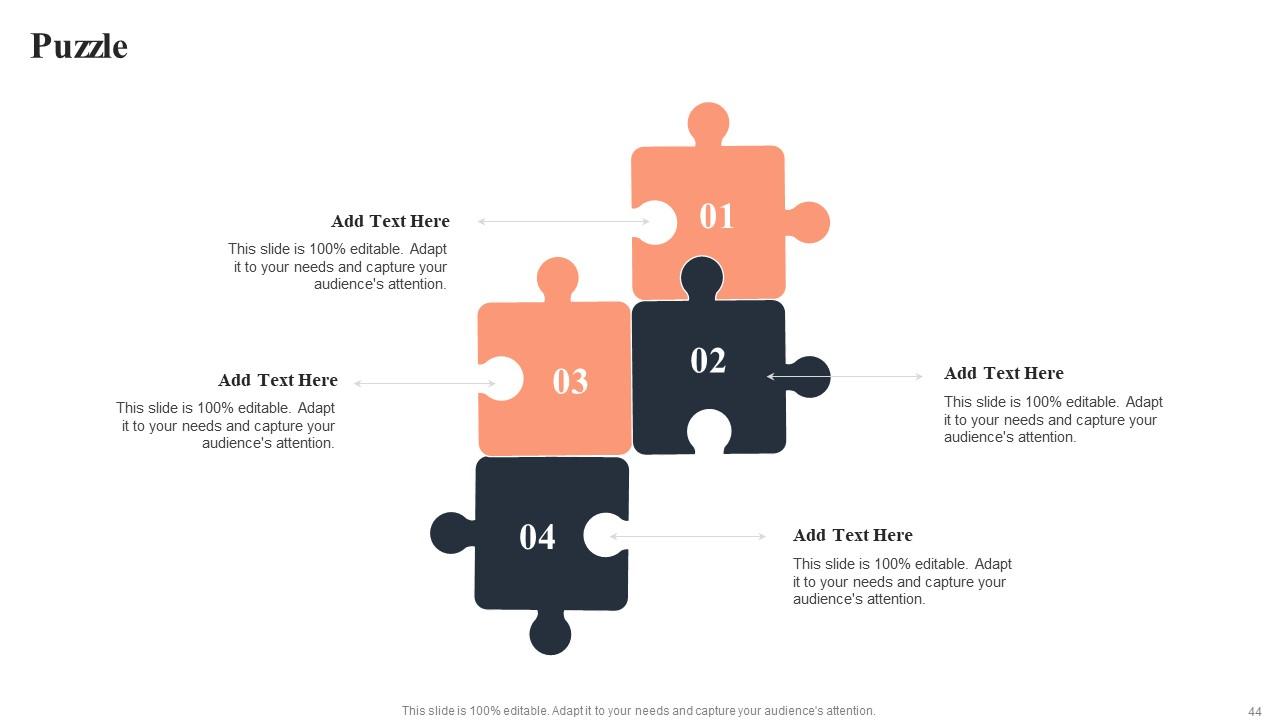
Slide 44: This is the Puzzle slide with related imagery.
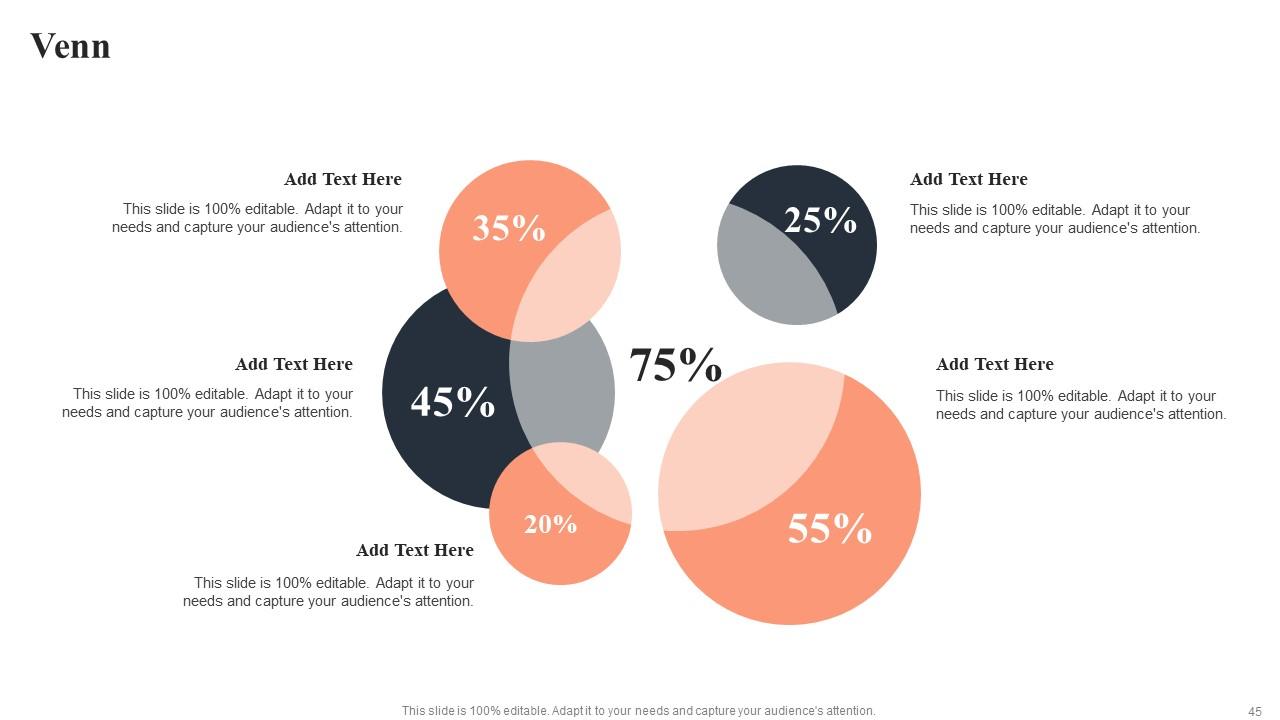
Slide 45: This slide incorporates the Venn Diagram for vital information.
Slide 46: This slide contains the Post it notes for reminders and deadlines.
Slide 47: This is Our target slide. List your Organization's target here.
Slide 48: This is the Puzzle slide with related imagery.
Slide 49: This slide contains a Magnifying glass for revealing some detailed information.
Slide 50: This is the Thank you slide for acknowledgement.
Parallel Computing Powerpoint Presentation Slides with all 55 slides:
Use our Parallel Computing Powerpoint Presentation Slides to effectively help you save your valuable time. They are readymade to fit into any presentation structure.
FAQs
The different hardware architectures used in parallel processing include symmetric multiprocessing (SMP), massively parallel processing (MPP), non-uniform memory architecture (NUMA), and hybrid systems.
The different types of instruction streams used in parallel processing are single instruction and single data stream (SISD), single instruction and multiple data stream (SIMD), multiple instructions and single data stream (MISD), and multiple instructions and multiple data stream (MIMD).
Bus-based intercommunication enables communication between processors and allows them to share data and instructions, making it an important component of parallel processing.
Switched memory access is a type of memory access that allows multiple processors to access a shared memory simultaneously. It is used in parallel processing to improve performance and reduce processing time.
Parallel processing is used in agriculture to analyze large and complex data sets related to crop yields, weather patterns, soil quality, and more, resulting in better decision-making, improved efficiency, and increased productivity.
-
The customer care of SlideTeam is very responsive. I was having a payment issue and they fixed it for me in no time.
-
Incredibly beautiful designs that will help you get noticed! These eye-catching templates are perfect for corporate presentations that can be altered to fit any occasion or taste.
