

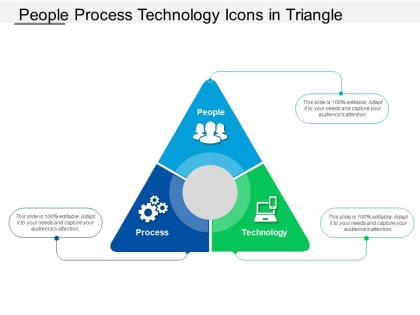
People process technology icons in triangle





Try Before you Buy Download Free Sample Product
 Impress Your
 Audience
 100%
100% Editable
 Save Hours
 of Time


Celebrate your accomplishment with our People Process Technology Icons In Triangle. Make the event a fun-filled one.
People who downloaded this PowerPoint presentation also viewed the following :
People process technology icons in triangle with all 5 slides:
Establish a good impression on the audience with our People Process Technology Icons In Triangle. Be able to ingratiate yourself.
FAQs for People process technology
So there's this three-part thing that really works - you've got your actual content, the connection with whoever you're talking to, and then how you're delivering it all. Most people just obsess over what they're saying and completely ignore the other stuff, which is why they bomb. Short sentences help sometimes. You want solid content obviously, but you also need to vibe with your audience and pick the right way to get your point across. Before your next big conversation, just quickly check - do I have all three covered? Trust me, it makes a huge difference once you start thinking about it this way.
So triadic integration is basically when you stop doing that annoying back-and-forth thing in meetings and add a third perspective to break the tie. Instead of just "A vs B" forever, you're looking at stakeholder needs, technical stuff, and business goals all at once. Game changer, honestly. Most teams treat these like they're fighting each other when they don't have to be. Next time you've got a big decision, try mapping out those three angles first. I bet you'll catch things you would've totally missed - plus it beats sitting through another hour-long meeting that goes nowhere.
So basically, good tech is what makes triadic integration actually work instead of being a total headache. Map out what tools you're already using first - then figure out where the disconnects are happening between your three groups. Collaborative platforms and shared databases are your friends here. Real-time communication tools too. Honestly, I'd rather have everyone looking at the same info in one digital workspace than deal with those never-ending email threads we all hate. Just make sure whatever you pick actually talks to your other systems. Otherwise you're just creating more problems for yourself.
Oh totally! So instead of that whole win/lose thing teams get trapped in, triadic integration helps you find a third path that actually works for everyone. I've seen this work so well - you're basically translating between people who think they're speaking English but really aren't, you know? The trick is getting them to talk about what they actually need, not just what they think they want. Next time you're stuck mediating, try asking "What would success look like for both of you?" It shifts the whole conversation.
Oh man, you're gonna hate the politics more than anything else. Getting stakeholders on the same page? Good luck with that mess. Data formats will make you want to scream - everyone's got their own way of doing things and none of it matches up. The technical stuff is annoying but doable, it's really the timeline chaos that'll get you. One team's moving at lightning speed while another's stuck in meetings for weeks. Seriously though, start small with a pilot project. Test everything out first and get people excited about it before you go big.
Figure out your three main groups first - customers, employees, shareholders, whatever makes sense for your situation. Mine were totally different than what I expected when I started this. Get them talking to each other regularly, not just separately. Cross-functional teams work well. Create shared goals that everyone actually cares about, then make sure your decision process includes all three voices. The key thing? Someone needs to own this balance or it'll just die in a few months like most initiatives do. Trust me on that one - I've seen it happen way too often.
Honestly, you need three things nailed down. First - everyone's gotta know their exact role and what they're responsible for. No vague BS. Power balance is huge too because if one person steamrolls the others, it'll blow up fast (seen it happen). Regular three-way check-ins are critical - not just side conversations that leave someone in the dark. Oh, and definitely sketch out who does what and how you'll all communicate before jumping in. That upfront planning saves so much drama later. Trust me on this one.
So triadic integration creates these three-way accountability loops between teams, leadership, and processes. Pretty clever actually. Instead of everything flowing top-down, decisions start moving in multiple directions through interconnected webs. Teams collaborate way more naturally since they're all part of these overlapping triangular relationships. Your culture gets more adaptive too - no single failure point can tank whole initiatives. Oh, and don't try to implement it everywhere at once. Start with one triad and let those collaborative patterns spread organically. Way less painful that way.
So basically, you want to connect three things: the student, what you're teaching, and where/how they'll actually use it. Instead of just lecturing at them (ugh, boring), make it like a three-way conversation. Students should link new stuff to what they already know while thinking about real applications. I'd start by mapping out those three elements for your lesson - oh, and see how they build off each other. Way more engaging than the old-school approach. Think of it as creating relationships between concepts rather than just dumping information on them.
So I'd start with baseline metrics for each channel first - that makes comparing way easier later. Track engagement rates across all three touchpoints, plus conversion lift versus your single-channel stuff. Cross-channel attribution scores matter too. Customer journey completion rates are probably the biggest indicator though - shows if people actually flow between channels without getting stuck somewhere. Message consistency and response timing between channels help round things out. Oh, and don't double-count conversions - that'll mess up your data fast. The whole point is seeing if integration actually beats doing channels separately.
So triadic integration basically makes your team juggle three things at once - technical stuff, what customers actually want, and business reality. Sounds messy, right? But here's the thing: when you're forced to find solutions that work for ALL three, you get way more creative. No more "wait, we can't afford to build this" surprises halfway through. It's like doing a puzzle where every piece has to connect perfectly. Definitely harder than just focusing on one area, but the results are so much better. Next brainstorm, grab someone from each department and see what happens.
Yeah, manufacturing and logistics see huge wins with triadic integration - basically any industry with messy supplier chains. Automotive's the classic example, like how car companies coordinate with their main suppliers AND those suppliers' vendors. Healthcare/pharma does well too. The pattern I've noticed? Industries where one screw-up creates a domino effect tend to benefit most. Makes sense when you think about it. I'd honestly just start small - pick your most important supplier relationship and see if looping in their key vendor helps everyone stay on the same page.
Honestly, you'll need to get good at systems thinking and active listening first. Conflict resolution skills are huge too. The hardest part? Holding multiple perspectives at once - I'm still working on that one myself. Group facilitation training helps since you're basically managing three-way conversations. Emotional intelligence matters more than you'd think. You have to read the room fast when things get tense. I'd start by watching experienced people do it, then practice with easier situations. Don't jump straight into high-pressure stuff or you'll probably crash and burn.
Yeah totally doable! Honestly might be easier since you control your space better. Map out three zones: solo focus work, team collab, and reflection time. Video calls are actually perfect for the collaborative stuff - sometimes better than cramped conference rooms tbh. For integration work, shared docs are your friend for async collaboration. Block out calendar time for reflection between switching contexts (this part gets forgotten a lot). The tricky thing is being super intentional about creating those distinct modes since they won't just happen naturally when everyone's scattered. Figure out which tools work best for each function first.
Dude, definitely check out Toyota's supplier model first - it's like the OG example everyone studies. They basically made these crazy tight partnerships between themselves, suppliers, and logistics folks that changed manufacturing forever. Kaiser Permanente did something similar in healthcare, connecting patients with providers and tech systems. Pretty smart stuff. Oh and fintech companies are killing it now with three-way integrations between banks, merchants, and consumers - though honestly that space moves so fast it's hard to keep up lol. Start with Toyota though, there's tons of research on it and you can actually apply their approach to other industries.
-
Very unique, user-friendly presentation interface.
-
Professional and unique presentations.