

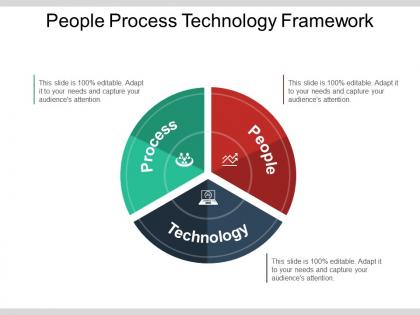
People process technology framework ppt examples slides




Try Before you Buy Download Free Sample Product
 Impress Your
 Audience
 100%
100% Editable
 Save Hours
 of Time


Appreciate intrepid approaches with our People Process Technology Framework Ppt Examples Slides. Applaud efforts at being inventive.
People who downloaded this PowerPoint presentation also viewed the following :
People process technology framework ppt examples slides with all 5 slides:
Folks get drawn in by your friendly attitude due to our People Process Technology Framework Ppt Examples Slides. You will exhibit a congenial approach.

FAQs for People process technology framework
So PPT breaks down into People, Process, and Technology - basically your team's skills, how work flows, and what tools you're using. It's like a three-legged stool situation where everything needs to balance out. Honestly, most companies get obsessed with shiny new tech when that's rarely the actual problem. You'll want to figure out which piece is your biggest mess right now. Maybe start by looking at where you currently stand in each area? The real magic happens when all three actually work together instead of fighting each other.
So basically the PPT thing works because it stops your people, processes, and tech from being a total disaster together. You know how you'll have amazing employees but they're stuck with garbage processes? Or expensive software that just sits there because no one figured out how to actually use it? Map out where you are right now with all three areas first. The framework makes you look at how everything connects instead of just throwing cash at shiny new tools when maybe you just need better training. I swear, misaligned teams waste so much money on the wrong fixes. Short version: get all three talking to each other and you'll stop bleeding efficiency.
So the PPT thing works because it gets your people, processes, and tech actually talking to each other instead of fighting. You know how annoying it is when you've got solid employees but they're stuck with garbage systems that make everything twice as hard? That's exactly what this fixes. When your team has decent tools AND clear workflows AND actual support, they don't feel like they're swimming upstream all day. The framework basically helps you spot where things are falling apart before everyone gets fed up and bails. I'd start by figuring out your biggest pain point between those three - probably processes, let's be honest - and fix that one first.
So here's the thing - tech is basically what connects your people and processes together. Your best workflows will totally fall apart without the right tools, and your team gets super frustrated (been there). Pick stuff that actually fits how your people already work instead of making them learn completely new ways to do everything. I mean, why make life harder than it needs to be? Don't force tools that fight against your existing setup. Map out what your team actually needs first. Short wins happen when you automate the stuff that makes sense, not just because you can.
Yeah, totally works for remote teams! Honestly might be even better since you're forced to be more deliberate about everything. People-wise, you gotta get good at building trust through screens and async communication. Can't rely on coffee chats anymore. Process becomes way more important - like, you actually need documented workflows and clear handoffs since no one's walking over to your desk. Technology gets interesting too... video calls, project management stuff, cloud everything. Plus making sure Karen from accounting doesn't have terrible wifi that cuts out every meeting. The trick is being intentional about all three pieces since the random hallway conversations don't just happen naturally.
Honestly, most companies just get obsessed with the cool new tech and completely ignore everything else. It's like buying a sports car when you don't even know how to drive stick. They'll dump money on fancy tools but never train anyone or fix their messy workflows first. Plus they treat each piece separately instead of making them work together - which is backwards if you ask me. The people part always gets forgotten because you can't put it in a spreadsheet as easily as "software deployed." Start with fixing your processes first, then figure out what your team actually needs to make it work, and then pick whatever tech supports that.
So here's the thing - companies don't treat all three PPT pillars equally, which honestly makes sense. Healthcare goes crazy on the people side because, you know, lives are at stake. All that training and safety protocol stuff. Tech companies obsess over their technology pillar instead, always tweaking processes around whatever shiny new platform they're using. Manufacturing? They're process nerds - efficiency = money for them. You should figure out which pillar is your biggest pain point first, then build everything around fixing that. Way more effective than trying to tackle all three at once.
Honestly, you need metrics from all three areas to see what's actually happening. People stuff - engagement scores, how many folks are sticking around, training completions. Then process metrics like how long things take, error rates, compliance numbers. Tech metrics are uptime, adoption rates, ROI on your investments. But here's what I've learned - the real gold is tracking things that cross over, like how long it takes to get new hires fully set up with system access. That tells you way more than individual metrics. I'd start small though. Pick 2-3 from each pillar and add more later.
So the PPT Framework is like your roadmap for change management - you've got to think about people, processes AND technology instead of just the flashy new systems. Most change projects crash and burn because they totally skip the human element, which is honestly the hardest part. You map out what skills folks need, how daily workflows will shift, plus what tech you actually need. Sequencing matters too - train people first, then roll out new processes. I'd start by looking at where you're at now in all three areas, then figure out where you want to end up.
Honestly, I'd hit three main areas: get people trained on systems thinking so they actually understand how everything connects. Change management is clutch too - helps teams roll with all the transitions. Then obviously whatever tech tools you're using, make sure everyone knows how to use them properly. Communication training is probably the most underrated part though, since you're basically trying to get departments to stop working in bubbles. Find some internal champions who can help mentor people through it. Start small with a pilot group, train them really well, then have them teach everyone else. Way less overwhelming than doing some massive company-wide rollout all at once.
Honestly, you can't just tackle one piece at a time - people, process, and tech all need to move together or the whole thing falls apart. Figure out what behaviors you actually want first. Then rebuild your processes around those behaviors, and get technology that supports the new way of doing things. I always think of it like redirecting a river - moving just one rock won't cut it! Map out how everything connects to each other. That's where most people mess up. Start small with a pilot program somewhere, then expand whatever actually works. Trust me, trying to change culture by only fixing processes is like... well, it's a recipe for frustration.
So basically, the PPT thing works by getting your people, processes, and tech all on the same page around what customers actually want. Most companies totally miss this - it's wild how obvious it seems once you see it. Your customers stop getting bounced around between departments or stuck in broken systems. Everything just flows better. Service gets more consistent, processes speed up, and your tech actually helps instead of causing headaches. Honestly? Just pick one customer journey and map out where your PPT stuff isn't connecting. You'll spot the problems right away.
So basically you want regular check-ins for all three parts - people, process, and tech. I'd do quarterly reviews where you dig into what's actually working vs what's a mess. Track your metrics for processes, get real feedback on people stuff (not just the fluff), and audit whether your tech is still worth it or needs updating. Here's the thing though - half the time what looks like a people issue is actually your process being broken, so don't just look at each piece separately. The quarterly thing works because you're not just putting out fires anymore, you're actually getting ahead of problems before they blow up.
Oh definitely! Toyota's lean manufacturing thing is probably the most well-known example - they really figured out how to balance people, processes, and tech without going overboard. Amazon's warehouse setup is solid too. Netflix and Spotify actually documented their transformations pretty thoroughly, which is rare honestly. Most companies doing agile stuff end up following similar patterns without even knowing it. Just search "digital transformation case studies" and you'll start seeing the people-process-technology framework everywhere. It's wild how often it pops up once you're looking for it.
Dude, small businesses actually crush it with PPT Framework! You can make changes in weeks while big companies are still stuck in meeting hell. Map out where you're at with people, processes, and tech first. Then just pick one small thing to improve in each area this quarter. The best part? You already know your whole team personally, which honestly makes everything so much easier. I mean, try getting that kind of connection at some massive corporation. Instead of just figuring it out as you go, the framework gives you a real plan for growth. Your size is your superpower here.
-
Use of icon with content is very relateable, informative and appealing.
-
Great product with effective design. Helped a lot in our corporate presentations. Easy to edit and stunning visuals.