


Innovative technology ppt examples slides





Try Before you Buy Download Free Sample Product
 Impress Your
 Audience
 100%
100% Editable
 Save Hours
 of Time


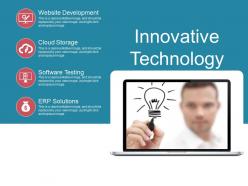
Give your audience an insight of new ideas of technology with our innovative technology PPT examples slides. With high quality graphics and well-researched content in this template, make your presentation simple yet attractive.. Talk to different stakeholders with various familiarities of tech solutions using this new and innovative technology PowerPoint slide. Speak directly to the audience with buying obstacles, concerns, and interests. Use this innovative performance technology PowerPoint design as a tool to harness technology to achieve marketing goals and objectives. You can create from simple to complex web-based applications, social network applications and electronic business applications. From web development to cloud storage, provide your clients with all the innovative tools of technology. With innovative technology products offer your customers with latest and best services. Enhance the way your presentation looks with our easy to understand as well as visually appealing PPT design. Reduce your time to prepare an effective presentation with this ready to use innovation technology PPT template. Identify inhuman conditions with our Innovative Technology Ppt Examples Slides. Initiate action to improve the environment.
People who downloaded this PowerPoint presentation also viewed the following :
Innovative technology ppt examples slides with all 5 slides:
Combine forces to attain goals with our Innovative Technology Ppt Examples Slides. Indulge in joint endeavours.
FAQs for Innovative technology
Honestly, the tech changes happening right now are insane. Machine learning is handling customer service and supply chains way better than humans in some cases. Cloud computing means you don't need crazy upfront costs to scale anymore. Blockchain went from this nerdy thing to... well, everyone's mom knows about Bitcoin now. IoT sensors are giving manufacturers data they never dreamed of having. 5G is making remote work actually work smoothly - my cousin's company went fully distributed last year because of it. I'd pick whichever one hits your industry hardest and just try a small test project first.
Honestly? Just pick one annoying thing that's eating up your time - maybe customer emails or data entry stuff. Don't go crazy trying to automate everything at once, you'll just stress yourself out. Chatbots are pretty solid for basic customer questions, and tools like Zapier can connect your apps without being too complicated. I'd avoid anything that requires a PhD to figure out, at least at first. Try it for a few weeks, see if it actually saves you time (sometimes these things are more hassle than they're worth), then maybe add something else. The key is starting somewhere instead of getting paralyzed by all the options.
So basically blockchain gives you this tamper-proof record of your whole supply chain - from where stuff starts to when customers get it. Nobody can mess with the data once it's there. Each step gets locked into these connected blocks, so you'll have real-time tracking of sourcing, manufacturing, shipping, all that. Customers can actually scan a QR code and see their product's entire journey, which is honestly pretty neat. I'd say start small though - figure out where you're having the biggest transparency headaches and test blockchain tracking on just those parts first. Way easier than trying to do everything at once.
Dude, AR and VR are seriously changing how brands connect with people. You can try on makeup virtually now, see how furniture looks in your actual room, or do full hotel tours before booking. The realistic factor is honestly getting crazy good! People get that hands-on feel without touching anything, which builds way more confidence and cuts down returns. Retail and hospitality are crushing it with this stuff. I'd say start simple - maybe AR try-ons or virtual showrooms. The engagement rates blow traditional ads out of the water. Worth testing for sure.
Dude, there's some crazy stuff happening with green manufacturing right now. AI systems are optimizing energy usage in real-time, which is pretty sick. Digital twins let you test processes virtually before rolling them out. 3D printing cuts material waste by like 90% - that's insane when you think about it. IoT sensors track everything from water to emissions, and honestly the data insights will blow your mind. There's also this circular thing where one process's waste becomes another's input. If I were you, I'd start with energy monitoring sensors first. Easy win with solid ROI.
Dude, 5G is what actually makes smart cities function in real-time. Traffic lights can instantly talk to self-driving cars, energy grids respond to demand spikes immediately, emergency services get live data without any lag. It's honestly crazy how fast everything syncs up now. All those sensors around the city can finally process and share data quick enough for split-second decisions. Oh and if you're working on any smart city stuff - build in that 5G infrastructure from day one. You can't really do it as an afterthought anymore, the whole system depends on it.
So quantum computers are gonna totally wreck our current encryption - RSA, all that stuff we use now. Classical computers would take forever to crack it, but quantum ones could do it in like hours. Crazy, right? But don't panic yet, we're still years away from that happening. Security folks are already working on "quantum-resistant" algorithms to fix this mess before it becomes a problem. You should probably check what encryption your company's using though. Maybe bug your IT team about their post-quantum plans? Better safe than sorry.
So basically IoT makes all your home devices talk to each other and learn what you do. Your thermostat figures out when you're home, smart plugs kill power to stuff that's just sitting there, and lights adjust themselves based on how bright it is outside. The system gets smarter too - mine learned I leave at 8am and now pre-cools the house before I get back. You can check everything from your phone which is honestly pretty addictive. I'd start with just a smart thermostat and maybe some smart plugs. You'll see savings right away without getting overwhelmed by all the tech stuff.
Dude, it's crazy how startups are just demolishing old industries right now. They find whatever sucks about traditional businesses and build apps to fix it. Look at fintech - they're making banks seem ancient with mobile payments. Uber killed taxi companies. All these direct-to-consumer brands skip stores completely now. The whole playbook is using AI or automation to be faster and cheaper than the old guys. What blows my mind is how fast it happens - like, blink and suddenly everyone's doing things differently. If you're working anywhere traditional, you better start watching these tech companies before they completely take over your space.
Ugh, the hiring market for ML engineers is absolutely insane right now - good luck with that. Your data's probably messier than you think, so brace yourself for cleanup hell. Computational costs can get wild fast, and don't even get me started on bias creeping into your algorithms from sketchy training data. That said, the upside's huge: automating decisions, predicting what customers will do, optimizing stuff you never could before. My advice? Pick one small pilot project with super clear metrics. Oh, and get your executives on board early or you're toast.
Oh adaptive learning is actually pretty neat - it watches how each kid learns and switches up the content on the fly. Like if someone's bombing fractions, it'll throw more practice at them and explain things differently than for the quick learners. Tracks their progress too and spots where they're lost. Then boom, serves up exactly what they need next. It's basically a personal tutor situation for every student which honestly seems like a game changer. Just make sure you find platforms that actually adapt meaningfully, not ones that just mess with difficulty levels.
Honestly, those AI budgeting apps are total game-changers - they'll automatically sort your spending and actually predict what's coming next. Robo-advisors are making investing way more accessible too, which used to be just for rich people with fancy advisors. There's this thing called open banking that lets you see everything in one place (seriously saved my life since I've got like 6 different accounts). Oh, and those buy-now-pay-later apps are everywhere now. Real-time payments changed how we spend money too. I'd just download one good budgeting app first - you'll be shocked at what you discover about where your money actually goes.
Honestly, big data is a total game-changer once you figure it out. You'll catch patterns and trends that would be impossible to spot manually - way better than just going with your gut. Real customer behavior data, market shifts, where you're bleeding money operationally... all of it becomes crystal clear. I'd start small though, maybe focus on something specific like keeping customers around longer or managing inventory better. Oh, and definitely set up dashboards for real-time stuff so you can actually pivot when things change. Trust me, the insights you get are insane compared to guessing.
Honestly the biggest stuff right now is wearables and AI diagnostics. Smartwatches tracking your heart rate 24/7, that kind of thing. Machine learning can catch patterns doctors totally miss - some of it's genuinely impressive. You need solid 5G for video calls that don't freeze up every two seconds (learned that the hard way during covid). Blockchain keeps patient info locked down when it's bouncing between systems. Start with Teladoc if you're curious, or look up whatever FDA-approved monitors work for your situation. Cloud platforms handle most of the data transfer stuff behind the scenes.
Dude, wearable tech is making everyone obsessed with their health stats in ways we never were before. My Apple Watch literally nags me to stand up every hour - it's annoying but it works! People are constantly checking step counts, sleep scores, heart rate zones. The cool thing though? These devices are actually making health data useful for normal people, not just fitness freaks. They're pushing personalized workouts and those breathing exercises for stress (which actually help btw). Honestly, just pick one thing to track that you care about. You'll be shocked how much it changes what you do daily.
-
Excellent products for quick understanding.
-
Visually stunning presentation, love the content.