


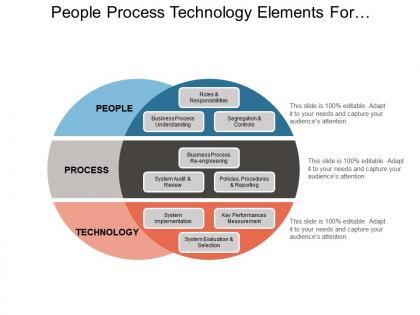
People process technology elements for successful change management ppt example file




Try Before you Buy Download Free Sample Product
 Impress Your
 Audience
 100%
100% Editable
 Save Hours
 of Time


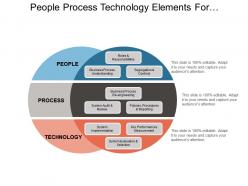
Various changes like competition, technological innovations, process reviews, consumer habits and any crisis situation can lead to the need for the implementation of change management in your business set up. Present your Change management model with this People Process Technology Elements For Successful Change Management PPT Example File prepared by Slideteam. With this enterprise change slide you can enforce alterations in the 3 main areas of a business, people, process and technology. The Change control processes template can be used to define the use of resources, business plan, finance allocation and other modes of application in a business set up. The need for change management techniques has been accelerated by the fast evolving digital media platforms and so, this slide is necessary for you to keep pace with the dynamic scenario. Modern organizational changes which can be easily implemented through this template are essential due to these external factors. The PPT can be easily downloaded at a click! Grow the asset you choose with our People Process Technology Elements For Successful Change Management Ppt Example File. They enable focus on earnings.
People who downloaded this PowerPoint presentation also viewed the following :
People process technology elements for successful change management ppt example file with all 5 slides:
Correct exaggerated accounts with our People Process Technology Elements For Successful Change Management Ppt Example File. Bring about a high degree of credibility.

FAQs for People process technology elements for successful change management
Honestly, the biggest thing is just talking to people early - nobody wants to be blindsided by changes that mess with their routine. Get your main players involved in the planning so they actually want it to work instead of sabotaging you later. Oh, and don't try to change everything at once (trust me on this one). Break it into chunks people can actually handle. The resistance thing is inevitable though, so have your reasoning locked down. Like, really solid reasons why this matters. People will push back until they get why you're doing it in the first place.
Watch for the obvious stuff first - metrics dropping, customers complaining more, competitors pulling ahead. Your employees are usually right when they say something's broken, so actually listen to them. Market changes and new rules will force your hand anyway. But honestly? Sometimes you just feel it in your gut that things are getting weird. I'd run regular check-ins and look at your data often - way easier to fix problems early than wait until everything's on fire. Oh, and don't ignore those "small" issues that keep popping up.
Honestly, leadership can make or break the whole thing. If they're not genuinely on board, forget it - people see right through fake enthusiasm. Your leaders need to explain why this change matters, not just bark orders about what's happening. They've got to walk the walk too, which sounds obvious but you'd be surprised how often they don't. Quick wins are huge for keeping people motivated. Oh, and they need to actually jump in when teams get stuck instead of just saying "figure it out." I've seen too many good ideas die because leadership treated them like checking a box. Get them truly invested first or you're wasting everyone's time.
Dude, communication is seriously like 70% of making change work. People need to know WHY things are changing and what's actually in it for them. I've watched so many projects crash because leadership just assumed everyone would magically get it. Be super transparent about timelines. Address their concerns directly instead of dancing around them. Use email, meetings, whatever - hit people through different channels since everyone processes info differently. Oh, and that core message about why you're doing this? You'll be repeating it until you want to scream, but that's literally how it sticks.
Honestly, most people freak out about losing their jobs or just hate feeling left out of decisions. Nobody wants procedures dumped on them without knowing why - I mean, who would? Plus if they're already swamped, more changes feel impossible. Skills not transferring is huge too. You know how it is, one bad rollout and everyone's like "here we go again." The trick is actually talking to people beforehand and being real about what's happening. Don't just spring stuff on them.
Track the obvious stuff first - adoption rates, timelines, whether you actually hit your goals. But honestly? Employee feedback matters way more than most people realize. Survey your teams throughout the whole process, not just at the end. Productivity always takes a hit initially, so measure how long recovery takes - that's what executives really care about. I'd also set up quick check-ins with key people so you can pivot early instead of discovering problems too late. Oh, and resistance levels are basically a leading indicator for everything else.
Honestly, culture is make-or-break for any change you're trying to push through. People in innovative companies? They'll jump on new stuff pretty quickly. But those "we've always done it this way" places - ugh, even tiny changes turn into huge fights. I've watched brilliant strategies completely tank because nobody thought about how stubborn the culture was. You gotta read the room first, then work with what you've got instead of fighting it. Find those people who actually get excited about change - they're worth their weight in gold for convincing everyone else.
Don't treat change management like some separate thing you bolt on later. Weave it straight into your project phases from the start. Map out stakeholder impacts during planning, throw communication and training right into your work breakdown structure. Your milestones should line up with change readiness checks too. Honestly, I've watched so many projects crush the technical side but totally faceplant when nobody actually uses what they built. Get your change manager embedded with the team on day one - not scrambling at the end to deal with pushback. Trust me, start connecting those change activities to your project timeline now before it bites you.
Honestly? Start with ADKAR if you're just getting into this stuff - it's pretty straightforward and gives you clear milestones to track. Kotter's 8-Step thing works great for big transformations, but it can feel overwhelming. Prosci is decent too, though sometimes it's way too much paperwork for what you actually need. For everyday changes, stakeholder mapping saves my butt constantly. Simple readiness assessments help too. Oh, and having good communication templates ready makes everything smoother. Here's the thing though - pick one or two methods max and stick with them. I see people constantly switching frameworks and it just creates chaos. Way better to master one approach than fumble through five different ones.
Don't just throw random training at people - that's such a waste. Figure out exactly what new behaviors and mindsets your team needs first, then build training around those specific gaps. Honestly, I've watched so many companies mess this up by doing generic skills stuff that doesn't actually help their change goals. Timing matters too. Roll it out when people can actually use it, not months before they'll forget everything. And definitely cover the "why" behind changes, not just step-by-step instructions. Start with your biggest 3 transformation goals and work backwards from there.
Change management? Honestly, it comes down to three basics. People need to know WHY stuff's changing - like what's actually in it for them, not just corporate speak. Get them involved in the planning too if you can. Nobody wants decisions just dumped on them. Oh, and don't forget the support piece - training, resources, even just acknowledging that change sucks sometimes. Find your cheerleaders early on. They're gold for convincing the doubters on your team. The emotional stuff matters way more than most leaders think.
Yeah, every industry handles change totally differently. Tech moves crazy fast - they're fine breaking stuff and fixing it later. But healthcare and finance? They take forever because mistakes actually matter there. Manufacturing hates stopping production lines (costs a fortune), so they plan everything around that. Retail's weird - they adapt to seasons no problem but freak out about major changes during busy periods. Honestly, I'd look into how your industry usually does things first. Check their typical timelines and how much risk they can stomach before you pitch anything big.
Ugh, change freaks people out - it's just how we're wired. Everyone wants predictability, so when things shift at work, you get all the classic reactions: anxiety, fear about losing jobs, stress, some people basically checking out mentally. Pretty normal stuff honestly. Your best bet? Be super transparent right from the start. Get people involved in planning when you can, give them actual timelines instead of vague promises. I'd also find those employees who are naturally onboard early - they're gold for convincing the doubters. Oh, and don't brush off concerns when people voice them. Regular check-ins help too, even if they feel repetitive.
Honestly, tech makes change management way less painful. Grab some collaboration tools to keep everyone on the same page - analytics dashboards help you see who's actually adopting stuff. Survey tools are clutch for checking how people really feel about changes. Digital training is where it's at though, nobody wants another boring PowerPoint marathon. Don't go crazy with every shiny new platform out there. Pick one thing that fixes your biggest communication headache first. You can always add more later once that's working smoothly.
So here's the thing - change management is huge for staying agile. Companies always have these amazing strategies, but then people just... don't follow them. Your teams end up resisting every pivot. It's like owning a Ferrari but never learning how to take corners properly, you know? The real trick is getting your culture comfortable with change from day one. That way when stuff inevitably shifts (and it always does), your people aren't freaking out about adapting. Otherwise you're stuck with great ideas that nobody actually implements. Build those change muscles early and you'll actually be able to move fast when you need to.
-
Commendable slides with attractive designs. Extremely pleased with the fact that they are easy to modify. Great work!
-
Understandable and informative presentation.