

Technological Change Management ITIL Change Management Process Flow




Try Before you Buy Download Free Sample Product
 Impress Your
 Audience
 100%
100% Editable
 Save Hours
 of Time


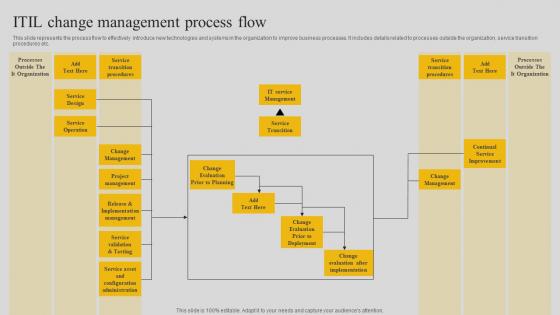
This slide represents the process flow to effectively introduce new technologies and systems in the organization to improve business processes. It includes details related to processes outside the organization, service transition procedures etc.
People who downloaded this PowerPoint presentation also viewed the following :
Technological Change Management ITIL Change Management Process Flow with all 6 slides:
Use our Technological Change Management ITIL Change Management Process Flow to effectively help you save your valuable time. They are readymade to fit into any presentation structure.





FAQs for Technological Change Management ITIL Change
Honestly, most of this comes down to communication. First thing - explain WHY you're making the change, because people hate being left in the dark. Make sure leadership is actually committed too, not just going through the motions. Here's where companies mess up though: they don't involve their team in figuring out the actual implementation. Like, how's this gonna work day-to-day? Let people have input instead of just dropping changes on them. Oh, and identify your key influencers early - get them excited first. Keep everyone updated throughout and celebrate the small wins. Sounds obvious but you'd be surprised how many skip that part.
Honestly, the biggest mistake I see is just dropping changes on people without explanation. You've gotta tell them WHY this is happening - and what's in it for them, not just the company bottom line. Listen when people push back (even if it's annoying). Find those employees who everyone else actually listens to and get them excited about it first. Let people contribute ideas instead of making them feel like victims of some executive decision. Oh, and don't assume buy-in will just happen magically - I've watched so many rollouts crash because leadership thought enthusiasm would appear out of nowhere.
Honestly, communication can make or break the whole thing. People hate being left in the dark - I've watched changes crash and burn just because nobody explained what was happening. Be upfront about the why, the timeline, all of it. Even when you don't have perfect answers yet, keep talking to them. Give people space to ask questions and actually listen to their concerns. Oh, and start early! Don't wait until you've got everything figured out. Consistent updates beat perfect plans every time. Trust me on this one.
Honestly, measuring culture change is kinda tricky because it moves so slowly. I'd start with employee engagement surveys before and after your initiative - watch for changes in trust and communication scores. Exit interviews can tell you a lot too, though obviously that's after people already left. Watch how people actually behave day-to-day. Are they collaborating more? Giving feedback differently? Making decisions the way you hoped? Don't expect huge shifts right away though. Set up pulse checks every few months instead of waiting for some dramatic transformation. The behavioral stuff is usually more telling than survey data anyway.
Don't wait for resistance to snowball - that's the biggest mistake I see. Talk to people early about what's happening and why. Get your biggest skeptics in a room first, honestly. Those one-on-ones matter way more than you'd think. When you're explaining the change, focus on what's actually in it for them personally, not just company benefits. Include people in planning if you can swing it. Oh, and don't brush off their concerns - address them head-on. Give them training and support during the messy transition period. Celebrate the small wins too.
Honestly, tech has made change management so much easier than it used to be. You can track how people are actually adopting new processes with real-time data instead of just guessing. Collaboration tools keep everyone on the same page during transitions, and you don't have to manually send the same updates fifty times anymore - automation handles that stuff. AI can even spot potential pushback before it becomes a problem, which is pretty wild. The coolest part? You can customize the whole experience for different teams and get instant feedback. Don't overthink it though - start with whatever tools you're already using, even basic surveys will show you patterns you've never noticed.
Honestly, the biggest mistake is not talking to people enough - like, way more than you think you need to. Leadership always wants instant results, but rushing kills these things every time. You've gotta identify your key players early or you're screwed. Also, terrible planning will tank everything before you start. I learned this the hard way - celebrate those tiny victories! People get discouraged fast without seeing progress. My advice? Overcommunicate like crazy and have a game plan for pushback before it hits you in the face.
Pick a framework that actually matches your company culture first - ADKAR's solid for getting individuals on board, but go with Kotter's for those massive org changes. Here's the thing though: everyone gets way too rigid with the steps initially. You've gotta adapt them to your timeline and situation. Use it as your actual roadmap, not something you just throw up in a PowerPoint once. Hit each phase on purpose and track how things are going. Oh, and don't mess around with the communication part - I've seen so many change efforts completely tank because they half-assed that piece.
Track the obvious stuff first - adoption rates, how fast people learn new processes, productivity numbers, retention rates. But honestly, the feelings matter just as much. Survey people about engagement and listen to what they're actually saying in meetings. I've watched so many "successful" rollouts where everyone technically did what they were supposed to but hated every minute of it. Timeline slips and budget overruns are red flags too. Start measuring from day one though - waiting until you think you're done is way too late to fix anything.
Honestly, you miss all those random hallway chats and being able to read people's faces - that stuff matters way more than you'd think. Remote teams need crazy intentional communication. I'm talking scheduled Q&As, video calls over email, the works. People get weird when they're stuck at home versus having teammates right there for support. You've gotta hammer the "why" behind changes constantly. Check in more often too - I'd do weekly pulse surveys instead of monthly because issues snowball fast when everyone's isolated. It's just harder to gauge how people are really handling things.
Honestly, you can't expect people to just wing it when everything changes. Training fills that gap between what they know now and what they actually need to do. I've seen so many changes fail because leadership assumes everyone will just "figure it out" - spoiler alert, they won't. When people understand the new stuff and feel capable, they push back way less. It's like showing you actually care about helping them succeed instead of just throwing change at them and walking away. Focus on hands-on practice and explain why you're changing things, not just the steps.
Honestly, the biggest mistake I see is treating change like a one-off project instead of baking it into how you actually work day-to-day. Celebrate those quick wins early - people need to feel momentum. Then slowly make those new habits part of your regular processes. Check in monthly (or you'll forget, trust me). Leadership has to stay visibly bought-in, not just disappear after the kickoff meeting. Keep reminding everyone why you're doing this in the first place. Build in ways to get feedback so you can pivot when stuff isn't working. I'd pick maybe 2-3 specific things to track each month rather than going overboard with metrics.
Change agents are your internal champions who push initiatives forward. They get people excited about the vision and help teams actually navigate the messy parts of transitioning. Basically, they translate big strategic stuff into language that makes sense for different departments - which honestly is harder than it sounds. Most change efforts fail because there's nobody fighting for them at the ground level. You need to spot these people early and give them real tools and authority. Otherwise you're just hoping things magically happen, and they won't.
Templates are honestly a game-changer for explaining changes at work. Abstract stuff becomes way easier to grasp when people can actually see it laid out. Different folks learn differently too - some need that visual element or they're just lost. Breaking everything into clear steps prevents that whole "wait, what am I supposed to do again?" confusion. I've seen teams waste so much time going in circles without them. Simple before/after comparisons work really well, or basic process flows. People can always go back and check instead of trying to remember every detail from meetings.
Honestly? First thing - make a visual chart connecting each project to your actual business goals. Sounds basic but you'd be shocked how often this gets skipped. Get leadership on the same page before anything else because conflicting messages from executives will tank your efforts every time. People need to understand WHY they're doing something, not just what they're supposed to do. I always do regular check-ins to catch drift early. Oh, and set milestones you can actually measure - stakeholders love seeing real ROI numbers throughout the process.
-
Happy to incorporate such stunning templates in my presentation. Made my presentation look professional and engaging.
-
I didn’t expect such a good service for the money I am paying. But, they exceed my expectations. Great work SlideTeam.