


People process technology approach to process improvement example of ppt




Try Before you Buy Download Free Sample Product
 Impress Your
 Audience
 100%
100% Editable
 Save Hours
 of Time


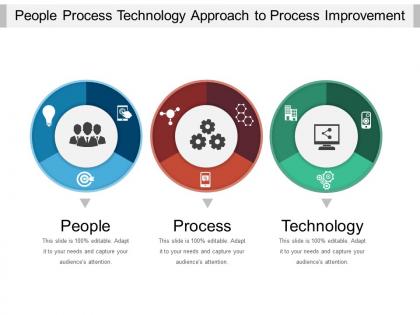
Business Process Improvement being a continuous process for improving the efficiency and accuracy of a business process, you need to keep pace with the dynamics of the industry. In order to help you display your process improvement plan, we have this People Process Technology approach to process improvement example of PPT slide. This BPI template with the 3 key sectors of a business namely, people, process and technology, can be used for a Continual Improvement Process (CIP) presentation. As the leader of your organization, you can use this Business Process Management exercise to identify areas where you can improve the accuracy, effectiveness and output and thus, redefine the processes to ensure improvement in the process. This Business Process Improvement Pattern PPT slide will help you close the process or system performance gaps. In case your company is in the services sector, then your business faces challenges in the following categories, namely, intangibility, inseparability, perishability and variability. A structured, continuous approach to process improvement is essential to maintain successful accomplishment of goals and Kaizen. So, download the slide, modify the content and present your ideas with confidence! Feel in the groove with our People Process Technology Approach To Process Improvement Example Of Ppt. You will function with absolute ease.
People who downloaded this PowerPoint presentation also viewed the following :
People process technology approach to process improvement example of ppt with all 5 slides:
Our People Process Technology Approach To Process Improvement Example Of Ppt actually facilitate ease of functioning. It delivers on it's boasts.

FAQs for People process technology approach to process improvement
So this model basically splits change into three parts: people, process, and tech. Your team's skills and culture. How work flows through the org. And all the systems you use. Companies always get obsessed with buying shiny new tools though - drives me crazy. They'll drop tons of money on software then wonder why nothing improved. You need all three pieces working together or it's pointless. Start by figuring out where each area stands now. What gaps do you have? Because honestly, you can't just install something and expect people to magically adapt. The people and workflow side matter just as much.
Break it down piece by piece first. Map out your current tech, document those tedious processes (yeah, the boring stuff nobody wants to do), and be brutally honest about what your team can actually handle. Then hunt for the gaps - maybe you're doing things manually that could be automated, or you've got amazing tools but nobody knows how to use them properly. The magic happens when all three pieces actually work together instead of fighting each other. Run some workshops with different teams to see what's really broken. Trust me, that's where you'll find the actual problems fast.
Honestly, employee engagement can totally make or break your PPT setup. If people are checked out, they'll just half-ass the processes or find sneaky workarounds. I've seen it happen with tech rollouts too - expensive software just sits there unused because nobody cares enough to learn it properly. But when your team's actually invested? They become your biggest advocates. They'll spot problems, help train others, and actually follow the processes like they're supposed to. My advice? Get everyone on board before you change anything major, otherwise you're basically wasting time and money.
Oh man, culture is literally everything with PPT rollouts. I've seen companies with amazing tech completely bomb because nobody wanted to change how they work. You gotta figure out if your team actually talks to each other first - some places need baby steps while others just dive right in. Leadership has to actually show they care too, not just send an email about it. The software part? That's honestly the easy bit. Getting people to ditch their old habits and embrace the new process... that's where it gets messy. Study your workplace vibe before you do anything else.
Okay so first thing - involve your people from day one when picking and setting up the tech. I always map out current processes first before adding anything new. Then tweak BOTH the process and the tech so they actually work together instead of cramming one into the other. Most epic failures? Someone just drops new software on everyone without proper training. Run pilots with your key users first - they'll become your biggest advocates. The magic happens when people genuinely want to use the tools because it makes their lives easier. Start small, get feedback constantly, and adjust fast. That's honestly it.
Honestly, analytics just shows you what's actually happening vs what you think is happening. Track your team's productivity and engagement stuff (that's your people side). Look for where things get stuck in your workflows - those bottlenecks are productivity killers. Then monitor if people are even using the tech you're paying for. Here's the thing though - it gets interesting when you see how everything connects. Like maybe that expensive new software isn't helping because nobody got trained properly. I'd start simple: pick one metric from each area and go from there.
Honestly, you're screwed without leadership buy-in - I've seen this fail so many times when execs just throw money at it and walk away. Your leaders have to actually champion the PPT model, not just fund it. They need to align everything with company goals and get resources for training and tech upgrades. The tricky part? Some executives really suck at the collaborative mindset PPT demands (ego issues, mostly). Short sentences work here. Leadership also breaks down those department silos that'll kill your progress. Make sure they know they're driving this thing, not just writing checks for it.
Start by setting clear KPIs for each area before jumping into anything. People stuff - track satisfaction scores, training completion, retention rates. For processes, measure cycle times, error rates, compliance. Tech metrics include uptime, user adoption, ROI calculations. Here's the thing though - these three areas totally affect each other, so don't look at them separately. Build a scorecard showing how fixing one thing impacts the others. Honestly, measuring baseline performance right now is crucial. Then just track quarterly progress against your targets. The interconnected piece always trips people up.
Honestly, the worst thing you can do is get obsessed with shiny new tech and forget about your actual people and workflows. I've watched companies blow tons of money this way. Don't treat everything like separate boxes either - they all need to mesh together. New software won't magically fix your broken processes (learned that one the hard way). Make sure you're actually talking to the people who'll use this stuff before you plan anything. Oh, and resist going full chaos mode - pick one thing, nail it down, then slowly add the rest. Way less painful that way.
Don't treat those three things like separate boxes to check off. Figure out what skills your people are missing first, then connect that to the actual processes and tech they'll use every day. The real breakthrough comes when you build scenarios where they're practicing new workflows AND using your actual systems while working on communication stuff. Honestly, I've watched so many companies just focus on the technical training and then act shocked when nobody adopts it. Your training needs to look exactly like their real work - same tools, same systems, hands-on practice.
So basically, you can't just dump new tech on people and expect things to work smoothly. PPT helps because you're looking at people, processes, AND technology together. Think of it like a three-legged stool - knock one over and you're screwed. When all three are balanced, teams actually know what they're doing, workflows make sense, and the tech supports real work instead of creating more headaches. Honestly, most companies mess this up by focusing on just one piece. Start by figuring out where your biggest gaps are between these three, then tackle those first. You'll pivot way faster once everything's actually aligned.
Set up weekly retrospectives so your team can call out process issues or tech problems they're running into. Track those complaints in dashboards - way better than spreadsheets that nobody checks. Your tech should also spit out data about how things are actually working so people can make smarter calls. Most companies are terrible at this part though. They collect feedback and then... nothing happens. Someone has to own fixing what you discover, or you're just wasting everyone's time. I'd start with one simple feedback loop first, then build from there once you've got that working.
Yeah, remote work basically stress-tests your whole People-Process-Technology thing and shows you where stuff breaks. Technology becomes super critical - it's literally how everyone connects now. Most processes need major rewrites for async work, which is honestly a pain. The people part gets weird because you lose all those random hallway chats that used to fix problems naturally. From what I've seen, teams really struggle when these three areas don't talk to each other well in a distributed setup. You'll want to document how everything connects way better than before, especially communication flows and what tech depends on what.
You just customize each pillar based on what your industry actually deals with. Healthcare? Your "People" pillar focuses on clinical training and patient communication, while "Process" handles stuff like HIPAA compliance workflows. Manufacturing is totally different - safety training for people, lean processes for efficiency. The framework itself doesn't change, which is honestly pretty genius. You're just swapping in relevant content for your sector's specific headaches and regulations. Works across pretty much any industry I've seen because it bends without breaking. Start with your biggest industry pain points, then figure out which pillar they fit under.
Honestly, I'd start with AI and machine learning - they'll automate so much stuff and make your team way more efficient. Cloud platforms are a must too since you can scale up without dropping crazy money on infrastructure. Low-code platforms might sound gimmicky but they actually let your regular business folks build things without bothering IT constantly (which is huge). Oh, and don't forget collaboration tools and good data analytics. Those change everything about how people work together. Map out your biggest process headaches first - that's where these technologies will hit hardest.
-
Graphics are very appealing to eyes.
-
Best way of representation of the topic.