


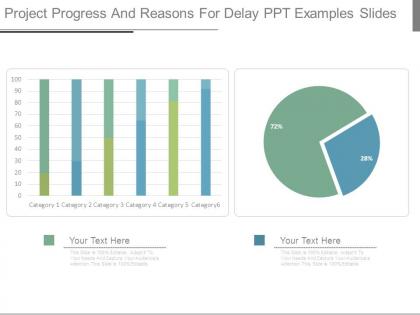
Project progress and reasons for delay ppt examples slides




Try Before you Buy Download Free Sample Product
 Impress Your
 Audience
 100%
100% Editable
 Save Hours
 of Time


Correct the injudicious with our Project Progress And Reasons For Delay Ppt Examples Slides. Deter them from hurried decisions.
People who downloaded this PowerPoint presentation also viewed the following :
Project progress and reasons for delay ppt examples slides with all 4 slides:
Have your ear to the grapevine with our Project Progress And Reasons For Delay Ppt Examples Slides. Get aware of current favorites.

FAQs for Project progress and reasons for delay
So there are five main stages: initiation, planning, execution, monitoring, and closure. First you define scope and get approval. Then comes detailed planning - timelines, resources, all that stuff. Execution is where the actual work happens, and honestly? This is where projects either crush it or completely bomb. You'll be monitoring progress throughout, dealing with whatever random issues come up (there's always something). Closure wraps everything up and documents what you learned. Real talk though - don't skip planning just to jump into the fun stuff. That extra prep time will literally save your sanity later.
Dude, agile is perfect for this stuff. Break everything into 2-week chunks so you're not locked into some massive plan that'll definitely fall apart anyway. You get feedback constantly instead of finding out 6 months later that you built the wrong thing. Those daily 15-minute standup meetings actually work - catches issues fast before they become disasters. Your stakeholders won't hate you either since they see real progress every couple weeks, not just PowerPoints. Honestly way better than waterfall where you pray everything works at the end. Just start small with the sprint thing and see how it goes.
Honestly, just pick 2-3 tools and stick with them. Asana's my go-to for project tracking, but Trello or Monday work great too - whatever your team won't ignore after week two. Slack keeps everyone chatting without endless email chains. Then grab Google Drive or Notion for dumping all your project docs in one place. The calendar thing is huge though - I've seen projects completely fall apart because nobody could figure out when meetings were happening. Start basic, then add stuff later when you realize what's actually missing. Trust me, tool overload is real.
Start with figuring out your critical path - basically which tasks will screw you over if they're late. Dependencies are where everyone gets tripped up, so map those out first. After that, hit the high-impact stuff early, especially anything that's blocking other people on your team. Buffer time is clutch because something random always goes sideways. Oh, and don't set your priorities once and forget about them - projects change constantly so check in weekly. I learned this the hard way on like three different deadlines last year.
Honestly, don't wait until stuff hits the fan to think about what could go wrong. When you're planning, spend time upfront figuring out the risks and build extra time/money right into your timeline. I got burned on this once - project went completely off the rails because we didn't see problems coming. Make a simple list of what might mess things up and check it regularly with your team. Oh, and assign someone to own the big risks so they don't just sit there ignored. It's way easier than scrambling later when everything's on fire.
Scope creep will destroy you - I've seen it tank so many projects. Get your requirements locked down first, then be ruthless about changes. Communication's huge too. I do weekly check-ins religiously now because people assume everyone knows what they're thinking (spoiler: they don't). Build extra time into everything, even if it feels excessive. Document decisions as you make them. Last week I spent two hours trying to remember why we picked a certain approach. Risk planning feels boring but do it anyway - problems always pop up when you least expect them.
Dude, start by figuring out who your stakeholders are and what they actually want from you. Some love getting weekly email updates, others just want you to swing by their desk for two minutes. Communication style is huge - way bigger deal than most people realize. I'd keep a simple list tracking who has influence and what they're worried about. But here's the thing: don't wait until everything's on fire to reach out. Set up regular check-ins from the beginning and actually listen when they talk. Trust me, it'll save you so much drama down the road.
Think of project scope as your roadmap - it shows what winning actually looks like. No clear boundaries? You'll waste time tracking meaningless stuff or dealing with endless scope creep (honestly, stakeholders love their "quick additions"). Your success metrics need to connect directly to what's in that scope document - the deliverables, deadlines, quality bars. Otherwise everyone's measuring different things. My advice? Nail down scope first, then figure out how you'll measure it. Doing it backwards never works out well.
Honestly, team drama kills more projects than bad planning ever will. I've watched solid ideas crash because people couldn't get along or didn't know who was supposed to do what. You gotta nail down everyone's role from day one and have regular check-ins where people actually talk. Don't let stuff simmer - if someone's constantly late with their work, call it out early. Awkward? Sure, but way better than your whole timeline falling apart later. Oh, and celebrate the small wins! Makes people actually want to show up. When everyone gets how their piece fits the puzzle, magic happens.
Do it within 2-4 weeks while everything's still fresh. Get your whole team together - stakeholders too. Yeah, these meetings kinda suck but they're worth it. Look at three things: did you hit your goals, how'd the team communication go, and were your budget/timeline realistic? Write it all down so you actually remember for next time. The trick is being honest without making people feel like shit. Focus on fixing processes, not blaming anyone. I learned this the hard way on a project that went sideways last year.
Oh man, cultural stuff can absolutely torpedo your project if you're not careful. Different places have totally different communication styles - some people are brutally direct, others dance around problems forever. Plus there's the whole time thing (don't even get me started on "meeting starts when everyone arrives" cultures). Hierarchy matters way more in some places too. That person who seems like they're being difficult? They might just be doing normal brainstorming in their culture. Do some research beforehand on your team's backgrounds. Build in extra time for those relationship conversations - they actually matter more than you'd think.
Honestly, Gantt charts are pretty solid for seeing your timeline at a glance - like which tasks are stacked up and what's blocking everything else. Stakeholders love them too since they're visual and easy to follow. But here's the thing: they turn into a nightmare on bigger projects. Way too cluttered. And don't even get me started on keeping them updated - it's like having another job. One little delay and your whole chart goes to hell. I'd say use them for the big picture stuff and client meetings, but you'll need something more flexible for actually managing your daily tasks. Maybe I'm just bitter from too many late nights updating charts though.
Honestly, you can't nail all three at once - something's gotta give. Figure out what matters most to your stakeholders first. Quality can't budge? Then you're looking at more time or money. Tight deadline? Cut scope or throw more people at it (though that gets pricey). I usually sketch out the trade-offs so everyone can actually see what their choices mean. The real trick is being upfront about this stuff from day one and getting everyone to agree on priorities. Write it down too - trust me, you'll need proof when people start asking for "just one more thing."
Break it down into smaller chunks and actually celebrate hitting those mini-goals - your team needs those wins! Otherwise you're all just staring at some distant deadline that feels impossible. I'd do regular check-ins but make them worth people's time, not boring status meetings. Switch up tasks when you can so nobody gets stuck doing the same mind-numbing stuff for weeks. Also, call out good work publicly when you see it. Honestly, even planning something small like pizza when you hit milestones makes a bigger difference than you'd think. People remember that stuff.
So basically AI is taking over all the tedious stuff we used to do manually. Real-time risk alerts, smarter resource planning, timeline predictions that don't suck - it's actually pretty wild. These scheduling tools will catch bottlenecks way before you do. Status updates and basic reports? Yeah, the AI handles that now too. Honestly, if you're still doing everything by hand you're gonna get left behind. I'd start playing around with some AI-powered PM tools soon because this shift is happening whether we like it or not.
-
Very unique, user-friendly presentation interface.
-
Graphics are very appealing to eyes.