Analytical method development layout ppt example 2015

Rating:
90%
Analytical method development layout ppt example 2015
Slide 1 of 7
Favourites Favourites

Try Before you Buy Download Free Sample Product

Audience Impress Your
Audience
Editable 100%
Editable
Time Save Hours
of Time
The Biggest Sale is ending soon in
0
0
:
0
0
:
0
0
Rating:
90%
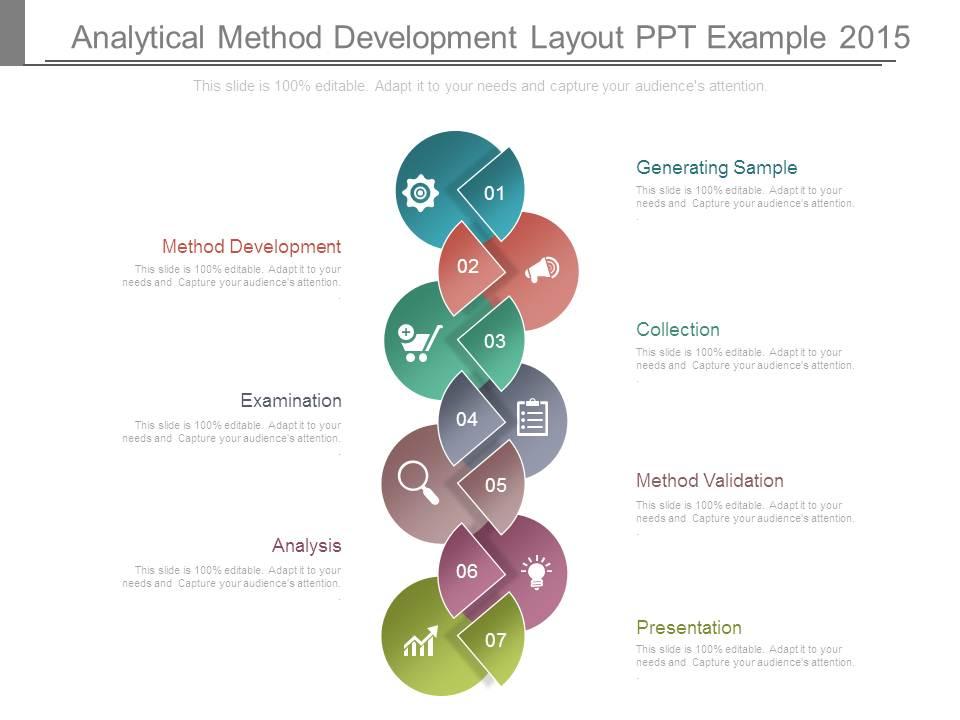
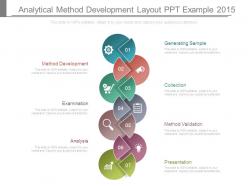
Presenting analytical method development layout ppt example 2015. This is a analytical method development layout ppt example 2015. This is a seven stage process. The stages in this process are generating sample, collection, method validation, presentation, analysis, examination, method development.

People who downloaded this PowerPoint presentation also viewed the following :

FAQs for Analytical method development layout

Okay so basically you start by figuring out exactly what you're trying to measure - that's gonna drive everything else. Pick your analytical technique, then mess around with the parameters like mobile phase and temperature until it's dialed in. Validation is next and honestly it's kind of a pain but you gotta test precision, accuracy, linearity, the whole nine yards. Document everything as you go (yeah I know, super tedious). Once that's done you can roll it out for actual use. Oh and don't forget to keep an eye on how it's performing long-term - methods can drift over time.

Look, method validation is huge for getting reliable results - you're basically proving your method actually works consistently. You'll establish things like precision, accuracy, linearity, all that good stuff under controlled conditions. Regulatory folks eat this up too. Skip validation and your data's gonna get questioned hard, trust me. I learned this the expensive way on a project last year. Short sentences help here. The whole point is knowing your method's limits before you need them. Budget time for proper validation upfront - it'll save you from stakeholders tearing apart your work later.

Chromatography is honestly your go-to for separating compounds when you're developing methods. I'd start by testing different column chemistries and gradient conditions - you want baseline resolution for all your important peaks. HPLC is what I use most, but GC works well if your stuff is volatile. The whole point is dialing in things like mobile phase composition, column choice, and temp to get clean separation of your target from all the junk. Bad separation = bad data, period. It's kinda the backbone of getting good specificity and accuracy in your final method.

Just focus on what you actually need to measure in your samples - don't overthink the theory stuff. Check your regulatory requirements first, that's your target. Run like 10-20 blanks, calculate the standard deviation, then multiply by 3 for your detection limit. People get super obsessed with the math here but honestly? Your practical needs matter way more. You want to detect at least 3-5x below your lowest sample concentration. Oh and definitely validate with real samples, not just standards - learned that one the hard way.

Look at your analyte's polarity and solubility first - that's gonna narrow things down fast. Sample matrix is key too because you don't want solvents screwing with your extraction or causing weird precipitation. pH compatibility becomes huge with LC-MS since some buffers totally wreck ionization (learned that one the hard way). Detection method obviously matters. Safety and cost are no-brainers - benzene's basically extinct now for good reason. Environmental regs too if you're in a regulated lab. I'd start with whatever's most selective for your targets, then tweak from there based on peak shape and retention times. Pretty straightforward once you work through the checklist.

So the biggest things happening right now? AI-driven optimization and real-time analytics are total game-changers. Machine learning can predict optimal conditions way faster than the old trial-and-error stuff - honestly saves ridiculous amounts of time. Portable spectroscopy and mini LC-MS systems are getting crazy good too, bringing real lab-quality work into the field. Green chemistry isn't optional anymore either, which makes sense but adds another layer to think about. Oh, and definitely look into automated method development platforms if you haven't already. The validation timelines alone make it worth it. Papers on this stuff are everywhere lately.

Okay so basically you want to stress-test your method before it bites you later. Pick the stuff that could realistically change in your lab - pH, temp, mobile phase, flow rate, whatever. Then mess with those parameters on purpose and see if everything still works. I typically do like ±10% changes, though honestly some variables are way more finicky than others. Write it all down because you'll definitely need that data later for validation. The whole point is catching the problems yourself instead of having your supervisor find them first - trust me on that one.

First thing - map out your matrix and what you're looking for, then tackle extraction efficiency. Try different solvents, mess with pH, or tweak extraction times while tracking recovery. But seriously, don't get stuck tweaking one thing forever! Move on to cleanup next - test different SPE cartridges or filters. Change one parameter at a time so you actually know what's working. If you've got multiple variables playing together, run a simple DOE. Oh, and document everything as you go - I can't tell you how many times I've regretted not doing this when writing methods up later.

Rushing sample prep is probably the worst mistake you can make. Test with gross real-world samples right away - not just clean standards. Seriously, I've watched so many methods completely fall apart during validation because people got lazy with this step. Document your failures too, weirdly enough they're super useful later. Don't assume your extraction steps work without proper validation first. Oh and stress-test your chromatography early on. Trust me, you don't want to be troubleshooting under deadline pressure when everything's going sideways.

Honestly, you've gotta start writing SOPs right from day one - don't wait until later. I learned this the hard way when a project completely fell apart because we skipped documentation early on. Your team needs consistent procedures for everything: sample prep, equipment calibration, data handling, all of it. Without SOPs, you can't prove your method is robust during validation. Trust me, auditors will tear you apart if you don't have this stuff documented. Even rough drafts work at first - you can always polish them later. But seriously, start now before things get messy.

Think of regulatory guidelines as your cheat sheet for method development - they spell out exactly what validation parameters, acceptance criteria, and documentation you need. ICH Q2, USP, FDA guidance... skip these and you're basically asking for rejection during submissions. Trust me, I found that out the hard way early on! Your method has to hit industry standards for accuracy, precision, specificity, robustness - the whole nine yards. Honestly, just read through the relevant guidelines before you even start developing anything. It sounds boring but you'll thank yourself later when you're not redoing everything from scratch.

Impurities will totally screw up your results - you'll get peak interference, weird retention times, or your analyte might just disappear completely. Matrix effects are the worst, honestly. Better sample cleanup is your first move - try SPE or liquid-liquid extraction. Then mess around with your chromatographic conditions to get cleaner separation. Spiked samples are clutch for spotting matrix interference. Internal standards help too, just pick ones that act like your target compound. Really though, you gotta figure out what specific crud you're dealing with first. That way you can actually fix the right problem instead of just guessing.

Honestly, automation is a game-changer - it just makes everything faster and way more consistent. All that tedious sample prep gets handled automatically, so you're not doing the same injection 200 times like some kind of lab robot. Your data becomes super reliable too since there's no human error messing things up. No more "was that weird peak because I hadn't had my second coffee yet?" moments. These systems can run overnight while you're binge-watching Netflix, which speeds up method development like crazy. My advice? Start with whatever's eating up most of your time - that's where you'll actually notice the difference.

Change one thing at a time - that's literally the only way to figure out what's broken. Sample prep screws people over most often, so start there. Then mess with your instrument settings like flow rate or temp. Honestly, keep a notebook of what you tried because you WILL forget. I learned this the hard way after repeating the same failed experiment three times. Run your standards regularly to make sure the method's not drifting on you. Write everything down as you go. When you're stuck, hit up the literature or just call the vendor - they've definitely dealt with your exact problem before.

So basically you'll want to run the same sample like 6-10 times to check repeatability - same person, same instrument, same day. Shoot for under 2% RSD if you can. Reproducibility is trickier though, you're testing different days, maybe different people or labs. Honestly the hardest part is making sure you're actually controlling what you think you are. I'd start with repeatability first because if that's all over the place, there's no point testing the other stuff yet. Oh and document literally everything - the regulatory people are gonna pick through this data with a fine-tooth comb later.

Ratings and Reviews

90% of 100
Review Form
Write a review
Most Relevant Reviews
  1. 80%

    by O'Sullivan Evans

    Visually stunning presentation, love the content.
  2. 100%

    by Curtis Herrera

    Colors used are bright and distinctive.

2 Item(s)

per page: