


Personal Development Plan For Project Manager




Try Before you Buy Download Free Sample Product
 Impress Your
 Audience
 100%
100% Editable
 Save Hours
 of Time


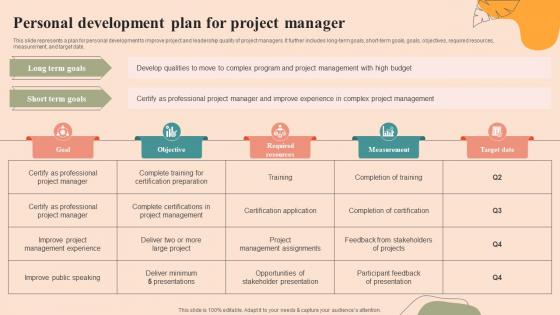
This slide represents a plan for personal development to improve project and leadership quality of project managers. It further includes long term goals, short term goals, goals, objectives, required resources, measurement, and target date.
People who downloaded this PowerPoint presentation also viewed the following :
Personal Development Plan For Project Manager with all 9 slides:
Use our Personal Development Plan For Project Manager to effectively help you save your valuable time. They are readymade to fit into any presentation structure.








FAQs for Personal Development Plan
Honestly, it boils down to four main things. First, figure out where you are now - what skills you have, what you're missing. Then set super specific goals, not vague stuff like "be a better leader" but actual concrete targets with deadlines. Break those down into weekly actions you can track. Oh, and quarterly check-ins are a must because otherwise your plan just sits there forgotten while life happens. I learned this the hard way - made these elaborate development plans that I'd completely ignore after like two months. Regular reviews keep everything on track when priorities inevitably shift around.
Honestly, just sit down and figure out what you're actually good at versus what makes you want to hide under a desk. I know it sounds obvious, but most of us suck at this self-awareness thing. Get some real feedback from people you work with - they'll tell you stuff you'd never notice about yourself. Then look at job postings for roles you want and see where the gaps are. That's your roadmap right there. Write it down somewhere you won't lose it, because tracking progress is weirdly motivating. Oh, and don't just focus on technical stuff - soft skills matter way more than people think.
Honestly, goals are what keep you from just spinning your wheels hoping things get better somehow. You need that direction and clear milestones to hit. Make them specific enough that you'll actually know when you've won - none of that vague "get better at communication" stuff. I always do a mix of quick wins and bigger stretch goals because the small ones keep you going when the big ones feel impossible. Oh, and deadlines matter way more than people think. Grab 2-3 concrete things you want to tackle and put actual dates on them this week.
Okay so you've probably heard of SMART goals but they actually work - make them Specific, Measurable, Achievable, Relevant, and Time-bound. Like instead of saying "get better at presentations," go with "finish a public speaking workshop and do three team presentations by June." Way more concrete, right? I totally bombed this before by setting super vague goals that just... disappeared. Now I break the big stuff into smaller chunks so I can actually feel good about progress. Write down 2-3 things you want to accomplish, then figure out the steps backwards. Oh and pick metrics you can genuinely track - otherwise you're just guessing if you're succeeding.
Honestly, you gotta break this down into tiny wins and actually celebrate them - even the stupid small stuff. I do weekly check-ins with myself to see what's working. Getting an accountability buddy helps too because it's way harder to give up when someone's asking about your progress. Also figure out your real "why" - not just surface level but like why you actually care about this goal. When I'm feeling unmotivated (which happens), I look back at what I've already accomplished. Reminds me I'm not totally hopeless lol. Pick one thing to track this week that shows you're moving forward, even slightly.
Honestly? I'd say check it every 3 months or so, then do a bigger review once a year. The quarterly thing doesn't have to be fancy - maybe 20 minutes tops just to see if you're still headed where you want to go. Life throws curveballs constantly, right? New projects, priorities shift, random opportunities appear. Those quick check-ins let you pivot without getting completely off track. Your yearly review is where you can really dig into the bigger picture stuff and maybe completely change direction if needed. Just throw 30 minutes on your calendar for next month and start there.
Honestly, I've tried a bunch of different things for this. Notion and Trello are solid if you like digital stuff - super easy to set up goals and track milestones. But habit-tracking apps? Game changer. Habitica turns everything into like a video game which sounds dumb but actually works. Google Sheets is boring but gets the job done too. Some people swear by bullet journaling if you're more of a pen-and-paper person. Pick whatever won't annoy you after two weeks. I started with three different systems before finding what stuck, so don't stress about choosing perfectly right away.
Go ask people who actually see your work - your boss, coworkers, maybe people under you if you manage anyone. But here's the thing: don't just say "how am I doing?" That'll get you nowhere. Ask stuff like "what's one thing I should work on?" Way more useful. Look for patterns when multiple people mention the same issues. That's your roadmap right there. Turn those into real goals you can actually measure progress on. Oh, and circle back later to show you didn't just ignore their advice - people appreciate that more than you'd think.
Honestly, the worst thing you can do is try changing everything at once. I made that mistake before - total burnout. Pick like 2-3 things max and break them down small. Don't be vague either, like "communicate better." That's useless lol. Try stuff like "ask two questions in every meeting" or "do one presentation monthly." Way more concrete. Oh and actually check in with yourself regularly or your whole plan just sits there doing nothing. I swear half the battle is just remembering to look at the thing again in a few weeks.
Honestly, I'd start with where you wanna be in like 2-3 years, then figure out what's missing to get there. If management's the goal, you gotta focus on leadership stuff and learning to delegate - though yeah, technical skills still matter. Talk to your manager regularly about this stuff so they can actually help set up opportunities that make sense. I learned this the hard way, but everything you work on should tie back to that bigger picture somehow. Otherwise you're just checking boxes. The whole thing's really about being strategic instead of just taking whatever development comes your way.
Honestly, networking is such a game-changer because you get exposed to completely different perspectives. Like, you'll discover career paths you didn't even know existed and pick up skills just from random conversations. It's wild how explaining your own work to strangers actually clarifies your thinking too. The people you meet often become mentors or collaborators who push you out of your comfort zone - sometimes they even become genuine friends. Oh, and your confidence shoots up way faster than you'd expect. Start simple: reach out to one new person in your field weekly. Even just grabbing coffee works.
Honestly, self-reflection is like having a personal GPS for your life. You'll start noticing patterns in what you do - the good stuff and the habits that are basically sabotaging you. I used to skip this completely and just wondered why I kept making the same mistakes over and over. Now I spend maybe 10 minutes a week just writing down what went well and what was a total disaster. Sounds cheesy, but it actually works. You catch yourself before those bad patterns get too stuck. Ask yourself what you'd change next time - that's where the real growth happens.
Honestly, just weave it into stuff you're already doing instead of adding more to your plate. I grab 15 minutes during lunch for reading, or throw on podcasts while driving. Used to think I needed these massive time blocks but that never happened lol. Your commute is prime real estate for learning if you're not already maxing it out. Weekend mornings can work too, assuming you don't have kids crawling all over you. Pick just one thing to focus on though - I made the mistake of trying everything at once and burned out hard. Short bursts beat grand plans every time.
Honestly, just chop those big scary problems into tiny pieces you can actually handle. Celebrate the small wins too - sounds cheesy but it works. When I get stuck, I try to figure out what exact skill I'm missing instead of panicking about everything at once. Having someone to vent to helps a lot. Oh, and plan for the stuff that'll probably go wrong before it happens - like "if my laptop crashes, I'll use the library computers" or whatever. Each mess-up teaches you something, even if it sucks at the time. I actually write down what went wrong and how I'd do it differently next time.
Honestly, online courses are great for targeting those specific skills you're missing. Just be strategic about it - don't become a serial certificate collector (guilty as charged lol). Pick ones with actual projects where you'll practice right away. I love being able to rewatch stuff when it doesn't click the first time. But here's the thing - you've got to block out real time each week or you'll join the club of people with 47 unfinished courses. Finish one completely before jumping to the next. Then actually use what you learned somewhere.
-
I am a big fan of their newsletters because that is how I found my perfect requirement at the time of urgency. Thank God, I kept opening those.
-
“I always have a wonderful experience with SlideTeam. It's my ""go to"" when I need a template.”