


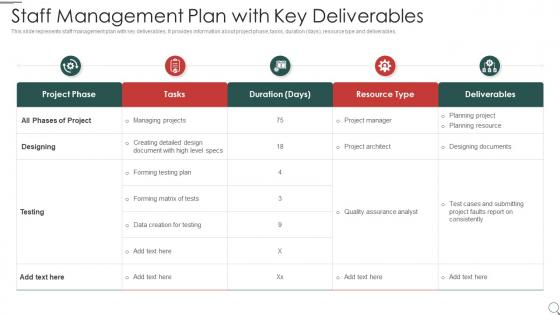
Staff management plan with key deliverables




Try Before you Buy Download Free Sample Product
 Impress Your
 Audience
 100%
100% Editable
 Save Hours
 of Time


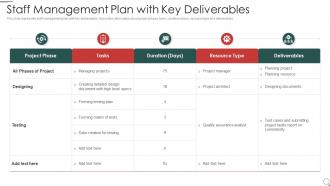
This slide represents staff management plan with key deliverables. It provides information about project phase, tasks, duration days, resource type and deliverables.
People who downloaded this PowerPoint presentation also viewed the following :
Staff management plan with key deliverables with all 6 slides:
Use our Staff Management Plan with Key Deliverables to effectively help you save your valuable time. They are readymade to fit into any presentation structure.





FAQs for Staff management plan
An effective staff management plan should include clear organizational structure, defined roles and responsibilities, performance evaluation systems, training and development programs, and communication protocols. These elements work together by streamlining workflow processes, enhancing employee engagement, and establishing accountability frameworks, with many organizations finding that comprehensive plans ultimately deliver improved productivity and reduced turnover rates.
Performance metrics can be incorporated through goal-setting frameworks, regular assessment intervals, productivity tracking systems, and feedback mechanisms that align individual contributions with organizational objectives. These data-driven approaches enable managers to identify performance gaps, recognize high achievers, and optimize resource allocation, with many organizations finding that structured metrics ultimately enhance accountability, streamline workflow processes, and deliver measurable improvements in overall team efficiency.
Employee feedback serves as the foundation for effective staff management plans, providing insights into workplace satisfaction, operational challenges, skill development needs, and process improvements. Through regular surveys, one-on-ones, and performance reviews, organizations can identify retention risks, optimize workflows, and align management strategies with employee expectations, ultimately creating more engaged teams and reducing turnover costs.
A staff management plan addresses multi-generational needs by implementing flexible communication channels, varied recognition programs, customized training approaches, and adaptable work arrangements that cater to different generational preferences and expectations. Through strategic combination of mentorship programs, technology integration, and individualized career development paths, organizations streamline team cohesion while enhancing productivity across age groups, ultimately delivering improved retention and workplace satisfaction.
Best practices for aligning staff management plans with organizational goals include establishing clear performance metrics, implementing regular goal-setting sessions, creating transparent communication channels, developing skills-based training programs, and conducting quarterly alignment reviews. These approaches streamline organizational cohesion by connecting individual contributions to strategic objectives, enhancing accountability, and improving resource allocation, with many companies finding that structured alignment processes deliver higher employee engagement and measurable business outcomes.
Technology enhances staff management through HR management systems, communication platforms, performance tracking tools, scheduling software, and mobile applications. These solutions streamline operations by automating administrative tasks, enabling real-time feedback, and facilitating remote collaboration, with many organizations finding that integrated platforms ultimately deliver improved productivity, reduced operational costs, and enhanced employee engagement across departments.
Remote staff management strategies include clear communication protocols, regular performance check-ins, collaborative project management tools, flexible scheduling frameworks, and outcome-based accountability measures. These approaches streamline coordination by establishing consistent touchpoints, enhancing transparency through digital workflows, and maintaining team cohesion, with many organizations finding that structured virtual management ultimately delivers improved productivity and employee satisfaction.
A staff management plan promotes engagement and retention by establishing clear career paths, providing regular feedback mechanisms, implementing recognition programs, and creating professional development opportunities. Through structured communication channels and performance management systems, organizations streamline talent development while enhancing job satisfaction, ultimately delivering reduced turnover costs and stronger workplace culture with improved productivity.
Approaches include mediation and conflict resolution protocols, clear communication channels, performance improvement plans, team restructuring, and structured feedback systems. These methods streamline workplace dynamics by addressing issues proactively, establishing transparent expectations, and creating supportive environments, with many organizations finding that systematic conflict management ultimately delivers improved productivity and employee retention.
Staff management plans should evolve through regular strategic assessments, workforce analytics reviews, skill gap analyses, and alignment with updated business objectives and market conditions. Organizations increasingly implement quarterly planning cycles that integrate changing business priorities with emerging workforce trends, enabling them to adjust talent strategies, restructure teams, and reallocate resources proactively, ultimately maintaining competitive advantage.
Training and development opportunities should include skills enhancement programs, leadership development courses, cross-functional training, mentorship initiatives, and professional certification support. These programs streamline talent retention by building competencies, enhancing career progression, and improving operational efficiency, with many organizations finding that strategic workforce development ultimately delivers higher employee engagement and competitive advantage.
A well-structured staff management plan supports diversity and inclusion through targeted recruitment strategies, comprehensive bias training programs, equitable performance evaluation systems, and inclusive leadership development pathways. These frameworks enable organizations to build representative teams across all levels, foster belonging through structured mentorship opportunities, and create accountability measures that drive meaningful cultural change, ultimately enhancing innovation and competitive advantage.
Key metrics include employee retention rates, productivity measurements, engagement survey scores, absenteeism levels, and performance goal achievement rates. These indicators enable organizations to assess workforce stability, operational efficiency, and staff satisfaction, with many companies finding that tracking these metrics quarterly delivers improved resource allocation, reduced turnover costs, and enhanced competitive advantage through strategic talent management.
A staff management plan fosters collaboration through cross-functional project assignments, team-based performance metrics, shared goal-setting processes, and regular collaborative workshops. These strategies enhance teamwork by breaking down departmental silos, encouraging knowledge sharing, and aligning individual objectives with collective outcomes, with many organizations finding that structured collaboration frameworks ultimately deliver improved innovation and operational efficiency.
Legal and ethical considerations include compliance with labor laws, anti-discrimination policies, data privacy regulations, workplace safety standards, and fair compensation practices. These frameworks ensure organizations maintain ethical hiring processes, transparent performance evaluations, and equitable treatment across all employee levels, while protecting against legal liabilities and fostering trust, ultimately delivering sustainable workforce management and enhanced organizational reputation.
-
Wonderful templates design to use in business meetings.
-
Appreciate the research and its presentable format.