

Staffing management plan for project project management professional toolkit




Try Before you Buy Download Free Sample Product
 Impress Your
 Audience
 100%
100% Editable
 Save Hours
 of Time


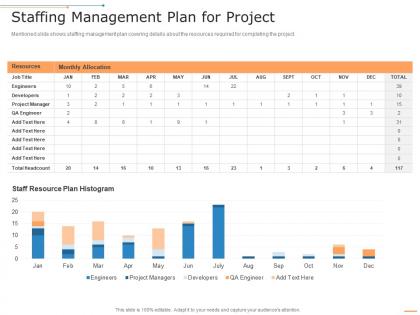
Mentioned slide shows staffing management plan covering details about the resources required for completing the project.
People who downloaded this PowerPoint presentation also viewed the following :
Staffing management plan for project project management professional toolkit with all 2 slides:
Use our Staffing Management Plan For Project Project Management Professional Toolkit to effectively help you save your valuable time. They are readymade to fit into any presentation structure.
FAQs for Staffing management plan for project project
Honestly, just focus on five main things for your staffing plan. Map out what roles and skills you actually need first - that's your foundation. Timeline comes next because you gotta know when people start and finish up. Budget for everything (salaries, contractors, the whole deal) under resource allocation. Figure out how you'll find these people too - promoting internally, recruiting, whatever works. Training is obvious but people forget about it constantly. The release plan handles transitions when someone's work wraps up. Oh, and definitely tackle roles and timeline first since they'll basically dictate everything else. Makes the whole process way less overwhelming.
Start with your project goals and work backwards from there. Map out what specialized skills you'll need and when - timing is everything. I learned this the hard way when our best developer was basically twiddling his thumbs for weeks because we screwed up the sequencing. Match your team size to each phase's complexity. Incremental delivery? Staff accordingly. The critical path stuff will bite you if you don't think through those resource dependencies early. Oh, and don't fall into the trap of building your staffing plan first then forcing your project to fit - that never works out well.
Honestly, you can't skip talking to stakeholders when planning your staffing - they're the only ones who actually know what's needed. Hit up project sponsors, functional managers, team leads, even end users. Documents lie, but people will tell you the real deal about timing, budget constraints, and those weird skill gaps nobody mentions upfront. Getting their input early saves you so much headache later. Trust me, you don't want pushback when you're trying to get specific people assigned. I learned this the hard way on my last project. Schedule those conversations before you lock anything down.
Honestly, start with time-to-fill and turnover rates - those are your bread and butter metrics. How long new hires take to get productive matters too, plus cost-per-hire if budget's tight. I always think employee satisfaction scores are underrated though, they'll tell you if people actually want to stay. Diversity numbers and internal promotions are worth tracking if that's a priority. Don't go overboard with data - pick maybe 3-4 that actually matter for your team. Monthly tracking works best so you can catch problems before they get messy.
First thing - figure out what skills you actually have vs what you need. Sounds obvious but most people skip this step. Look at your current team first since they might already have hidden talents you don't know about. Cross-training works great for some gaps, but you'll probably need to hire externally for the really specialized stuff. Contractors can be clutch for short-term needs too. Just make sure you're doing regular check-ins because project requirements change constantly and you don't want to get caught off guard. Oh, and write this stuff down - trust me, you'll forget the details later when you're scrambling.
Honestly? Budget issues will be your worst enemy. Finding the right people takes way longer than you think - especially if you need someone with niche skills. Last-minute scope changes are the absolute worst because they wreck your entire staffing plan. People get yanked onto "emergency" projects constantly, plus you'll have unexpected departures. I swear, it's like herding cats sometimes. Build in extra time for everything and keep a list of backup candidates ready. Also, make sure leadership actually supports what you're doing upfront, otherwise you'll be begging for resources later.
Honestly, tech makes staffing so much easier if you do it right. HR software automates scheduling and tracks who's certified for what - super helpful when projects ramp up. You'll spot patterns too, like which positions take forever to fill or where your budget's disappearing. Job posting and screening candidates becomes way less of a headache with digital platforms. Just don't go crazy adding random apps that don't talk to each other (learned that one the hard way). Pick stuff that actually works with what you've got already.
Honestly, start by digging through your old project data - sounds boring but it's super helpful. Check team sizes, what roles you needed when, and how long everything took. I always map out skill gaps early because nothing's worse than realizing you need three devs but can only afford two (been there). Don't forget about seasonal stuff and turnover rates. Update your forecast every few months. Oh, and factor in training time - new hires don't just magically know everything on day one. Also watch for tech changes that might shift what skills you'll actually need.
When you're building diverse teams, culture seriously changes everything about staffing. Different communication styles matter huge - some people are super direct, others dance around feedback. You'll want to think about who works well together based on that stuff. Holiday schedules vary wildly too, plus attitudes toward meetings and deadlines. Honestly, I've seen teams crash and burn because nobody thought about hierarchy expectations beforehand. Time zones are obvious for global teams, but the cultural piece runs way deeper. Map this out early so you're creating complementary combinations instead of accidentally setting people up to clash.
Ugh, turnover is the worst - it's like trying to plan anything when people keep disappearing on you. You'll be scrambling to figure out if you actually need to replace someone or if you can just shuffle things around. And of course nobody ever quits at a good time (is there even such a thing?). Knowledge walks out the door, training eats your budget, projects get pushed back. Honestly, the only thing that's saved me is always planning for extra capacity from the start. Also keep some good candidates on standby so you're not posting job ads in panic mode when someone drops their two weeks notice.
Honestly, start with figuring out what skills you're actually missing - do a quick inventory of your current team first. Then you've got three main options: hire new people, train who you already have, or bring in contractors for specific stuff. I'd prioritize the urgent gaps though - like yeah, get that cybersecurity person before worrying about Excel training. The whole point is being ahead of the game instead of scrambling later. Compare what you have now against what you'll need for upcoming projects. It's way less stressful when you're not constantly playing catch-up.
Honestly, training and development is what connects your current team's skills to what you actually need for the project. Don't just hire people and cross your fingers they know everything - we've all made that mistake! Spot skill gaps early in your staffing plan, then figure out how to fill them. Maybe that's training, mentoring, or bringing in experts. People stick around longer when they're learning new stuff too, which is nice. Oh, and build your training timeline into the project schedule right from the start. Treating it like an afterthought never works out well.
Build flexibility right into your staffing from day one. Cross-train people, set up temp staffing deals, and map out who could step up if someone leaves. When chaos hits (which it will, probably on a Friday afternoon), you'll already know who can cover what. Keep a running list of everyone's skills so you're not guessing who can handle different roles. Having backup plans beats scrambling during a crisis every time. Document your critical positions and find at least two people who could potentially fill each one. Multiple options = way less stress when things go sideways.
Honestly, get your compliance stuff sorted right from the start - employment law, discrimination rules, wage requirements, all that fun stuff. Your hiring criteria need to be directly tied to the actual job, and document literally everything. EEOC guidelines aren't optional either. Labor laws are such a headache, especially if you're dealing with multiple states. Union agreements too if that's relevant to your industry. Oh, and any weird industry-specific rules you might have. Trust me, bring HR and legal into this early. Trying to fix compliance issues after the fact is a nightmare you don't want.
Honestly, staffing plans are never "set it and forget it" - the market's always shifting under your feet. High demand for certain skills? You're stuck offering better pay or scrambling to find new talent pools. Economic downturns hit and suddenly you're freezing hires or switching to contractors for flexibility. Then there's stuff like AI completely flipping what skills people actually need (which is happening faster than anyone expected, tbh). The trick is baking flexibility right into your plan upfront. That way when things change - and they will - you can pivot instead of panicking.
-
Innovative and Colorful designs.
-
Designs have enough space to add content.
-
Thanks for all your great templates they have saved me lots of time and accelerate my presentations. Great product, keep them up!