


Establishing Plan For Successful Project Management Team Staffing Plan For Effective Project




Try Before you Buy Download Free Sample Product
 Impress Your
 Audience
 100%
100% Editable
 Save Hours
 of Time


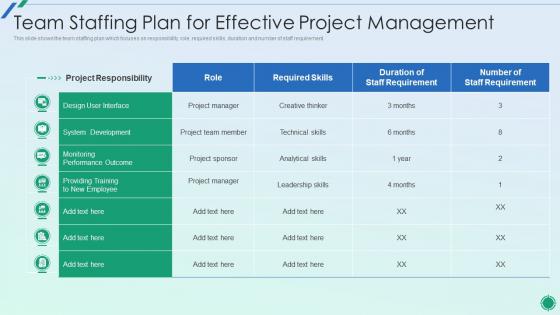
This slide shows the team staffing plan which focuses on responsibility, role, required skills, duration and number of staff requirement.
People who downloaded this PowerPoint presentation also viewed the following :
Establishing Plan For Successful Project Management Team Staffing Plan For Effective Project with all 6 slides:
Use our Establishing Plan For Successful Project Management Team Staffing Plan For Effective Project to effectively help you save your valuable time. They are readymade to fit into any presentation structure.





FAQs for Establishing Plan For Successful Project Management Team Staffing Plan
So you've got your Project Manager running the show overall. Business Analyst handles all the requirements stuff. Technical Lead owns the dev work, QA Lead covers testing. If you're doing Agile, there's usually a Scrum Master too - though honestly that role and PM can get pretty blurry depending on how your company does things. Everyone sticks to their area but you're constantly talking about deadlines, deliverables, risks, all that. Oh and definitely figure out who's doing what upfront. Trust me on that one - saves so much headache later when things get crazy.
Honestly, I'd start by mapping out your project phases first - that's always been the easiest way for me to see the big picture. Then work backwards from each milestone and figure out what skills you actually need. Don't forget the boring stuff like client communication or documentation (learned that the hard way). Once you've got your skills inventory down, compare it against your current team. You'll probably spot some gaps pretty quick. From there, decide if you want to train people up, hire new folks, or just bring in contractors for the tricky bits.
Honestly, I'd start by figuring out exactly what skills you're missing - like do a quick audit or whatever. Training your current people usually makes the most sense since they already get the project and you trust them. But if you're in a time crunch, contractors can jump in fast (though they're pricier). You could also see if other departments can lend you someone temporarily - that works pretty well. Sometimes you just gotta bite the bullet and hire permanent staff if it's a big ongoing gap. Really depends on your timeline and how much budget you've got to work with.
Honestly, diverse teams are game-changers for projects. People from different backgrounds think about problems totally differently, so you end up with way more creative solutions. It's like having multiple sets of eyes checking your work - they'll spot issues you'd completely miss. Different skill sets mean you understand what stakeholders actually want better too. I've seen teams where someone's cultural perspective totally changed how they approached the market. The tricky part? You can't just mix people together and expect magic. You've got to actually get them talking and collaborating, which takes some effort.
Track your sprint velocity and whether you're hitting deadlines - that's the obvious stuff. But honestly? The team happiness metrics matter just as much. Do regular retrospectives to see how people are actually feeling. Code quality, knowledge sharing between teammates, stakeholder feedback - all super important too. I'd say start with maybe 3-4 key things you can realistically monitor instead of trying to measure everything under the sun. You can always add more later once you figure out what actually moves the needle for your specific project.
Dude, cultural fit matters SO much for project teams. Like, you could hire the smartest developer ever, but if they don't vibe with how your team communicates or works together? Total disaster. I've watched this blow up projects before - it's painful. When you're hiring, definitely get your current team involved in interviews. They'll know right away if someone fits. Look for people who handle problems the same way you do, or at least won't constantly butt heads over every little thing. Oh, and how they deal with disagreements is huge too. Trust me on this one.
Honestly, you want them feeling useful fast while they're getting to know everyone. First week should be pretty structured - introduce them around, show them current projects, get their tech setup done. I always assign a buddy who isn't their manager for all those random questions like where's good lunch spots or whatever. Don't just do the standard HR check-ins either - actually schedule real conversations their first month. Give them something small they can finish in a few days so they're not just sitting there reading policies. Oh, and be super upfront about how you communicate and what you expect from the start.
Honestly, go for like 70% senior PMs and 30% junior - that's worked best in my experience. Your seniors can tackle the messy stakeholder situations and high-stakes projects. Junior folks are great for smaller stuff while they're learning the ropes. I've watched teams completely implode when they hired too many juniors at once (total nightmare). Expensive as hell to go all-senior though. Pair each newbie with someone experienced for their first few projects so they actually pick up your processes. Oh, and create some kind of promotion track early - otherwise your good junior people will just leave for senior roles at other companies. Track who's showing potential fast.
Oh man, remote PM work is a whole different beast. Communication gets way more deliberate - no more just walking over to bug someone at their desk. Decision-making usually slows down at first while everyone figures out the async thing, though honestly some teams end up running smoother once they get their shit together. The hardest part? Keeping everyone connected when you're missing all those random coffee chats. Your documentation game has to be on point too since people miss context constantly. I'd say start by over-communicating like crazy and set up regular check-ins that aren't just boring status updates.
Dude, you've gotta get stakeholders involved early or you'll regret it later. They control the budget and know what skills they actually want on the team. I've watched so many projects crash because someone forgot to include the right person in staffing calls - it's honestly painful to watch. Plus they usually know about internal people you haven't even heard of yet. Keep them updated on how hiring's going and where you're stuck. When you hit roadblocks (and you will), they can often bulldoze through barriers that would take you weeks to handle alone.
So team size is huge for how fast you can make decisions and how much time you waste coordinating. Keep it small - like 3-7 people - and you'll move way faster with less drama about who's doing what. Bigger teams can handle more stuff obviously, but here's the thing: every person you add makes communication exponentially messier. You end up in meetings about meetings, you know? I'd say start with a tight core group and pull in specialists when you actually need them for specific parts. Way better than loading up your team from day one and watching productivity tank.
Honestly, most good PMs bail because of crappy managers, not the company itself. Give them meaty projects that actually challenge them - stuff they can sink their teeth into. Clear paths for moving up are huge too. I'd also say don't wait for annual reviews to give feedback; do it regularly. Yeah, pay matters, but mentorship and letting them run with initiatives they care about? That's gold. Oh, and actually listen when they have opinions about team decisions. Just ask them straight up what they want career-wise and help make it happen.
Honestly, ditch the gut feeling approach and let data do the heavy lifting. Project management tools can track your team's actual skills and availability in real-time - way better than guessing who's good at what. There's some wild AI stuff now that'll suggest team lineups based on project needs and past performance. Resource management software shows you workloads so you catch bottlenecks early. I'd start small though - just build a skills matrix in whatever PM tool you're already using. It's crazy how much you don't actually know about your team's capabilities until you map it out properly.
Look, role overlap is tricky - it can totally work in your favor or mess things up. When done right, your team shares knowledge better and you've got backup when someone's swamped. But too much? People start bumping into each other, duplicating work, and honestly it gets expensive fast. What I'd do is give everyone a clear primary responsibility, then maybe one or two secondary areas they can help with. That way there's no confusion about who's actually driving what. Trust me, nobody wants to be that person asking "wait, whose job is this again?" in every meeting.
Don't make learning an afterthought - weave it into your regular routine. Monthly lunch-and-learns work great where people share cool tools they've found. Send PMs to conferences, then have them report back to everyone else. Cross-project shadowing is honestly underrated - junior PMs learn tons just watching senior ones handle tricky client calls. A basic skills matrix helps track development goals (I'd check quarterly, not obsessively). The trick is making it automatic instead of "we'll do this when things calm down." Which, let's be real, never happens. Start small - just one 30-minute session next month and build from there.
-
Content of slide is easy to understand and edit.
-
Thanks for all your great templates they have saved me lots of time and accelerate my presentations. Great product, keep them up!