

Pestel Analysis Of Food Manufacturing Industry Ppt Powerpoint Topics Formates




Try Before you Buy Download Free Sample Product
 Impress Your
 Audience
 100%
100% Editable
 Save Hours
 of Time


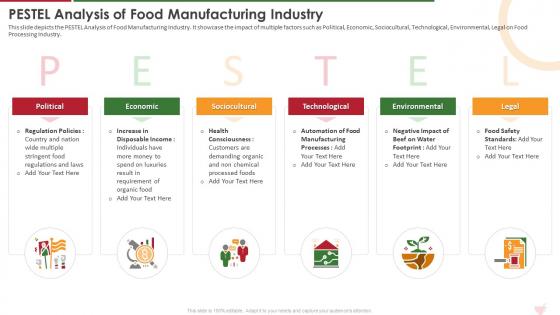
This slide depicts the PESTEL Analysis of Food Manufacturing Industry. It showcase the impact of multiple factors such as Political, Economic, Sociocultural, Technological, Environmental, Legal on Food Processing Industry.
People who downloaded this PowerPoint presentation also viewed the following :
Pestel Analysis Of Food Manufacturing Industry Ppt Powerpoint Topics Formates with all 6 slides:
Use our Pestel Analysis Of Food Manufacturing Industry Ppt Powerpoint Topics Formates to effectively help you save your valuable time. They are readymade to fit into any presentation structure.





FAQs for Pestel Analysis Of Food Manufacturing Industry Ppt
So PESTEL breaks down to Political, Economic, Social, Technological, Environmental, and Legal - basically all the outside stuff that can screw with your business. Here's the thing though, they're super connected. Political drama leads to new laws, economic changes shift how people act, tech creates environmental headaches... you get it. I always tell people to map out the obvious stuff first in each bucket. Then hunt for the connections between them - honestly that's where the good insights hide. You can't just look at them separately because they feed into each other constantly.
So basically you want to go through each PESTEL thing and ask yourself how it affects your business - like what new opportunities pop up or what might screw you over. Map out what's happening in politics, economics, social stuff, tech, legal, and environmental areas in your industry. Don't be vague though - instead of "recession = bad," think about how higher interest rates might actually bring you different customers. I usually just make a simple chart for each factor with opportunities on one side, threats on the other. Then rank them by how likely they are and how much they'd actually matter. Oh and do this every quarter, not just once and forget about it.
So basically, politics totally controls how businesses can actually operate in different places. Governments mess with tax rates, throw around tariffs, change rules about foreign investment - and boom, your whole business model shifts overnight. Trade wars are the perfect example (we've all seen that mess lately). Currency gets wonky when there's political drama too, which affects everything from investor confidence to how much people spend. Honestly, the unpredictability is the worst part. When you're analyzing markets, just map out the major political risks for each region and have backup plans ready.
For the economic part of PESTEL, start with the big ones: GDP growth, inflation, unemployment, consumer spending. Interest rates are massive - they mess with both your costs and what customers can actually afford. Exchange rates matter if you're doing anything international. Income trends and economic cycles too, obviously. Honestly, the hardest part isn't finding the data, it's figuring out what actually matters for your specific situation. Pick 3-4 economic factors that really move the needle in your industry. Then just check them regularly so you're not caught off guard when things shift.
The 'S' in PESTEL is basically tracking how society's changing - and honestly, it's probably the most interesting part. Remote work completely flipped where people shop and what they care about, right? Values around sustainability, family structures, lifestyle trends - all of that stuff directly changes what customers want from you. I always tell people to watch early signals in social movements or cultural conversations before they blow up. Like, demographic shifts usually predict buying patterns way before they actually happen. Short version: catch these social waves early and you'll spot consumer behavior changes before your competition does.
So for PESTEL's tech factor, you're basically watching how new tech creates opportunities in your space. AI, automation, digital stuff - it's all changing how companies work and treat customers. Honestly, the whole "spot trends early" thing sounds cliche but it's true. Either jump on new tech fast or get ready to be disrupted. Blockbuster learned that the hard way with Netflix, right? I'd suggest doing quarterly check-ins on which emerging tech might mess with your business model or what customers expect. Don't be the company that ignores this stuff and gets left behind.
Look at carbon pricing and emissions rules first - that's where the money hits. Consumer demand is shifting hard toward green products, and honestly that's only getting stronger. Check water availability and raw material costs too since supply chains are getting hammered by climate stuff. Tax breaks for sustainable practices can actually save you decent cash. Biodiversity regs are tightening up everywhere. Oh, and waste management requirements - those vary tons by location but they're getting stricter. Map out which factors directly mess with your operations and costs. That's where you'll spot the real strategic moves.
Legal stuff can totally flip your business strategy depending on where you're expanding. Employment laws, data rules, environmental regs - they're all different country to country and directly change how you operate. GDPR in Europe vs. looser data laws elsewhere? That's a completely different data strategy right there. You'll be tweaking hiring practices, workplace policies, supply chains, customer data handling - honestly, everything. My advice? Map out the legal landscape super early in your planning. Way easier to build compliance in from the start than scramble to fix things later when you're already committed.
Look at Netflix - they saw streaming tech and binge-watching habits coming way before competitors did, so they ditched DVDs early. Genius timing honestly. McDonald's does something similar by tweaking menus for different countries (rice burgers in Asia, no beef in India). Uber's smart about it too - they study local regulations before launching anywhere new, which has saved them tons of legal drama. The key thing? These companies don't just do PESTEL analysis once and forget about it. They're constantly checking back on those factors. That's probably why they stay ahead while others get blindsided.
Honestly, most companies do it once a year, but that's kinda lazy if you're in tech or retail where things change constantly. Those industries? Go quarterly. Set up Google alerts for stuff that could hit your business - new regulations, economic shifts, whatever. COVID taught us that waiting for your annual review is pretty stupid when the world's falling apart. Stable industries can probably stick with yearly analysis. But here's the thing - you've gotta jump on major events when they happen. Brexit didn't wait for anyone's planning cycle, you know? Schedule regular check-ins but don't be rigid about it.
Honestly, PESTEL research is such a pain because the data is everywhere and never stops changing. Political stuff gets buried in random government docs. Economic numbers are spread across like five different agencies. Social trends are impossible to track down reliably - half the time you're just guessing based on Twitter or whatever. Environmental and legal changes happen overnight, so by the time you finish analyzing something, it's already old news. Tech moves ridiculously fast too. Set up Google alerts for each category though, that helps. Also do weekly updates instead of cramming it all into one marathon session.
So PESTEL is basically your CSR radar - it spots opportunities and risks you might miss otherwise. Political stuff helps you catch new sustainability regulations before they hit. Economic conditions show you what stakeholders actually care about when budgets get tight. Social trends? That's where you figure out if you're aligned with what communities want (or totally off-base). Environmental factors are the obvious ones - carbon footprint, waste, all that. Tech opens up new ways to make an impact, and legal keeps you from getting blindsided by compliance issues. Try mapping what you're already doing against each factor first. You'll probably find some glaring gaps pretty quickly.
PESTEL works okay as a starting point, but honestly it's pretty clunky for fast industries. By the time you finish analyzing crypto regulations or AI policies, they've already changed twice. Everything's interconnected too - political shifts immediately hit tech development, which impacts social trends. It's like trying to map a river while you're white-water rafting. The traditional categories don't really capture how quickly new business models pop up either. What I'd do? Use it as your baseline but set up monthly check-ins. Focus on where trends are heading instead of where they are right now.
PESTEL's pretty solid for catching problems early instead of scrambling later. You scan political stuff (new regulations), economic shifts (recession hitting your customers), social changes that might kill demand for your product, tech that could make you obsolete overnight - honestly, that one keeps me up at night sometimes. Environmental regulations can bite you too, plus legal changes creating lawsuit risks. Think of it like a early warning system. I'd run through it every quarter, update your risk list, then actually plan for the worst-case scenarios you find.
PESTEL's honestly a lifesaver for international stuff. It breaks down each country's political risks, regulations, cultural quirks - basically everything that could torpedo your launch. I've watched teams ignore obvious cultural mismatch signals that would've been caught with this framework. Plus it helps you rank which markets to hit first by comparing all the external factors side by side. The cool part? Forces everyone to think past just profit margins. Like, sure the numbers look good, but what about that new trade policy or local consumer behavior? Run your target markets through it before making any big moves. Super straightforward but catches things you'd totally miss otherwise.
-
Enough space for editing and adding your own content.
-
Illustrative design with editable content. Exceptional value for money. Highly pleased with the product.