


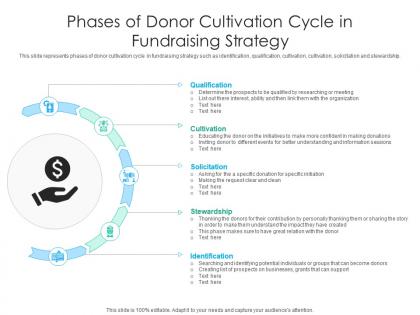
Phases of donor cultivation cycle in fundraising strategy




Try Before you Buy Download Free Sample Product
 Impress Your
 Audience
 100%
100% Editable
 Save Hours
 of Time


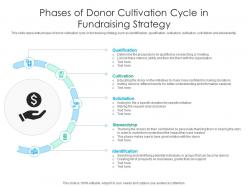
This slide represents phases of donor cultivation cycle in fundraising strategy such as identification, qualification, cultivation, cultivation, solicitation and stewardship.
People who downloaded this PowerPoint presentation also viewed the following :
Phases of donor cultivation cycle in fundraising strategy with all 2 slides:
Use our Phases Of Donor Cultivation Cycle In Fundraising Strategy to effectively help you save your valuable time. They are readymade to fit into any presentation structure.
FAQs for Phases of donor cultivation cycle
The key stages of the donor cultivation cycle include identification, research, initial contact, relationship building, solicitation, stewardship, and retention. These stages streamline fundraising efforts by targeting qualified prospects, personalizing engagement strategies, and maintaining long-term donor relationships, with many nonprofits finding that systematic cultivation ultimately delivers higher donation rates and sustained giving patterns.
Organizations identify potential donors through prospect research using wealth screening databases, donor giving histories, and community involvement patterns, combined with relationship mapping and referral networks from existing supporters. Through data analytics and social listening tools, nonprofits can assess philanthropic capacity, charitable interests, and engagement levels, while building authentic connections through events and stewardship activities, ultimately delivering targeted cultivation strategies.
Relationship-building serves as the foundation of the donor cultivation cycle, creating trust, emotional connection, and long-term commitment through personalized communication, regular engagement, and meaningful stewardship activities. These strategic interactions enable nonprofits to transform prospects into committed supporters, increase donation frequency and amounts, and build sustainable funding partnerships, with many organizations finding that strong donor relationships ultimately deliver higher retention rates and enhanced philanthropic impact.
Storytelling enhances donor engagement by creating emotional connections through impact narratives during awareness, sharing testimonials and case studies for cultivation, and demonstrating outcomes through beneficiary stories at solicitation. Through strategic storytelling across touchpoints, nonprofits build trust, illustrate mission effectiveness, and inspire continued giving, with many organizations finding that personalized narratives significantly increase donor retention and lifetime value.
Essential metrics for donor cultivation include retention rates, gift frequency progression, average gift size growth, engagement scores, and conversion rates from prospects to donors. These measurements enable organizations to track relationship depth through donor lifecycle analysis, stewardship effectiveness, and cultivation ROI, with many nonprofits finding that consistent metric tracking ultimately delivers stronger donor relationships and increased fundraising efficiency.
Personalization significantly enhances donor retention by enabling organizations to tailor communications, recognition approaches, and engagement strategies based on individual giving histories, preferences, and motivations. Through personalized stewardship programs, nonprofits can deliver more meaningful donor experiences, strengthen emotional connections, and demonstrate genuine appreciation, with many organizations finding that targeted personalization increases long-term donor loyalty and lifetime giving value.
Common pitfalls include over-soliciting without relationship building, neglecting donor preferences and communication styles, failing to demonstrate impact through meaningful updates, and treating all donors identically regardless of their motivations. Organizations increasingly find that inconsistent stewardship, poor data management, and inadequate personalization significantly damage long-term relationships, while strategic cultivation approaches enhance retention and ultimately deliver sustainable funding growth.
Technology and CRM systems streamline donor relationship management by centralizing donor data, automating personalized communications, tracking engagement patterns, and analyzing giving behaviors. These platforms enable nonprofits to segment donors effectively, schedule strategic touchpoints, and deliver targeted campaigns, with many organizations finding that automated workflows and data-driven insights significantly enhance donor retention and ultimately increase fundraising efficiency.
Converting one-time donors into recurring supporters requires personalized follow-up communication, demonstrating specific impact through detailed reporting, creating exclusive engagement opportunities, implementing convenient giving options, and establishing meaningful relationship touchpoints. Many nonprofits find that combining impact storytelling with donor recognition programs, stewardship events, and simplified recurring donation platforms ultimately delivers higher donor retention rates and sustainable funding growth.
Cultural and demographic factors significantly influence donor cultivation strategies by shaping communication preferences, giving motivations, outreach timing, and engagement channels across different communities. Organizations increasingly tailor their approaches based on generational giving patterns, cultural values around philanthropy, income levels, and preferred communication methods, with many nonprofits finding that personalized, culturally-sensitive strategies deliver higher engagement rates and stronger long-term donor relationships.
Donor feedback is crucial for refining cultivation strategies, as it reveals donor preferences, communication effectiveness, and relationship satisfaction levels. Through surveys, informal conversations, and giving pattern analysis, nonprofits can identify which cultivation approaches resonate most strongly, adjust messaging frequency and channels, and ultimately enhance donor retention rates while building deeper, more meaningful philanthropic partnerships.
Volunteer opportunities serve as powerful engagement tools that deepen donor relationships by providing hands-on involvement, personal connection to the mission, increased understanding of organizational impact, and pathways to larger financial commitments. Through volunteering, potential major donors experience firsthand the organization's work, build emotional investment, and develop stronger advocacy roles, with many institutions finding that active volunteers convert to their most generous and loyal supporters.
Organizations effectively communicate their mission by crafting compelling narratives that highlight tangible impact, utilizing multiple channels including social media, newsletters, and community events, and personalizing outreach based on donor interests and values. Through strategic storytelling that showcases specific outcomes, nonprofits enhance donor engagement, build lasting relationships, and ultimately secure increased funding commitments while expanding their supporter base.
Follow-up cultivation tactics include personalized thank-you communications, regular progress updates on funded initiatives, exclusive donor briefings, impact storytelling through videos or reports, and strategic invitation sequences to special events. These approaches strengthen relationships by demonstrating transparency, accountability, and appreciation, with many nonprofits finding that consistent, meaningful engagement ultimately increases donor retention rates and encourages larger future contributions.
Social media enhances donor engagement by creating personalized content, sharing impact stories in real-time, and facilitating two-way conversations through comments and direct messaging. These platforms enable organizations to build deeper relationships with supporters, showcase transparent project updates, and encourage peer-to-peer fundraising, ultimately delivering increased donor retention and expanded reach within supporter networks.
-
Awesome use of colors and designs in product templates.
-
Excellent products for quick understanding.
-
Use of icon with content is very relateable, informative and appealing.