


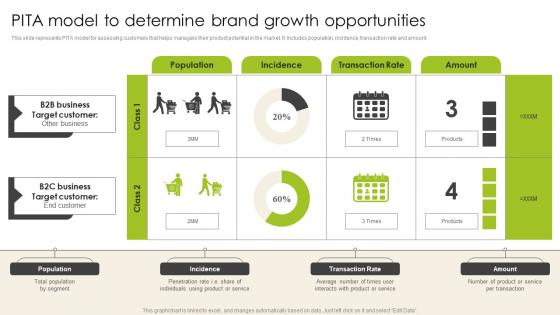
Pita Model To Determine Brand Growth Opportunities Introduction To Shopper Advertising MKT SS V




Try Before you Buy Download Free Sample Product
 Impress Your
 Audience
 100%
100% Editable
 Save Hours
 of Time


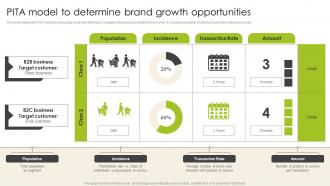
This slide represents PITA model for assessing customers that helps managers their product potential in the market. It includes population, incidence, transaction rate and amount.
People who downloaded this PowerPoint presentation also viewed the following :
Pita Model To Determine Brand Growth Opportunities Introduction To Shopper Advertising MKT SS V with all 7 slides:
Use our Pita Model To Determine Brand Growth Opportunities Introduction To Shopper Advertising MKT SS V to effectively help you save your valuable time. They are readymade to fit into any presentation structure.





FAQs for Pita Model To Determine Brand Growth Opportunities Introduction To Shopper Advertising
So the Pita Model breaks down into three layers - kinda like an actual pita if you think about it. Your infrastructure is the bread part, then you've got your business processes as the filling, and there's this integration layer that's like the sauce connecting everything. Each layer builds on the previous one, which honestly makes sense but also means if your foundation sucks, you're screwed. I'd start by checking where your current setup fits into these three buckets. Oh, and the data flow between layers is what makes or breaks the whole thing - that's where most people mess up.
Honestly, the PITA Model works pretty well for this stuff. Start with Purpose - get everyone aligned on what you're actually trying to accomplish. Information comes next: set up those daily standups or shared dashboards so people aren't working in silos. Trust is huge - celebrate wins together and follow through on what you say you'll do. Then there's Accountability, which is just making sure everyone owns their piece. Oh, and don't try to fix everything at once - that never works. Pick one area and focus there first. Once that's running smoothly, you can tackle the next one.
So the PITA Model really shines when people are pushing back on changes - especially in bigger companies with multiple teams involved. Map out your key stakeholders first, that's crucial. I've watched it totally bomb when leadership tries to speed through the steps (classic mistake). But when you actually stick to the process? It's gold for tech rollouts, workflow changes, or shifting company culture. Works best when the change hits people's daily routines and you need buy-in from different levels. Don't bother with it for small, simple changes though.
Honestly, change management is gonna be your biggest headache. Teams get super comfortable with what they know and will push back hard on new frameworks. Training takes way longer than anyone expects too - I've seen so many rollouts crash because leaders think people will just "figure it out." Resource allocation gets messy since you need everyone consistently participating across departments. Oh, and don't even try rolling it out company-wide right away. Find one team that's actually excited about trying something different, let them crush it, then wave their success in front of the doubters. Works every time.
So here's the thing - SWOT just dumps everything into boxes but doesn't tell you what to do next. Pretty frustrating, honestly. Pita's way more action-focused and actually walks you through solving problems step by step. Lean's cool for cutting operational waste, but Pita zeroes in on pain points instead. You'll get better results with Pita when you're in those early strategy phases and need to go from "we have problems" to "here's how we fix them." SWOT leaves you staring at a matrix thinking "okay... now what?" Pita actually points toward solutions.
Look, the Pita Model is only as good as the data you feed it. Garbage in, garbage out - I learned that the hard way on a project last year. You want both numbers and real insights, not just one or the other. First thing? Figure out what info you're missing. Then tackle the gaps that'll help with your most urgent decisions. Quality beats quantity here. The model actually works pretty well when you give it timely, relevant stuff that connects to what you're trying to decide. Without decent data though, you're just guessing with fancy labels.
Totally! Works really well in education and healthcare too. I've seen teachers use it for designing curricula and figuring out student engagement stuff. Healthcare teams adapt it for patient workflows and treatment plans - though honestly healthcare can be trickier with all the regulations. Both fields deal with complicated processes and managing different stakeholders, so the framework translates pretty naturally. The core principles are flexible once you mess around with it. Start small though - try a pilot project first to see how it maps to your specific workflows before going all-in.
Hmm, I'm not seeing any major case studies for something called the "Pita Model" - honestly might be because it's not super mainstream in business circles? Could be a company-specific thing or maybe a spin on another framework. What area does it focus on exactly - project management, analytics, something else? That'd help me point you toward better examples. Your team probably has internal docs with success stories if it's a proprietary model. Those are usually way more useful than generic case studies anyway.
So the Pita Model is actually pretty smart for this stuff. Your core business purpose goes at the bottom - that's your foundation. Then stack your market segments, what makes you different from competitors, and your day-to-day priorities on top. Honestly, most small businesses I know try to plan everything at once and just get stuck. This way you're not juggling a million things. Map out where you are now first, then figure out what needs work next quarter. The whole point is seeing how everything connects instead of treating each piece separately.
So for the Pita Model, I'd grab Asana or Monday.com first - they're solid for tracking your process phases. Tableau and Power BI are clutch for the data viz stuff, though honestly Power BI can be a pain to learn at first. Your team will need something like Miro or Figma to map workflows together. But here's the thing - don't go crazy with tools right away. A good spreadsheet works fine when you're starting out. Pick one from each category, get comfortable with it, then expand. Otherwise you'll spend more time learning software than actually improving your process.
Look, the Pita Model basically forces you to involve stakeholders at every step - skip it and you're screwed. Map out your key people right from the start. Then keep them in the loop through feedback sessions and collaborative checkpoints. Some folks love how structured it is, others think it's overkill (personally I'm somewhere in the middle). But here's the thing - it's not just about asking for opinions. You actually build their feedback into your plans and execution. Oh, and don't be that person who waits until halfway through to start involving people. Trust me on this one.
Track the usual stuff first - delivery speed, cycle times, defect rates. But honestly? Team happiness matters just as much, maybe more. Survey people monthly about stress and whether the process actually helps. Meeting overhead is huge too since that's what Pita Model supposedly fixes. Get your baseline numbers before you start, then check everything monthly for three months. Oh, and don't forget context-switching frequency - that one's sneaky but kills productivity. The data will tell you pretty quick if it's working or just another process experiment.
Oh man, cultural stuff will absolutely trip you up with Pita Model rollouts. Some places want super direct feedback, others get offended by anything too blunt. Power dynamics are wild too - what works in flat organizations bombs in hierarchical ones. I learned this the hard way watching a team assume everyone thinks like individualists when half their users were totally collectivist-minded. Plus time expectations vary like crazy. Some cultures need that relationship-building phase while others just want results yesterday. Definitely pilot it regionally first and loop in local HR early - they'll catch blindspots you'd never think of.
Start with the business value - what problems will this actually fix for them? The "pita" name is kind of genius since everyone gets the bread analogy. Skip all the tech speak and just show them one real example of how their day-to-day would change. Visuals are everything here - before/after charts, whatever works. Let them drive the questions instead of dumping everything on them at once (I learned this the hard way). Oh, and don't forget concrete next steps at the end. They need to walk out knowing exactly what happens next and when.
So the Pita Model is basically like - you know how a pita has layers? Same thing with problems. Find your main issue first (that's your "filling"), then work outward through all the other stuff affecting it. Way better than trying to fix everything at once, which honestly just makes my brain hurt. One layer at a time keeps you sane. Works great when you've got multiple people involved or those messy system-wide issues. Next time you're stuck on something complicated, try mapping it out this way. I swear the connections will start jumping out at you.
-
Great product, helpful indeed!
-
I was mind-blown by the services that SlideTeam provided me. Thanks a ton!