


Pitchbook for general and m and a deal powerpoint presentation slides
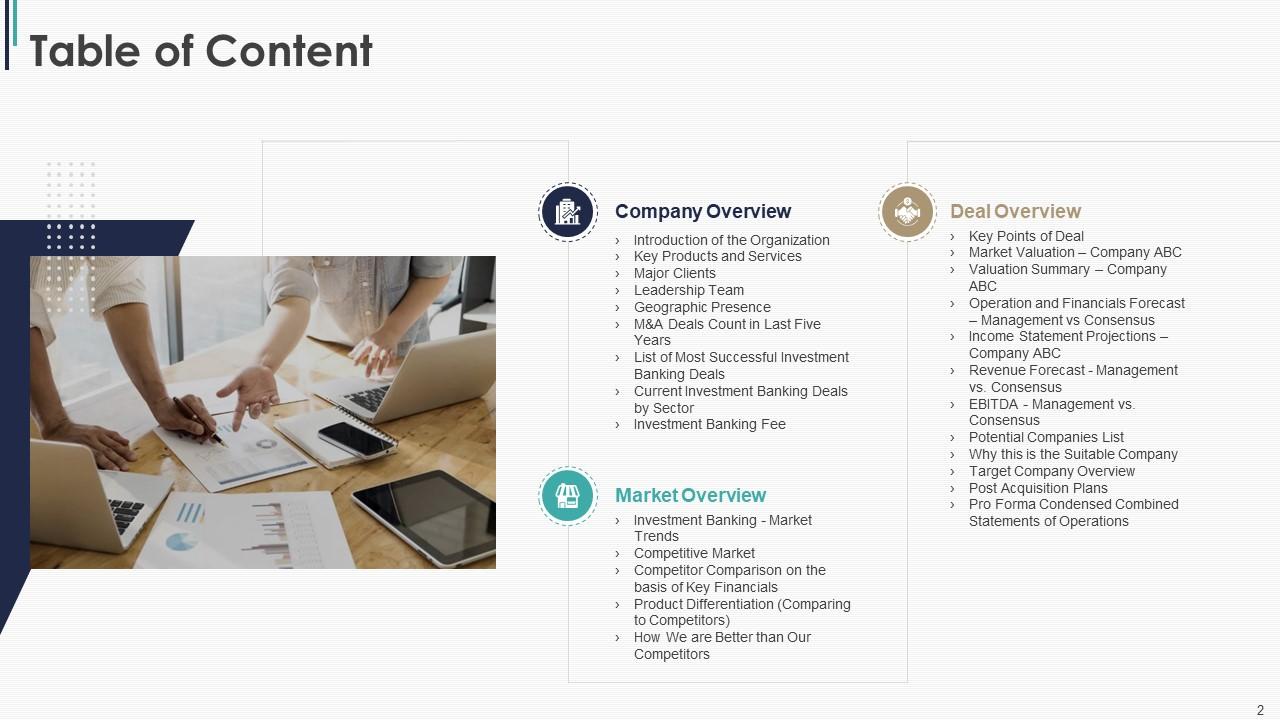
A general pitchbook provides a general overview of the company and includes relevant information, such as past successful investments, recent market trends, current deals, and information on profits. Whereas a deal pitchbook is prepared for specific deals, focusing on how the investment firm can offer services that suit the financial needs of the client. This pitchbook shows a deal of a company acquisition by another company. This acquisition pitchbook covers details regarding company overview, key products, major clients and leadership team, geographic presence, M and A deal count in past 5 years, most successful banking deals, current investment banking deals, etc. This general and deal pitchbook also provides information related to market overview such as investment banking market trends, competitive market overview, competitor comparison, product differentiation, etc. Also, this pitchbook covers details related to deal overview such as market valuation, key points of deal valuation summary, financials forecast, income statement projections, revenue forecast, target company overview, post-acquisition plans etc.
A general pitchbook provides a general overview of the company and includes relevant information, such as past successful i..









-

- Google Slides is a new FREE Presentation software from Google.
- All our content is 100% compatible with Google Slides.
- Just download our designs, and upload them to Google Slides and they will work automatically.
- Amaze your audience with SlideTeam and Google Slides.
-

Want Changes to This PPT Slide? Check out our Presentation Design Services
-

- WideScreen Aspect ratio is becoming a very popular format. When you download this product, the downloaded ZIP will contain this product in both standard and widescreen format.
-
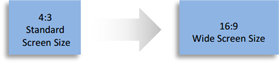
- Some older products that we have may only be in standard format, but they can easily be converted to widescreen.
- To do this, please open the SlideTeam product in Powerpoint, and go to
- Design ( On the top bar) -> Page Setup -> and select "On-screen Show (16:9)” in the drop down for "Slides Sized for".
- The slide or theme will change to widescreen, and all graphics will adjust automatically. You can similarly convert our content to any other desired screen aspect ratio.
Compatible With Google Slides

Get This In WideScreen
You must be logged in to download this presentation.


Do you want to remove this product from your favourites?
PowerPoint presentation slides
Presenting our Pitchbook For General And M And A Deal PowerPoint Presentation Slides. This is a 100% editable and adaptable PPT slide. You can save it in different formats like PDF, JPG, and PNG. It can be edited with different colors, fonts, font sizes, and font types of the template as per your requirements. This template supports the standard (4:3) and widescreen (16:9) format. It is also compatible with Google Slides.

People who downloaded this PowerPoint presentation also viewed the following :
Content of this Powerpoint Presentation
Slide 1: This is a cover slide for Pitchbook for General and M&A Deal PowerPoint Presentation.
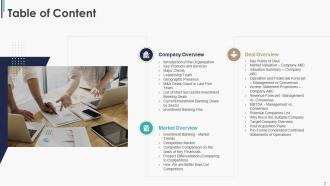
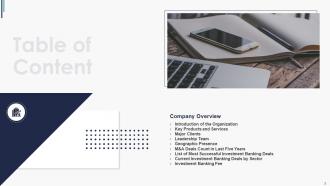
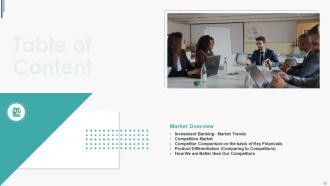
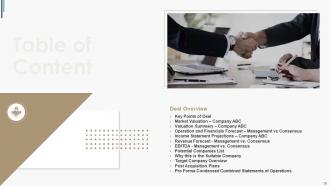
Slide 2: This is the Table of Contents slide that lists out all the essential elements covered in the deck.
Slide 3: This slide presents company overview.
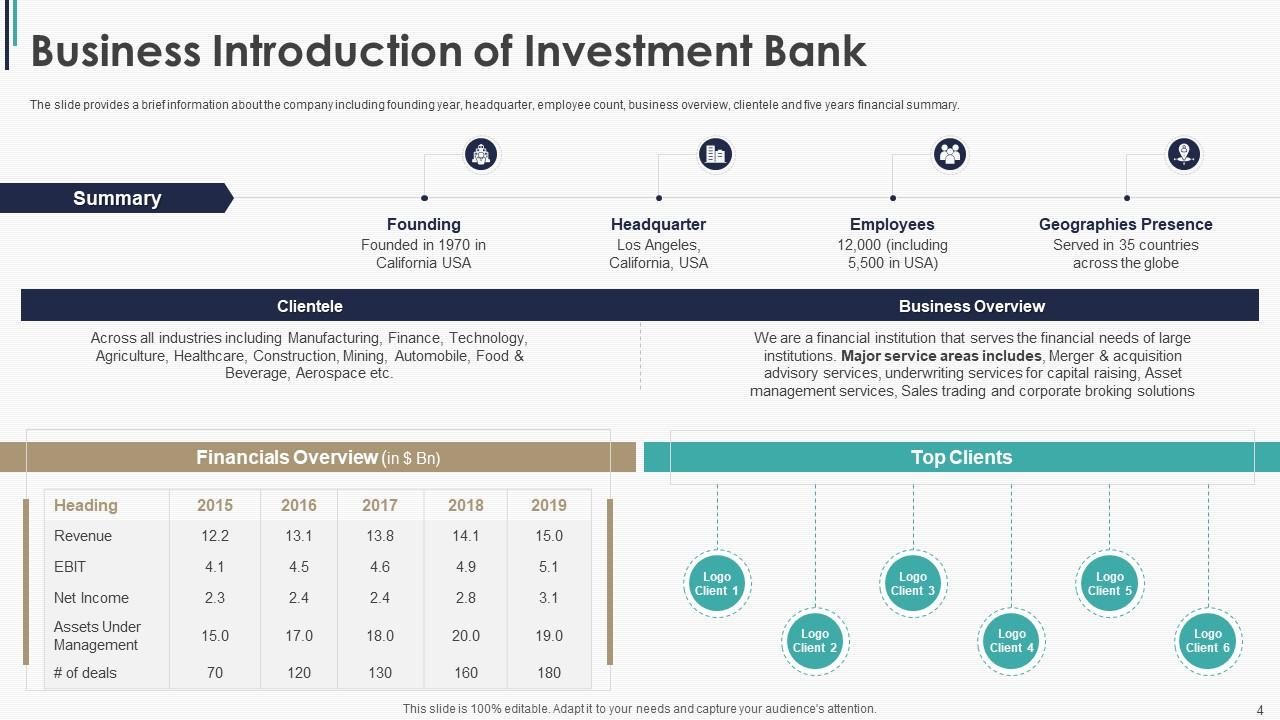
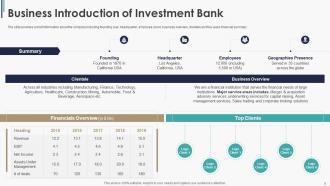
Slide 4: The slide provides a brief information about the company including founding year, headquarter, employee count, business overview, clientele and five years financial summary.
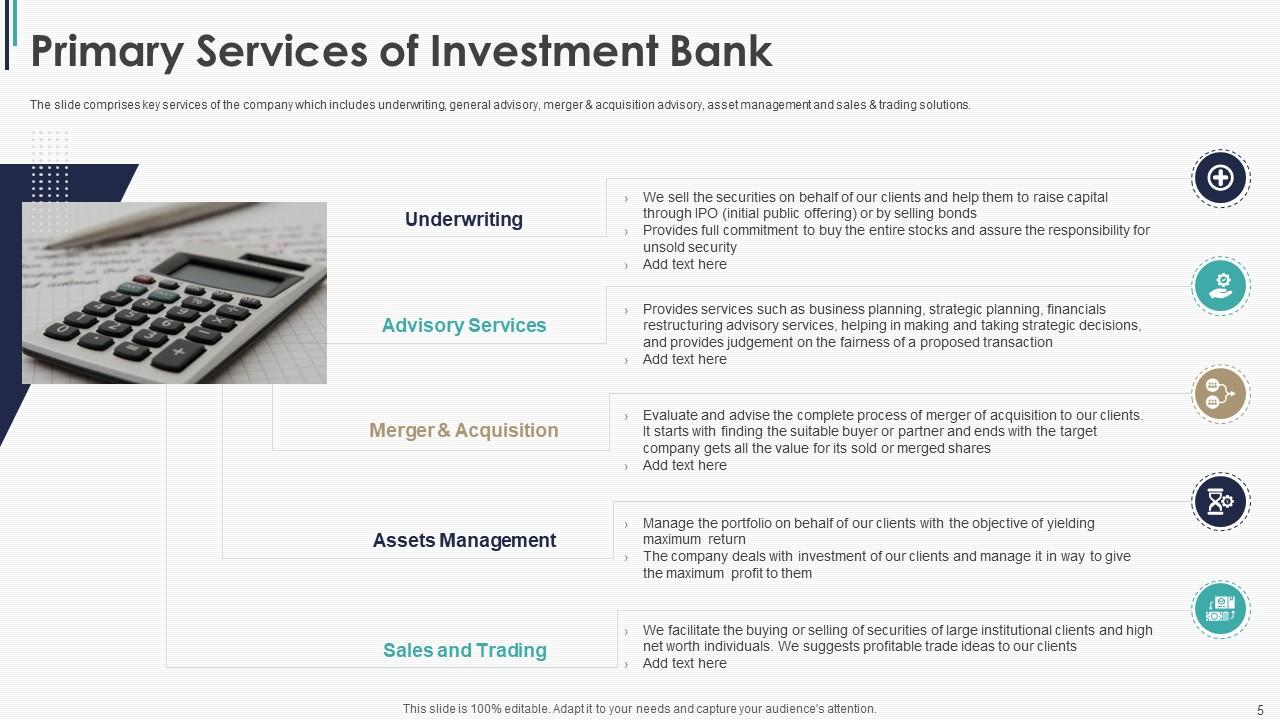
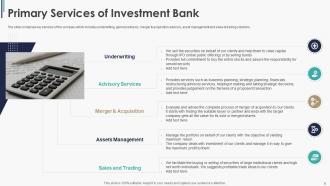
Slide 5: The slide comprises key services of the company which includes underwriting, general advisory, merger & acquisition advisory, asset management and sales & trading solutions.
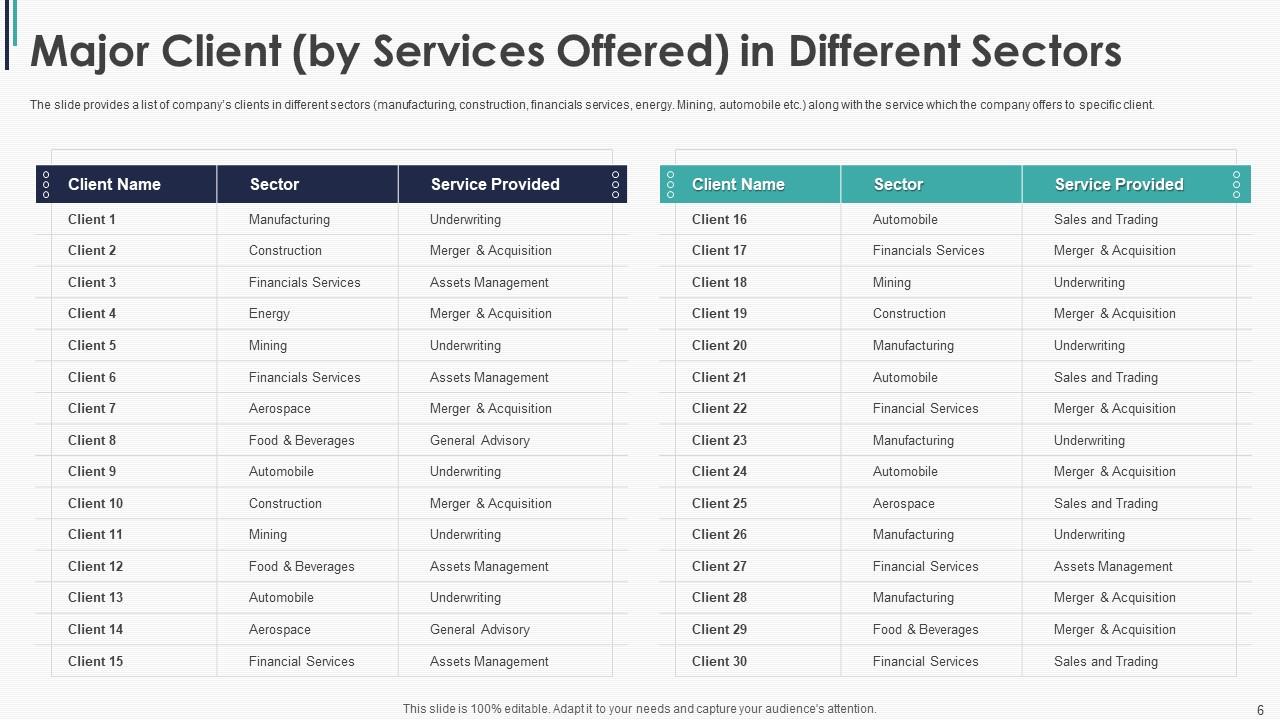
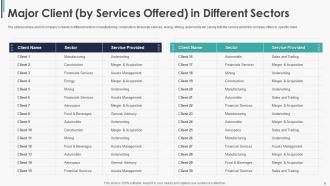
Slide 6: The slide provides a list of company’s clients in different sectors (manufacturing, construction, financials services, energy. Mining, automobile etc.) along with the service which the company offers to specific client.
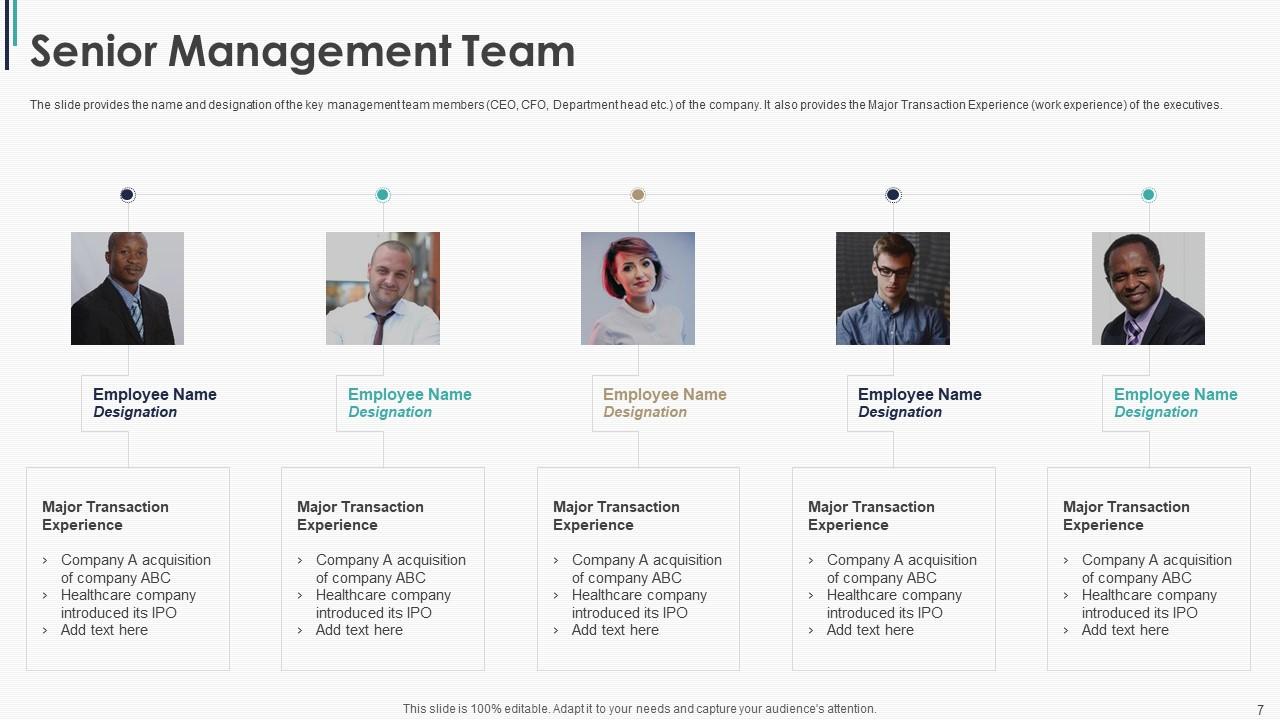
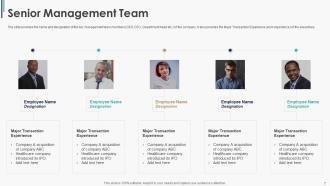
Slide 7: The slide provides the name and designation of the key management team members (CEO, CFO, Department head etc.) of the company. It also provides the Major Transaction Experience (work experience) of the executives.
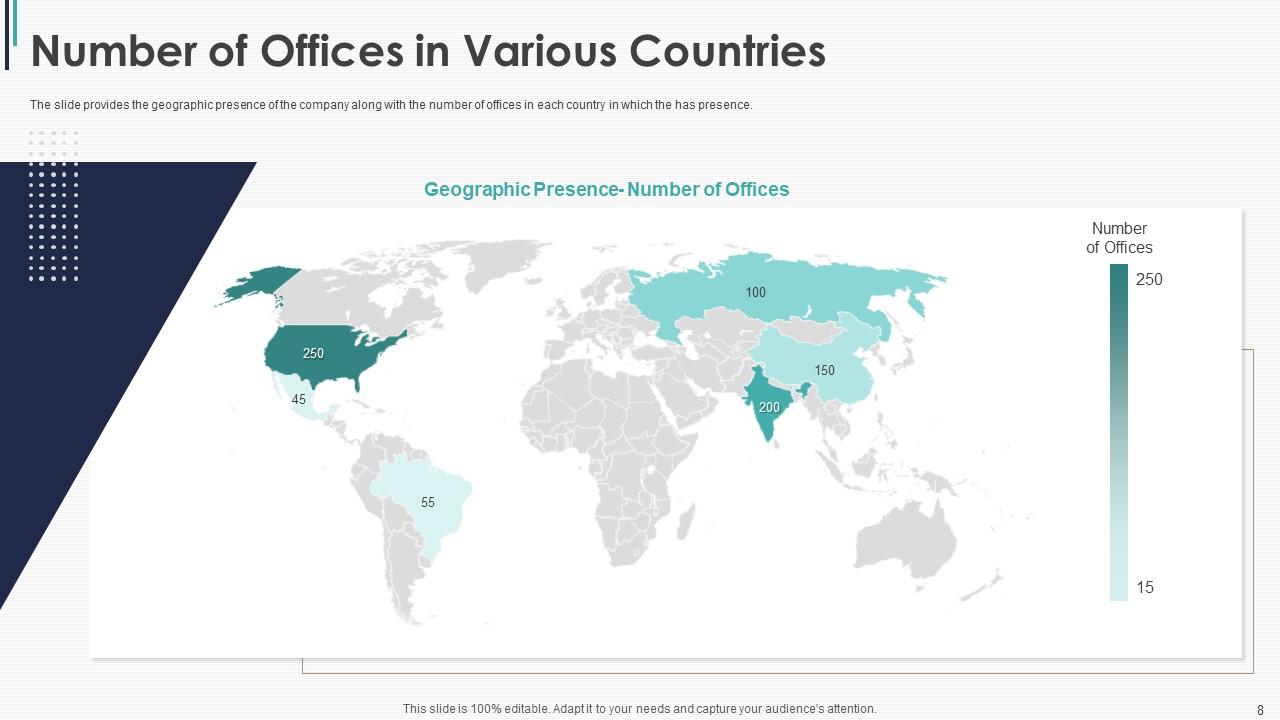
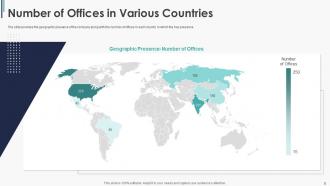
Slide 8: The slide provides the geographic presence of the company along with the number of offices in each country in which the has presence.
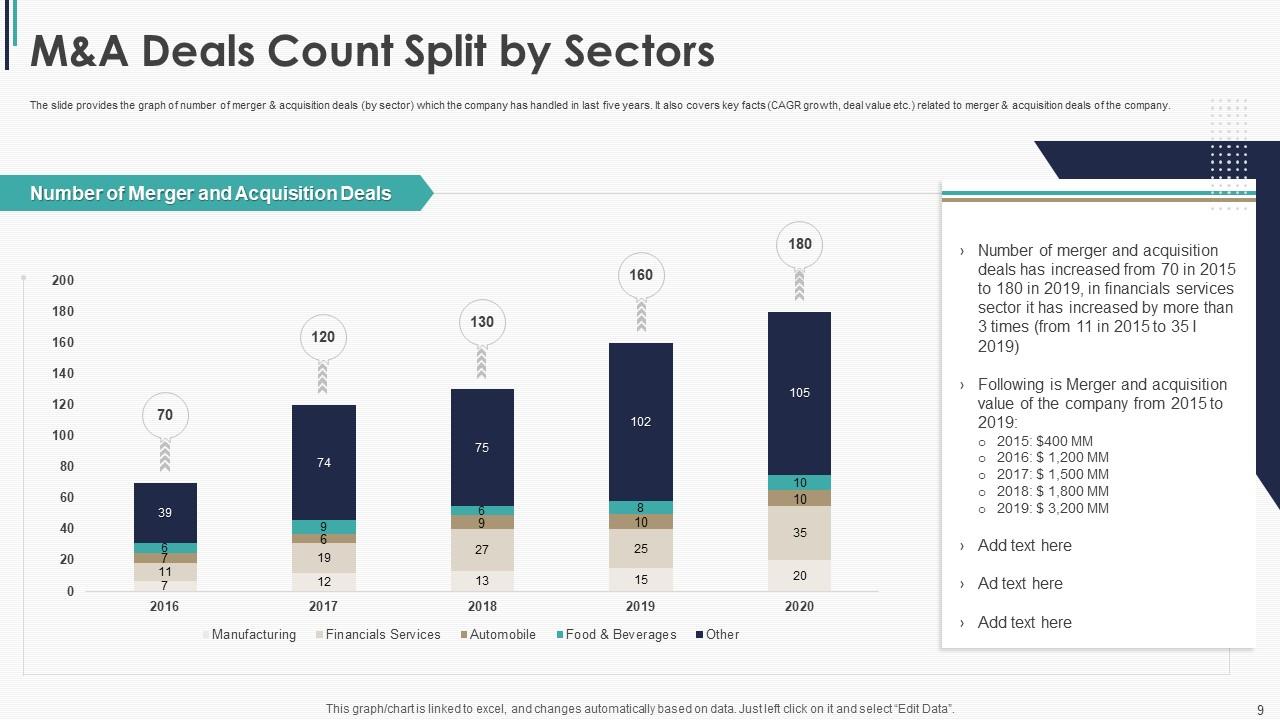
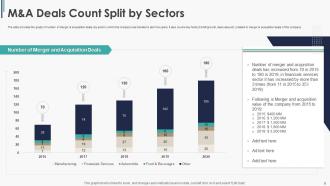
Slide 9: The slide provides the graph of number of merger & acquisition deals (by sector) which the company has handled in last five years. It also covers key facts (CAGR growth, deal value etc.) related to merger & acquisition deals of the company.
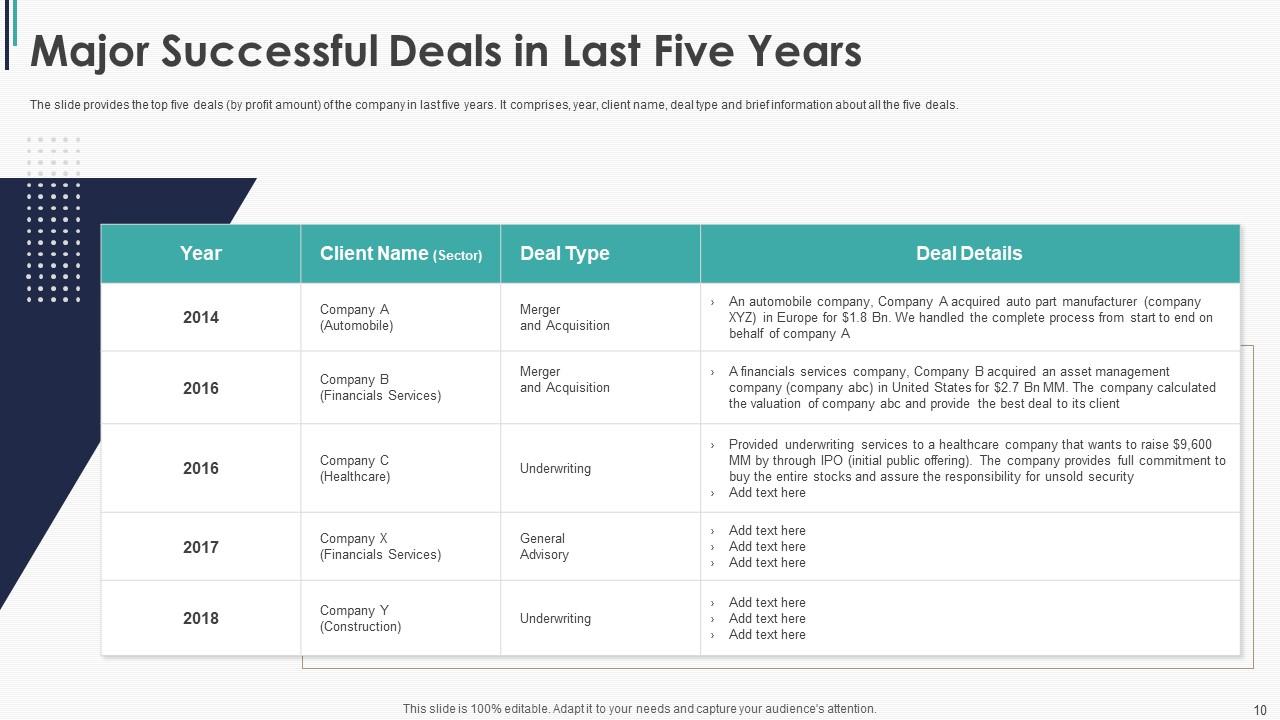
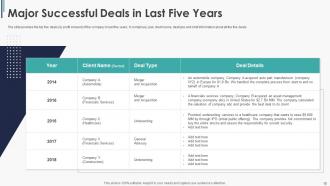
Slide 10: The slide provides the top five deals (by profit amount) of the company in last five years. It comprises, year, client name, deal type and brief information about all the five deals.
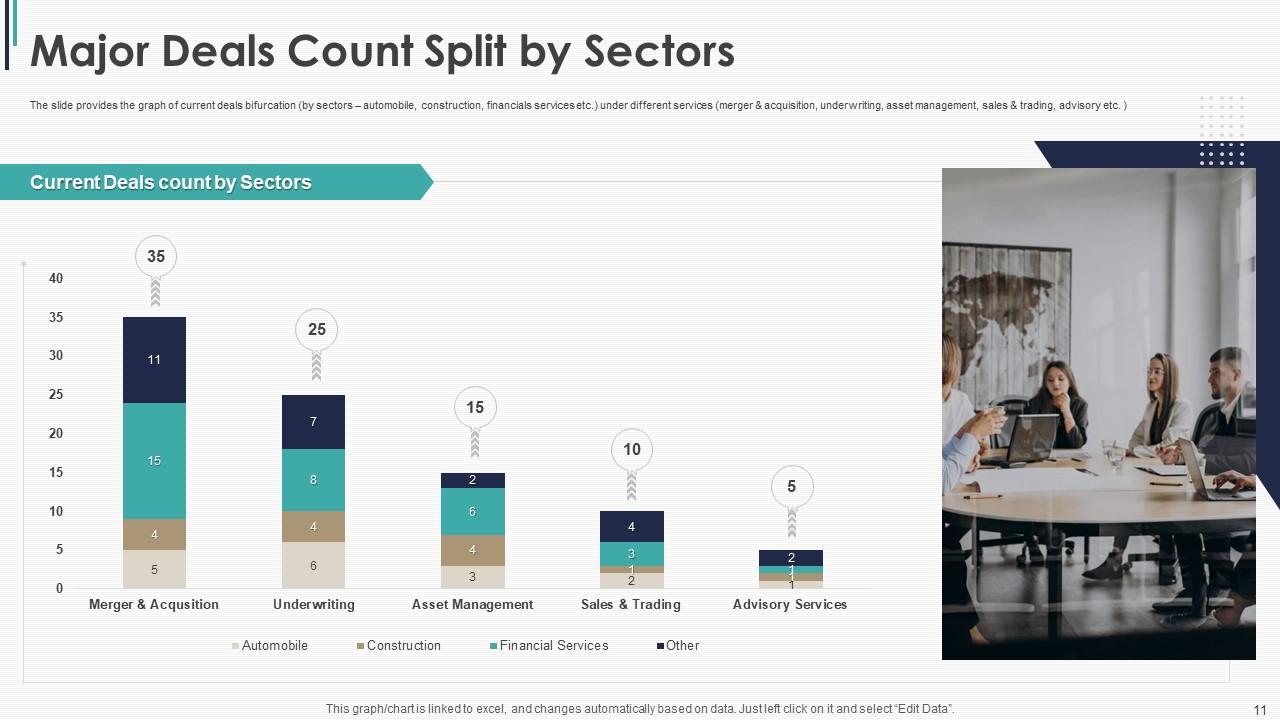
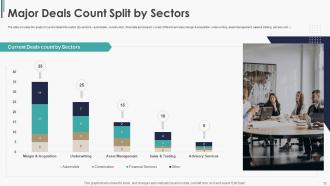
Slide 11: The slide provides the graph of current deals bifurcation (by sectors – automobile, construction, financials services etc.) under different services (merger & acquisition, underwriting, asset management, sales & trading, advisory etc. )
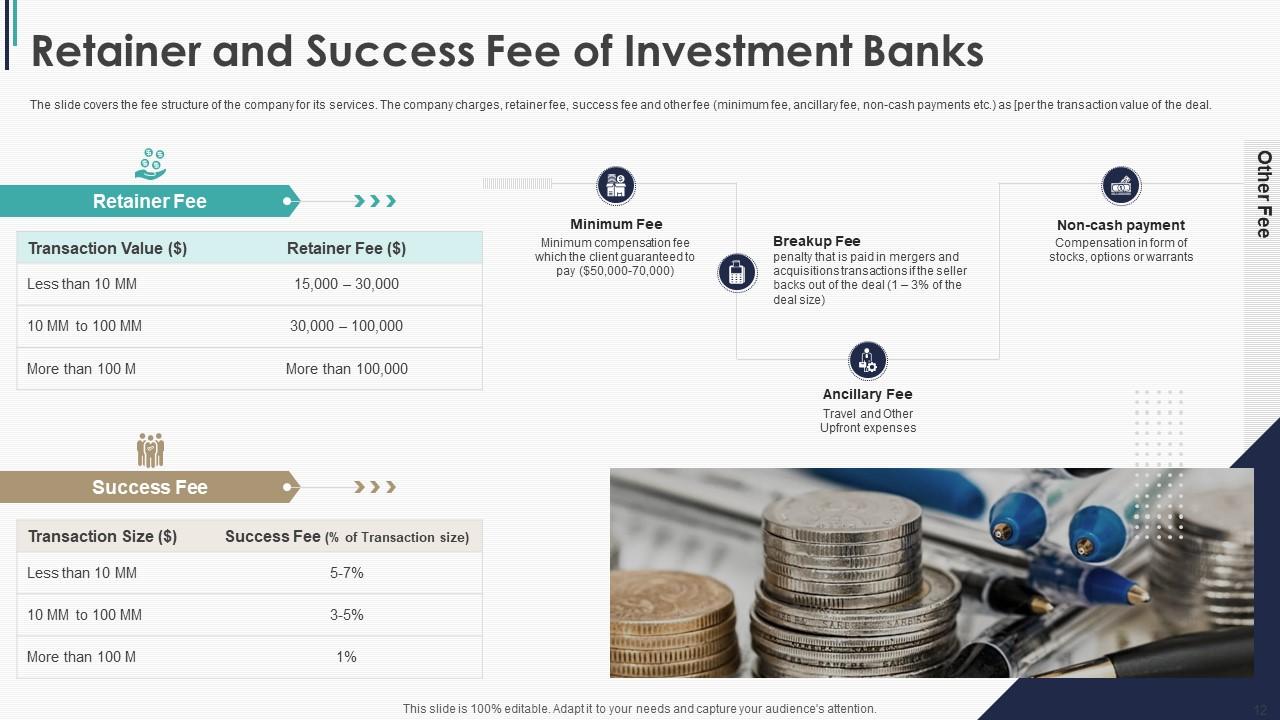
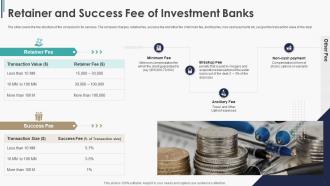
Slide 12: The slide covers the fee structure of the company for its services. The company charges, retainer fee, success fee and other fee (minimum fee, ancillary fee, non-cash payments etc.) as [per the transaction value of the deal.
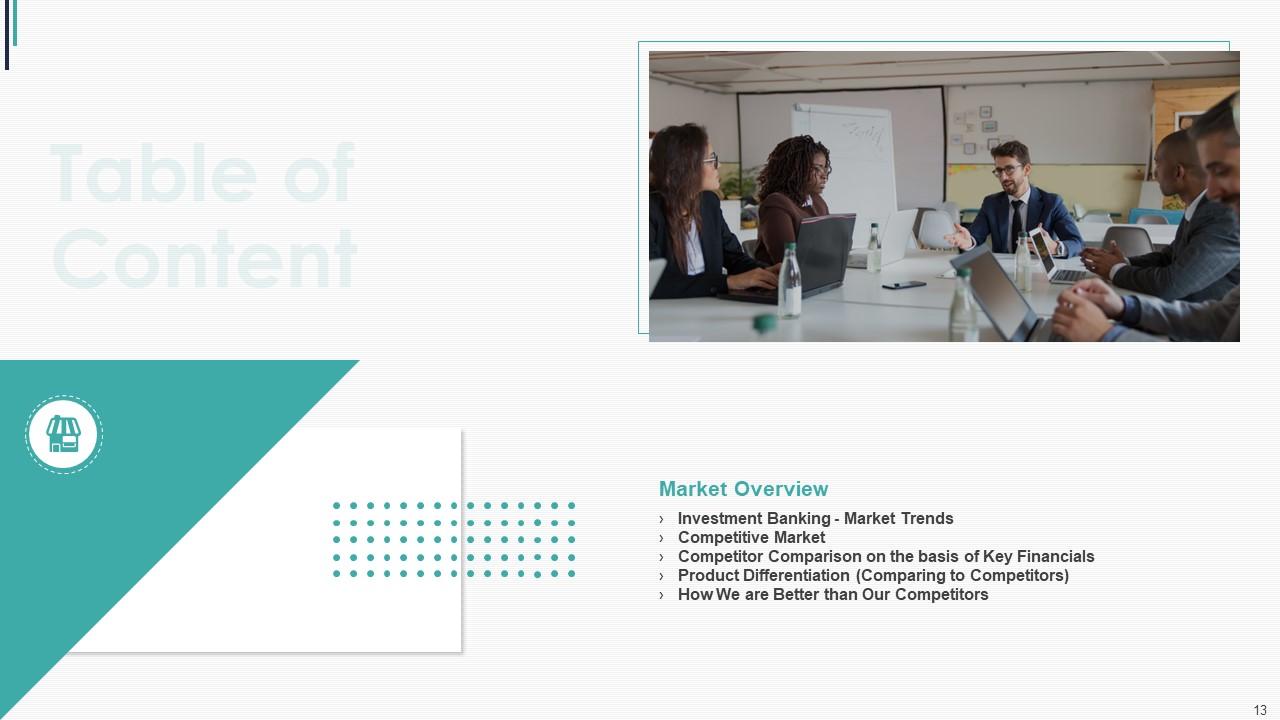
Slide 13: This slide presents Market Overview
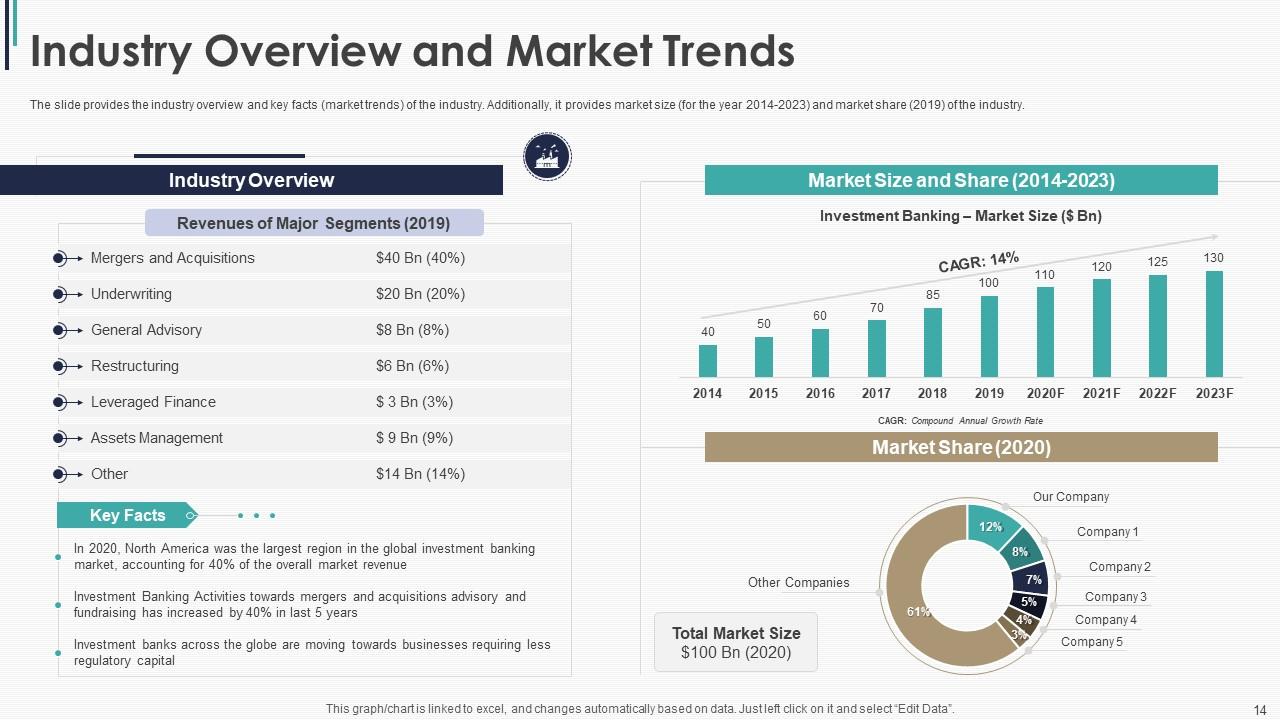
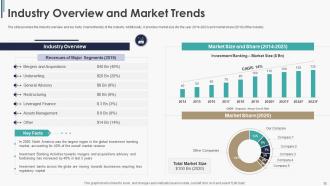
Slide 14: The slide provides the industry overview and key facts (market trends) of the industry. Additionally, it provides market size (for the year 2014-2023) and market share (2019) of the industry.
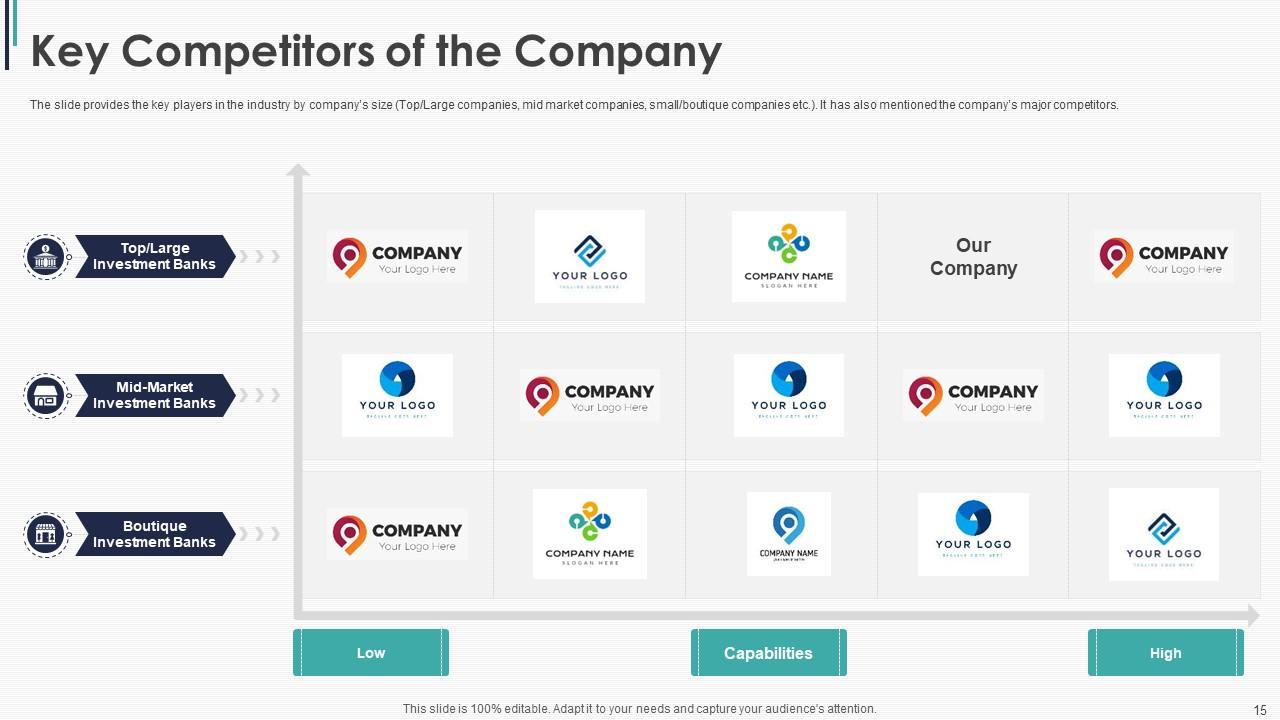
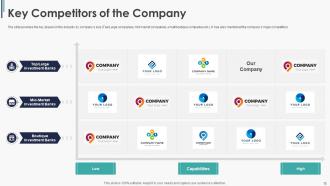
Slide 15: The slide provides the key players in the industry by company’s size (Top/Large companies, mid market companies, small/boutique companies etc.). It has also mentioned the company’s major competitors.
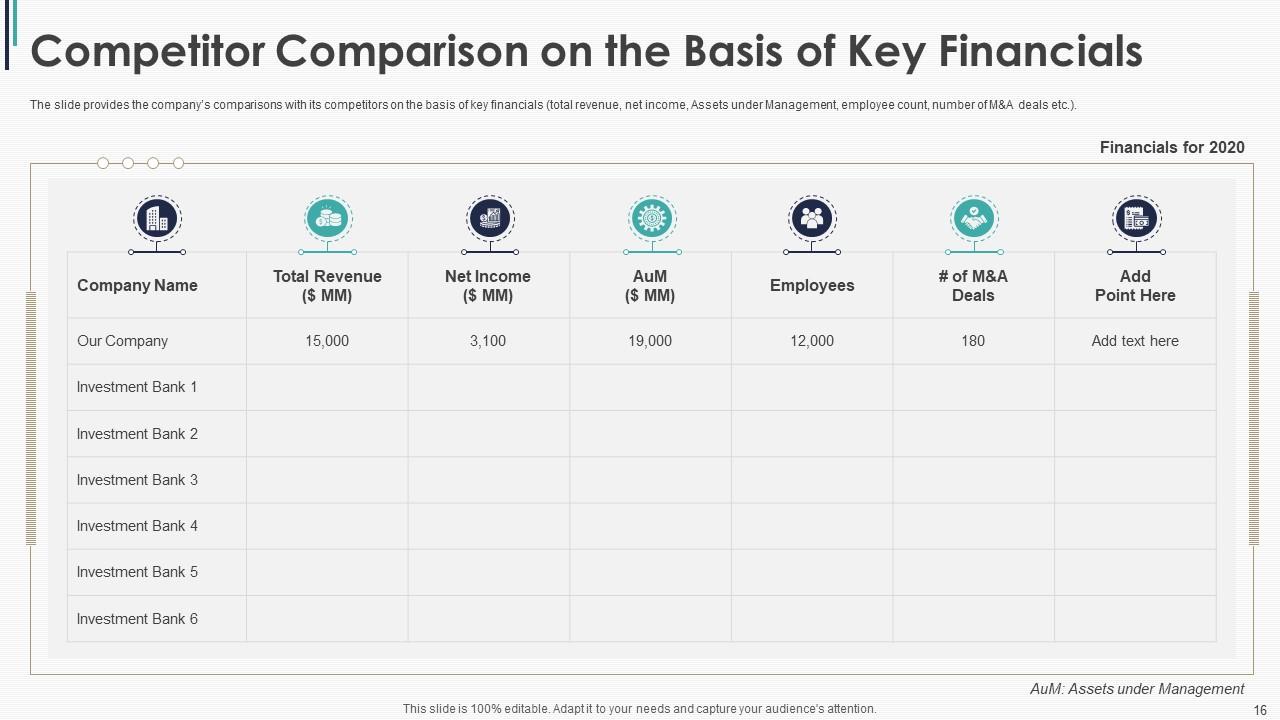
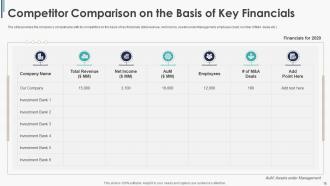
Slide 16: The slide provides the company’s comparisons with its competitors on the basis of key financials (total revenue, net income, Assets under Management, employee count, number of M&A deals etc.).
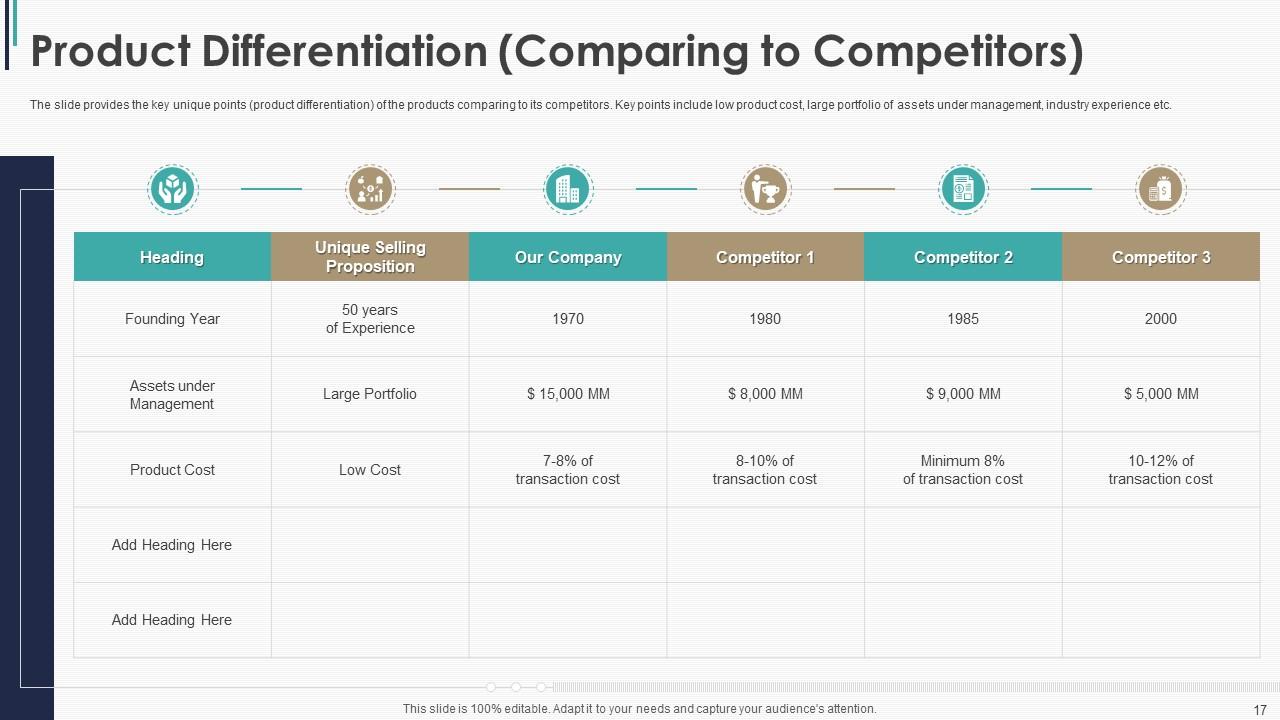
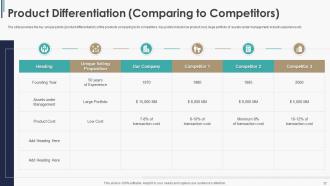
Slide 17: The slide provides the key unique points (product differentiation) of the products comparing to its competitors. Key points include low product cost, large portfolio of assets under management, industry experience etc.
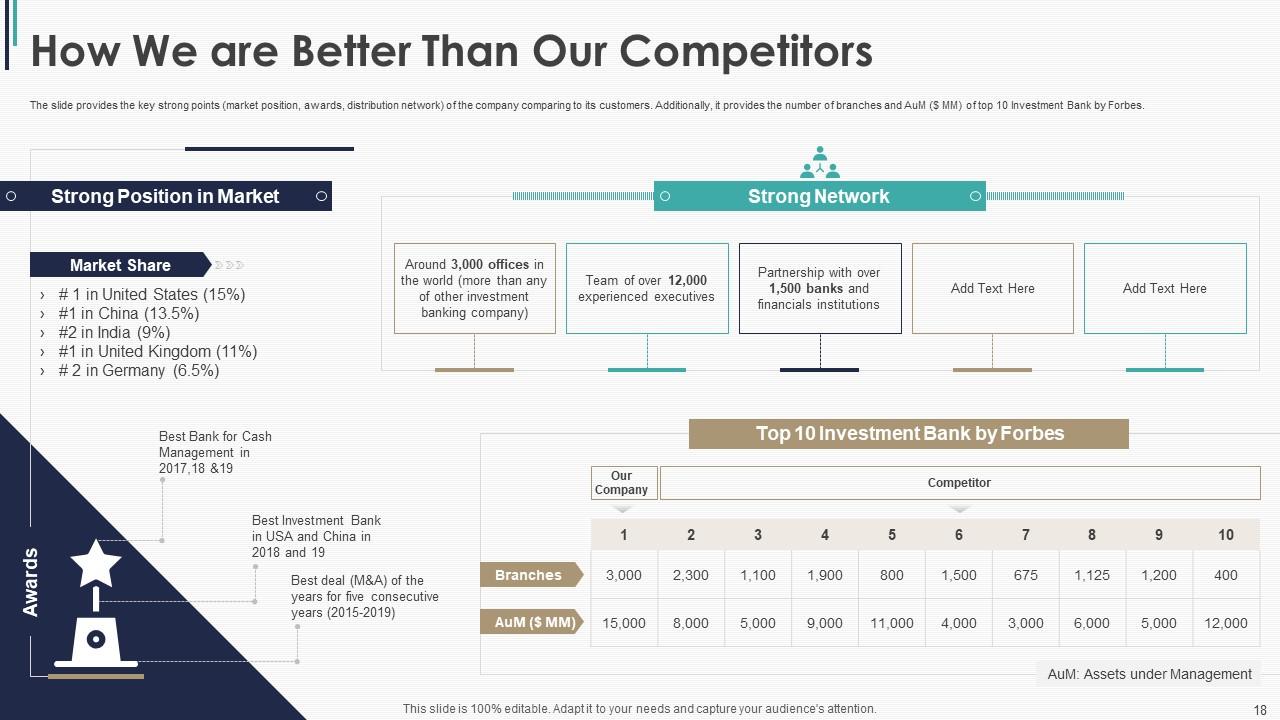
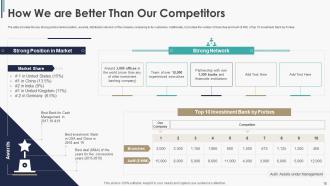
Slide 18: The slide provides the key strong points (market position, awards, distribution network) of the company comparing to its customers. Additionally, it provides the number of branches and AuM ($ MM) of top 10 Investment Bank by Forbes.
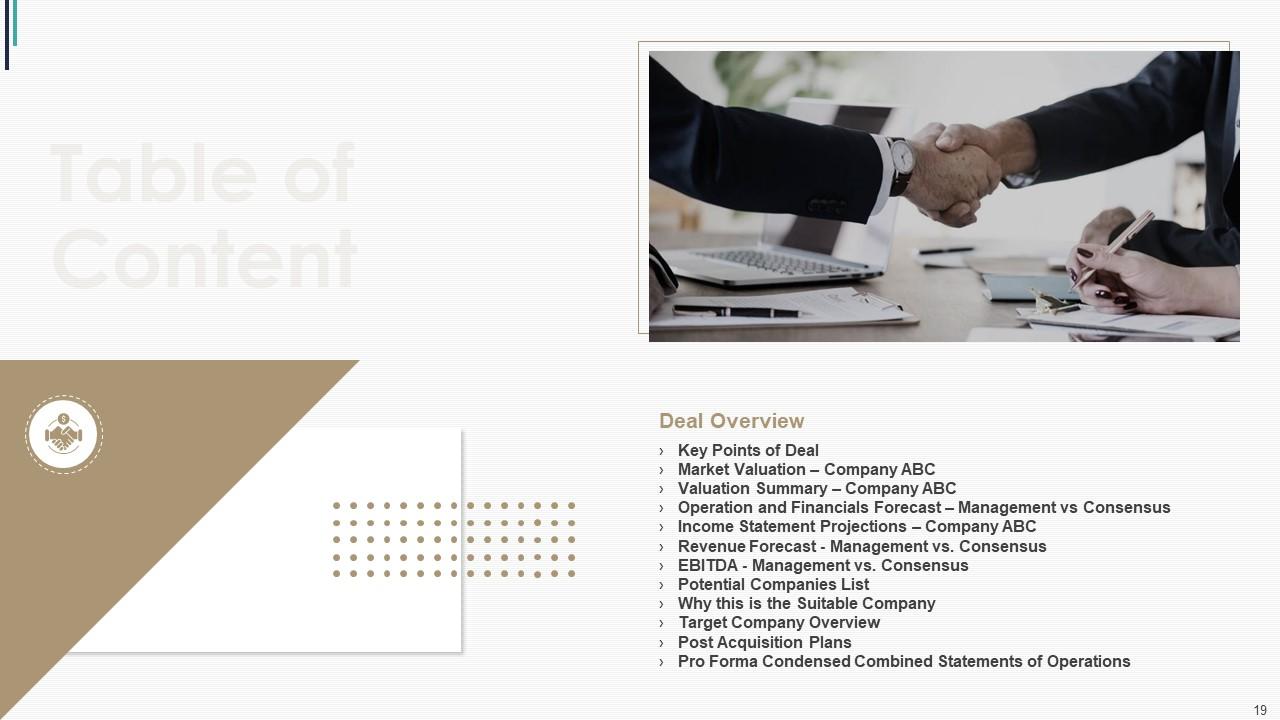
Slide 19: This slide presents Deal Overview
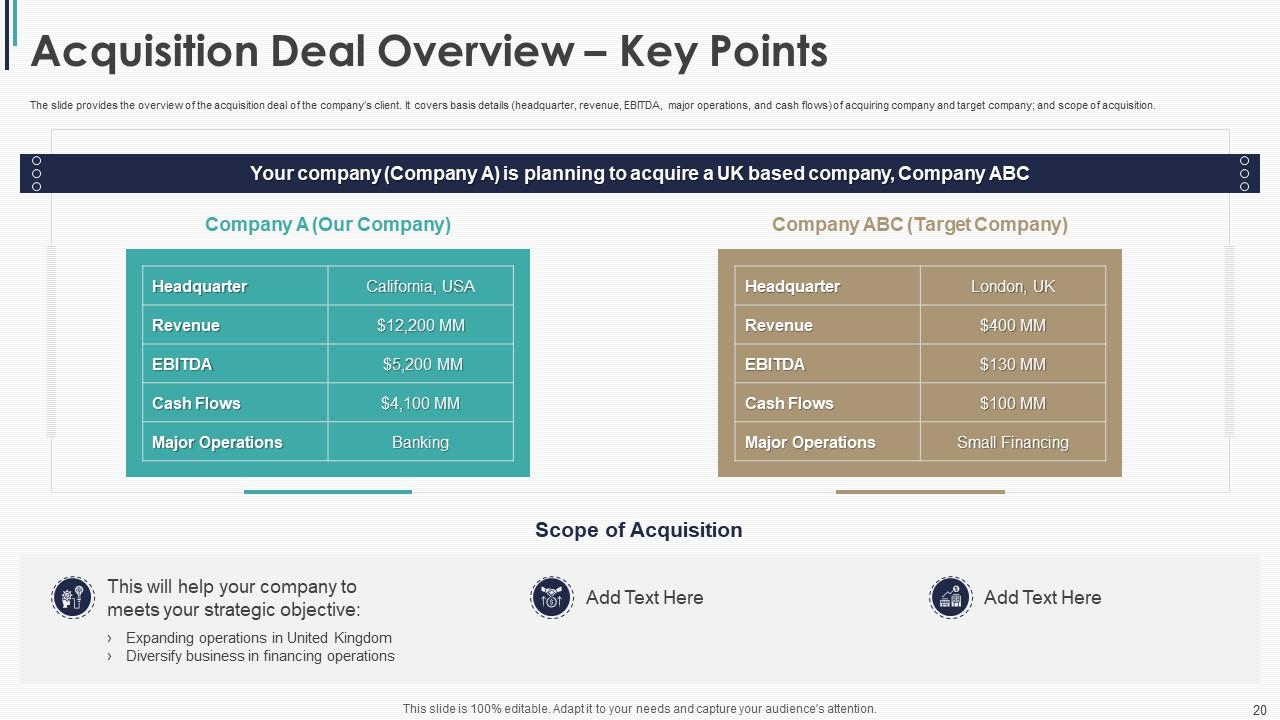
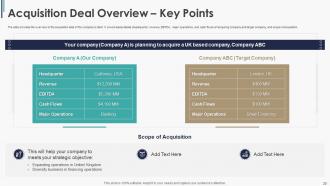
Slide 20: The slide provides the overview of the acquisition deal of the company’s client. It covers basis details (headquarter, revenue, EBITDA, major operations, and cash flows) of acquiring company and target company; and scope of acquisition.
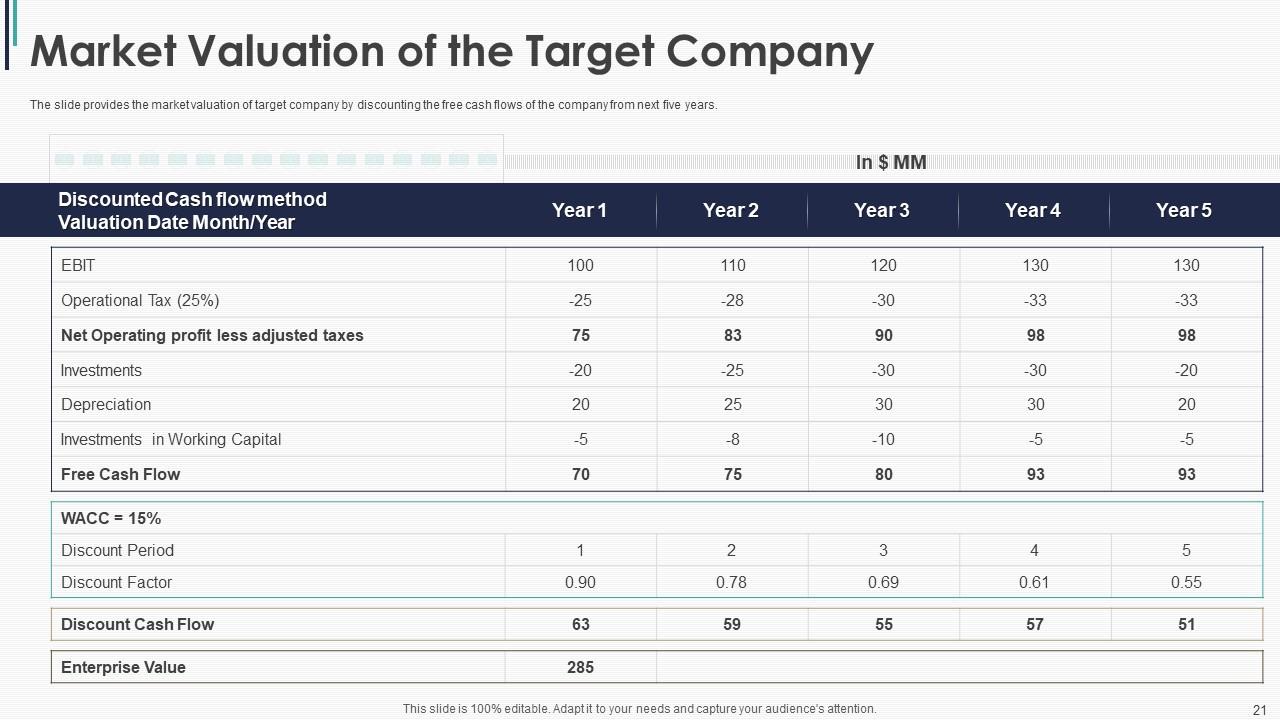
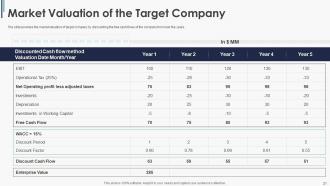
Slide 21: The slide provides the market valuation of target company by discounting the free cash flows of the company from next five years.
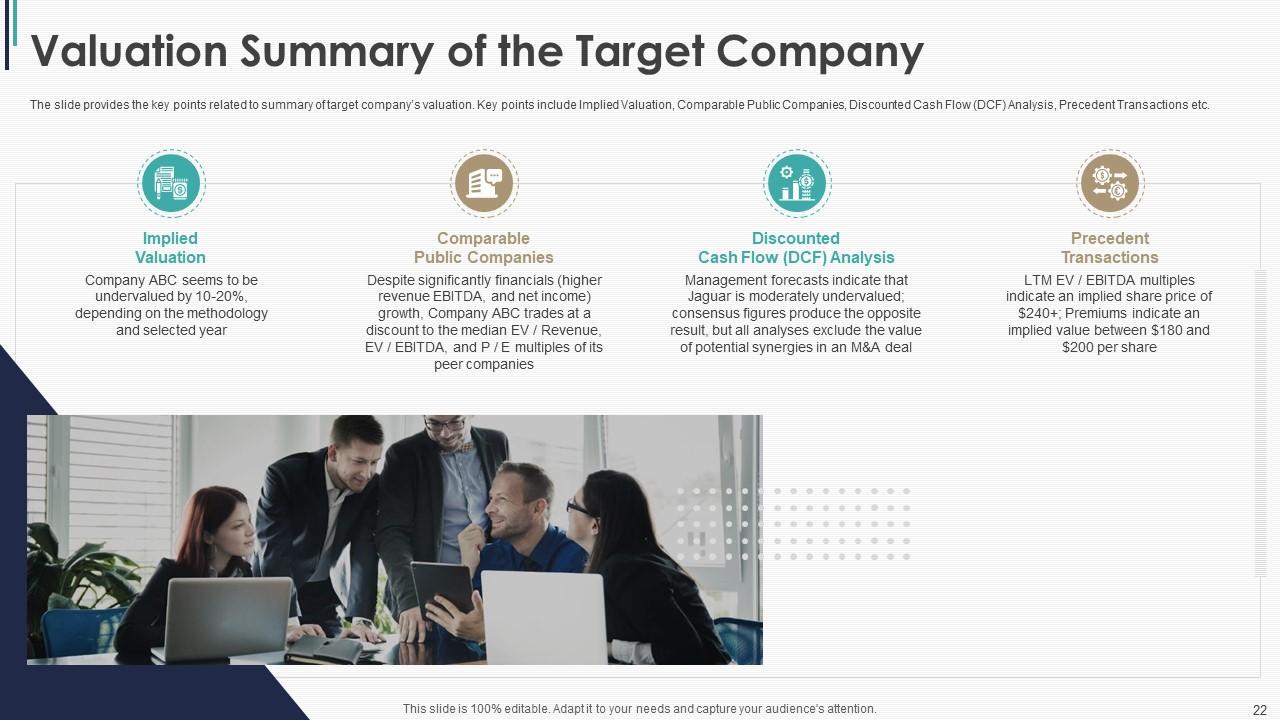
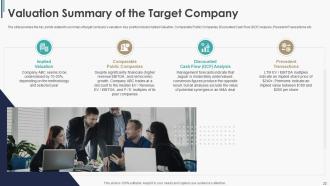
Slide 22: The slide provides the key points related to summary of target company’s valuation. Key points include Implied Valuation, Comparable Public Companies, Discounted Cash Flow (DCF) Analysis, Precedent Transactions etc.
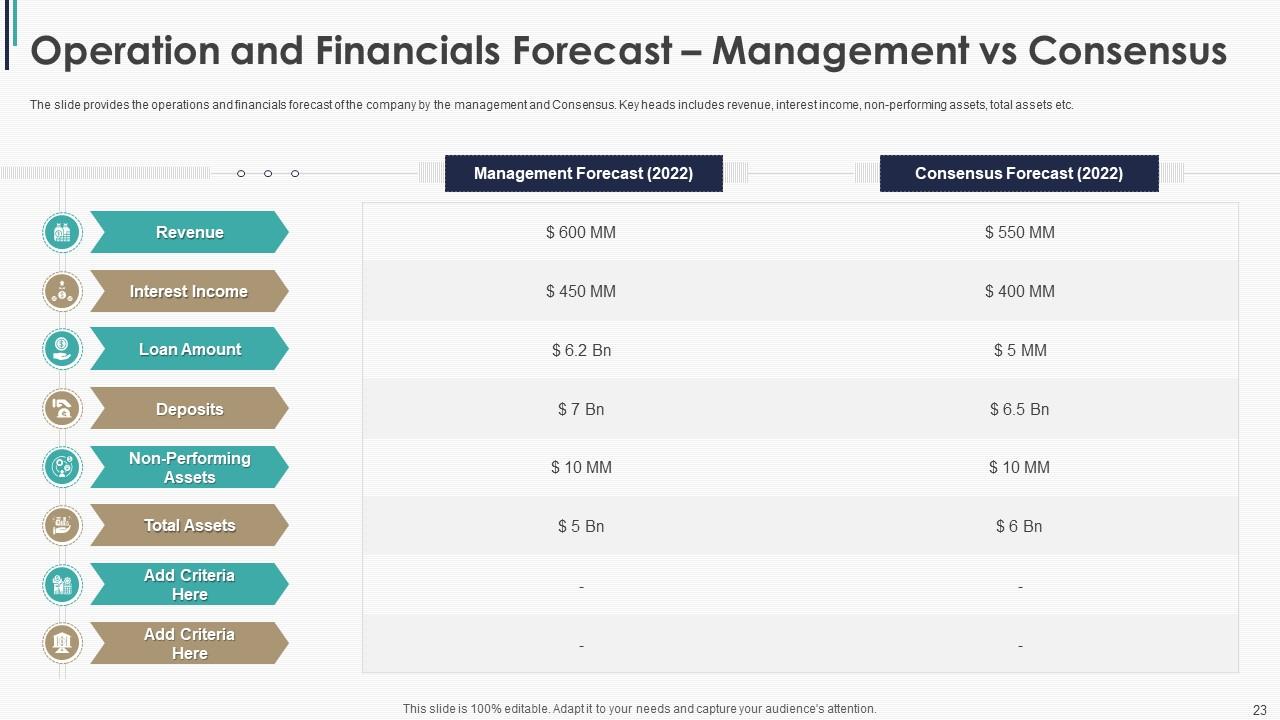
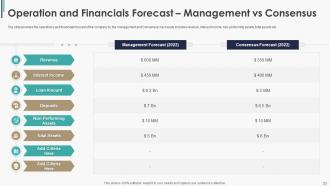
Slide 23: The slide provides the operations and financials forecast of the company by the management and Consensus. Key heads includes revenue, interest income, non-performing assets, total assets etc.
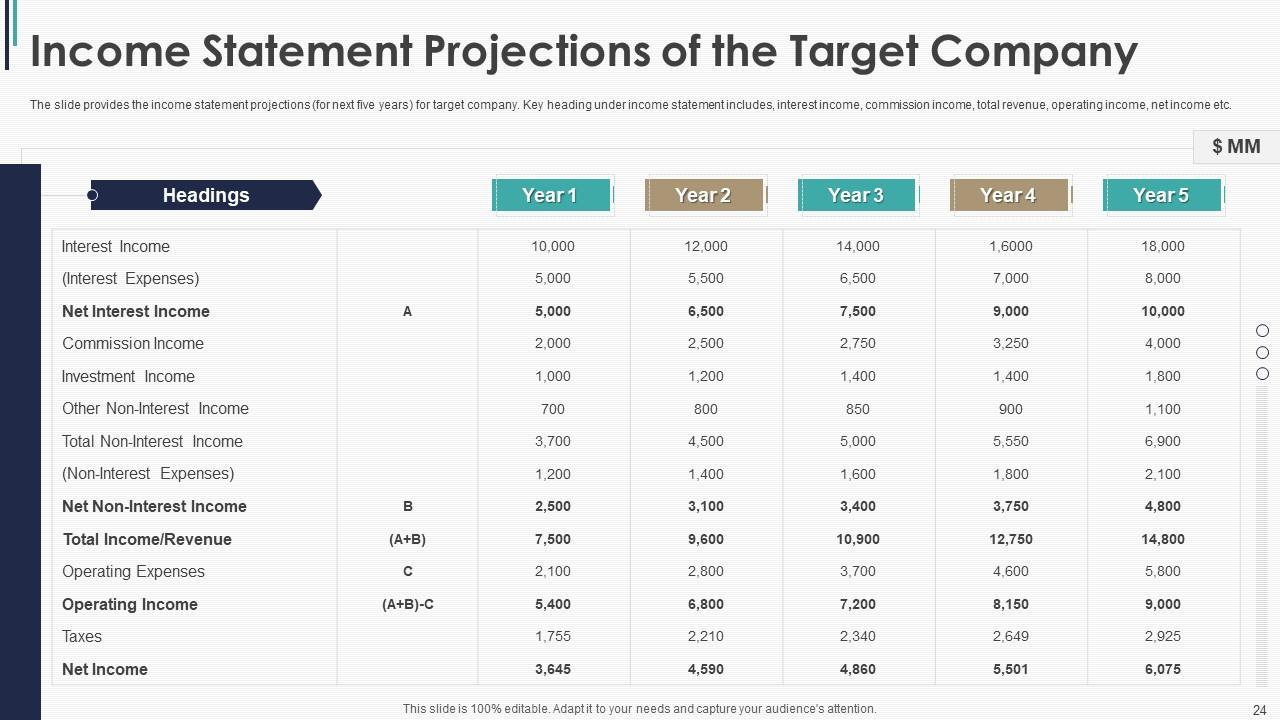
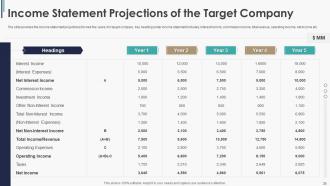
Slide 24: The slide provides the income statement projections (for next five years) for target company. Key heading under income statement includes, interest income, commission income, total revenue, operating income, net income etc.
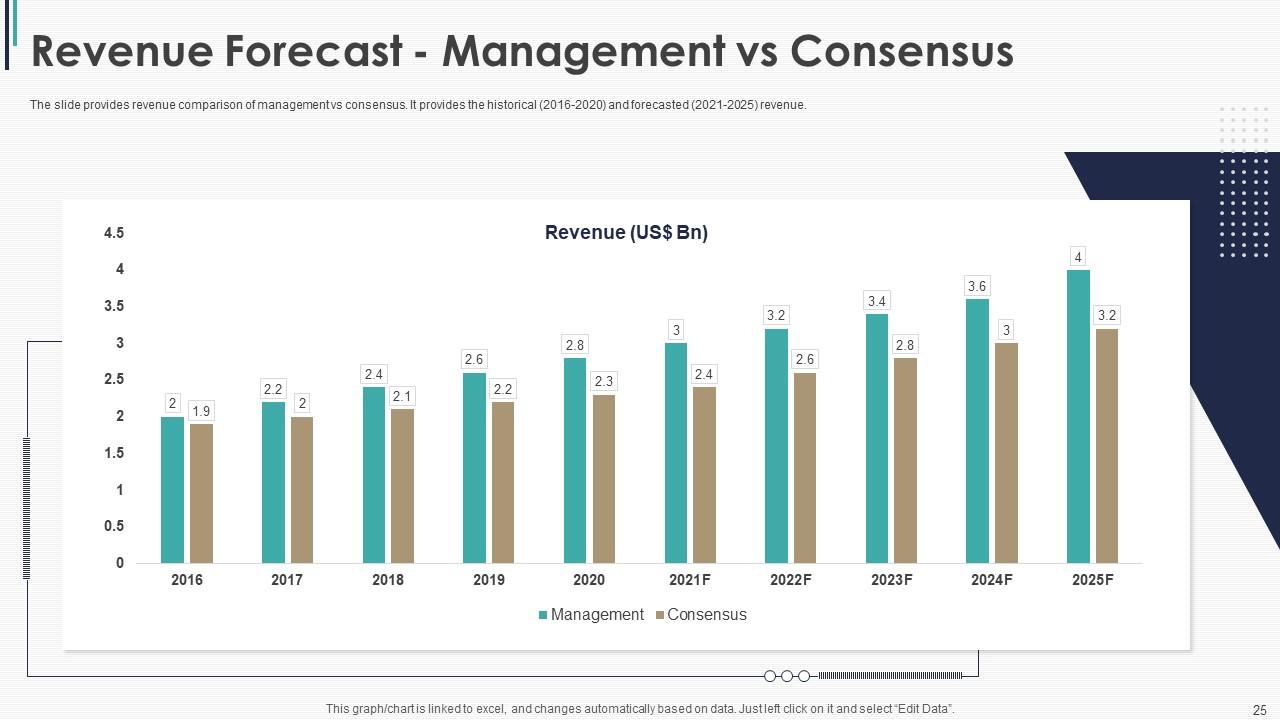
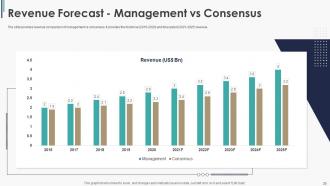
Slide 25: The slide provides revenue comparison of management vs consensus. It provides the historical (2016-2020) and forecasted (2021-2025) revenue.
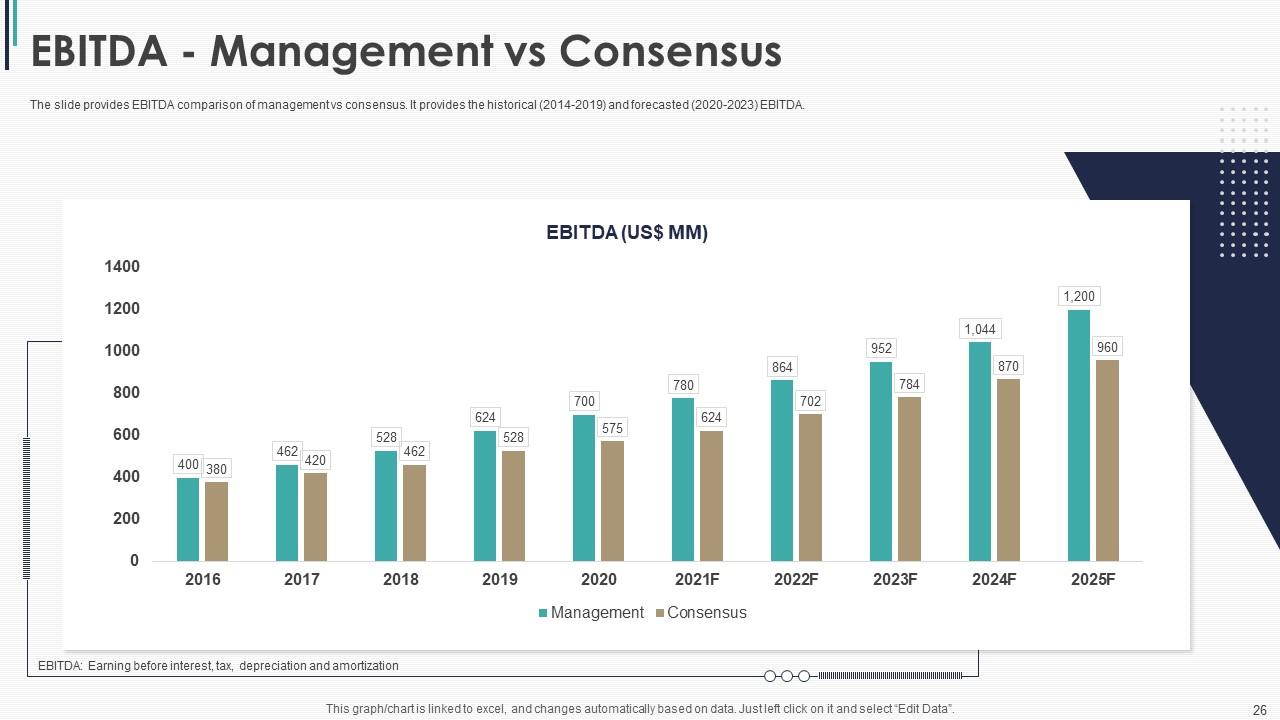
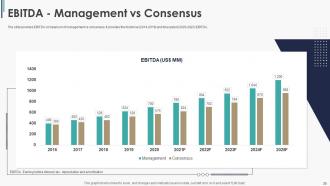
Slide 26: The slide provides EBITDA comparison of management vs consensus. It provides the historical (2014-2019) and forecasted (2020-2023) EBITDA.
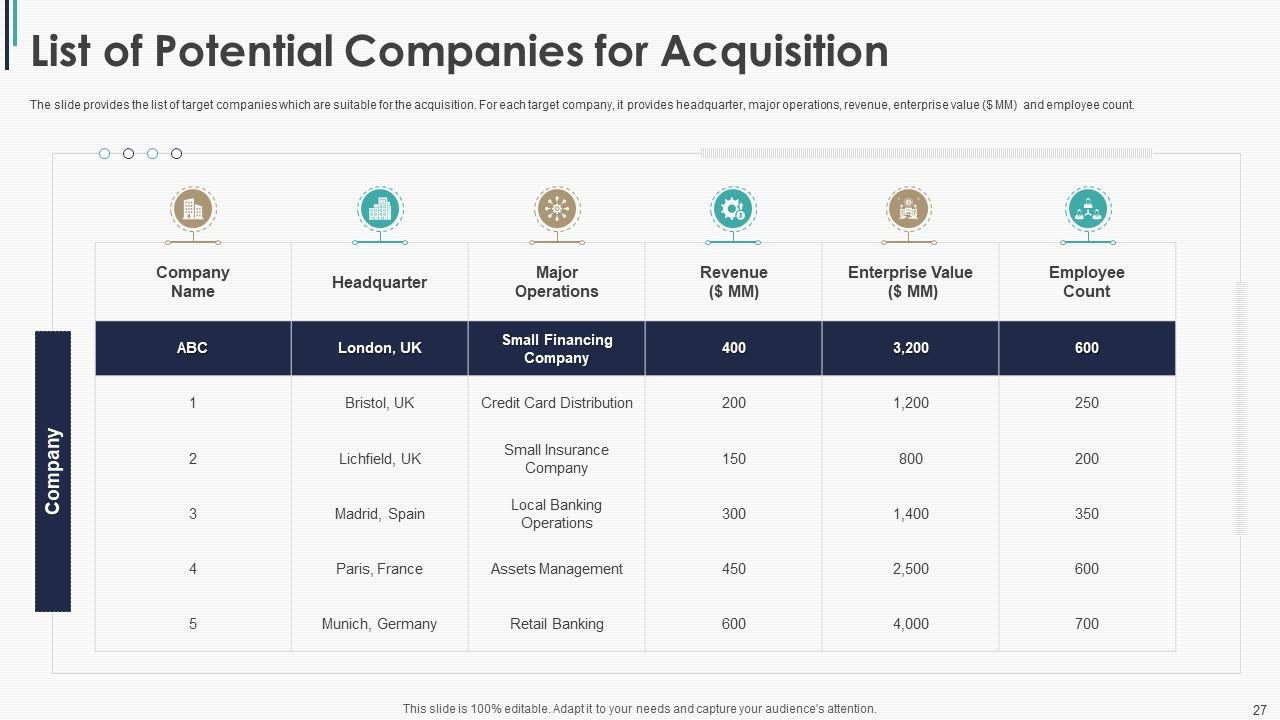
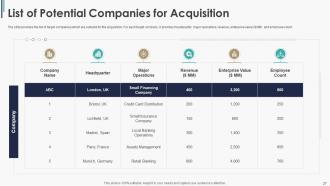
Slide 27: The slide provides the list of target companies which are suitable for the acquisition. For each target company, it provides headquarter, major operations, revenue, enterprise value ($ MM) and employee count.
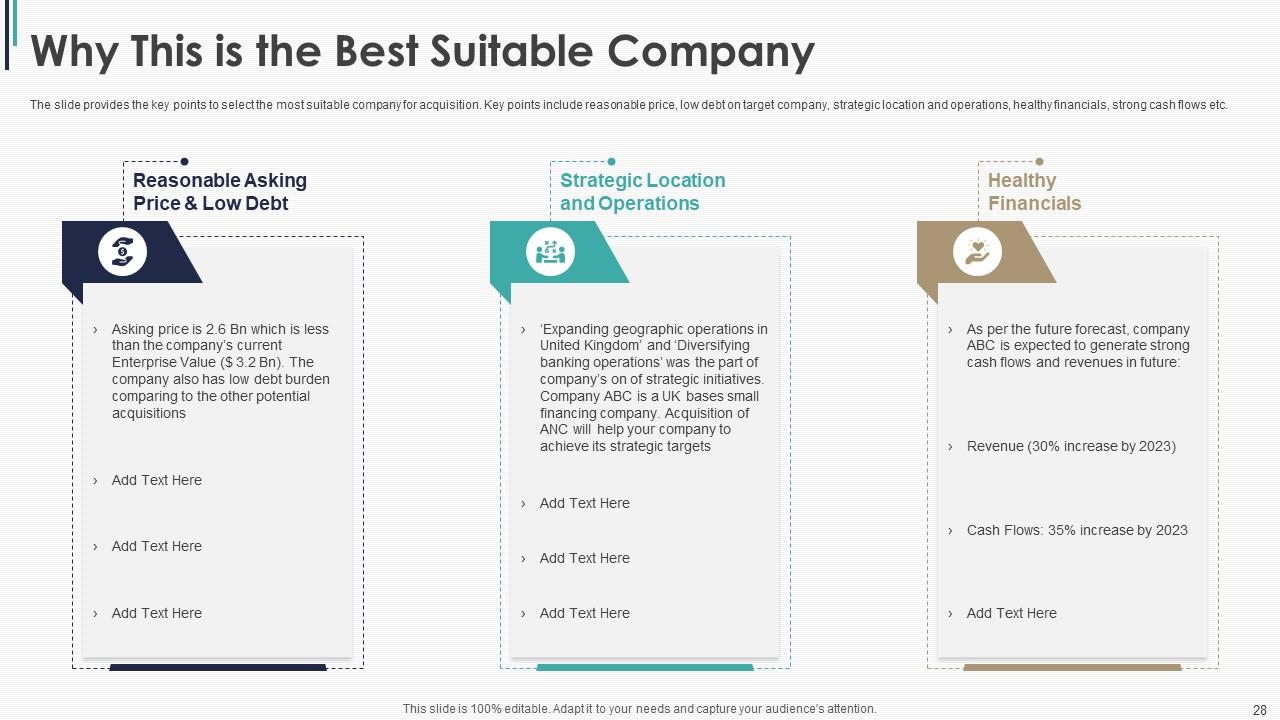
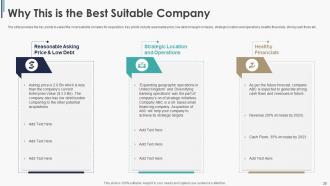
Slide 28: The slide provides the key points to select the most suitable company for acquisition. Key points include reasonable price, low debt on target company, strategic location and operations, healthy financials, strong cash flows etc.
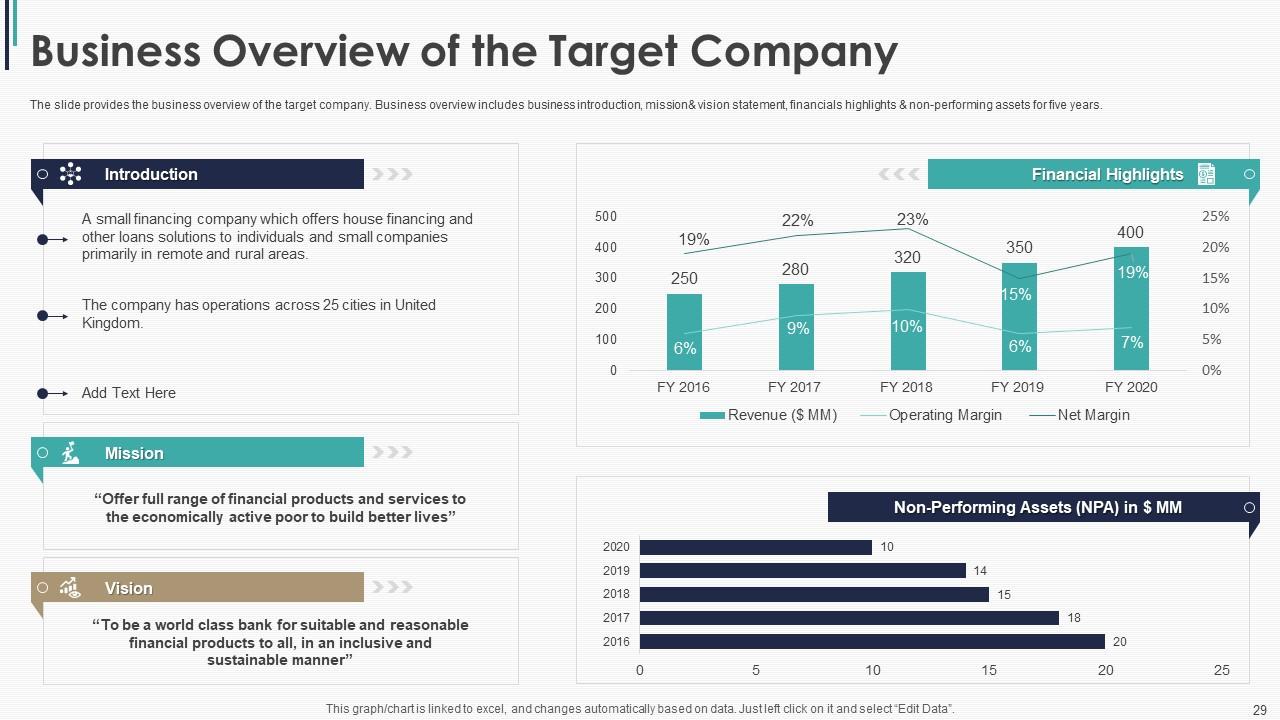
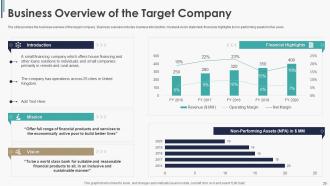
Slide 29: The slide provides the business overview of the target company. Business overview includes business introduction, mission& vision statement, financials highlights & non-performing assets for five years.
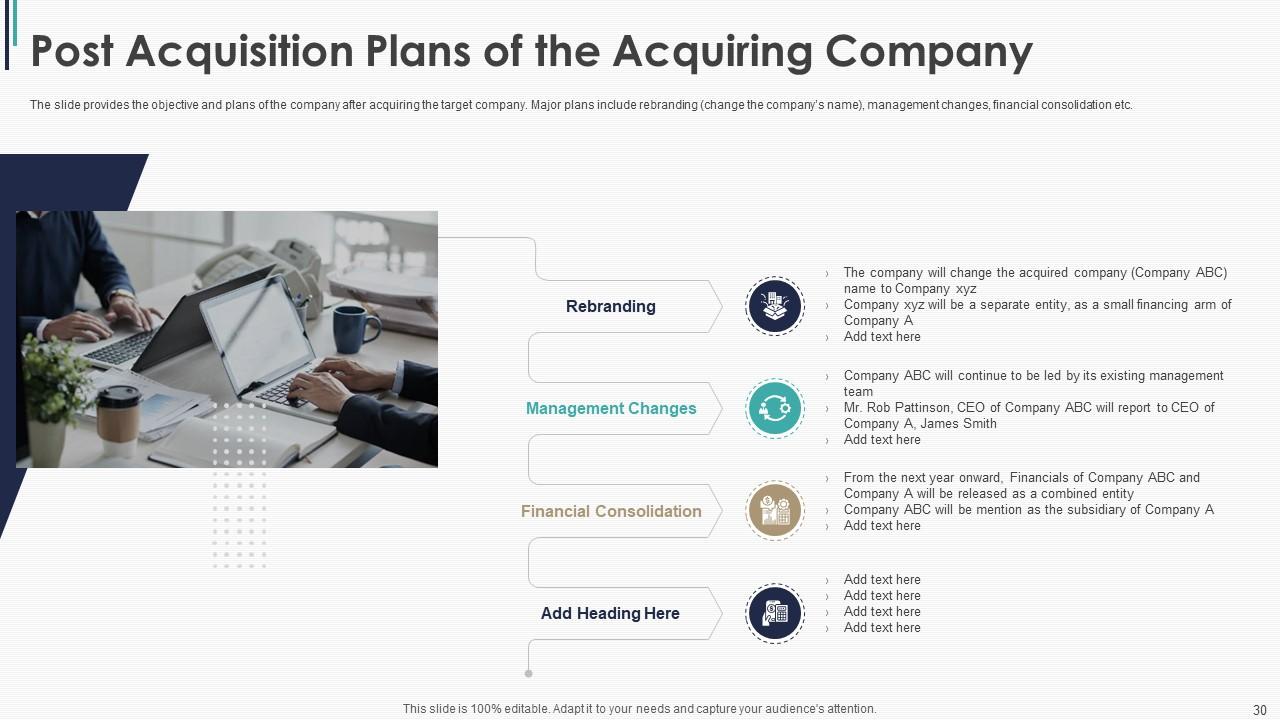
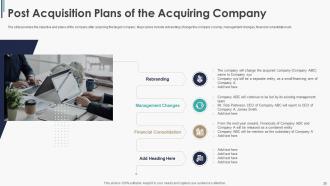
Slide 30: The slide provides the objective and plans of the company after acquiring the target company. Major plans include rebranding (change the company’s name), management changes, financial consolidation etc.
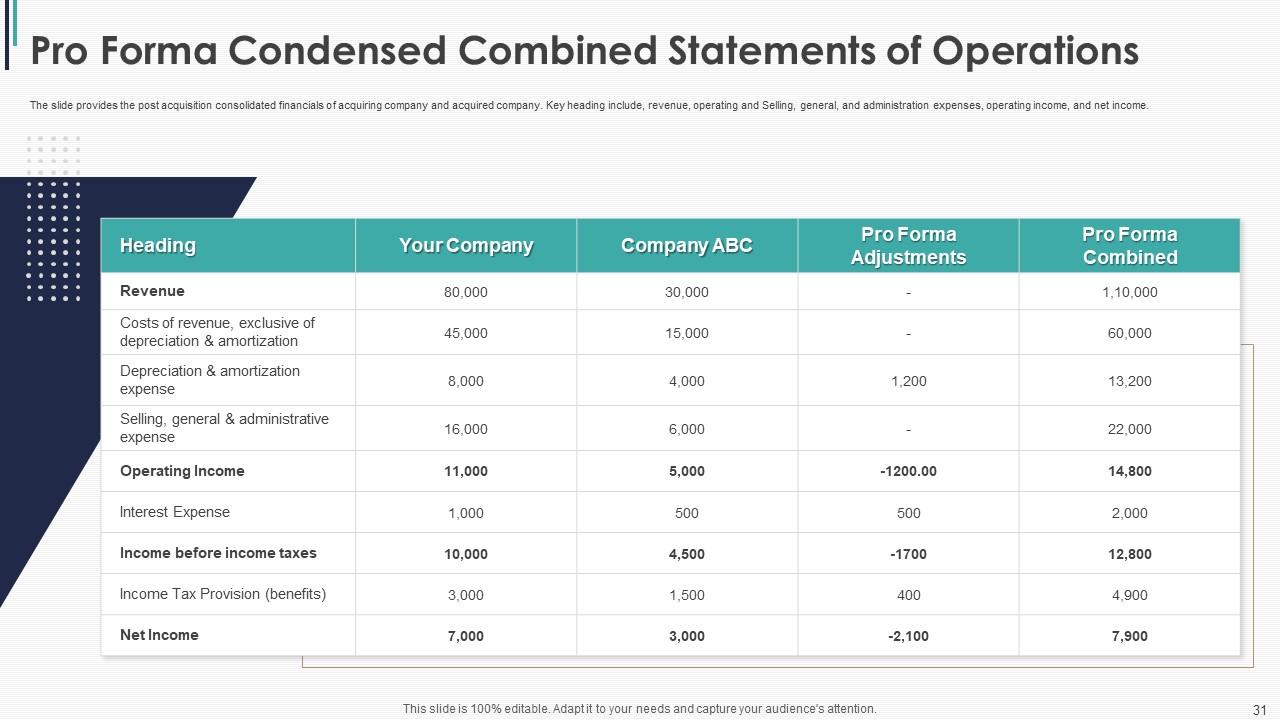
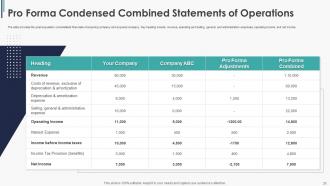
Slide 31: The slide provides the post acquisition consolidated financials of acquiring company and acquired company. Key heading include, revenue, operating and Selling, general, and administration expenses, operating income, and net income.
Slide 32: This is an Icon slide. Use it as per your needs.
Slide 33: This is an Additional Slide.
Slide 34: This is Our Mission slide to state your mission and vision.
Slide 35: This is About us slide that can be used to give a brief overview of the company.
Slide 36: This is Our Team slide with name and designation to fill.
Slide 37: This is a Timeline slide that can be used to present chronological sequence of events.
Slide 38: This is a Post it Notes slide that can be used to keep important information at one place.
Slide 39: This is a Venn Diagram slide that can be used to compare three different elements.
Slide 40: This is a Target slide to present your company's target.
Slide 41: This is an Idea Generation slide to present creative ideas.
Slide 42: This is a creative Puzzle slide to state information, specification, etc.
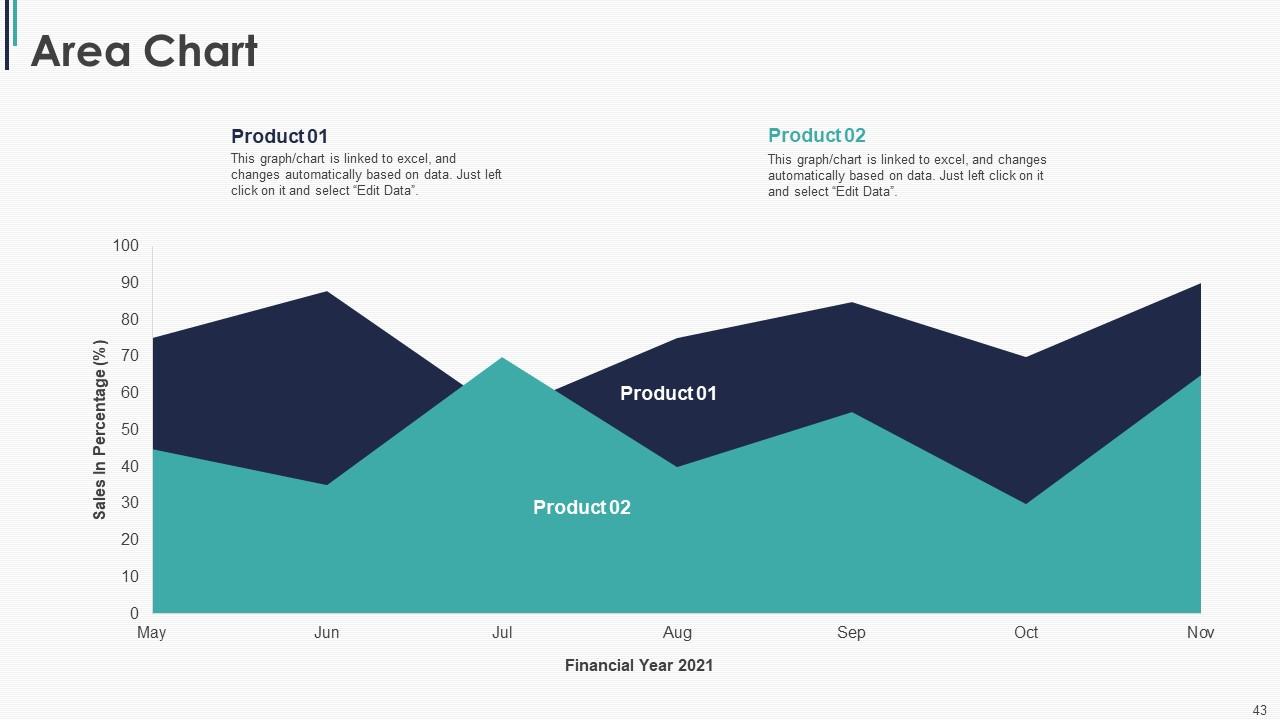
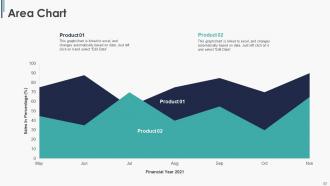
Slide 43: This is an Area Chart slide that can be used to compare different products.
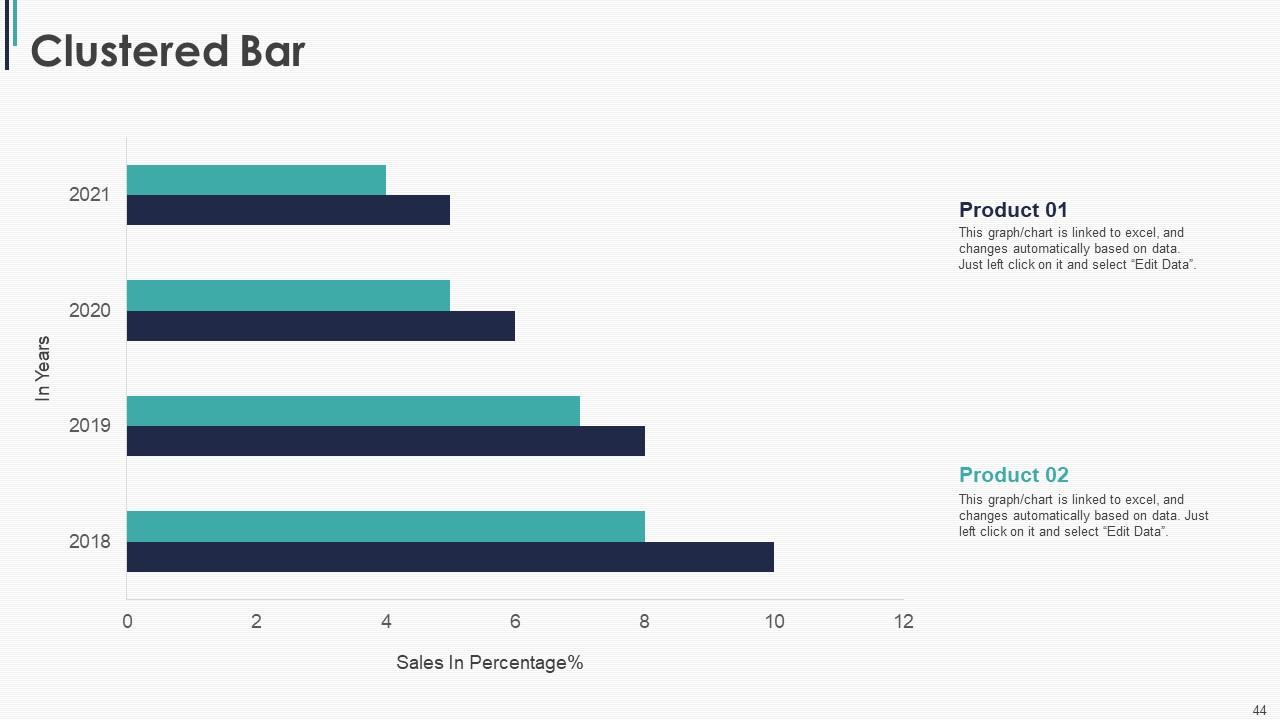
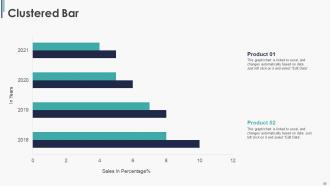
Slide 44: This is a Clustered Bar slide that can be used to conduct comparison between different products on yearly basis.
Slide 45: This is a Thank You slide for acknowledgment. You can share your contact details here.
Pitchbook for general and m and a deal powerpoint presentation slides with all 45 slides:
Use our Pitchbook For General And M And A Deal Powerpoint Presentation Slides to effectively help you save your valuable time. They are readymade to fit into any presentation structure.
-
Designs have enough space to add content.
-
The content is very helpful from business point of view.
-
Great quality product.
-
Great quality slides in rapid time.
-
Good research work and creative work done on every template.
-
Perfect template with attractive color combination.
