

Pre Sales Lifecycle With Marketing Support




Try Before you Buy Download Free Sample Product
 Impress Your
 Audience
 100%
100% Editable
 Save Hours
 of Time


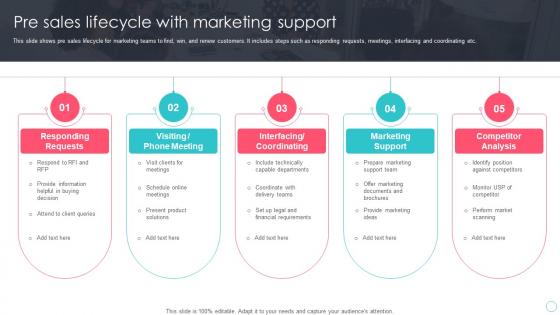
This slide shows pre sales lifecycle for marketing teams to find, win, and renew customers. It includes steps such as responding requests, meetings, interfacing and coordinating etc.
People who downloaded this PowerPoint presentation also viewed the following :
Pre Sales Lifecycle With Marketing Support with all 6 slides:
Use our Pre Sales Lifecycle With Marketing Support to effectively help you save your valuable time. They are readymade to fit into any presentation structure.






FAQs for Pre Sales Lifecycle
So there's basically four stages you gotta hit: qualifying leads, discovery/needs analysis, solution design, then proposals and demos. First thing - make sure they're actually worth pursuing (seriously saves you from wasting weeks on tire-kickers). Discovery is where the magic happens though - dig deep into their actual pain points and what they need. Once you've got that nailed down, design something that fits their specific situation. Then present it back to them. Oh, and here's the thing - if you nail the discovery part, everything else becomes way easier. Each step builds on the last one and gets you closer to closing.
Dude, pre-sales discovery is literally make-or-break for your proposals. Most reps just wing it and send the same boring template to everyone - then wonder why they're not closing deals. You gotta dig deep into their actual problems first. What's broken with their current setup? Where's their budget sitting? Who's making the final call? Once you nail down their specific pain points, your proposal writes itself honestly. It becomes this targeted solution instead of generic fluff. I always start discovery calls with "So what's not working right now?" and just let them vent. Works every time.
Honestly, communication is everything in pre-sales. When you're clear and actually listen, prospects trust you more - they start seeing you as someone who gets their problems, not just another pushy salesperson. Good questions during discovery calls will get you way better info about budgets and who's really making decisions. I swear, half the deals that fall through could've been saved with better communication upfront. Those awkward misunderstandings? Total deal-killers. Next time you're on a call, try asking more open-ended stuff instead of yes/no questions. You'll be surprised how much more they'll share when they feel heard.
So CRM software is basically your home base for tracking prospects before they buy anything. You'll know exactly where each lead stands and when you last talked to them - super helpful when you're managing like 20 different people. What I love most is how you can automate the boring stuff (initial emails, follow-ups) and actually see which tactics work. Your whole team stays on the same page too, which honestly saves so much drama. Just dump all your contacts in there first. Everything else gets way easier once that's done.
Pull your CRM data from last quarter and map out where deals actually closed. Most sales teams just guess at this stuff, then act shocked when numbers don't add up. Check your win/loss rates by industry and company size - you'll spot patterns fast. Track what content gets engagement during calls too. Honestly, the timing piece is huge but gets ignored. See where prospects stall versus where they speed up. Your best reps probably have different approaches worth copying. Oh, and don't forget territory assignments based on what's actually working, not just geography.
Honestly, the biggest pain points are usually sales and marketing not being on the same page, plus those endless approval chains that just kill all your momentum. Prospects also love to ghost you halfway through - drives me crazy. Here's what actually works: nail down clear handoff rules between teams first. Streamline approvals so deals don't die waiting around. Set up regular check-ins and hit people through different channels so they can't just disappear on you. Map out where your deals typically get stuck, then fix those spots one by one. Oh, and assign actual owners for each stage - accountability makes everything move faster.
Dude, you gotta stop doing generic demos - nobody cares about your full feature tour. Ask them what's actually broken in their world first, then only show the 2-3 things that fix those problems. Let them play with their own data if you can. I swear, half the demos I've sat through just ramble about everything and lose people immediately. Talk like a normal human, not like your marketing team wrote your script. After each part, tie it back to what they said they needed. The whole point is making them think "yeah, I'd actually use this every day" - that's when you know you've got them.
Okay so here's what I've learned after bombing a few pitches - tell them a story, not a feature list. Start with their actual problems, then show how you fix those specific issues with real examples. Your slides should be super visual because honestly, walls of text put people to sleep. Oh and definitely practice your demo beforehand so you're not clicking around like an idiot. The thing that really makes a difference though? Don't save questions for the end. Let them interrupt and engage throughout - it should feel like you're just having a conversation about how to make their life easier.
Honestly, when sales and marketing stop fighting each other, everything gets easier. You'll get way better leads because marketing finally understands what you actually need. The messaging stays consistent too - no more prospects getting confused by different stories. Sales feedback helps marketing build content that tackles real objections you're hearing daily. Oh, and you can divide and conquer better - they nurture the warm ones while you focus on closing hot leads. Just do weekly check-ins to share what's working. Sounds boring but it saves so much hassle later.
BANT qualification is your best friend here - Budget, Authority, Need, Timeline. Just ask them straight up about budget ranges and who makes the decisions. Discovery calls are gold for figuring out their actual pain points (and whether you can even help). I score leads on company size, industry match, how much they engage with our content... that stuff. Honestly though? Real conversations beat fancy systems every time. Don't overthink it - just build a simple scoring process you'll actually use. You'll spot the serious buyers versus people just browsing pretty quickly once you get into a rhythm.
Dude, you absolutely have to know your competition - it's like going into battle blindfolded otherwise. Research who else they're talking to early on. I've watched so many deals die because the rep had no clue what other solutions were in the mix. Once you know their strengths and weak spots, you can angle your pitch to show where you dominate and get ahead of any objections. Like if they've got better pricing but worse support, lead with your service story. Honestly, walking in blind is just asking to lose the deal.
Hit up prospects with surveys during discovery calls, then send follow-up questionnaires after demos. That's where you get the real dirt. Typeform's solid for this, or honestly just Google Forms works fine too. Stalk their LinkedIn posts and industry forums - sounds creepy but you'll catch complaints about current tools they're using. Document everything in your CRM so patterns pop out later (this part's boring but worth it). Ask stuff like "what's broken with your current setup?" instead of leading them toward your product. Review responses weekly or you'll forget.
Dude, stories are everything in presentations. Seriously, people's brains just latch onto them way better than boring feature lists. What I do is weave in customer success stories throughout my whole pitch - like, find a client who had similar problems and walk through their entire journey. Start with their pain points, then show the transformation after using your solution. Real numbers work best here. The key is getting specific about outcomes. Oh, and always loop it back to them at the end - "this is exactly what we can do for you too." It's honestly one of the most effective techniques I've learned.
Look at your conversion rates first - track them at every single stage. Response times matter too, plus how accurate your qualification actually is. Sales cycle length will tell you exactly where people are dropping off. Demo-to-opportunity conversion is honestly where I'd focus most of my energy since that's make-or-break territory. Check your sales accepted lead rate and pipeline velocity so you know if marketing's sending you garbage or gold. Win rates by lead source are clutch - shows which channels aren't just wasting your time. Start there, then you can get fancy with the detailed stuff later.
Oh man, cultural stuff is HUGE for pre-sales. That direct American approach? Total disaster in places like Japan where you're basically building trust for months before anyone even considers buying. I bombed my first APAC deal because of this lol. You'll need to flip everything - how you communicate, run meetings, who you're actually pitching to. Sales cycles get weird too, like Germany takes forever compared to the US. Honestly, just find local people who get the culture. Worth every penny even if it feels expensive upfront.
-
Innovative and creative templates with high-quality designs. Helped me with my presentation as the slides were easy to edit.
-
The design is clean-cut, modern, and sleek, keeping the users' needs in mind. The multiple uses make this product worth every penny!