

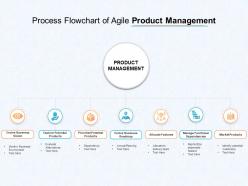
Process flowchart of agile product management





Try Before you Buy Download Free Sample Product
 Impress Your
 Audience
 100%
100% Editable
 Save Hours
 of Time


Our Process Flowchart Of Agile Product Management evolve on a daily basis. They forecast forthcoming fashions.
People who downloaded this PowerPoint presentation also viewed the following :
Process flowchart of agile product management with all 5 slides:
Our Process Flowchart Of Agile Product Management facilitate globalisation. They contain elements of all cultures.
FAQs for Process flowchart of
So basically you've got discovery, ideation, prioritization, development, and release. Start with research - figure out what users actually want and where the market gaps are. Then brainstorm solutions and rank your backlog by value vs effort. Development runs in sprints with lots of feedback, which honestly makes or breaks most teams. Release stuff incrementally after each sprint and use that data for your next round. The whole thing's a cycle - you're always testing assumptions and changing direction when something's not working. Oh, and keep those feedback loops short or you'll be flying blind.
So basically Agile completely flips the script from traditional product management. Instead of planning everything upfront in these massive cycles, you work in short sprints with tons of feedback. Old school methods are like waterfall - define requirements, build it all, then launch. But with Agile? You release bit by bit and pivot based on what users actually want (which honestly is never what you think it'll be). You're validating assumptions through real user data instead of crossing your fingers that your big bet works out months down the line. The whole thing becomes: start small, test fast, iterate.
So user stories are like the foundation of agile - they capture what users actually want in bite-sized pieces your dev team can handle. Write them from the user's POV: "As a [user], I want [goal] so that [benefit]." Way better than those monster requirement documents we used to suffer through! They feed right into sprint planning and help you prioritize based on actual user impact. Honestly, the collaborative writing part is huge - getting your whole team involved makes everyone way more invested. Break stories down into tasks during planning. Short, focused, user-centered. That's the sweet spot.
Honestly, flowcharts are game-changers for Agile teams. You can finally see how everything connects - backlog grooming, sprint planning, retros, all of it. Handoffs between people become obvious, and you'll catch bottlenecks before they wreck your sprint. New team members won't drown in endless documentation either. I swear, visualizing the whole workflow beats trying to keep track of individual ceremonies in your head. Try building one during your next retro with the whole team. Everyone gets on the same page about how work actually moves through your process, and it's way more collaborative than having one person document everything.
Miro, Lucidchart, and Figma are solid picks for building Agile flowcharts - they're collaborative so your whole team can jump in. Don't overthink the tool choice though, I've watched teams waste weeks debating this stuff. They all work fine honestly. You'll want to connect whatever you pick to your existing project management setup. Jira's popular, or Azure DevOps if you're in that ecosystem. Trello works too for simpler workflows. Just pick something everyone will actually use instead of the shiniest option. Start basic and add bells and whistles later when you hit real limitations.
So basically stakeholder feedback is what makes your Agile sprints actually work. After each demo, you collect their input and use it to figure out what's going in your next sprint. The whole idea is this constant feedback loop - you're always adjusting based on what they really need instead of guessing (and we're terrible at guessing, honestly). Build in regular check-ins like sprint reviews or user testing sessions. Whatever clicks for your team. Just make sure you're not collecting feedback for the sake of it - actually document it and do something with it. Each sprint becomes your chance to show them you listened.
Honestly, frameworks like MoSCoW or weighted scoring help tons with ranking features objectively. Start with what actually impacts users and your business metrics - that's your north star. Don't get trapped in endless debates without data (I've watched teams do this for weeks). Grab user feedback and analytics first. Sure, factor in technical complexity and effort, but high-value stuff should usually win. Things move crazy fast, so revisit priorities every couple sprints. Oh, and here's the thing that drives me nuts - teams label everything "high priority." Pick like 3-5 things max or you'll lose focus completely.
Flowcharts are your best friend here - people get it when they can actually see how work moves around. Start big picture with the sprint cycle, then zoom into the daily stuff like standups and retros. Here's the thing though: different teams care about totally different parts. Devs want to see technical handoffs, marketing just wants to know when stuff ships. So honestly, don't try to explain everything to everyone at once. Walk them through a real project they're working on right now - that's when it clicks. The abstract process stuff is boring until they can connect it to their actual work.
Track velocity and sprint burndown first - that's your bread and butter for seeing delivery speed. Cycle time matters too, plus lead time from idea to customer. Story points completed vs planned helps with predictability, though honestly we always start way too optimistic with estimates lol. Feature adoption rates are huge since they show if people actually use what you built. User feedback scores round it out nicely. I'd stick to maybe 3-4 metrics initially. You can always pile on more later once you've got the routine down.
Honestly, sprints are like your product's pulse - they give you this steady rhythm where you can actually see what's getting done. You're forced to pick what matters most, build it, then get real feedback before jumping into the next thing. Think of them as mini-deadlines that keep everyone from just spinning their wheels. What I love is you always have something concrete to show people at the end. When priorities shift (and they will), you can pivot fast instead of being stuck in some endless development cycle. Oh, and use those sprint reviews to figure out what's actually moving the needle vs. what's just... busy work, I guess.
Honestly, the sprint setup is perfect for this. You get these 2-3 week windows to try stuff without going all-in on some massive project. When you're getting user feedback constantly, it naturally leads to those "oh wait, what if we..." conversations that turn into actual innovation. Retrospectives are clutch too - gives the team space to think bigger and suggest wild ideas. Way better than the old school approach where you'd plan everything upfront and just... hope for the best? Each sprint becomes like a mini experiment instead of just cranking through a feature list.
Honestly, the biggest mistakes I see are teams overcommitting during sprints and basically ignoring customers until it's too late. Analysis paralysis is huge too - I've definitely fallen into that trap, spending way too much time perfecting user stories instead of just getting started. Oh, and don't treat your backlog like some sacred document that can't change. Talk to actual users constantly, not just when it's convenient. My take? Go small first, test everything early, and be ready to completely change direction when (not if) you're wrong about stuff.
So with Agile, you're basically planning as you go instead of trying to figure everything out upfront like Waterfall does. I always think of it like using GPS vs those old MapQuest printouts - you adjust the route when needed. You'll plan maybe 2-4 sprints ahead, then constantly tweak things based on what you learn each iteration. Priorities shift, users want different stuff, whatever. The whole point is expecting change rather than fighting it. Honestly, it's way less stressful once you get used to it. Just start with your next couple releases roughly mapped out, then refine from there.
Retros are honestly where the magic happens in Agile. Your team sits down after each sprint and talks through what went well, what sucked, and what you'll do differently next time. Think of it like a process health check - sometimes I think these meetings matter more than the actual sprint work. The trick is making sure those conversations turn into real action items, not just people complaining about stuff. Otherwise you're stuck making the same dumb mistakes every sprint. Oh, and actually follow through on the changes you decide on. Nobody wants expensive group therapy disguised as a meeting.
Honestly, video calls for daily standups are non-negotiable - I've watched teams fall apart trying to do async check-ins. Get everyone on Miro for sprint planning and use it religiously. Yeah, someone might have to join at 7am, but having overlapping hours for core stuff is worth it. Document everything right away in Confluence or whatever you use. Shorter sprints help too, keeps momentum going when you can't just tap someone's shoulder. Oh and this might sound weird, but create some kind of virtual hangout space. Those random conversations actually build the team vibe you lose being remote. Start simple with your tools though - don't go crazy with fifteen different apps.
No Reviews