

Process state transition




Try Before you Buy Download Free Sample Product
 Impress Your
 Audience
 100%
100% Editable
 Save Hours
 of Time


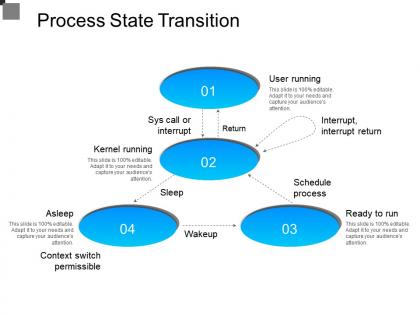
Introducing Process State Transition slideshow to discuss how the processes move from one state to another. Showcase the components which include process stack, data section, and a heap memory allocated to process to run. Describe how the process changes its state during its execution with the help of a computer architecture PowerPoint layout. Take the assistance of this process state diagram PPT slide to highlight each state which is new, running, waiting, ready, terminated. Each process can be in one of the states. Utilize our content-ready time-sharing operating system PowerPoint graphic, and showcase the transition between the states. Also, there are various high-grade icons present in the slide to make your presentation attention-grabbing and meaningful. Describe the function of the process control block and how it is maintained by the operating system. Thus, create a knowledgeable presentation by downloading our ready-to-use process transition PowerPoint graphic.
People who downloaded this PowerPoint presentation also viewed the following :
Process state transition with all 5 slides:
Employ our Process State Transition as your gambit. Gain control from the beginning.


FAQs for
Honestly, start with process mapping - just document one workflow that's driving everyone crazy. Pick someone to actually own it (without an owner, stuff just dies a slow death). Set up some basic metrics so you know if it's working or getting worse. The thing is, what worked great six months ago might be completely broken now, so you need regular check-ins. Oh and automate whatever boring repetitive tasks you can - your team will thank you for it. Don't try to fix everything at once though. Just grab that one process that's been bugging people and map it out this week.
Walk through your customer's whole experience first - from initial contact to final delivery. Map out every step that touches them directly since those are your main processes. Honestly, the best approach is literally following the work around your office (or on Zoom calls now). Write down who handles what and where handoffs happen. Don't worry about tiny details at first though. Get the big picture, then dive deeper. Here's the thing - talk to people actually doing the work because they'll spot stuff you'd never see from a management perspective. They know where things get messy.
Honestly, tech is a game-changer for managing processes. Automation tools handle all that boring repetitive stuff and cut out human mistakes. You'll get dashboards that actually show you where everything's getting bottlenecked - seriously, it's wild what you discover. Manual tracking is such a pain, but real-time visibility means no more hunting people down for updates. Cloud platforms let everyone work together no matter where they are (learned that one the hard way during remote work). My advice? Start with whatever manual process makes you want to scream. Those are always the best ones to automate first.
So basically, good process management = happier customers. Here's why it works: your customers get consistent service no matter who they deal with (which honestly should be the bare minimum, but you'd be surprised). Fewer screwups, faster problem-solving since your team isn't figuring things out from scratch each time. No more random delays from internal confusion either. I'd start by looking at whatever processes your customers actually see and experience first. Those are your biggest wins. Fix the stuff that makes people wait or gets messed up regularly. The ripple effect is pretty immediate once you nail down those workflows.
Honestly, the worst part is always people hating change - like, I've literally watched projects die because Karen from accounting refused to use new software. Also getting buy-in from higher-ups who don't actually understand the day-to-day mess. Map your current processes first so everyone can see how broken things really are. Bring stakeholders into the planning early instead of springing changes on them later. Explain WHY you're doing this, not just what you're changing. Oh, and start with small pilot programs! Way easier to prove it works before going company-wide.
Don't treat continuous improvement like some separate project - just build it into what you're already doing. Weekly retrospectives are perfect for catching what's broken before it gets worse. Make tiny tweaks instead of planning these massive overhauls (seriously, those are pipe dreams). Track your metrics so you actually know if stuff is getting better. Oh, and people need to feel safe calling out problems without everyone getting defensive about it. Honestly? Just pick one annoying process this week and ask your team what's driving them crazy about it. Small changes add up fast.
Look at four main areas: how fast things move (cycle time, throughput), quality stuff (error rates, defects), what it costs you (processing costs, how well you're using resources), and whether customers are happy (delivery times, complaints). Honestly? Start small with maybe 2-3 metrics per area. Trust me, trying to track everything right away is a nightmare and you'll burn out fast. The exact metrics really depend on what kind of process you're running, but whatever you pick needs to actually matter to the people upstairs. Also make sure you can measure them consistently and do something about it when the numbers start looking ugly.
So lean methodology is basically about cutting out all the crap that doesn't add value to your process. Map out what you're doing now - seriously, just draw it out or whatever - and you'll probably find a ton of stuff that's just... pointless. Things like waiting around for approvals or doing the same task twice. The idea is making small tweaks constantly instead of some huge dramatic change. Get your team involved too since they know where the real problems are. Honestly? Just pick one process that annoys everyone and start there. You'll figure out the rest as you go.
You really need those people on board or your whole thing falls apart. I learned this the hard way - what you think is happening and what's actually happening are usually two different things. Get them involved early so they can tell you where the real problems are. Nobody wants changes forced on them, but if they help build it? Way different story. Map out everyone who'll be affected and bring them into the design stuff. Seriously, it'll save you so much drama down the road. Oh and they'll spot issues you'd never think of.
Honestly, process management is a game-changer for cutting costs. Map out one workflow that's been driving you crazy - you'll spot so much wasted time it's ridiculous. Those redundant steps everyone just accepts? Gone. Bottlenecks slowing everything to a crawl? Fixed. The "we've always done it this way" mentality costs serious money through duplicate work and pointless handoffs. Once you standardize things (boring but worth it), you'll actually know where your resources are going instead of just guessing. Pick something small to start with and hunt for the obvious confusion points.
So for process stuff, I'd check out Asana, Monday.com, or Notion - they're solid for mapping workflows and tracking tasks. Lucidchart and Miro are clutch if you need visual process maps for complex stuff. Though honestly? I've seen teams crush it with just Trello boards - sometimes keeping it simple wins. Zapier's perfect for automation without getting too technical, connects all your existing tools. Main thing is picking whatever your team won't abandon after two weeks. I'd start with your biggest pain point process first, then build out from there once you get the hang of it.
Oh totally - culture will torpedo your process plans faster than anything else. I learned this the hard way when we tried pushing formal approvals on a team that basically ran on Slack DMs and quick hallway decisions. Such a disaster. You've got to watch how people actually get stuff done first. Are they super independent? Then rigid checklists will drive them crazy. Do they love brainstorming together? Don't force them into isolated workflows. Honestly, the best processes feel like they just make the good stuff easier instead of fighting against how your team naturally operates. Work with their vibe, not against it.
Okay so basically - project management is for one-time things with clear start/finish dates. Process management? That's for stuff you do repeatedly. Like if you're launching a new product, that's totally a project situation. But your customer service workflow runs constantly, so that's process territory. Projects have deadlines and specific deliverables you're working toward. Processes are more about keeping daily operations smooth and consistent. Honestly, the easiest way I think about it is just asking "will we do this again?" If yes, treat it like a process. If it's a one-and-done deal, go with project management.
Honestly, forget those thick binders everyone ignores - you need procedures people will actually use. Map what you're doing now, then build workflows with clear checkpoints. Audits help but only if you actually act on what you find (learned this the hard way). Get your teams trained and use monitoring tools to spot problems early. Here's the thing though - assign specific people to own each process. Makes a huge difference when someone's actually responsible. Oh, and quarterly reviews keep everything from getting stale. Trust me on this one.
Look, training is huge for process management - seriously can't skip it. People hate change (I'm guilty of this too), so you've got to show them why new processes matter, not just dump instructions on them. Otherwise you'll get chaos. Everyone doing their own workarounds, half-following procedures, getting frustrated. Hands-on sessions work way better than boring presentations. Make some quick reference sheets they can actually keep at their desk. Trust me, without proper training you're basically setting everyone up to fail from day one.
-
Use of different colors is good. It's simple and attractive.
-
Very well designed and informative templates.