


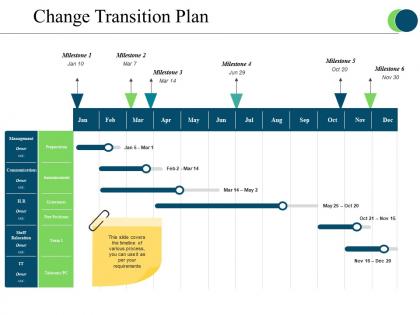
Change transition plan powerpoint templates




Try Before you Buy Download Free Sample Product
 Impress Your
 Audience
 100%
100% Editable
 Save Hours
 of Time


Enjoy everything you do with our Change Transition Plan Powerpoint Templates. Fun has always been their credo.
People who downloaded this PowerPoint presentation also viewed the following :
Change transition plan powerpoint templates with all 5 slides:
Ensure your enterprise doesn't get adversely effected with our Change Transition Plan Powerpoint Templates. It helps counter external influences.

FAQs for Change transition
Honestly, it comes down to three big things. First, communicate like crazy - tell people exactly why this is happening and what they'll get out of it. Nobody likes workplace surprises. Your leaders need to actually stick around and be visible, not just make the announcement and vanish. Get employees involved in the planning if you can. Makes them feel like they have some control instead of just being dragged along. Oh, and definitely expect pushback - it's gonna happen no matter what. Find your change champions early and get them hyped up first. They'll do half the work convincing everyone else for you.
Honestly, you need both the hard numbers and the touchy-feely stuff. Track your adoption rates, budget, timeline - the usual suspects. But here's the thing: employee feedback is huge because people can torpedo your whole project if they hate it. I learned this the hard way once. Check if they're actually using the new processes or just pretending to follow along. Don't wait until the end to measure - do pulse checks throughout. Oh, and pick 3-5 success metrics before you start so you're not playing catch-up later trying to figure out what "winning" looks like.
Dude, communication literally makes or breaks change management. People HATE being kept in the dark about stuff that affects their jobs - like, who wouldn't? You've gotta explain why the change is happening and actually listen when they push back or ask questions. Don't wait until you have everything figured out either. Start talking early, keep it real with updates, and let it be a two-way thing. Otherwise you'll just get rumors and resistance filling those information gaps. Been there, seen that disaster happen. Keep it frequent and transparent - that's honestly your best shot.
Honestly, communication is everything here. Talk to your team early and keep talking - don't go dark when things get messy (I've seen that backfire so many times). Be straight with them about the challenges but also paint the bigger picture of where you're headed. Here's the thing though - get them involved in figuring out the "how" instead of just dropping decisions on them. Regular updates, town halls, whatever works. And yeah, acknowledge that this stuff is genuinely hard while celebrating the small wins. People need to feel heard, not just managed through change.
Honestly, the worst part is always getting people on board - everyone hates change, even when it's good for them. Leadership not backing you up is brutal too. Then you've got the usual mess of unclear deadlines, not enough budget, and somehow you're supposed to keep everything running normally while flipping the whole system. Oh, and communication? Forget about it. Everyone thinks someone else is sending updates. My advice: talk way more than feels necessary, make sure the bosses are visibly supporting you, and get the complainers involved in planning. When people feel like they helped design it, they'll actually want it to work.
Honestly, you've gotta read your company's vibe before picking any change strategy. Traditional, buttoned-up places need way more structure and endless meetings to get everyone on board - annoying but necessary. Companies that are already pretty flexible? They can handle faster, bottom-up changes without everyone freaking out. I learned this the hard way at my last job when we tried moving too fast. Don't force some Silicon Valley approach on people who've been doing things the same way for decades. Figure out how change-ready your team actually is, then work with their natural style instead of against it.
Okay so there's a few good options here. Kotter's 8-Step thing is super popular - walks you through creating urgency, building coalitions, all that. ADKAR is solid too, focuses on individual change (Awareness, Desire, Knowledge, Ability, Reinforcement). Perfect when you actually need people to change how they do stuff. But honestly? I've watched teams get completely bogged down in all the theory. Lewin's Unfreeze-Change-Refreeze is way simpler if you're dealing with smaller changes. My take - just pick whatever matches how complex your situation is and don't try mixing different approaches together.
Honestly, tech tools can make or break your change rollout. Slack or Teams keeps everyone talking openly instead of weird hallway whispers. Project management stuff helps you actually see if you're hitting deadlines. Pulse surveys are clutch - you'll know if people are freaking out before they start updating their resumes. Digital training makes upskilling way less painful than those awful conference room sessions we've all sat through. Don't go crazy picking every shiny new tool though. Your culture matters more than features. Start small, maybe two tools max, then add more once people aren't overwhelmed.
Honestly, communication is everything here. People hate changes they don't get or weren't asked about. Explain WHY you're doing this, not just what's happening. Get them involved in figuring out the how - I can't tell you how many times I've watched changes crash and burn because someone just made announcements from their office. Quick wins are your friend. Show benefits fast and actually celebrate them. Oh, and find your natural cheerleaders early. Those people who adapt quickly? They'll do half your convincing for you without it feeling forced.
Honestly, good training can make or break your whole change initiative. I've watched so many projects crash because leaders just expected people to wing it - big mistake. You need folks to actually get why things are changing, not just how. Start planning this stuff early too, don't wait until the last minute. Cover the technical bits obviously, but the mindset piece is huge. When people feel confident with new systems and understand the reasoning behind it all, they'll stop fighting you on everything. It's kinda obvious when you think about it, but companies mess this up constantly.
So basically, planned change is when you're in the driver's seat - you control the timeline, prep your team, have a whole strategy mapped out. Reactive change? That's when life smacks you upside the head and you're scrambling. Market crashes, competitors blindside you, whatever. Way more chaotic and honestly exhausting. I learned this the hard way at my last job lol. The trick is building some wiggle room into your plans so when random stuff inevitably happens, you can pivot without losing your mind. Nobody's psychic, but you can at least try to stay ahead of the curve.
Build in regular check-ins throughout the whole thing - pulse surveys, focus groups, whatever works for your team. Weekly feedback sessions during rollout are honestly pretty effective. But here's the thing: you've gotta actually DO something with what people tell you, not just collect it and let it sit there (been guilty of that myself). Close the loop by telling folks "hey, you said X, so we're changing Y." Quick one-on-ones with key people work great too. Make it feel like you're just chatting, not like some formal interrogation. People will be way more honest that way.
So stakeholders are like your reality check mixed with your biggest supporters. Get them involved early - they'll spot problems you missed and explain how changes actually hit people's daily work. Plus they're way better at selling the "why" to their teams than you are. Map out who has real influence and who gets affected most. Listen when they say your timeline sucks (spoiler: it probably does). Don't just email updates and call it stakeholder engagement - actually have conversations. The ones who seem skeptical? Those are often your most valuable voices.
Honestly, this is where so many companies mess up. First thing - every change you're pushing needs to tie back to actual business goals. No connection? Don't do it. Get your leadership team talking about why these changes matter for strategy, and loop in the strategy folks from day one. I've watched way too many initiatives die because people couldn't see the point. Keep hammering home the business case - like, constantly. Oh and map out exactly which changes drive which outcomes. Sounds obvious but you'd be surprised how often this gets skipped. The communication part is huge too.
Start with mapping out your stakeholders first - that's honestly the foundation for everything else. You'll need different messaging for executives vs. frontline people (they care about totally different things). Build in two-way communication because trust me, people will ask stuff you never thought of. Timing matters way more than you'd think - flood them with updates and they'll tune out, but go radio silent and they'll panic. Oh, and make sure everyone knows who's responsible for communicating what, otherwise you'll get mixed messages everywhere. Feedback loops are crucial too.
-
Wonderful templates design to use in business meetings.
-
Really like the color and design of the presentation.