


Procurement Category Management Powerpoint PPT Template Bundles




Try Before you Buy Download Free Sample Product
 Impress Your
 Audience
 100%
100% Editable
 Save Hours
 of Time


Our Procurement Category Management Powerpoint PPT Template Bundles are topically designed to provide an attractive backdrop to any subject. Use them to look like a presentation pro.
People who downloaded this PowerPoint presentation also viewed the following :
Procurement Category Management Powerpoint PPT Template Bundles with all 17 slides:
Use our Procurement Category Management Powerpoint PPT Template Bundles to effectively help you save your valuable time. They are readymade to fit into any presentation structure.
-
Procurement Category Management
-
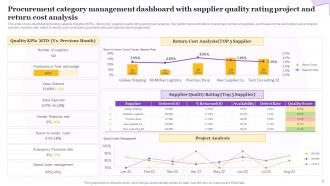
Procurement category management dashboard with supplier quality rating project and return cost analysis
-
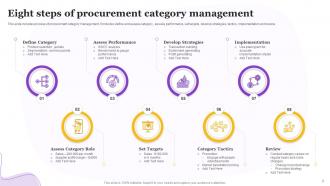
Eight steps of procurement category management
-
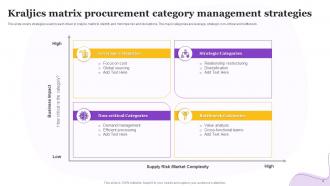
Kraljics matrix procurement category management strategies
-
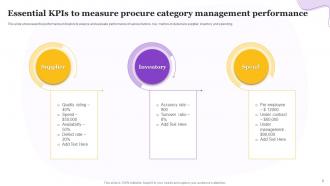
Essential KPIs to measure procure category management performance
-
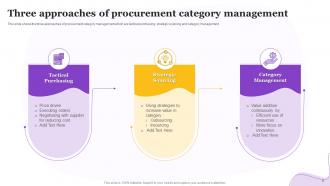
Three approaches of procurement category management
-
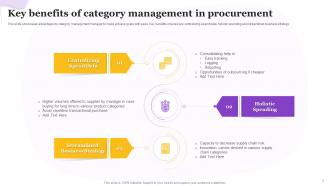
Key benefits of category management in procurement
-
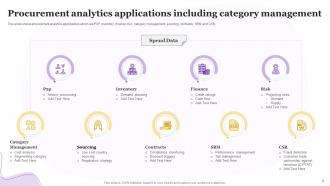
Procurement analytics applications including category management
-
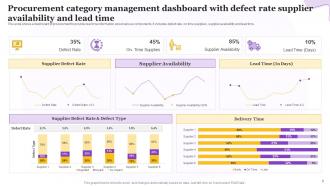
Procurement category management dashboard with defect rate supplier availability and lead time
-
Procurement category management hierarchical structure icon
-
Procurement category management icon with magnifying glass
-

Thank you
-

-

-

-

-

FAQs for Procurement Category Management Powerpoint
Honestly, the biggest win is just seeing where your money actually goes - most companies have no clue. You'll save cash by bundling purchases and get way better contract terms since suppliers love working with buyers who know their stuff. Plus you catch risks early, like realizing you're way too dependent on one vendor for something critical. Managing whole categories beats random one-off buying every time. My advice? Pick something with decent spend and multiple suppliers to test it out first. Don't overthink it.
Pull your spend reports first - see what you're buying, from who, and how much. Group stuff by what you're actually getting, not just vendor names (people mess this up all the time). Don't get too fancy at first. Start with your biggest spend areas or anything that could really hurt if it went wrong. Each category needs enough volume to be worth your time managing separately - no point creating a strategy for your $500 coffee budget, you know? Market risk and business impact matter more than perfect organization. You can always tweak categories later.
Honestly, you can't make decent sourcing calls without solid data - it's what drives everything. Start with cleaning up your spend data first because that's your foundation. From there, you'll spot consolidation opportunities and use supplier metrics to catch potential risks early. Market intel helps you time negotiations better too. I've watched teams try to wing procurement decisions and it never ends well. The data lets you benchmark prices, track if contracts are actually being followed, and build cases that'll get stakeholders on board. Pretty much everything flows from having clean spend data initially.
Honestly, getting other departments involved early is a game-changer for category strategies. You'll catch stuff you'd totally miss otherwise. Finance spots budget red flags, ops teams know the real pain points (not just what's in the requirements), and end users tell you what actually works day-to-day. I've gotten some of my best cost-saving wins just chatting with operations people - they see waste we don't even notice. The trick is treating them like actual partners, not just people to run ideas past. Pick your biggest 2-3 categories first and figure out who's really affected by those sourcing calls. Makes everything smoother.
Start with cost savings - duh, that's what everyone asks about first. But also track supplier stuff like on-time delivery and quality scores. Risk metrics matter too, like how diversified your supplier base is. Here's something most people skip: actually survey your internal customers. I've seen procurement teams think they're killing it while everyone else is quietly annoyed with them. Cycle times for sourcing and negotiations are good too. Just don't go crazy - stick to maybe 4 metrics that actually matter to your business or you'll get lost in spreadsheets.
So technology basically saves you from making decisions based on hunches and gut instincts. Spend analytics tools help spot where you can save money. Supplier dashboards track all your KPIs automatically. E-sourcing platforms make RFPs way less painful - seriously, the spreadsheet nightmare alone made me want to switch careers at one point. AI tools can actually predict market shifts and recommend sourcing strategies for different categories. Don't try implementing everything at once though. Pick whatever's driving you crazy right now and start there.
Start by splitting your suppliers into tiers - strategic ones vs. the everyday vendors. Your top partners need way more attention: quarterly meetings, shared goals, the whole deal. The rest? Just keep them on track with basic scorecards and SLAs. Mapping all these relationships feels like a nightmare at first, but trust me on this one. Pick your 5 most critical suppliers and get those quarterly reviews on the calendar ASAP. That's honestly where you'll see the biggest wins. Oh, and always have backup plans for anything mission-critical - learned that the hard way once.
Look, market research is basically your cheat sheet for not making terrible category decisions. You get the full picture - who's supplying what, pricing patterns, where things are headed. It's way better than just winging it, trust me. This stuff helps you figure out if you should stick with current suppliers or shake things up. Make-vs-buy calls become so much clearer when you actually know what's happening in the market. I'd start simple - just track 3-5 key suppliers per category. Check their financials and market position every quarter or so.
Honestly, the biggest headache is usually people being weird about change. Everyone gets protective of "their" suppliers and categories - it's like they think you're stealing their lunch money or something. Your data's probably a mess too, scattered across random systems that don't talk to each other. Skills are hit-or-miss since not everyone can do decent market analysis. Leadership wants results yesterday but doesn't want to spend money upfront. My advice? Pick one category as a pilot first. Prove it works there before trying to take over everything. Way easier to get buy-in that way.
Category management gives you way better visibility into where your money's going and how your suppliers stack up. Look for chances to consolidate vendors - you'll get better volume discounts that way. Honestly, just stopping maverick spending can save you a ton. Each category needs its own strategy and cost targets, kinda like running separate little businesses. Market competition works in your favor when you play suppliers against each other (in a good way obviously). Start with your three biggest spend areas first. That's where you'll see results fastest and it'll give you momentum for the rest.
Look for people who can actually think about the bigger picture, not just spreadsheet jockeys. Cross-functional experience is clutch - finance, ops, supply chain backgrounds work great. Honestly? Some of my best hires came from totally random industries. You want different thinking styles and perspectives on your team. Training matters too - get them solid on market intel tools and how to manage stakeholders. The whole point is making them real business partners instead of just the "cut costs" department. Oh, and don't sleep on analytical skills obviously, but pair that with people who get how procurement affects everything else.
Honestly, global sourcing turns your whole category planning upside down. Currency swings mess with your budgets. Lead times get crazy long. Then you're dealing with different regulations in every country - it's a headache. That "amazing" overseas supplier quote? Yeah, add shipping costs and import duties and suddenly it's not so amazing anymore. Cultural stuff matters way more than people think too. I learned that the hard way. You need backup suppliers spread across regions and map out total ownership costs, not just sticker prices. Also build way more flexibility into your roadmaps because things will go sideways.
Risk management saves your butt when things go sideways - and trust me, they will. Map out your biggest vulnerabilities first: single suppliers, shaky financials, geopolitical mess. I've watched entire categories implode because nobody asked "what happens if our main supplier tanks?" Build backup plans now, not during a crisis. Diversify your supplier base, maybe keep some buffer inventory for critical stuff. Oh, and don't forget about price swings - they'll hit when you least expect it. The whole point is having answers ready before the questions become urgent.
Look, you've gotta bake this stuff into your category strategy right from the start. Pick your scariest categories first and nail down solid ethical sourcing rules - labor standards, environmental stuff, anti-corruption basics. Make suppliers actually prove they meet your criteria before they even make it onto your approved list. I know it feels like a lot at first (honestly, it kind of is), but there's no getting around it anymore. Regular audits help. So do self-assessments and third-party certs. The real trick? Score ethics directly in your RFPs instead of treating it like some checkbox afterthought.
So AI is totally changing category management - you can now predict demand way better and automatically track supplier risks. ESG stuff isn't optional anymore either, which honestly makes sense given where the world's heading. You've got to diversify suppliers too because nobody wants to get caught like we did in 2020. Real-time visibility tools are becoming essential. Instead of basic transactional deals, everyone's moving toward outcome-based contracts now. I'd start by figuring out which categories could actually benefit from automation first, then build your business case around those. Much easier sell that way.
-
The website is jam-packed with fantastic and creative templates for a variety of business concepts. They are easy to use and customize.
-
“Superb. What a great finding. Thankful for SlideTeam. We were paying people to make slides which went all in vain. We are so happy to have found you.”