


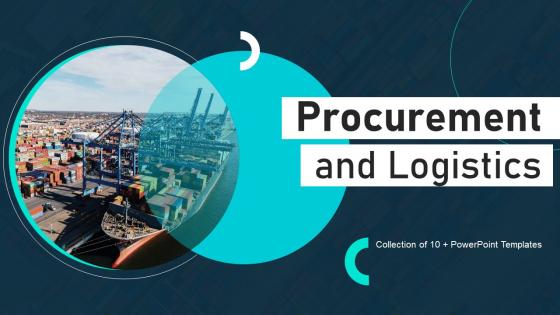
Procurement And Logistics Powerpoint Ppt Template Bundles




Try Before you Buy Download Free Sample Product
 Impress Your
 Audience
 100%
100% Editable
 Save Hours
 of Time


Our Procurement And Logistics Powerpoint Ppt Template Bundles are topically designed to provide an attractive backdrop to any subject. Use them to look like a presentation pro.
People who downloaded this PowerPoint presentation also viewed the following :
Procurement And Logistics Powerpoint Ppt Template Bundles with all 22 slides:
Use our Procurement And Logistics Powerpoint Ppt Template Bundles to effectively help you save your valuable time. They are readymade to fit into any presentation structure.







FAQs for Procurement And Logistics Powerpoint
Key factors influencing procurement decisions include cost optimization, supplier reliability, quality standards, sustainability requirements, and geopolitical risk assessment. In today's interconnected marketplace, organizations increasingly evaluate supply chain resilience, regulatory compliance, and environmental impact alongside traditional price considerations, with many companies finding that strategic supplier partnerships ultimately deliver greater value than lowest-cost sourcing alone.
Technology streamlines procurement processes through automated vendor selection, real-time inventory tracking, predictive analytics, digital contract management, and AI-powered demand forecasting. These systems enable logistics operations to reduce procurement cycles by 40-60%, minimize stockouts through better visibility, and enhance supplier relationships, with many companies finding that automated workflows ultimately deliver significant cost savings and operational efficiency.
Sustainability drives modern procurement through supplier environmental assessments, circular economy practices, carbon footprint reduction, and ethical sourcing requirements. Organizations increasingly integrate sustainability metrics into vendor selection, with manufacturing and retail companies finding that sustainable procurement delivers cost savings, regulatory compliance, and enhanced brand reputation while meeting stakeholder expectations.
Procurement and logistics work together by aligning sourcing strategies with transportation capabilities, coordinating delivery schedules with supplier contracts, and sharing real-time data for demand forecasting. This strategic combination enables organizations to reduce inventory costs, minimize lead times, and optimize warehouse operations, with manufacturing companies finding that integrated procurement-logistics teams deliver significantly faster order fulfillment and enhanced customer satisfaction.
Key procurement performance metrics include cost savings percentage, supplier performance scores, procurement cycle time, contract compliance rates, and spend under management ratios. These measurements enable organizations to streamline vendor relationships, reduce operational costs, and enhance supply chain efficiency, with many companies finding that comprehensive metric tracking delivers better negotiation outcomes and strategic supplier partnerships.
Risk management integrates into procurement and logistics planning through supplier diversification, scenario planning, contingency protocols, real-time monitoring systems, and comprehensive risk assessments across the supply chain. These strategies enable organizations to identify potential disruptions early, maintain operational continuity during crises, and build resilient networks, with many companies finding that proactive risk integration ultimately delivers competitive advantage and enhanced supply chain stability.
Global sourcing challenges include supply chain disruptions, quality control inconsistencies, currency fluctuations, regulatory compliance complexities, and extended lead times. These obstacles impact organizations across manufacturing, retail, and technology sectors, with many companies finding that strategic supplier diversification, enhanced visibility systems, and local partnerships ultimately deliver greater resilience and competitive advantage.
Strong supplier relationship management significantly enhances logistics performance by improving delivery reliability, reducing lead times, enabling better demand forecasting, and facilitating collaborative problem-solving during disruptions. Through strategic partnerships and transparent communication, organizations streamline their supply chains, minimize inventory costs, and achieve greater operational flexibility, with many manufacturers and retailers finding that close supplier collaboration ultimately delivers faster customer fulfillment and competitive advantage.
Emerging trends transforming procurement and logistics include artificial intelligence for demand forecasting, blockchain for supply chain transparency, autonomous vehicles for delivery, IoT sensors for real-time tracking, and sustainable sourcing practices. These technologies streamline operations by reducing costs, minimizing delays, and enhancing visibility, with many organizations finding that strategic adoption delivers competitive advantage and improved customer experiences.
Data analytics enhances procurement decision-making by providing real-time supplier performance insights, demand forecasting accuracy, and cost optimization opportunities through comprehensive spend analysis. Through predictive modeling and automated reporting, procurement teams can identify supply chain risks, negotiate better contracts, and streamline vendor selection processes, ultimately delivering significant cost savings and operational efficiency improvements.
Effective inventory management practices include demand forecasting, ABC analysis, just-in-time ordering, safety stock optimization, and real-time tracking systems. These approaches streamline operations by reducing carrying costs, minimizing stockouts, and enhancing supply chain visibility, with many retailers and manufacturers finding that strategic inventory control ultimately delivers improved cash flow and customer satisfaction.
E-procurement technology influences cost savings in logistics by automating vendor selection, streamlining purchase orders, and enabling real-time spend tracking across supply chains. Through digital procurement platforms, organizations achieve reduced administrative costs, faster supplier negotiations, and enhanced inventory optimization, with many logistics companies finding that automated procurement processes deliver 15-20% cost reductions while improving operational efficiency.
Geopolitical factors significantly reshape procurement strategies by forcing organizations to diversify supplier bases, reassess regional dependencies, and implement enhanced risk management protocols. Companies across manufacturing, technology, and retail sectors increasingly adopt multi-sourcing approaches, nearshoring initiatives, and strategic inventory buffers, ultimately delivering greater supply chain resilience while navigating trade tensions and regulatory shifts.
Organizations balance quality and cost through strategic supplier diversification, comprehensive vendor evaluation systems, long-term partnership development, and data-driven procurement analytics. By implementing total cost of ownership assessments rather than focusing solely on purchase price, companies in manufacturing and retail sectors streamline operations while maintaining quality standards, ultimately delivering enhanced operational efficiency and sustainable competitive advantage.
Collaboration among supply chain partners enhances logistics performance by improving demand forecasting accuracy, streamlining inventory management, and enabling real-time information sharing across the network. Through integrated planning platforms and coordinated operations, retailers, manufacturers, and suppliers achieve faster delivery times, reduced carrying costs, and enhanced customer satisfaction, ultimately delivering competitive advantage in increasingly complex markets.
-
Extremely professional slides with attractive designs. I especially appreciate how easily they can be modified and come in different colors, shapes, and sizes!
-
Best way of representation of the topic.